
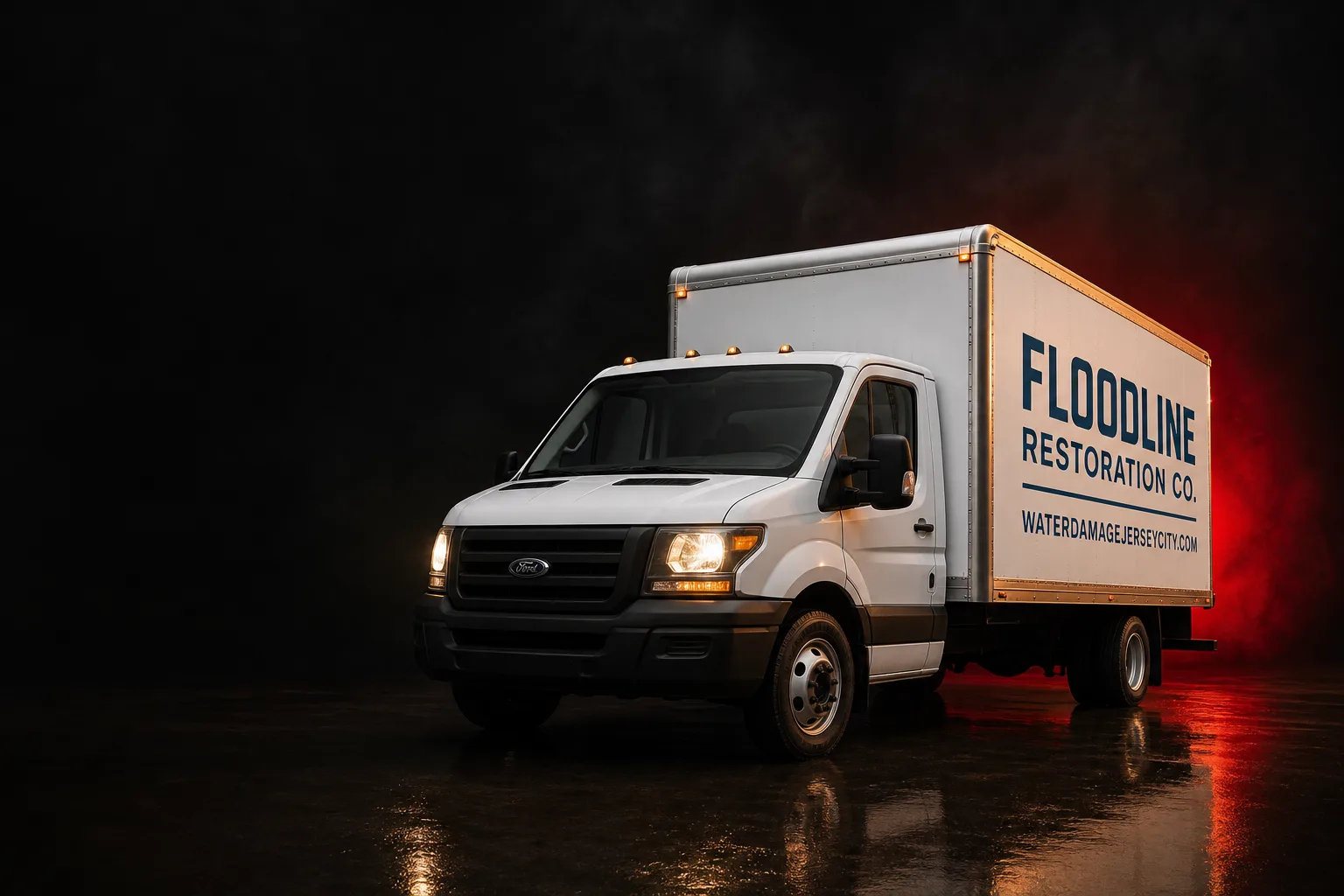
Free visual inspection and a written scope of work before any mitigation begins - photos, moisture readings, and drying logs go in your claim file
The scope we write is the scope we bill. Anything new gets shown to you, in writing, before we touch it.
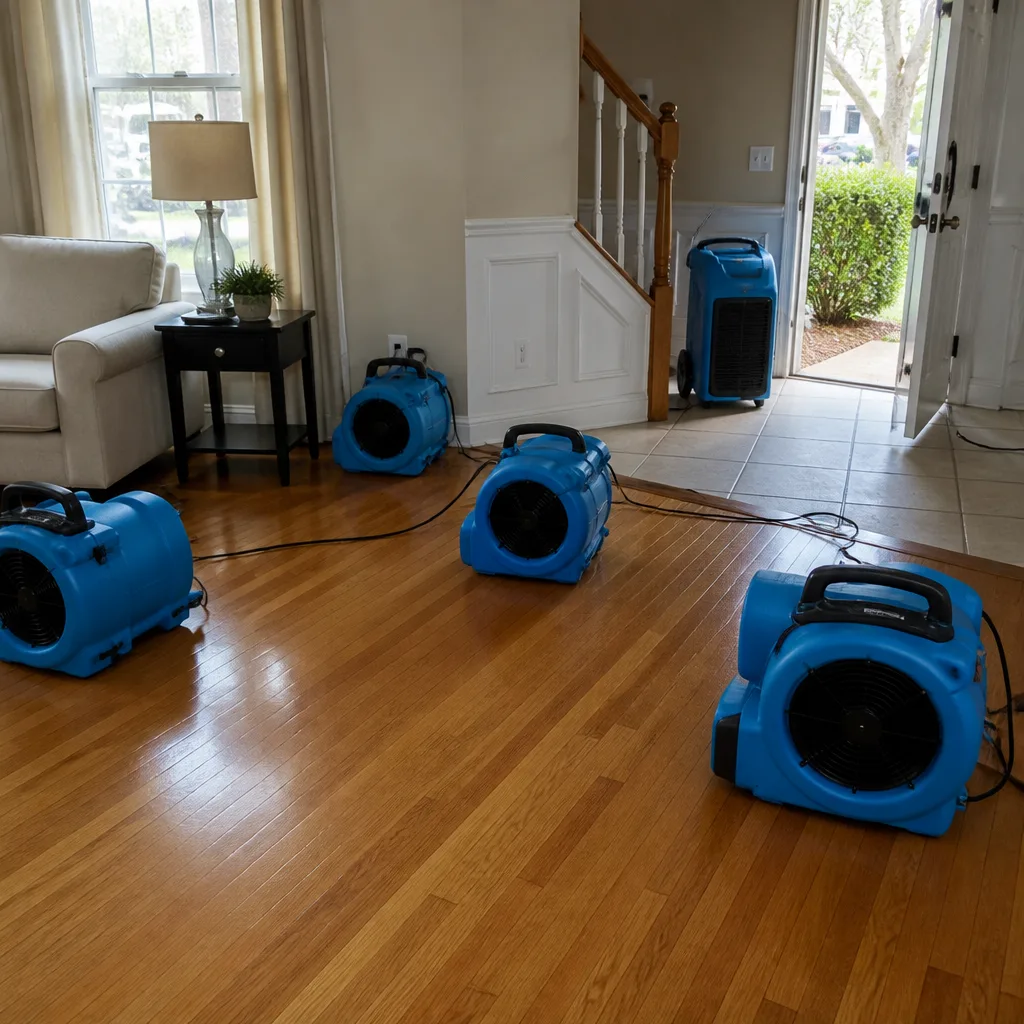
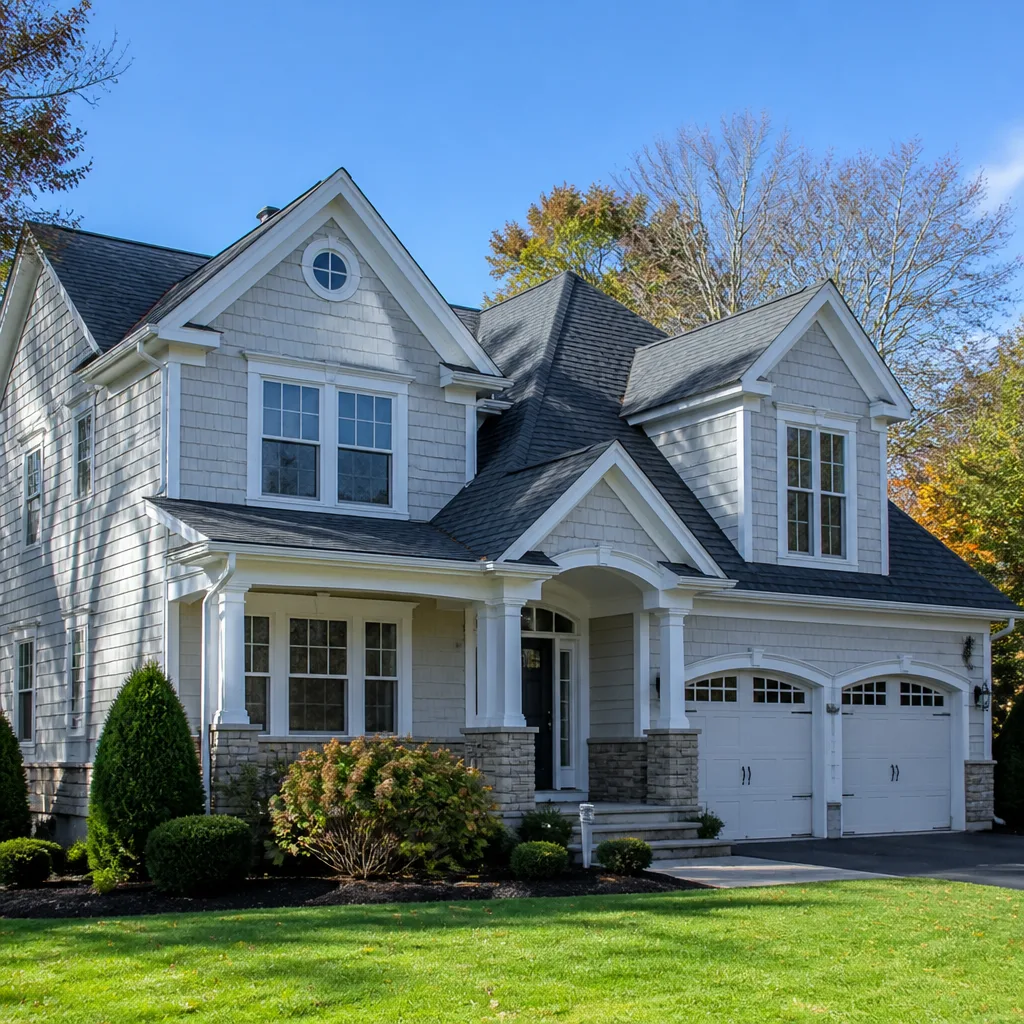
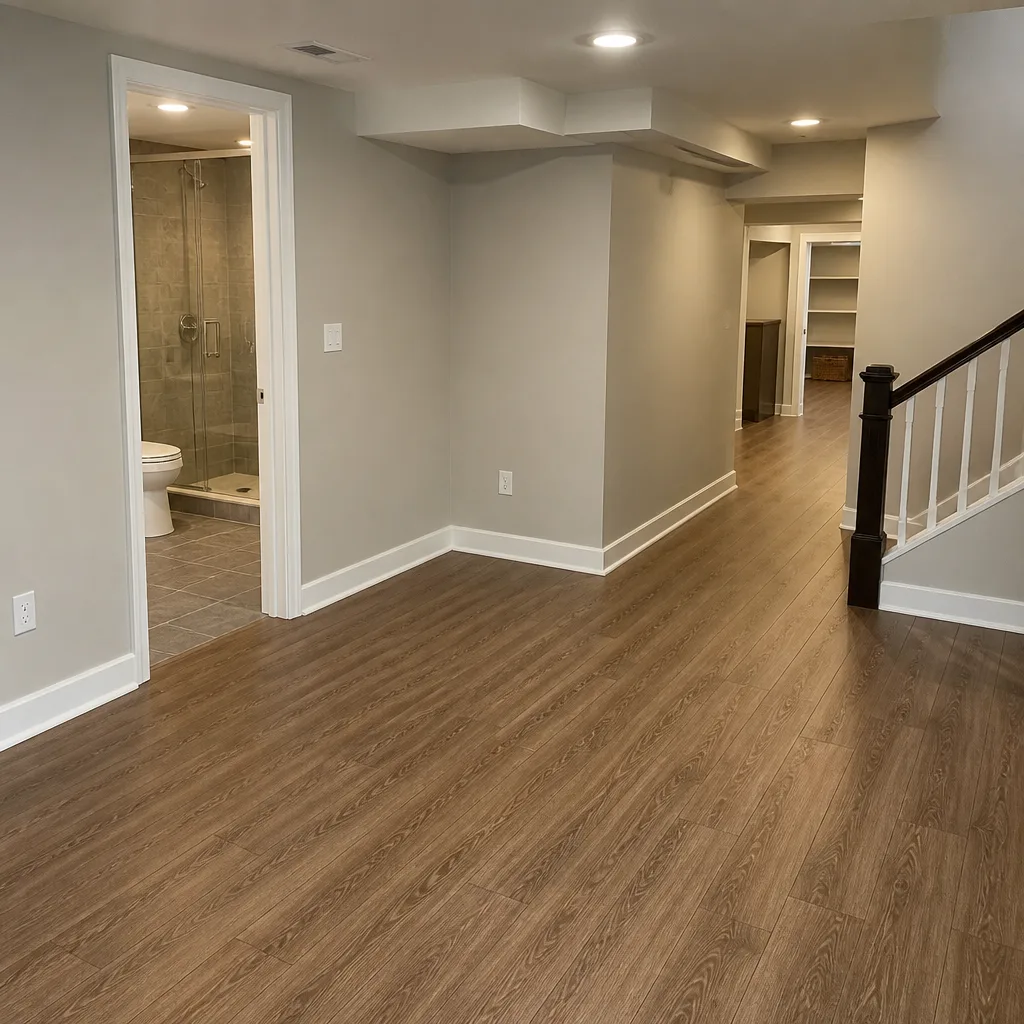
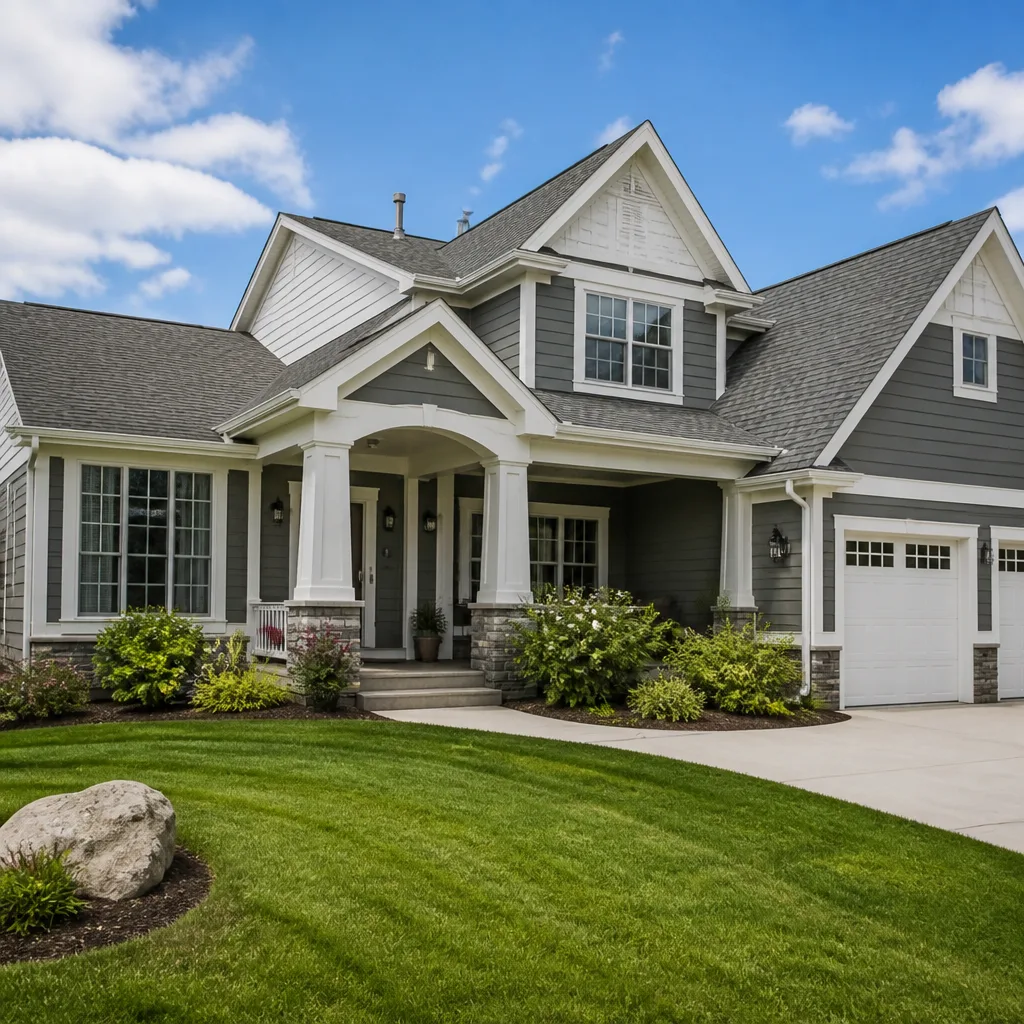
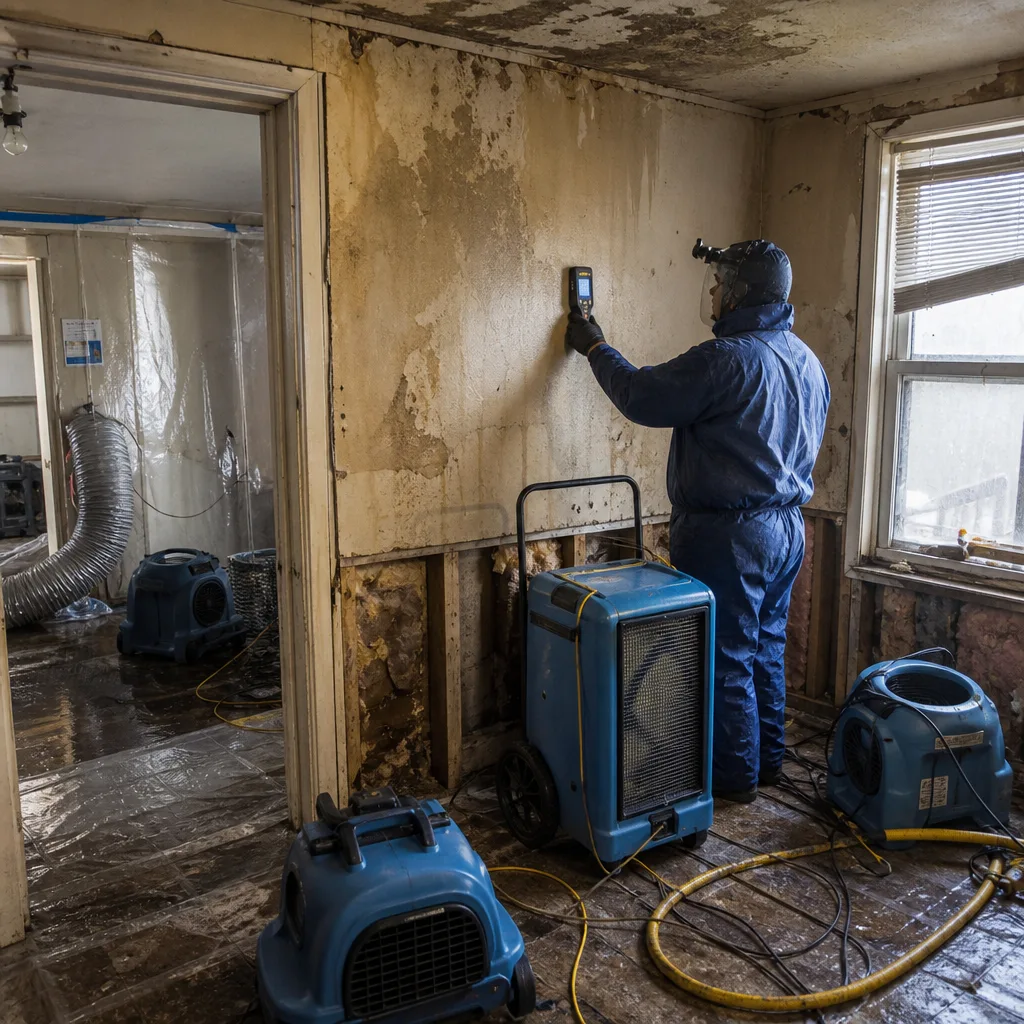 Before
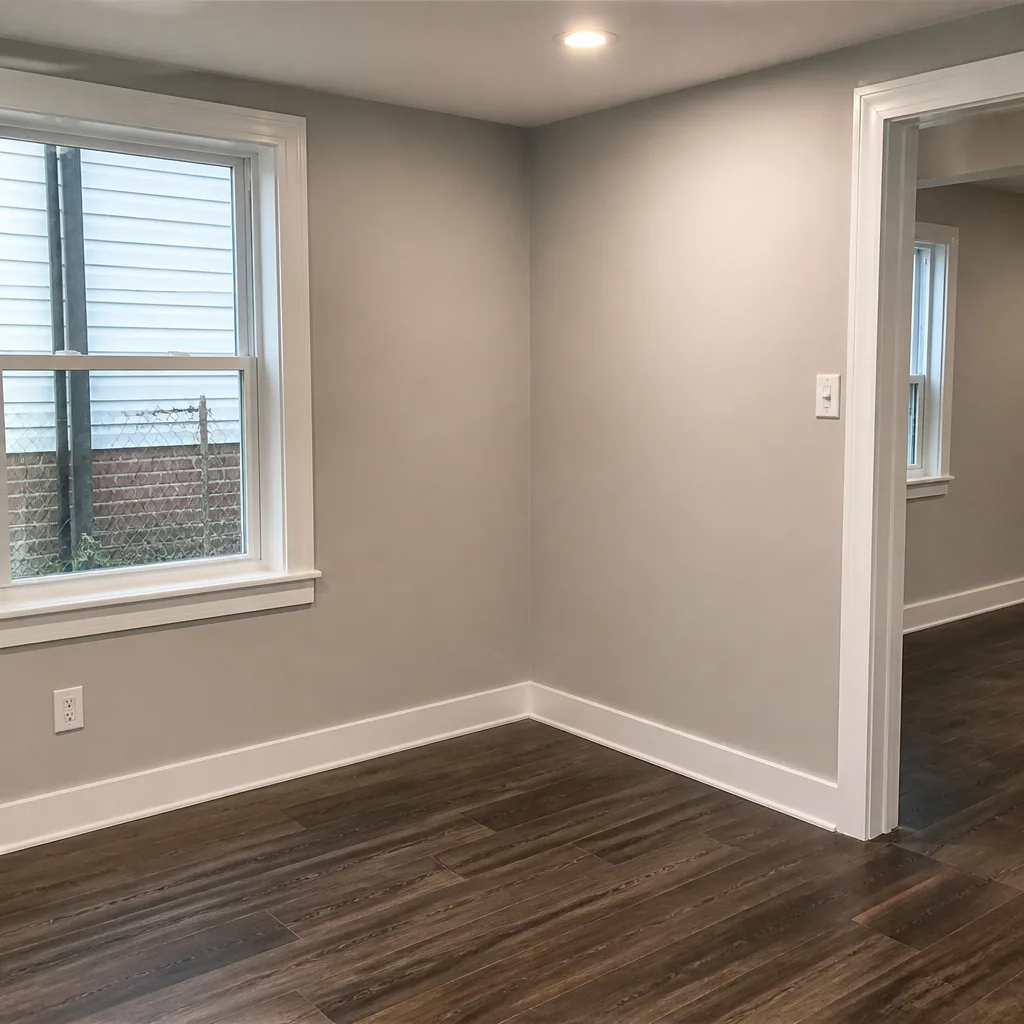 After
After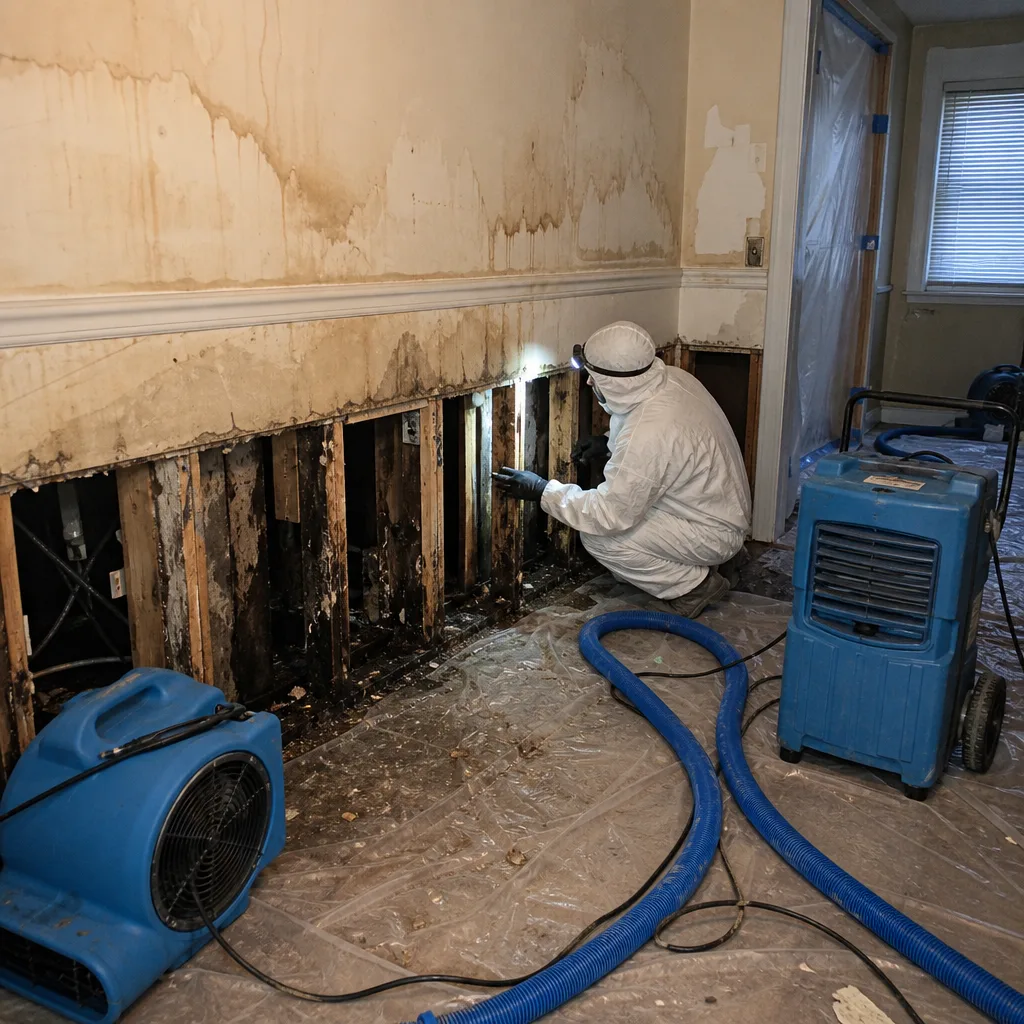 Before
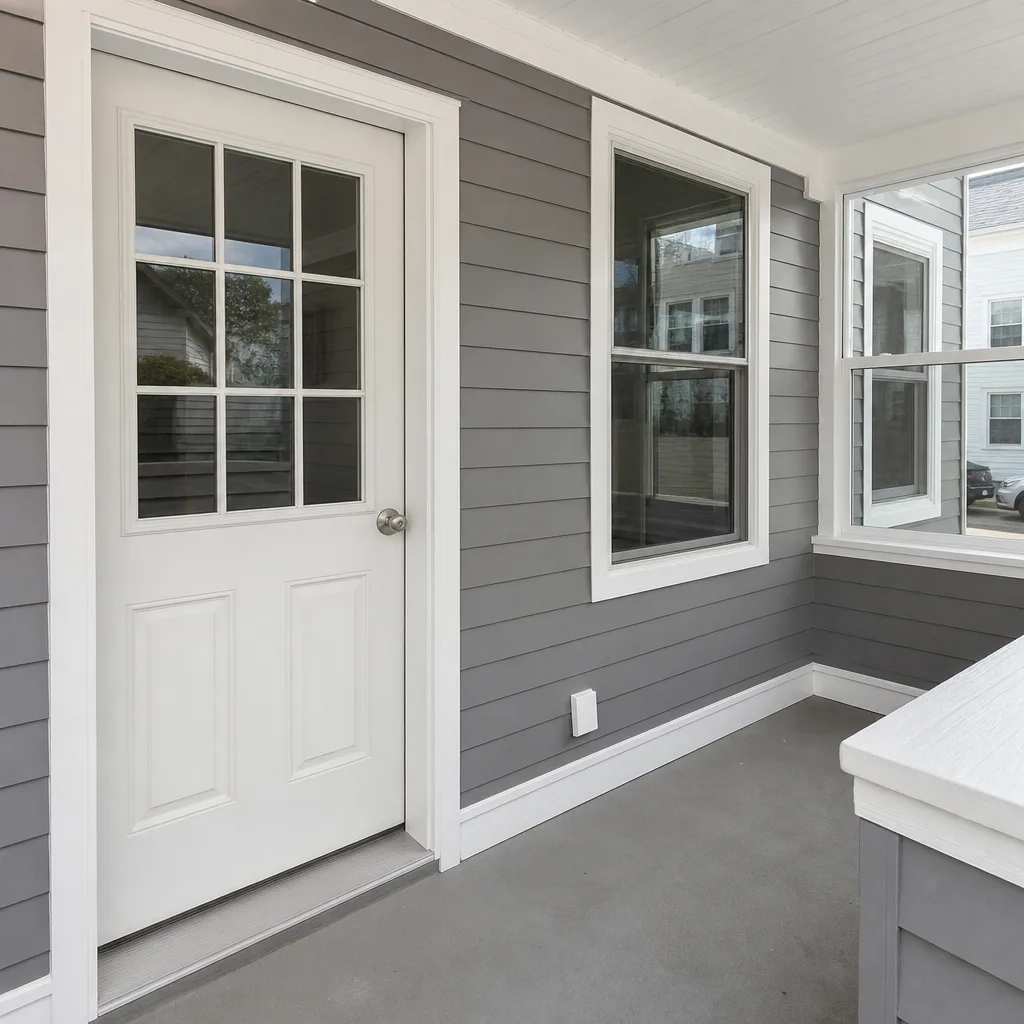 After
After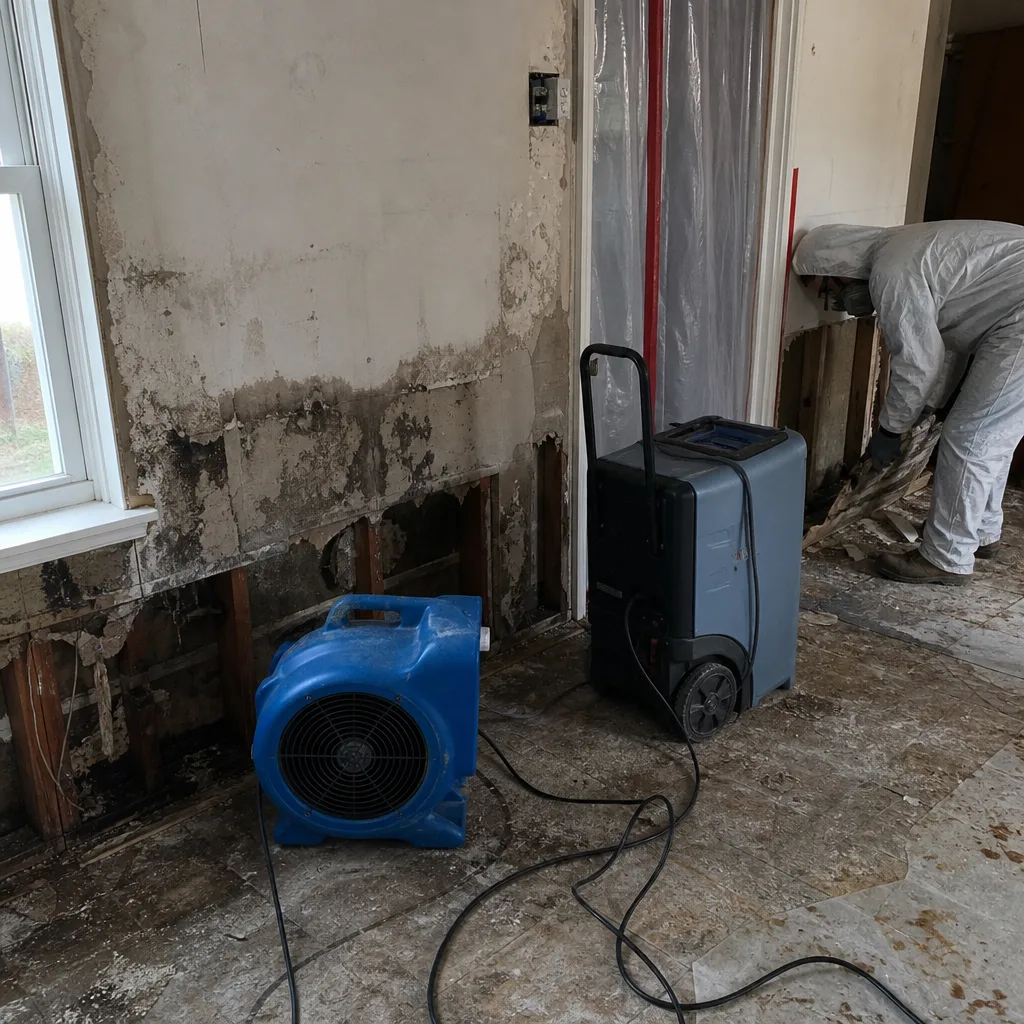 Before
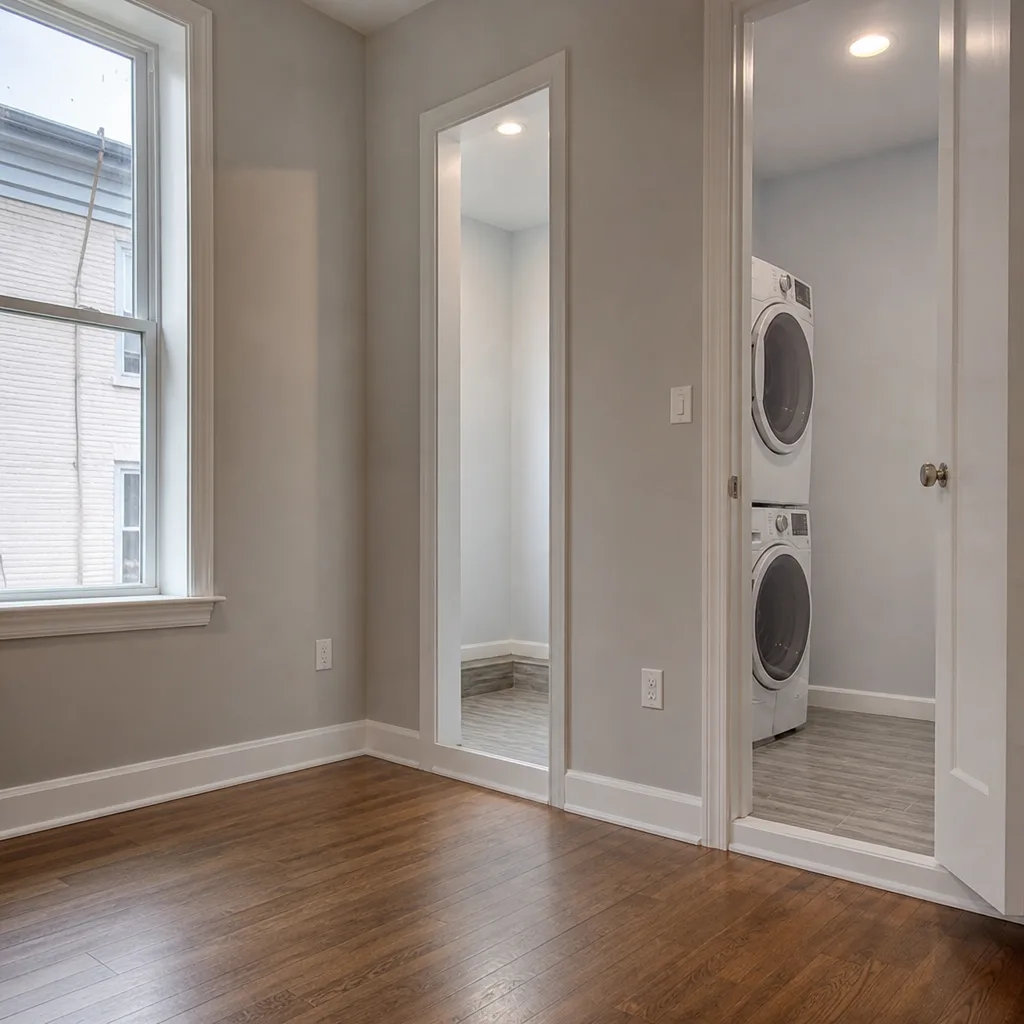 After
After24/7 Emergency Sanitization Services in Financial District
Sanitization Services in Financial District typically run $450-$1,900 depending on square footage, contamination type, and whether chloride neutralization is required after saltwater exposure. When a sewage backup hits a subgrade mechanical room off Water Street or a post-illness situation forces a condo board to act before residents return to the lobby, you don’t have time to wait for a callback. Call (640) 400-9404 and a live dispatcher answers. Not a recording. Not a call center in another state. A person who knows the Financial District, knows our crews’ locations, and starts moving a team toward your building while you’re still on the phone.
The first hour matters because contamination spreads through HVAC systems fast. In Financial District’s converted high-rises, a single contaminated floor can push pathogens into shared supply plenums, through elevator shafts, and into stairwell pressurization paths within minutes. Floodline Restoration Co. runs background-checked, uniformed technicians certified to IICRC, RIA, and IFA standards, equipped with Dri-Eaz negative-air machines, HEPA scrubbers, and EPA-registered antimicrobial agents. We arrive, assess, contain, and start treatment the same visit. Free visual inspection on every call.
What happens when you call
- 1
A real person answersNo phone trees - you reach a local pro.
- 2
You get an upfront price rangeHonest numbers before anyone is dispatched.
- 3
A background-checked tech heads outLicensed & insured, dispatched right away.
- 4
You approve before work beginsNothing starts until you say go.
Understanding Sanitization Services Severity in Financial District Properties
Sanitization is not one-size-fits-all, and in Financial District it’s rarely simple. The district’s building stock spans pre-war masonry towers from the 1880s, mid-century steel-frame office blocks, and luxury residential conversions carved out of former bank headquarters and trading floors. What they share is this: mechanical systems, switchgear, elevator pits, and HVAC plants all live below grade, where groundwater, storm surge, and sewer infrastructure meet. Subgrade spaces here sit at or near sea level. FEMA maps large sections as Zone AE. That means contamination events here are not the same as an apartment spill in Midtown.
We classify contamination by source and severity. Category 1 starts clean (a supply line leak), Category 2 carries significant biological risk (wash water, sump overflows), and Category 3 is grossly contaminated (sewage, tidal water, river ingress). A Category 3 event in a Pearl Street basement storage room requires full containment, removal of porous materials, and antimicrobial treatment before occupancy can resume. In Financial District specifically, we test for chloride contamination before closing out any subgrade job. Salt left behind after surge events is hygroscopic. It re-wets building materials indefinitely, and standard freshwater protocols will never catch it.
Why Financial District Property Owners Choose Floodline Restoration Co.
- 45-minute response commitment: Our crews stage near the Financial District and reach Water Street, John Street, and Exchange Place corridors fast, often within the hour.
- 24/7 live answer, never an automated system: Call at 2 a.m. and a dispatcher picks up. Curt Bowman built this company around a dispatch board, and that hasn’t changed since 2010.
- IICRC-certified crews: Our technicians hold current certifications including Water Damage Restoration Technician (WRT), Fire & Smoke Restoration Technician (FSRT), and Applied Microbial Remediation Technician (AMRT), with RIA and IFA continuing education requirements met.
- Free visual inspection: We walk the site, test what needs testing, and give you a straight read before any money changes hands.
- Direct insurance billing: We communicate with adjusters directly, provide photo-logged documentation, and handle the carrier paperwork. You don’t play messenger.
- One team from start to finish: The same Floodline technicians who contain the contamination run the scrubbers, do the fogging, and handle the repairs. No mid-job handoff, no inherited crew.
Our Sanitization Services Process
Inspection & Assessment
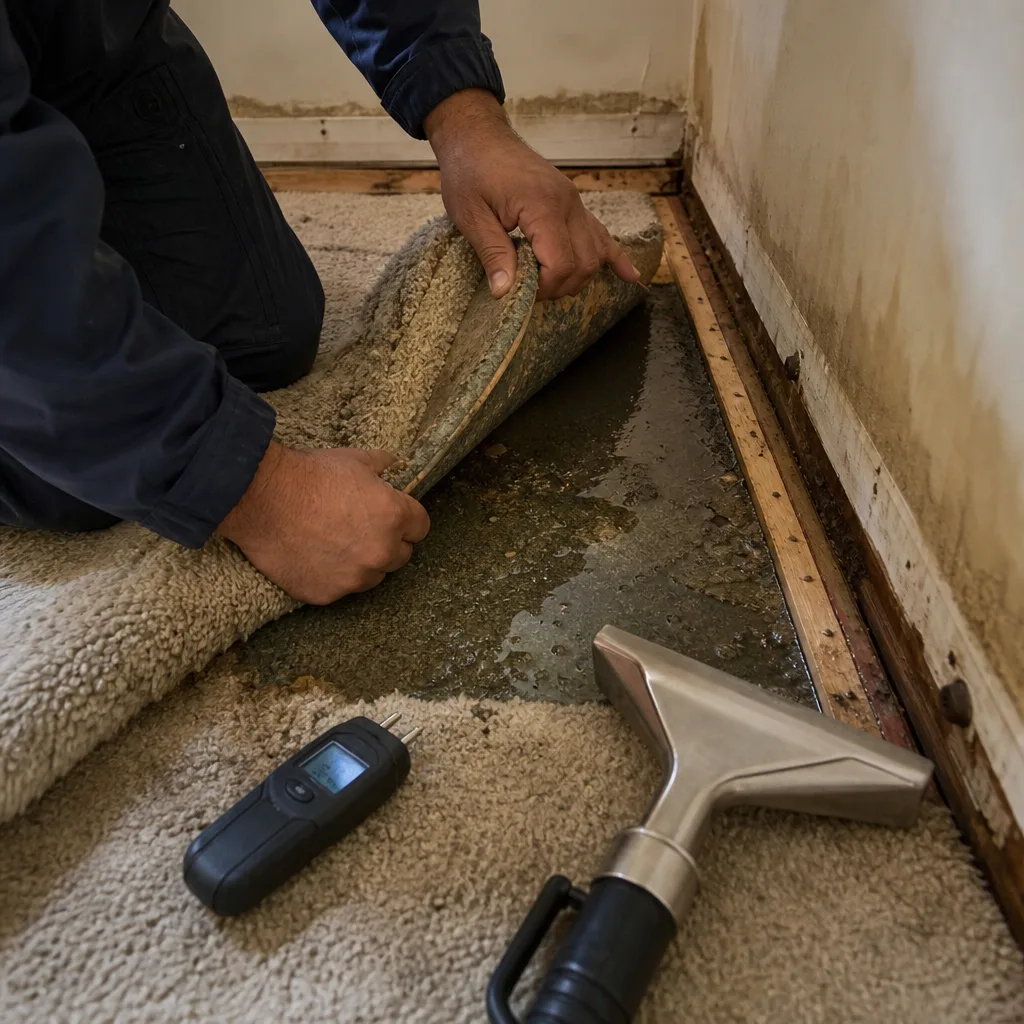
We inspect the affected space, identify contamination source and category, and test for chloride in any subgrade area with possible storm surge history. Thermal imaging helps us find moisture hidden behind walls and inside conduit chases. You get a written scope with a straight answer before work starts.
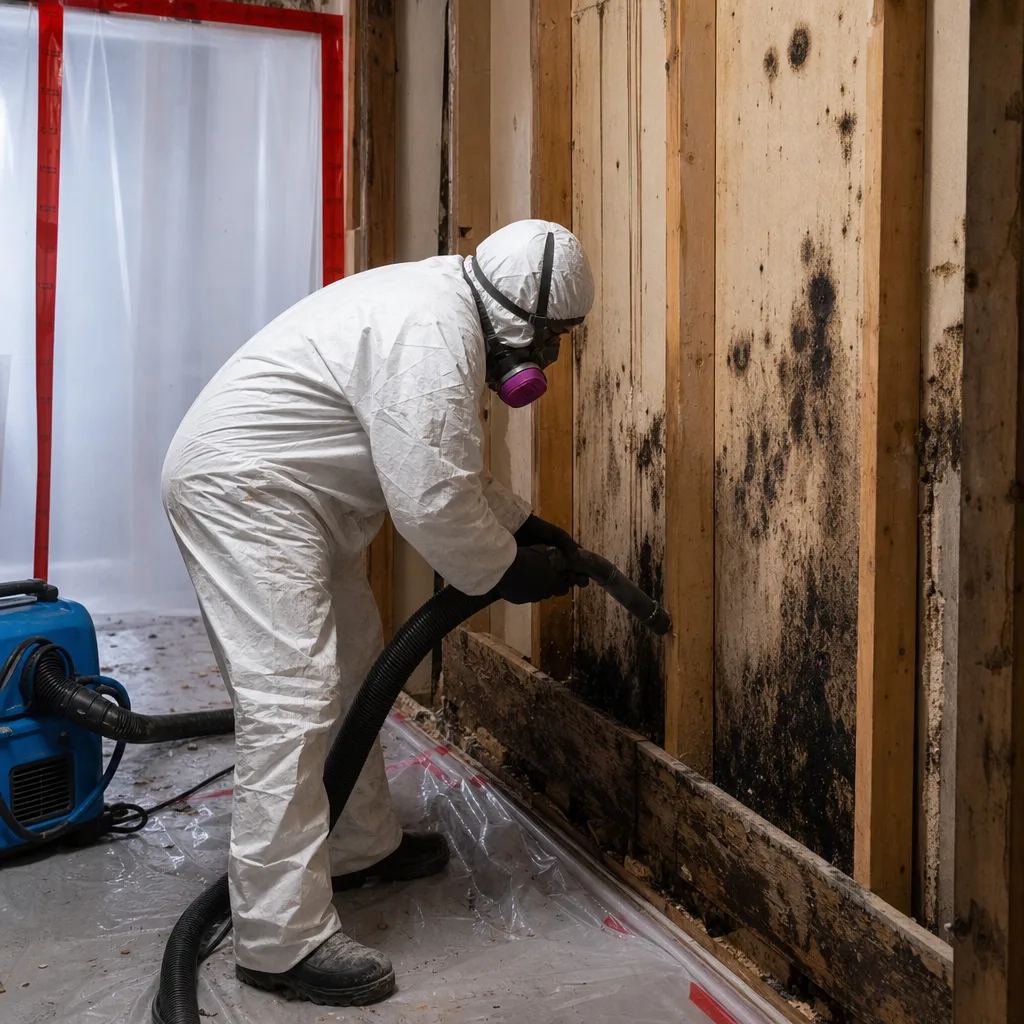
Extraction & Stabilization
For liquid contamination (sewage, water line breaks), we extract standing water using truck-mounted or portable extraction units depending on corridor access. In Financial District, that often means carrying equipment through narrow service elevators and loading docks. We stabilize the space with containment and bring humidity under control before proceeding.
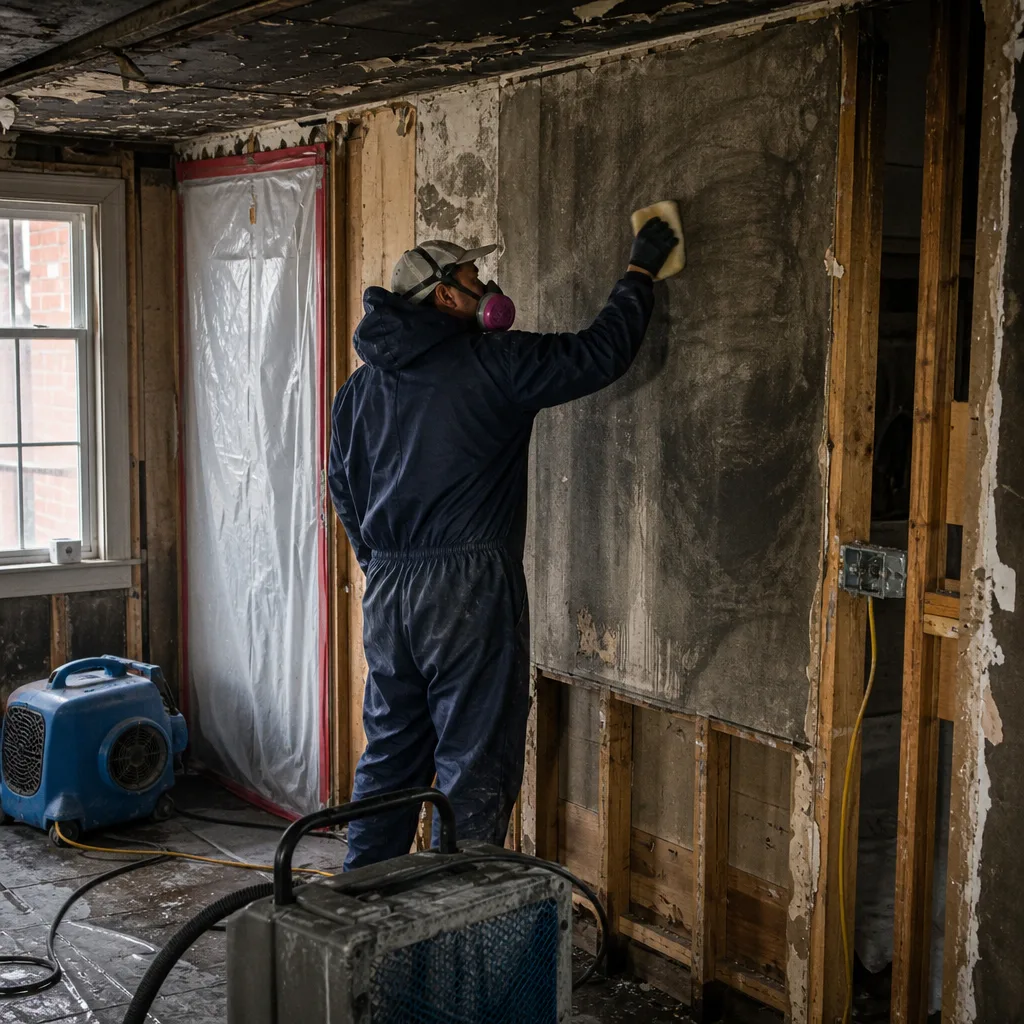
Drying & Dehumidification
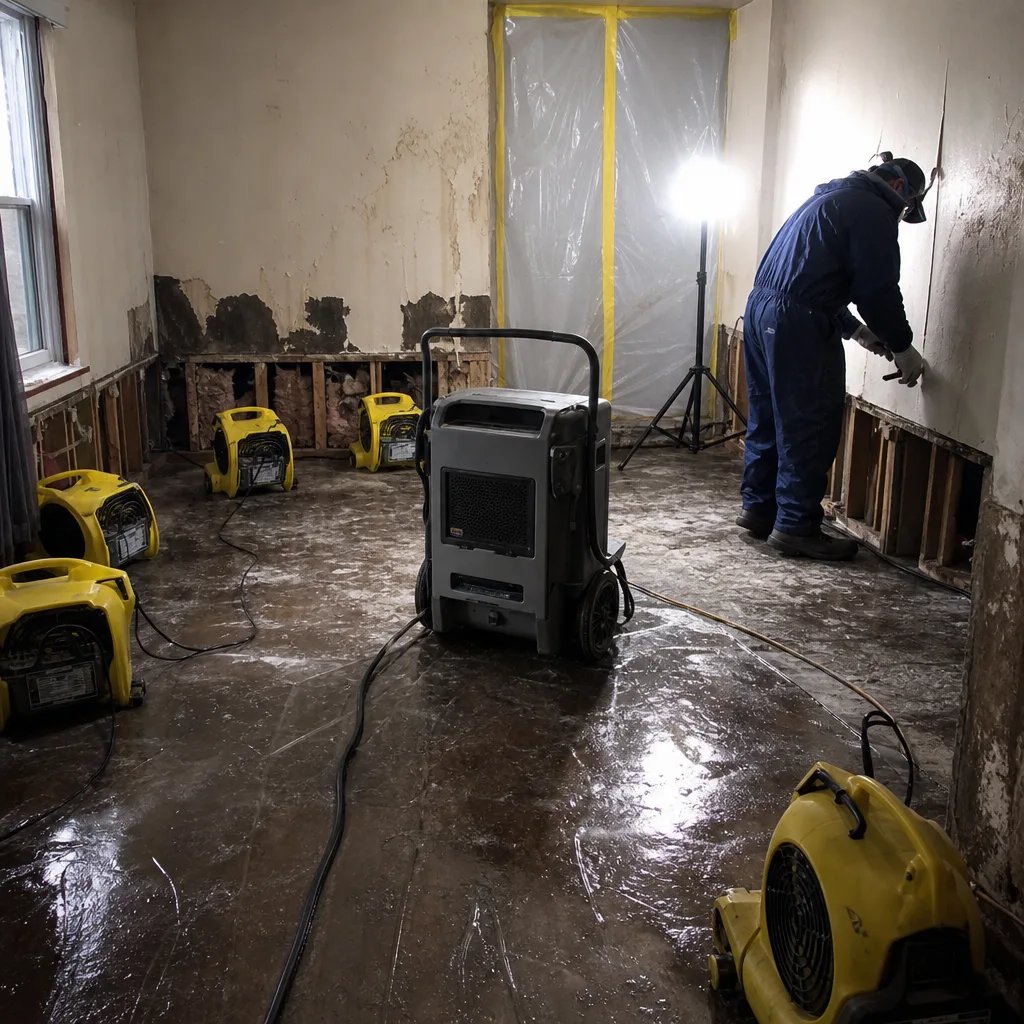
Commercial dehumidifiers and air movers run continuously until moisture mapping confirms the dry standard. In below-grade FiDi spaces, we often operate negative-air machines during this phase to keep airborne contaminants from migrating into occupied floors above.
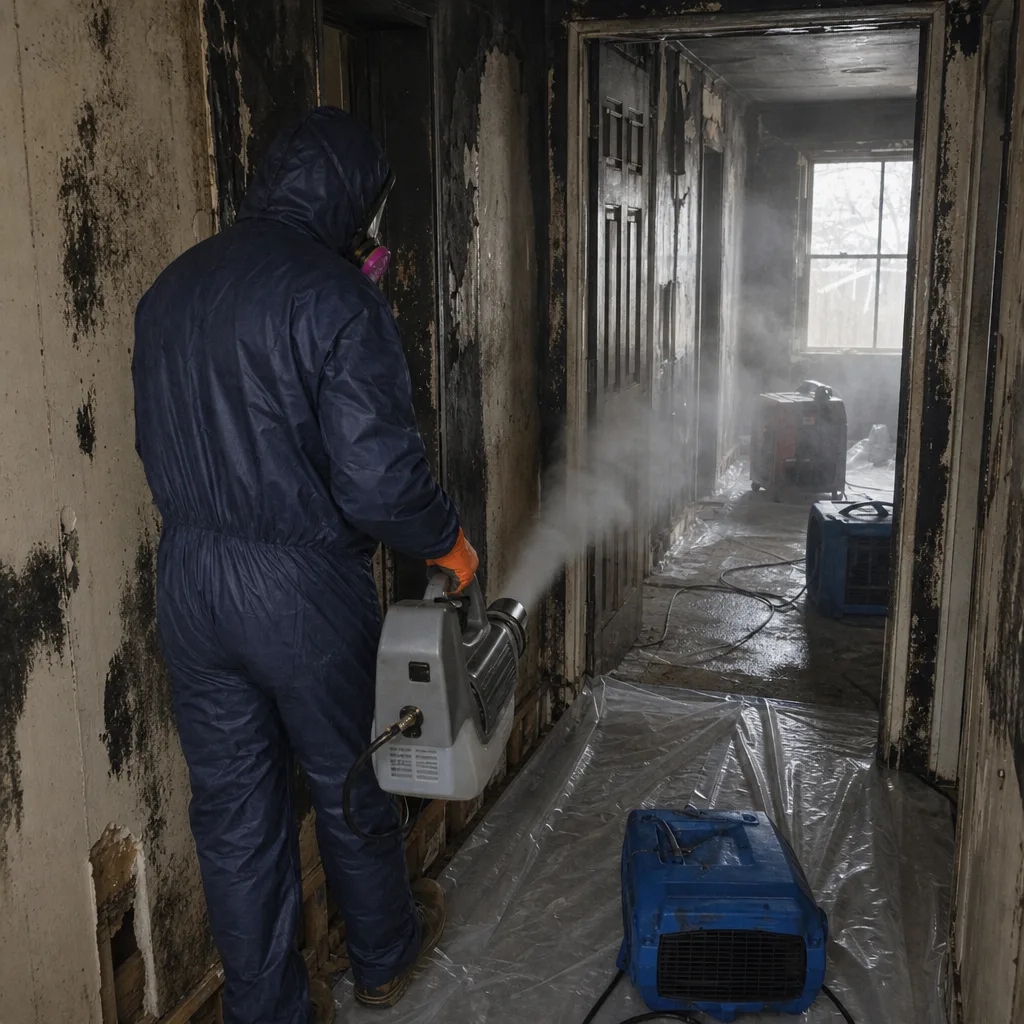
Cleaning & Sanitization
All affected surfaces are cleaned with EPA-registered antimicrobial products appropriate to the contamination type. For subgrade rooms that touched tidal saltwater, we run a marine-grade washdown to remove chlorides first. Skipping this step invalidates the sanitization work entirely in Financial District.
Specialty Treatment & Fogging
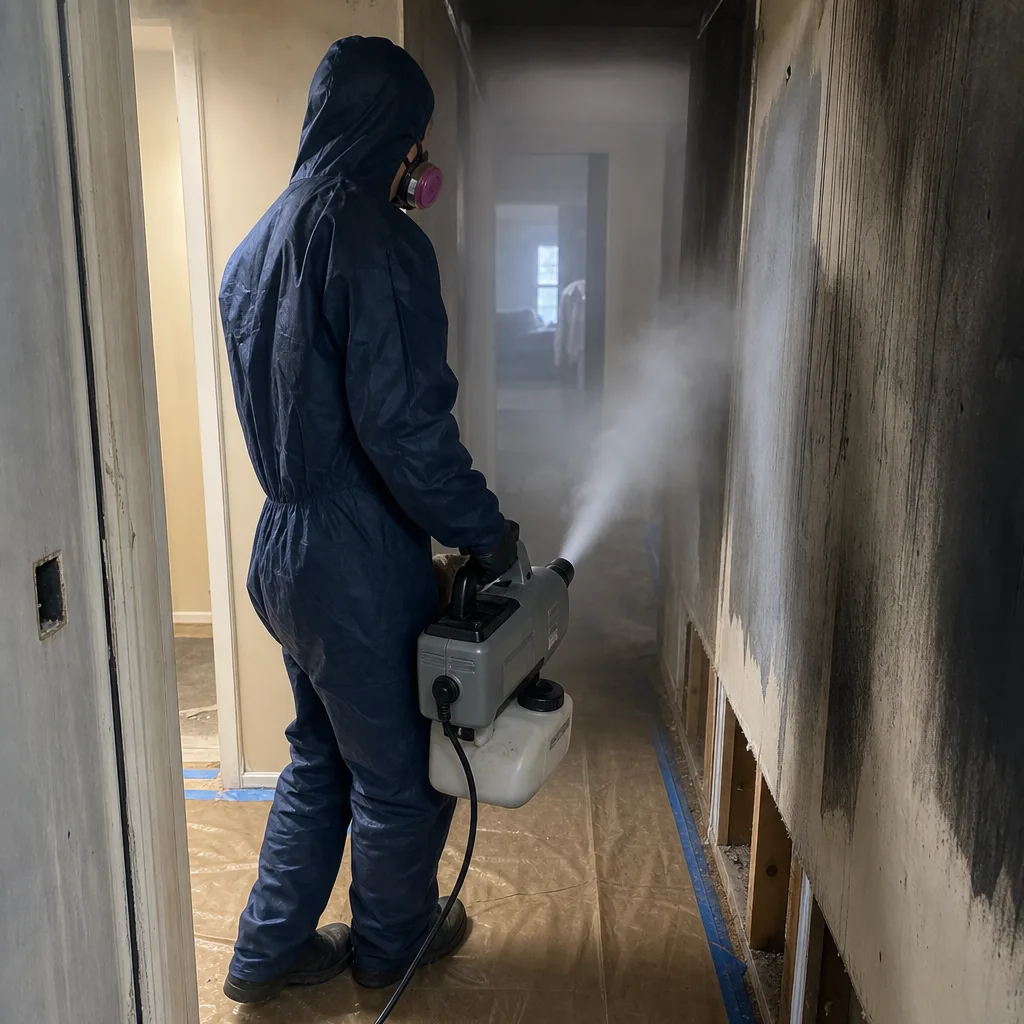
Depending on contamination class, we perform commercial-grade fogging with EPA-registered disinfectants through the HVAC supply plenum where relevant, plus targeted treatment of air ducts and hard surfaces. Clearance testing includes post-remediation swabs and, when spec’ed by the building engineer, air sampling.
Repairs & Restoration
After sanitization and clearance, we repair what needed repair, replace what needed replacing, and hand you a moisture log, a job file for your carrier, and our 90-Day Done Right Promise in writing. If it’s not done right, we make it right. No arguing.
Need Emergency Sanitization Services in Financial District Now?
Crews minutes away, answering live 24 hours a day. The sooner we start, the less it costs.
Working With Your Insurance Company
Most sanitization jobs in the Financial District tie to a covered peril: sewage backup, storm surge, plumbing failure, or a documented contamination event. The carrier expects documentation from the first hour, and that’s what we give them. Photos room by room. Moisture readings taken before, during, and after the job. A line-item scope that matches industry-standard estimating software. Our office communicates with your adjuster directly, so the board doesn’t get stuck arbitrating between a contractor and an insurance desk in another state. Floodline has done this for over a decade, and Curt Bowman’s name goes on every job file.
What We Provide Your Insurer
- Thorough documentation of the loss
- Photos of all damage, room by room
- Moisture readings and drying logs
- A detailed, line-item scope of work
- Direct coordination with your carrier
Built for Financial District’s Loss Calendar
Financial District’s sanitization needs track the harbor, the sewers, and the building systems, and they shift by season. January and February bring deep freezes that burst supply lines in pre-war masonry towers off Broad Street, flooding mechanical rooms and forcing Category 2 cleanup. March and April bring nor’easters. A slow-moving coastal storm pushes storm surge into the district’s three-sided waterfront, overwhelming combined sewer outfalls near Battery Park and forcing sewage back through floor drains in subgrade garages. That’s a Category 3 event, often requiring full containment and fogging before boards will let residents back into amenity spaces.
Summer thunderstorms are flash floods, plain and simple. The low-lying streets near South Street Seaport and the old Pearl Street shoreline sit on landfill with poor drainage, and several inches of rain in an hour pushes groundwater into basements that stay damp for weeks. September brings the hurricane season tail. Any of these events can force a building to shut down a lobby, a mailroom, or an elevator bank for sanitization. We plan our equipment staging around these seasonal rhythms because we’ve worked this district through every one of them.
Sanitization Services Across Financial District’s Neighborhoods
We run routes down Broadway, Water Street, and Exchange Place every week, and each corridor has its own building type. In the Wall Street corridor, the pre-war bank buildings have massive subgrade vaults and mechanical floors where sewage backups and groundwater seepage concentrate. Response is mostly about getting equipment down narrow stairs and through loading docks before contamination spreads into elevator pits.
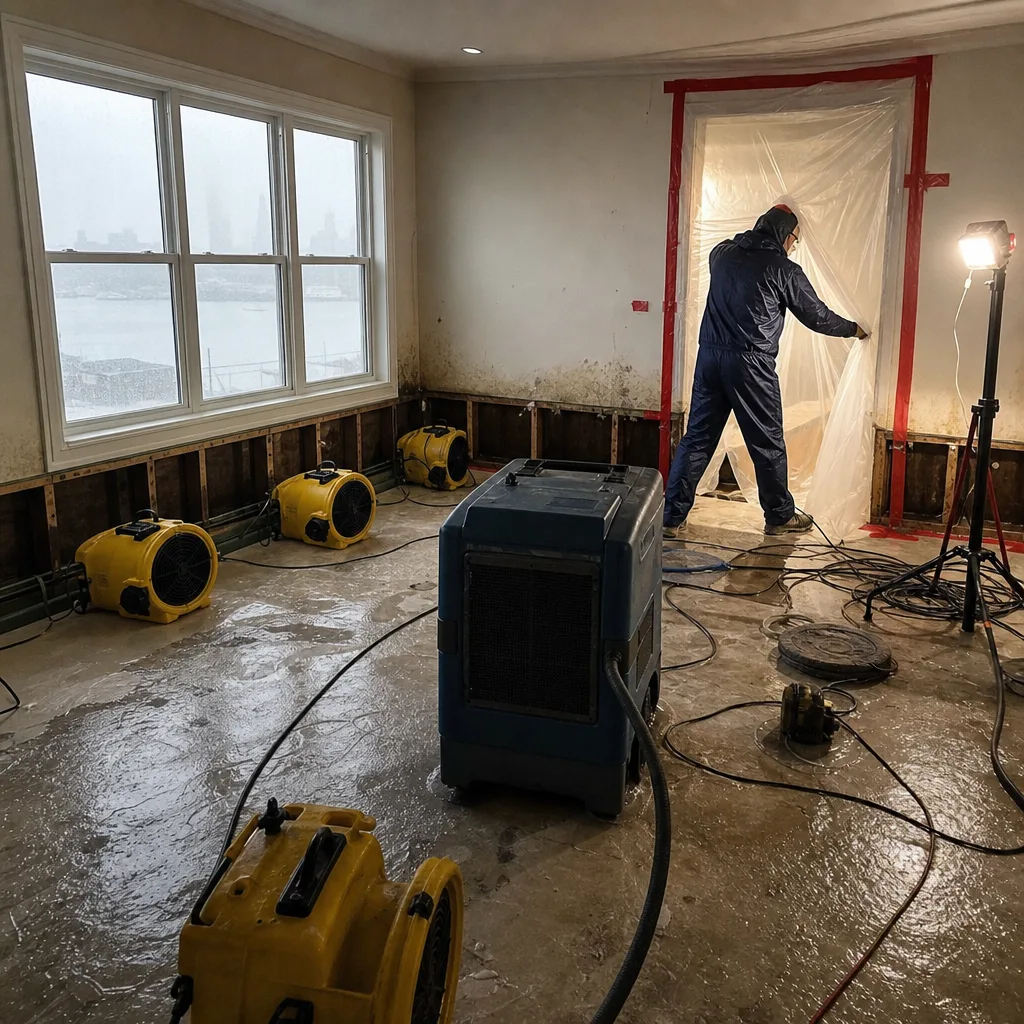
Over by Battery Park and South Street Seaport, residential towers sit right on the waterfront. Storm surge is the primary threat, and post-Sandy construction still shows chloride damage in subgrade garages and pump rooms. Sanitization here always includes chloride testing. In the Pearl Street / Stone Street conversions, we work in occupied condo buildings where containment is non-negotiable. The board needs negative-air pressure before fogging, because any drift into occupied floors means air-quality complaints and a shutdown.
Around Fulton Street and the World Trade Center campus, commercial kitchens and transit-adjacent buildings generate odor-neutralization and air-duct sanitization calls that have to fit around tenant schedules. We know the building managers, the security desks, and the loading dock protocols. That local knowledge keeps a job moving.
Specialized Sanitization Services We Offer in Financial District
Our Sanitization Services team covers the full range of contamination response in Financial District, adapted to the district’s building stock and board expectations. Each job gets a written scope, a moistue log, and the 90-Day Done Right Promise.
Deep Disinfection
Beyond surface wiping. Deep disinfection in Financial District means treating all horizontal and vertical surfaces in a contained area with EPA-registered antimicrobials, including hard-to-reach zones like conduit chases, behind equipment racks, and inside elevator pits. In a converted residential tower, we use HEPA-filtered negative-air machines to keep any aerosolized disinfectant from migrating into occupied units.
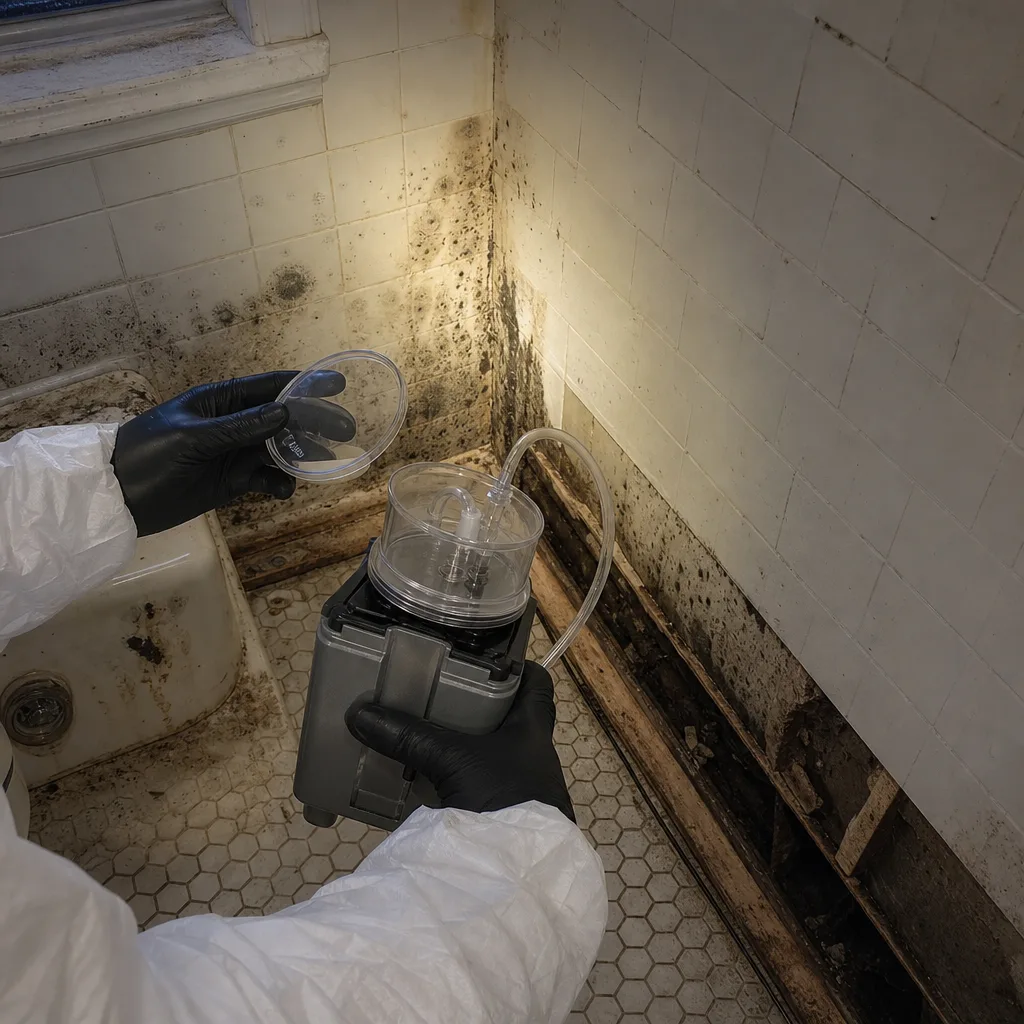
Virus & Bacteria Decontamination
After a confirmed illness event in a shared lobby, gym, or mailroom, FiDi boards and building managers need documented decontamination before reopening. We follow IICRC and CDC-aligned protocols for viral and bacterial contamination, run ULV fogging where appropriate, and provide the post-job documentation boards demand. In occupied buildings, we schedule work during low-traffic windows and post necessary notices.
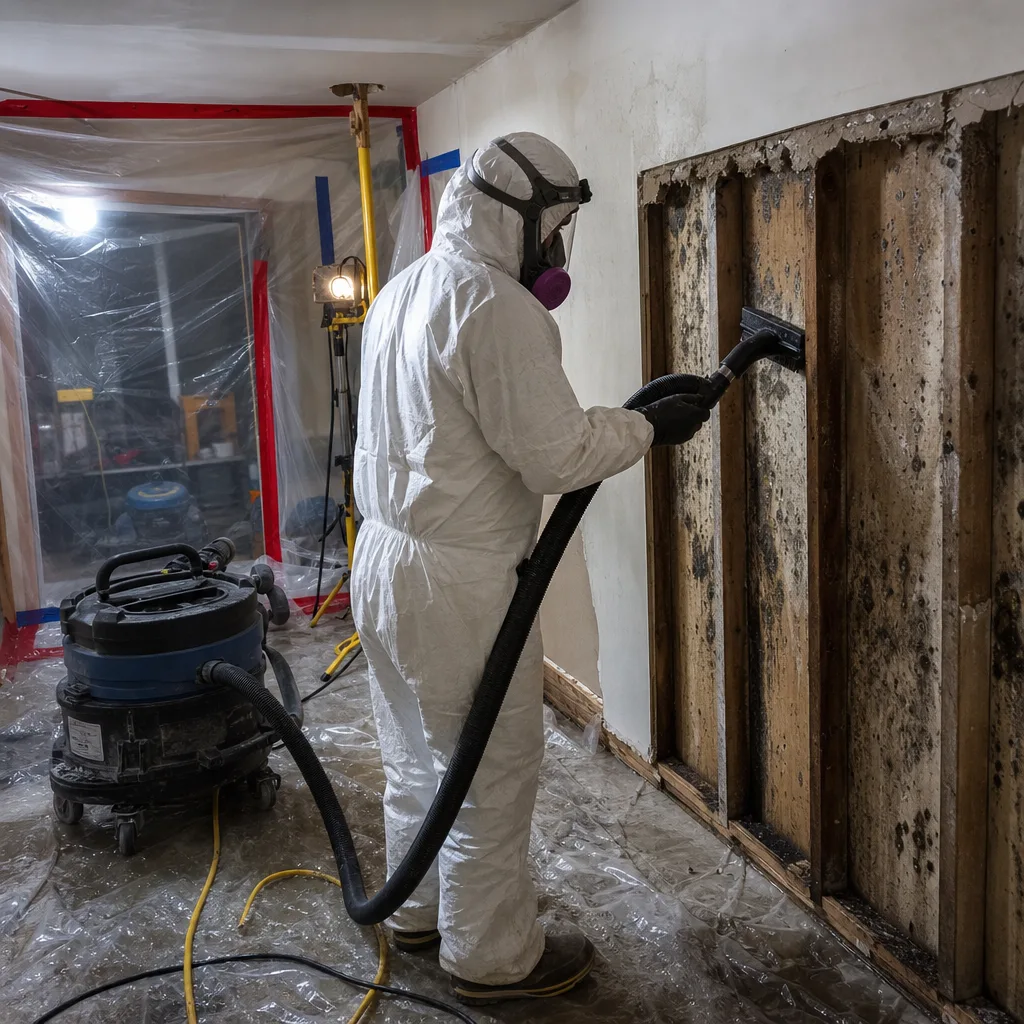
Odor Neutralization
Odors in Financial District buildings typically come from sewage, dead pests in wall cavities, or long-standing moisture in subgrade spaces. In pre-war buildings, the smell can travel through shared air paths for floors. We find the source, not mask it. Hydroxyl generators and activated oxygen treatments run under controlled occupancy rules, and we verify results with the resident or property manager before closing out.
Air Duct Sanitization
Ductwork in Financial District high-rises runs through decades of accumulated dust, moisture, and sometimes post-Sandy salt film. We inspect supply and return plenums, run HEPA vacuuming and brush agitation where needed, and apply EPA-registered antimicrobials to duct interiors. For occupied co-ops and condos, we isolate the duct run and run the treatment without disturbing adjacent units.
Commercial-Grade Fogging
ULV and thermal fogging delivers disinfectant into spaces that are impossible to wipe by hand: inside HVAC plenums, above drop ceilings, behind built-in furniture. In Financial District, fogging is standard after Category 3 sewage events and post-illness cleanups. We run it under containment, verify dwell times, and log everything for the board and the carrier.
Sanitization Services Costs in Financial District, NY
What you’ll pay in Financial District depends on what happened and where. A straightforward deep disinfection of a 400-square-foot lobby or fitness room runs $450-$900. Air duct sanitization for a single condo unit is typically $600-$1,200, while full plenum treatment in a pre-war tower with multiple risers can run $2,500-$5,000. Post-sewage Category 3 jobs in subgrade garages or mechanical rooms start around $1,200 and climb based on square footage, containment needs, and chloride testing. Tidal saltwater jobs with marine-grade washdown and fogging typically fall between $2,000 and $6,000 depending on the size of the space and access difficulty.
Most insured losses cover the bulk of sanitization after deductible. Our free visual inspection gives you a firm line-item scope before work starts. No surprises on the bill, and we bill your carrier directly.
We Also Serve Cities Near Financial District
Floodline Restoration Co. runs crews throughout the New York metro from our New York City office, and we handle sanitization jobs in Financial District plus nearby Staten Island communities. If you’re in Midland Beach, New Springville, Oakwood, or Travis – Chelsea, call the same number: (640) 400-9404.
Serving Financial District, NY - Our Local Coverage Area
We’re based in the Financial District area and know this community well. Use the map below to see our service coverage - if you’re nearby, we can almost certainly help.
Financial District Sanitization Services Questions, Answered
Why does sanitization in Financial District basements require chloride testing after a storm surge?
Chloride testing is required in Financial District basements after storm surge because tidal saltwater leaves behind hygroscopic chloride residues that continue pulling moisture from the air, re-wetting surfaces, and re-activating mold cycles even after the space looks dry. Standard freshwater sanitization will not remove chlorides, so the mold returns within months. We test for chlorides before applying any antimicrobial treatment, and we run a marine-grade washdown when tests come back positive.
How do you sanitize air ducts in a FiDi pre-war co-op without disturbing occupied floors above?
We isolate the duct run with containment and run negative-air pressure inside the affected section before any cleaning or fogging begins. In a pre-war co-op, we access ducts through existing service points or install temporary access panels rather than cutting into finished walls. HEPA vacuums and brush agitation do the mechanical cleaning, then we fog the plenum with an EPA-registered antimicrobial under dwell-time monitoring. Occupied floors above stay unaffected because air moves the way we control it, not the way the building’s natural stack effect wants it to go.
After a sewage backup in a subterranean parking garage near Water Street, what sanitization steps are legally required?
Subterranean garage sewage backups require Category 3 protocols: full containment, removal and disposal of porous materials, extraction of standing water, cleaning of all hard surfaces with an EPA-registered antimicrobial effective against sewage-borne pathogens, and fogging as a final step. In a parking garage, we also address floor drains and sump pits, which often hold contamination after the visible water is gone. Building departments and insurers expect documentation: photos, moisture logs, chemical dwell times, and a written clearance summary. We provide all of it.
Can you sanitize a condo’s custom wood paneling that was splashed with Hudson River saltwater but didn’t warp?
Yes, if the paneling is still dimensionally stable. We start with chloride testing on the wood surface itself. If chlorides are present, we run a gentle washdown using marine-grade surfactant blends that lift salt without saturating the wood, followed by controlled drying with air movement and dehumidification. Once moisture readings confirm the paneling is dry, we apply a wood-safe antimicrobial. The key is acting before the salt has months to degrade the finish or delaminate veneers. Panel that’s already warping will likely need replacement, and we’ll tell you straight in the written scope.
Why do FiDi high-rise boards often require post-sanitization air sampling before reopening a mechanical room?
Boards require post-sanitization air sampling because the mechanical room serves multiple unit types and any airborne contaminant left behind will circulate through the entire building. A swab test says the surfaces are clean. Air sampling says the room’s air is clean enough to reintroduce to occupied spaces. In a high-rise, the board’s management company and engineer need that documentation for liability and for the residents’ trust. We coordinate with the building’s chosen environmental testing firm or bring in one we work with regularly. Results go to the board, the property manager, and your carrier.
How fast can you reach Financial District for a sanitization emergency?
Our crews stage near the Financial District and typically reach Water Street, Broad Street, Exchange Place, or Battery Park corridors within 45 minutes of your call. Call (640) 400-9404 any time, day or night, and a live dispatcher gives you a straight ETA. We don’t book sanitization emergencies for next-day service when contamination is spreading through a building’s HVAC system.
Will my insurance cover sanitization after a sewage backup or storm surge?
Most homeowner and commercial policies cover sanitization when it’s tied to a covered peril like sewage backup, wind-driven water, or a sudden plumbing failure. The deductible applies. We document the loss from the first hour, work directly with your adjuster, and bill the carrier directly so you’re not fronting cash while the claim moves. If the board’s master policy is involved, we coordinate with both carriers. Call (640) 400-9404 for a straight answer on your specific situation.
How long does full sanitization take in a Financial District condo or commercial space?
A contained single-room sanitization with fogging typically takes one full day, including dwell times and clearance. Air duct sanitization for a unit runs a half day to a full day depending on duct complexity. Larger subgrade jobs with chloride washdown, negative-air containment, and mechanical room treatment run two to four days. We’ll give you a firm time estimate in the written scope after the free inspection. You’ll know before we start, not after.
Written by Curt Bowman, Owner at Floodline Restoration Co., serving Financial District and the New York metro since 2010.
Why Financial District Chooses Floodline Restoration Co.
We set the standard for sanitization services in Financial District.
Documented for Your Claim
Every job is photographed before, during and after, with moisture logs where they apply. We hand the full file to your adjuster and bill your insurance directly - you are never the one relaying it.
Licensed & Insured
Fully certified technicians who meet all local and state licensing requirements.
Upfront Pricing
No hidden fees, no surprises. You approve the price before any work begins.
Guaranteed Work
Every repair and installation is backed by our workmanship warranty and satisfaction guarantee.
How It Works in Financial District
Getting your sanitization services handled is simple and fast.
Call or Request a Free Estimate
Tell us about your sanitization services needs and we provide an upfront, transparent quote - no obligation, no hidden fees.
Licensed Technician Dispatched
A background-checked, certified technician arrives in Financial District - typically within 30-60 minutes, with parts stocked on the truck.
Problem Solved, Guaranteed
We complete the job to your full satisfaction, backed by our warranty and 100% satisfaction guarantee.
What happens when you call
- 1A real person answersNo phone trees - talk to a local sanitization services pro.
- 2You get an upfront price rangeHonest numbers before anyone is dispatched. No surprises.
- 3We come out and measureLicensed & insured, at a time that suits you - the visit and the quote are both free.
- 4You get the price in writingLine-itemed, yours to keep, and nothing starts until you say go.
What Financial District Customers Say
Trusted by homeowners across Financial District and surrounding areas.
"Kitchen fire, more smoke than flame. They boarded the broken window the same day, ran air scrubbers for the smell, and got the smoke out of the whole house including the closets upstairs. They dealt with the adjuster directly so I never once had to relay anything."
"Washing machine hose let go while we were at work and the ceiling below was sagging by the time I got home. They had extraction running within the hour and fans placed before dinner. The tech took moisture readings every day and showed me the numbers coming down until they hit dry."
"Water heater flooded the finished side of the basement at two in the morning. A person answered, not a machine, and a crew was pulling water before sunrise. Everything got photographed before they moved a thing, which made the insurance claim painless."
Our Work in Financial District
A look at recent damage restoration projects across Financial District and surrounding areas.
Ready for Sanitization Services in Financial District?
Call now for a free estimate - or request one below. Licensed, insured, and here with fast after-hours help in Financial District.
(640) 400-9404Request a Free Estimate in Financial District
Tell us about your sanitization services needs - we'll respond within the hour.