

Free visual inspection and a written scope of work before any mitigation begins - photos, moisture readings, and drying logs go in your claim file
The scope we write is the scope we bill. Anything new gets shown to you, in writing, before we touch it.
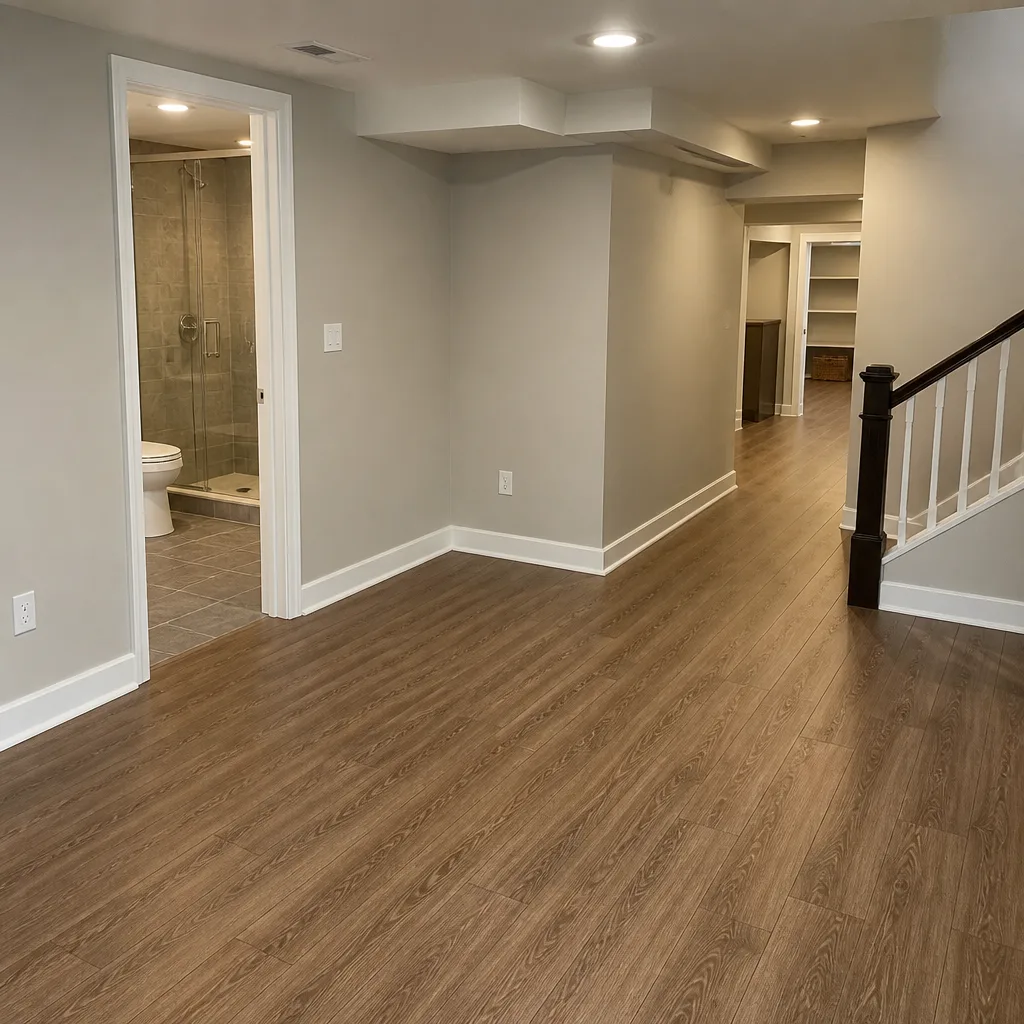
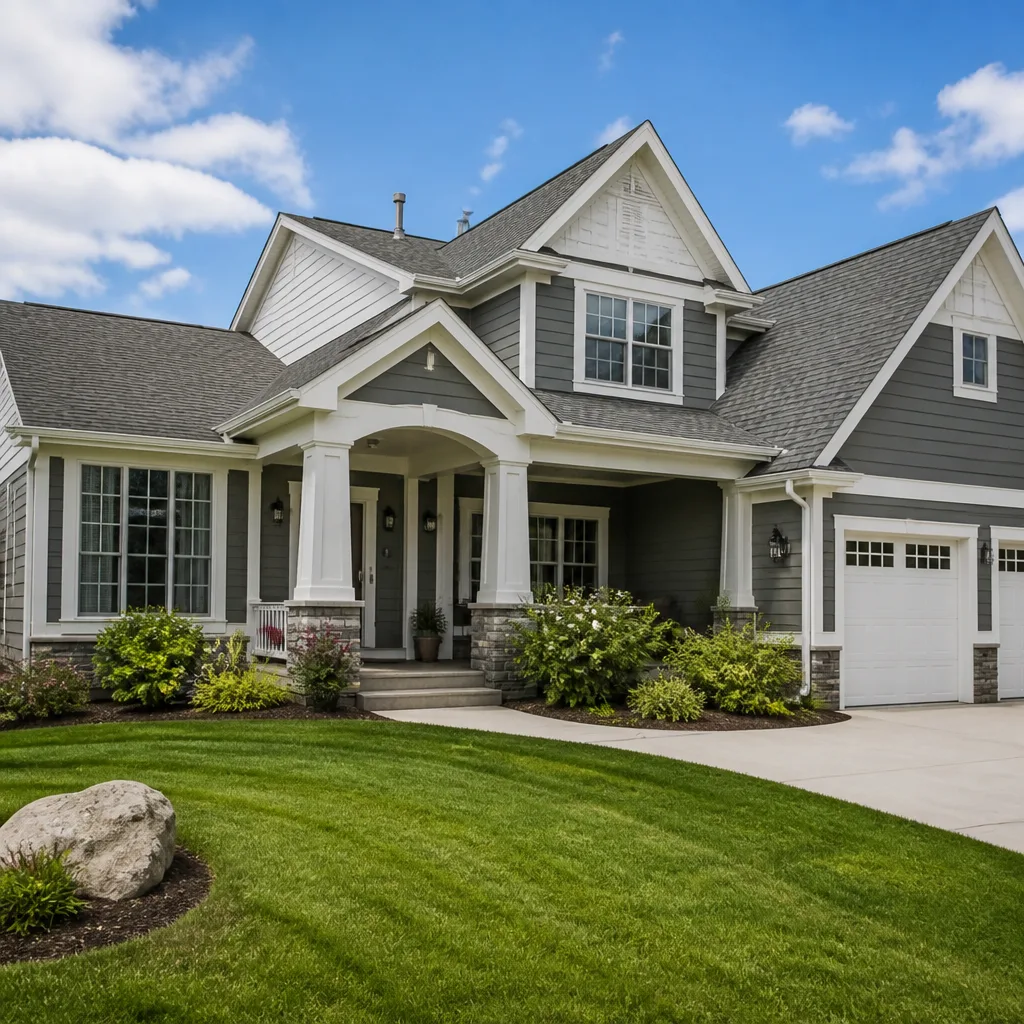
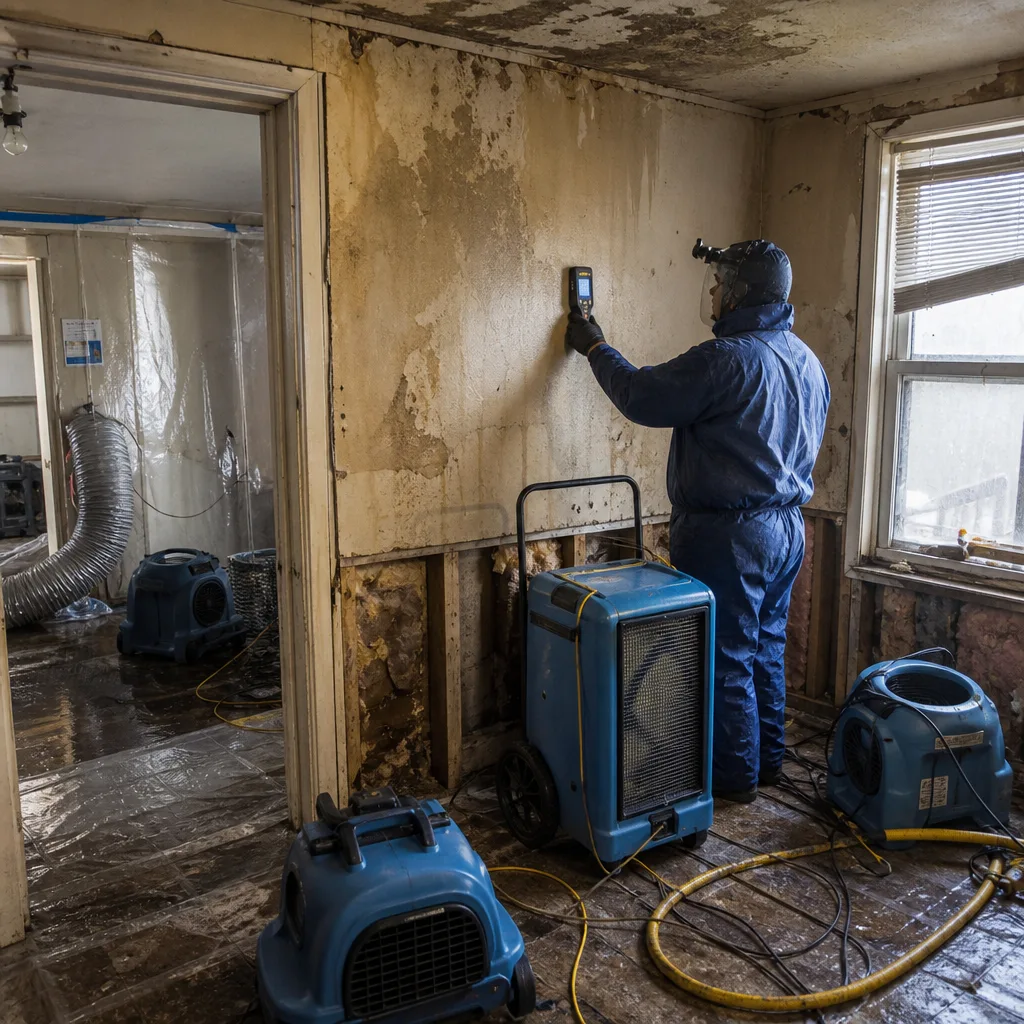 Before
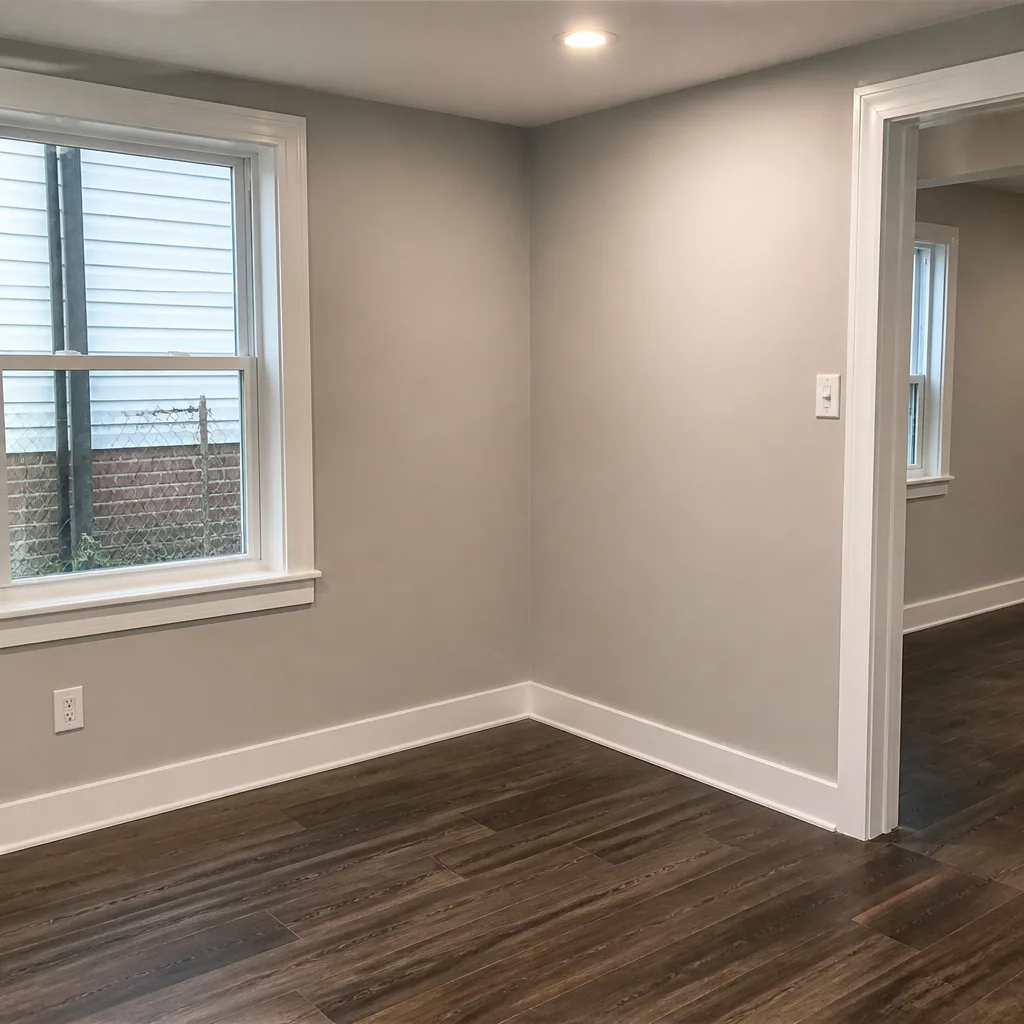 After
After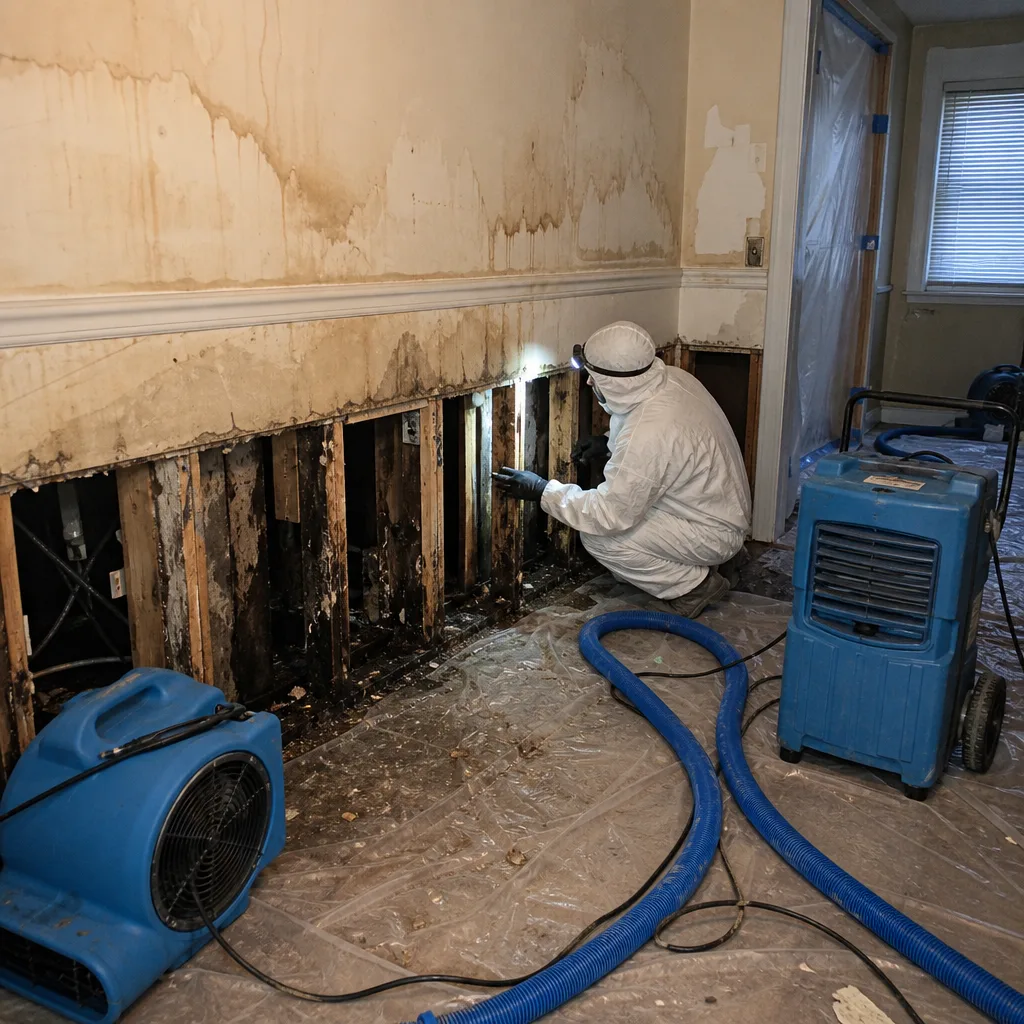 Before
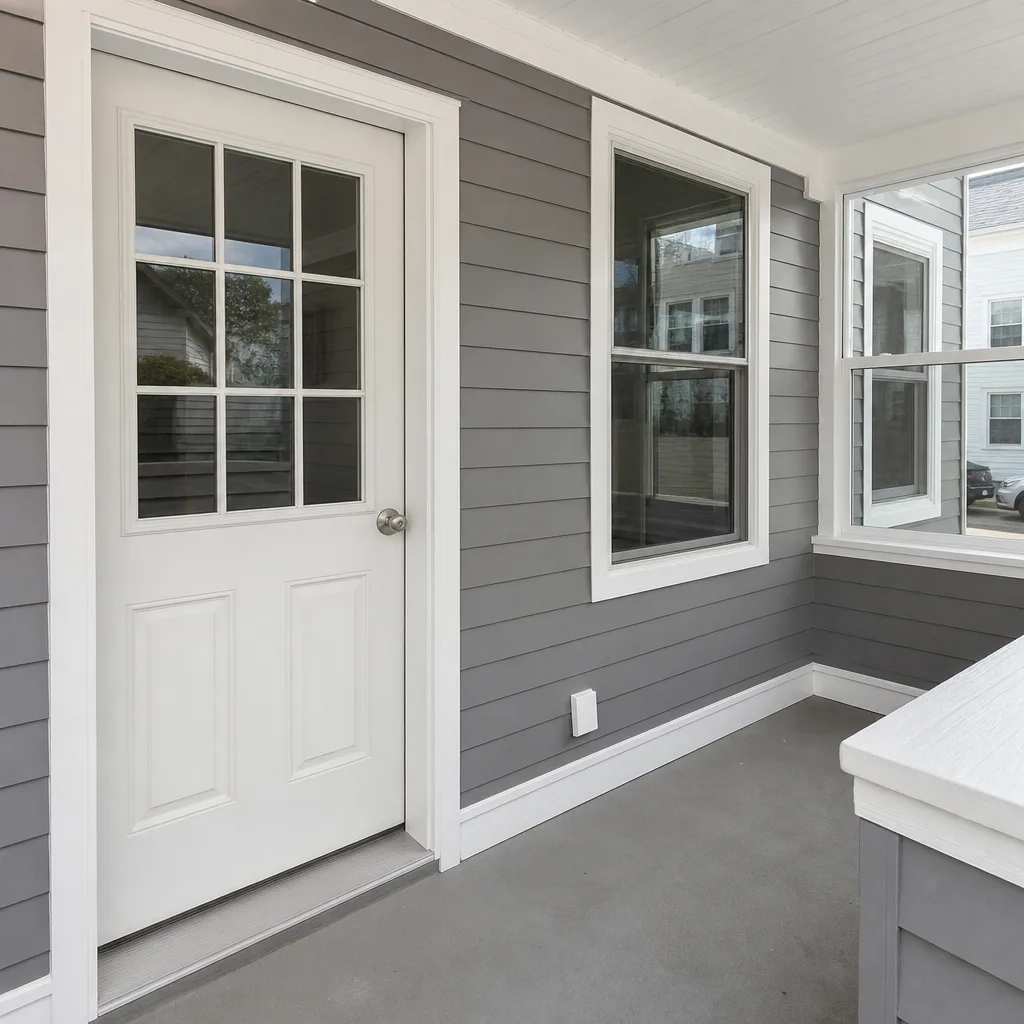 After
After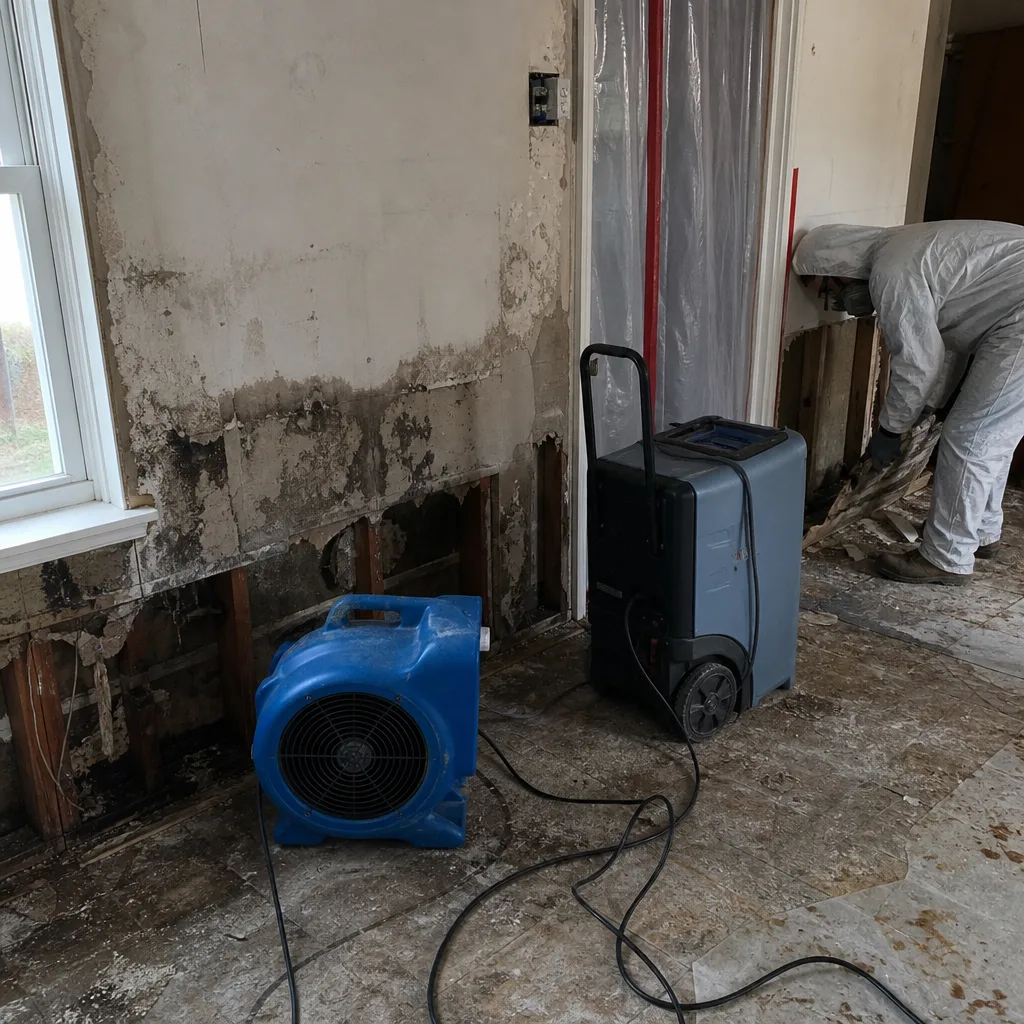 Before
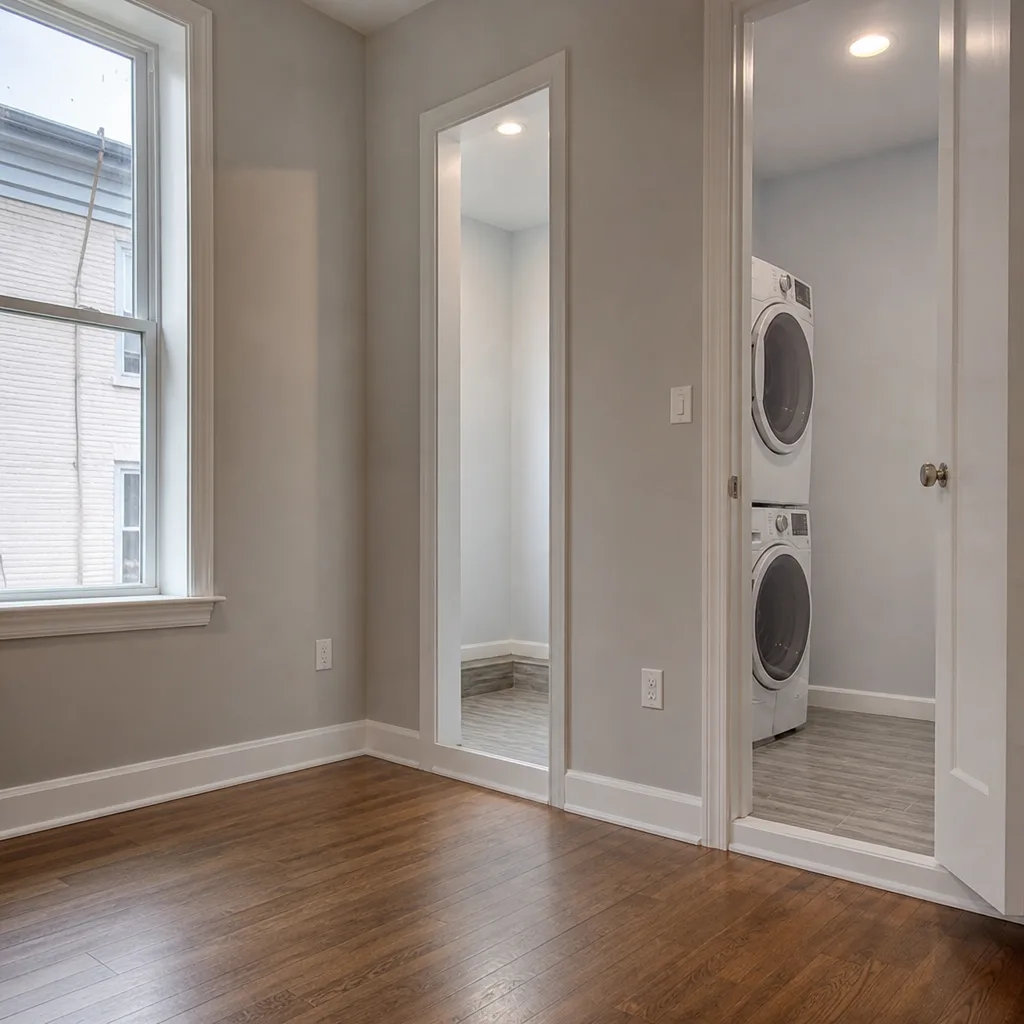 After
After24/7 Emergency Mold Remediation in Harrison
Mold in a Harrison basement after the Passaic rises is not a spring cleaning project. It’s a Category 3 water event that needs containment now, because mold colonies double every 24 to 48 hours in the kind of humidity a river-flooded row house holds. Call (640) 400-9404 and a live dispatcher answers, day or night. We dispatch crews into Harrison within 45 minutes, start with a free visual inspection, and get containment up the same visit. The first hour matters more here than in almost any other Hudson County town because river water is already carrying sewage, silt, and bacteria into porous brick foundations. Every hour that passes drives spore counts higher inside wall cavities you can’t see.
Understanding Mold Remediation Severity in Harrison Properties
Harrison’s mold problems are not the same as a bathroom vent issue in a suburban split-level. Most of the housing stock dates from 1900 to 1940. Brick row houses and two-to-four family walk-ups sit on full basements, many with finished spaces that never got permits, and the mortar joints between those bricks wick groundwater like a sponge. When the Passaic floods, the water is Category 3: contaminated, carrying river sediment, fuel residue, and sewage. That means the mold it leaves behind is not surface staining. It’s growth inside wall cavities, behind vinyl baseboards, and under non-code drywall assemblies installed by previous owners. Our IICRC-certified mold remediation techs start with containment: negative air pressure, HEPA-filtered air scrubbers, and poly barriers before any demolition opens a cavity. Then we moisture-map the room with thermal imaging and hygrometers. In Harrison, we regularly find relative humidity over 90% behind basement drywall even when the surface looks dry. That’s the difference between cleaning visible mold and actually remediating it. Clearance testing confirms spore counts return to normal before we call the job done.
Why Harrison Property Owners Choose Floodline Restoration Co.
- 45-minute response into Harrison neighborhoods. From the moment you call, a uniformed crew is dispatched. We’re not a sales desk. We’re a dispatch board, and we’ll be there when we say.
- A live person answers, 24/7. No phone tree, no message service. At 2 a.m. during a nor’easter, a real dispatcher picks up. That’s been true since Curt Bowman founded the company in 2010.
- IICRC-certified technicians. Our mold teams hold IICRC AMRT (Applied Microbial Remediation Technician) and WRT (Water Restoration Technician) certifications, plus RIA and IFA training. Background-checked and uniformed on every job.
- Free visual inspection. We look at the full basement, not just the wet spot. That means checking foundation walls, crawl spaces, and the area behind finished surfaces where Harrison mold actually hides.
- Direct insurance billing. You don’t play messenger between us and your carrier. We send the photos, moisture logs, and line-item scope straight to the adjuster and bill directly.
- One team from first cut to final sanding. Floodline handles Mold Remediation and the reconstruction that follows. No mid-job handoff, no inherited crew, no arguing over who’s responsible for what.
Our Mold Remediation Process
Inspection & Assessment
We start with a free visual inspection across the whole basement and any crawl spaces, not just the visible mold. Thermal imaging and hygrometer readings map moisture behind finished walls. In Harrison’s pre-war homes, that often means pulling a baseboard and finding growth no one knew was there.
Containment & Stabilization
Before any material is disturbed, we seal the work zone with poly sheeting and run HEPA air scrubbers under negative air pressure. That stops spores from moving into the rest of the house while we open walls and remove contaminated material. For Category 3 river water, this step is non-negotiable.
Source Removal & Material Disposal
Wet drywall, saturated insulation, and any porous material with confirmed growth comes out. In Harrison basements finished without permits, that frequently means removing entire non-code wall assemblies. We dispose of all contaminated material through proper channels.
Drying & Dehumidification
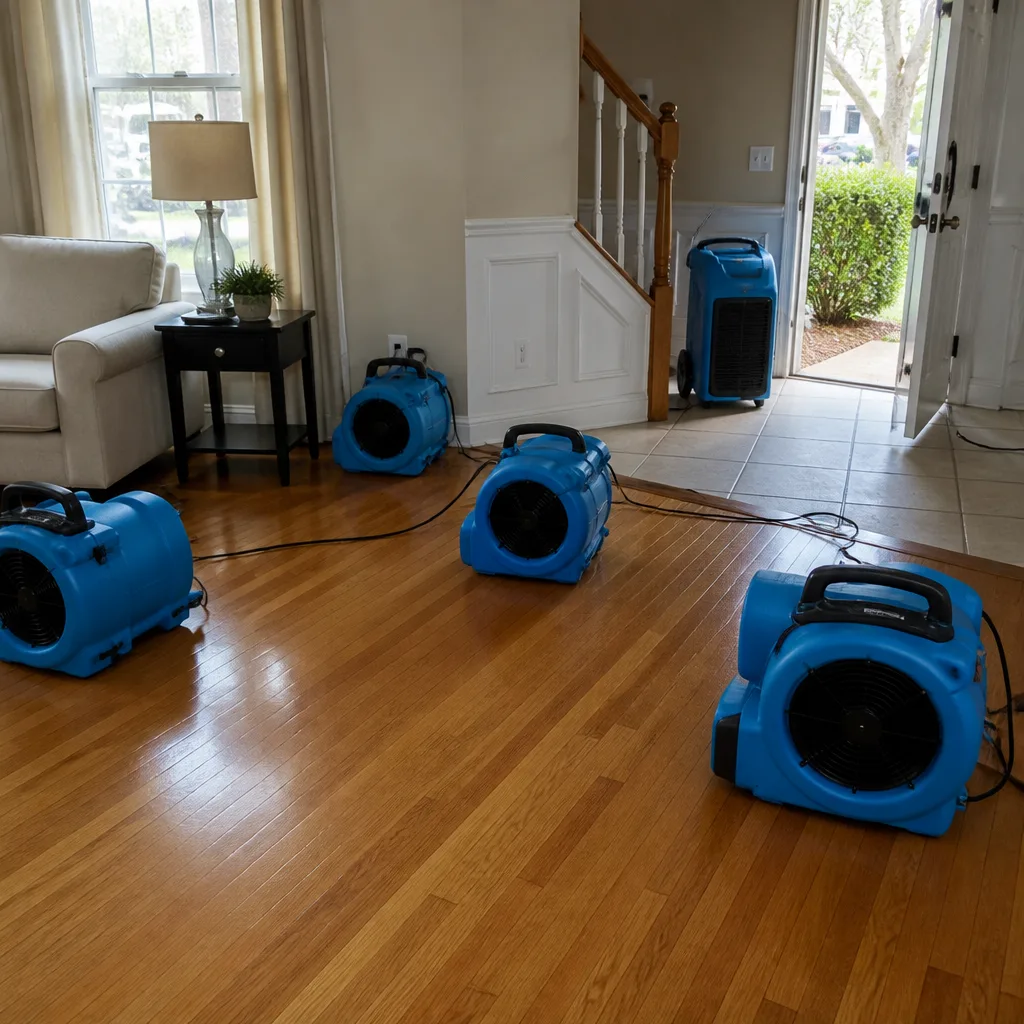
We set Dri-Eaz and Phoenix dehumidifiers plus XPOWER air movers and run them until drying logs show the structure hits pre-loss moisture levels. Daily readings are logged and shared with you and your insurer. In river-flooded Harrison basements, this typically runs four to seven days, not two.
Antimicrobial Treatment & Cleaning
All remaining surfaces get treated with EPA-registered antimicrobials. Concrete floors, foundation walls, and any salvageable framing are scrubbed, fogged, and verified. This step is why misclassifying river water as clean water guarantees mold returns. We don’t skip it.
Rebuild & Restoration
We put the basement back together properly: code-compliant framing, new drywall, baseboards, and any electrical corrections the disclosed scope requires. The same crew that read the moisture map on day one hands you the finished room and the 90-Day Done Right Promise in writing.
Need Emergency Mold Remediation in Harrison Now?
Crews minutes away, answering live 24 hours a day. The sooner we start, the less it costs.
Working With Your Insurance Company
Most Harrison homeowners filing mold claims after a river flood are already exhausted. They’ve been through the water damage, the initial cleanup, and now a remediation estimate that looks three times what they expected. We handle the insurance piece so you don’t have to. From the first hour, our documentation matches what adjusters actually require: room-by-room photos, moisture readings taken before and during drying, and a line-item scope that separates remediation from reconstruction. We talk to the adjuster directly, send the drying logs daily, and bill the carrier on approved work. You get a clear picture of what’s covered and what isn’t before we cut a single wall open.
What We Provide Your Insurer
- Thorough documentation of the loss
- Photos of all damage, room by room
- Moisture readings and drying logs
- A detailed, line-item scope of work
- Direct coordination with your carrier
Built for Harrison’s Loss Calendar
Harrison’s mold season does not follow a simple calendar. It follows the Passaic. Nor’easters from late fall through early spring push the river over its banks, and the water sits in basements for days before pumps can move it. By then, Category 3 water has soaked into mortar joints, floor framing, and the drywall somebody hung over a foundation wall twenty years ago. Spring thaw adds groundwater seepage through deteriorated parging, so basements that stayed dry during the winter suddenly read 80% relative humidity on our hygrometers by mid-March. Summer thunderstorms bring flash flooding to low-lying streets near the river, and the heat accelerates mold growth inside wall cavities to the point where a two-week delay turns a $3,000 cleanup into a $14,000 remediation and rebuild. Then winter’s freeze-thaw cycles crack the brick foundation walls on older row houses, and the cycle starts again. This is the reality of owning a pre-war home in a FEMA flood zone, and it’s why Harrison property owners need a restoration company that understands riverine water, not just rainwater.
Mold Remediation Across Harrison’s Neighborhoods
Mold Remediation in Harrison follows the building stock block by block. Over in the residential grid between Frank E. Rodgers Boulevard and the river, the housing is almost entirely brick row houses from the 1920s and 30s. Full basements, shared party walls, and foundations that have been absorbing Passaic moisture for nearly a century. Mold here starts behind peeling parging and spreads up into floor joists. Near Cleveland Avenue, we see some of the oldest housing stock in town, the kind where basement damage from the last flood was never properly dried before new drywall went up over it. Around the Red Bull Arena waterfront corridor, the buildings are newer, post-2010 construction, but that brings its own pattern: envelope defects, humidity trapped inside energy-efficient envelopes, and warranty claims that require the kind of photo and moisture documentation most contractors don’t bother to keep. We do. In the streets south of Harrison Avenue near the hospital, two-family walk-ups predominate, many with below-grade apartments. Any mold job there requires checking whether the unit was built to code, because that changes the scope, the timeline, and the liability picture for everyone involved.
Specialized Mold Remediation Services We Offer in Harrison
Mold Inspection & Testing
We start with a visual inspection, then use thermal imaging and hygrometers to find moisture you can’t see. For Harrison homes in the floodplain, we recommend air sampling and surface swab testing whenever mold is suspected behind finished walls. Results come back from a certified lab and guide the remediation scope.
Category 3 / Black Mold Remediation
This is the service Harrison needs most. Passaic floodwater is Category 3: river water carrying sewage, fuel, and silt. The mold that follows is not cosmetic. Remediating it means full containment, HEPA air scrubbing, removal of saturated porous materials, and antimicrobial treatment on every surface the water touched. Skipping any of these steps guarantees the mold returns in weeks.
Mold Removal
Physical removal of colonized materials: drywall, insulation, carpet, baseboards, anything porous that cannot be properly cleaned. In Harrison’s older basements, that often means removing what turned out to be an unpermitted interior wall, and we’ll tell you what we find before we expand the scope.
Air Quality Restoration
After source removal and antimicrobial treatment, we run HEPA air scrubbers through the full drying period, then verify with clearance testing that spore counts in the air match or beat outdoor baseline levels. For Harrison homeowners with respiratory conditions or young children, this step is the one that matters most.
Crawl Space Treatment
Many Harrison row houses have shallow crawl spaces under the front or rear extension. These spaces trap river moisture for months after a flood. We clean out contaminated soil, treat framing with antimicrobials, and recommend encapsulation or vapor barrier installation where groundwater intrusion is chronic.
Moisture & Humidity Control
Even without a flood event, Harrison basements run humid. We install and service dehumidification systems sized for below-grade river-adjacent spaces, plus sump pump upgrades and drainage corrections that address the groundwater seepage that feeds mold cycles every spring.
What happens when you call
- 1
A real person answersNo phone trees - you reach a local pro.
- 2
You get an upfront price rangeHonest numbers before anyone is dispatched.
- 3
A background-checked tech heads outLicensed & insured, dispatched right away.
- 4
You approve before work beginsNothing starts until you say go.
Mold Remediation Costs in Harrison, NJ
Actual Harrison prices track the severity of the water source and the age of the building. A contained mold cleanup in a small unfinished basement, where the problem is limited to one corner wall, typically runs $1,800 to $3,500. A full Category 3 mold remediation in a finished Harrison basement with unpermitted drywall assemblies, requiring containment, demolition, structural drying, antimicrobial treatment, and rebuild, generally lands between $9,000 and $18,000. Crawl space treatment alone runs $2,200 to $5,000 depending on square footage and whether encapsulation is needed. What moves the price: how long the water sat, whether builders’ materials were code-compliant, how much finished space must be removed, and whether the foundation itself needs parging repairs before new materials go up. Insurance covers mold remediation when it stems from a covered peril like a river flood under a flood policy or a burst supply line under homeowners insurance. The free visual inspection gives us the information to give you a written line-item scope before any work starts, so you know exactly what you’re approving.
We Also Serve Cities Near Harrison
The same crews that handle river-flooded Harrison basements also cover Kearny, Jersey City, Secaucus, and Bayonne. Floodplain geography and pre-war housing stock carry similar mold patterns across these towns, but Harrison’s Passaic exposure makes it the most complex market we work in Hudson County.
Serving Harrison, NJ - Our Local Coverage Area
We’re based in the Harrison area and know this community well. Use the map below to see our service coverage - if you’re nearby, we can almost certainly help.
Harrison Mold Remediation Questions, Answered
How does Passaic River flooding affect mold remediation in Harrison basements compared to ordinary water damage?
River flooding brings Category 3 water, which is contaminated with sewage, silt, and fuel residues. That means every remediation step has to be more aggressive: full containment before any demolition, HEPA air scrubbing throughout, complete removal of saturated porous materials, and antimicrobial treatment on every surface. Clean water from a burst supply line does not require the same protocol. In Harrison, most basement floods that follow a nor’easter or heavy spring rain are Category 3, not Category 2. Misclassifying this is the single most common reason mold returns.
Why do unpermitted basement rentals in Harrison complicate mold jobs?
A lot of Harrison basements were finished into rental units without permits. That means non-code drywall assemblies, unlicensed electrical panels, and no fire-rated separation from the main house. When mold remediation starts, opening a wall often reveals these issues. We have to disclose them and adjust the scope, which changes timelines and liability documentation. It’s something suburban contractors rarely handle, and it’s routine here. We’ll tell you what we find before expanding work.
Do Harrison’s brick row houses need different mold remediation than newer Red Bull Arena-area buildings?
Yes. Pre-war brick row houses have porous mortar joints, deteriorated parging, and foundations that wick groundwater, so we treat the masonry itself, not just the finished surfaces in front of it. Newer Red Bull Arena corridor buildings tend toward envelope defects and trapped humidity inside tighter construction. The containment and drying strategy differs between the two. Older homes usually need longer drying periods and masonry attention; newer buildings more often need humidity source identification and ventilation correction.
What does a mold remediation timeline look like for a Harrison basement after a nor’easter flood?
After a nor’easter floods a finished Harrison basement, expect five to nine days from first inspection to finished remediation and rebuild. Day one: inspection, containment, and source removal. Days two through six: structural drying with daily moisture readings until logs hit pre-loss conditions. Day six or seven: antimicrobial treatment and clearance testing. Day eight to nine: rebuild of removed assemblies. Bigger basements with multiple finished rooms can run two weeks. We’ll lay out a written timeline after the initial assessment.
Can mold grow in a Harrison basement even without a flood event?
Yes, and it does every year. Groundwater seeps through aged mortar joints and cracked parging, raising relative humidity into the 70-80% range through winter and spring. Combined with freeze-thaw damage to brick foundation walls, that’s enough to feed mold growth behind finished walls even in homes the Passaic never reached. We find this pattern constantly in the residential streets between Frank E. Rodgers Boulevard and the river. Regular humidity monitoring and dehumidification sizing are the only long-term answer.
How fast can someone actually get to my Harrison basement?
Within 45 minutes. We dispatch from a local crew base, and a live dispatcher takes your call day or night. In Category 3 situations, the first hour matters because mold begins expanding rapidly in a warm, saturated basement. Call (640) 400-9404 and we’re moving.
Will insurance cover mold remediation after a Passaic flood?
If you carry a flood policy through FEMA’s National Flood Insurance Program, mold remediation that stems from river flooding is generally covered as part of the flood loss. Standard homeowners insurance does not cover river flooding, but it does cover mold from a sudden burst pipe. We document everything and bill your carrier directly, and we’ll help you understand your coverage before the work is approved.
What should I do in the first 30 minutes after discovering mold in my Harrison basement?
Do not disturb the mold. Don’t scrub it, don’t run fans, don’t pull up baseboards. Agitating mold releases spores into the air and spreads the problem through the house. Shut the basement door, turn off any HVAC that draws air from the basement, and call us at (640) 400-9404. A free visual inspection tells us whether you’re looking at a small contained issue or a full Category 3 remediation.
In a 1920s brick row house on Cleveland Avenue, our techs found mold behind unpermitted basement drywall after the Passaic rose. Moisture readings showed 98% relative humidity behind vinyl baseboards, so we set containment, removed the non-code assemblies, and ran Dri-Eaz dehumidifiers for five days until drying logs hit pre-loss condition. That’s the standard of work Harrison property owners should expect.
If you’ve got mold in a Harrison basement, or you’re not sure whether you do, call (640) 400-9404. We’ll be there when we say, we’ll tell you what we find without overselling, and we’ll stand behind the work in writing.
Written by Curt Bowman, Owner at Floodline Restoration Co., serving Harrison and Hudson County with mold remediation, water damage restoration, and full reconstruction since 2010.