

Free visual inspection and a written scope of work before any mitigation begins - photos, moisture readings, and drying logs go in your claim file
The scope we write is the scope we bill. Anything new gets shown to you, in writing, before we touch it.
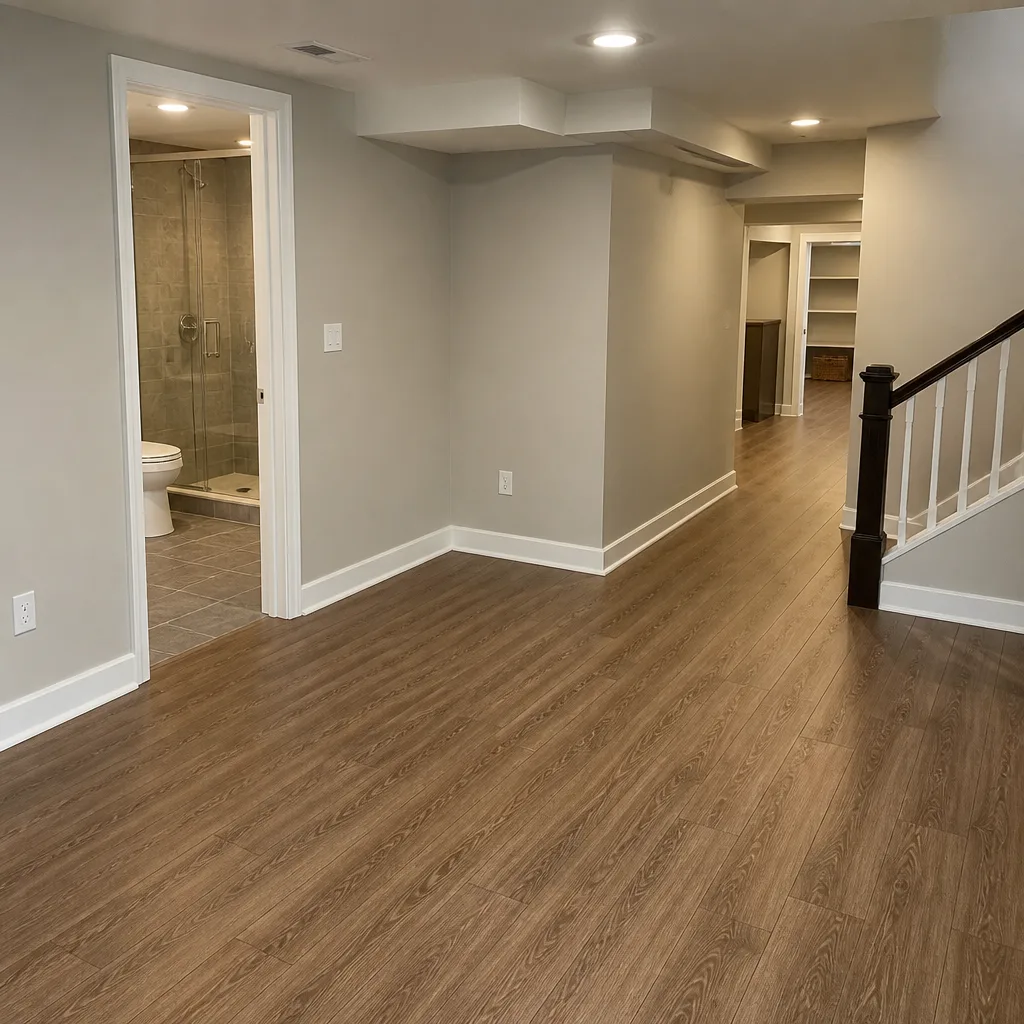
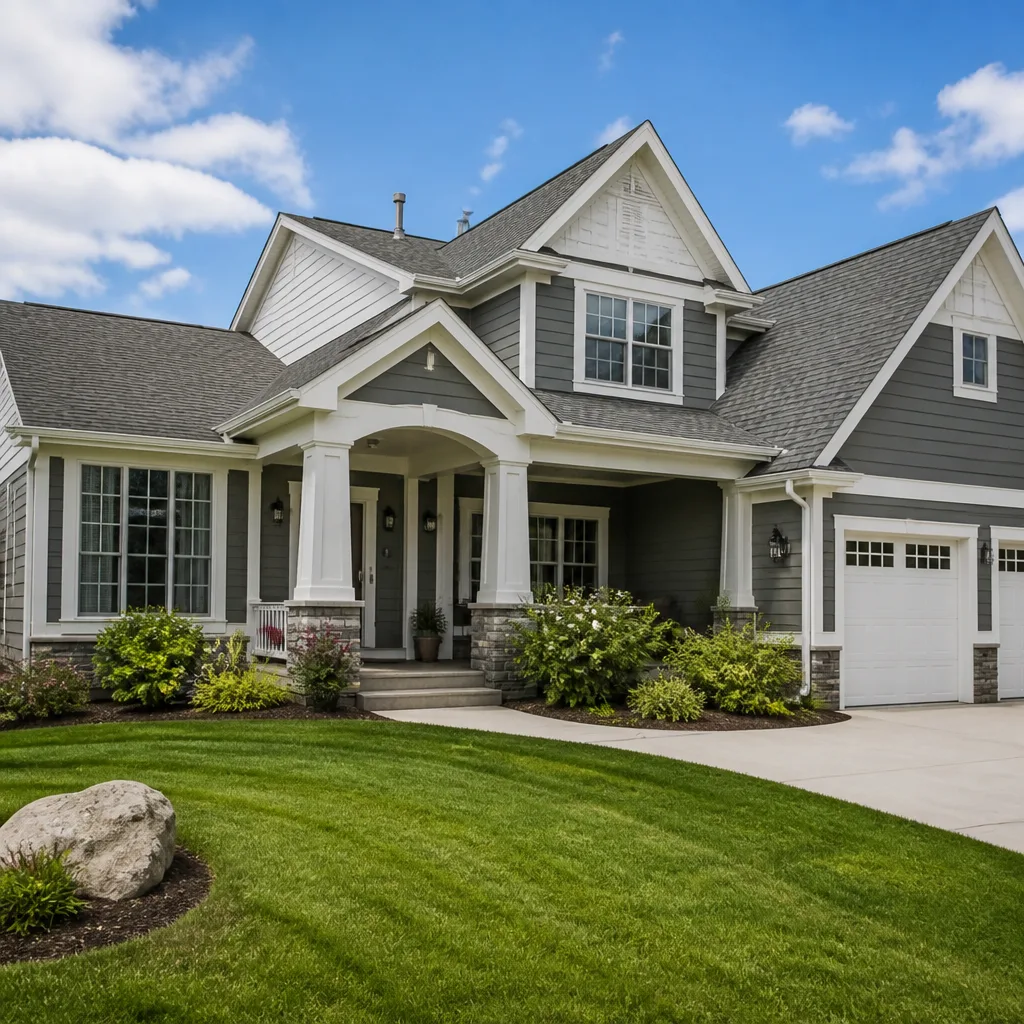
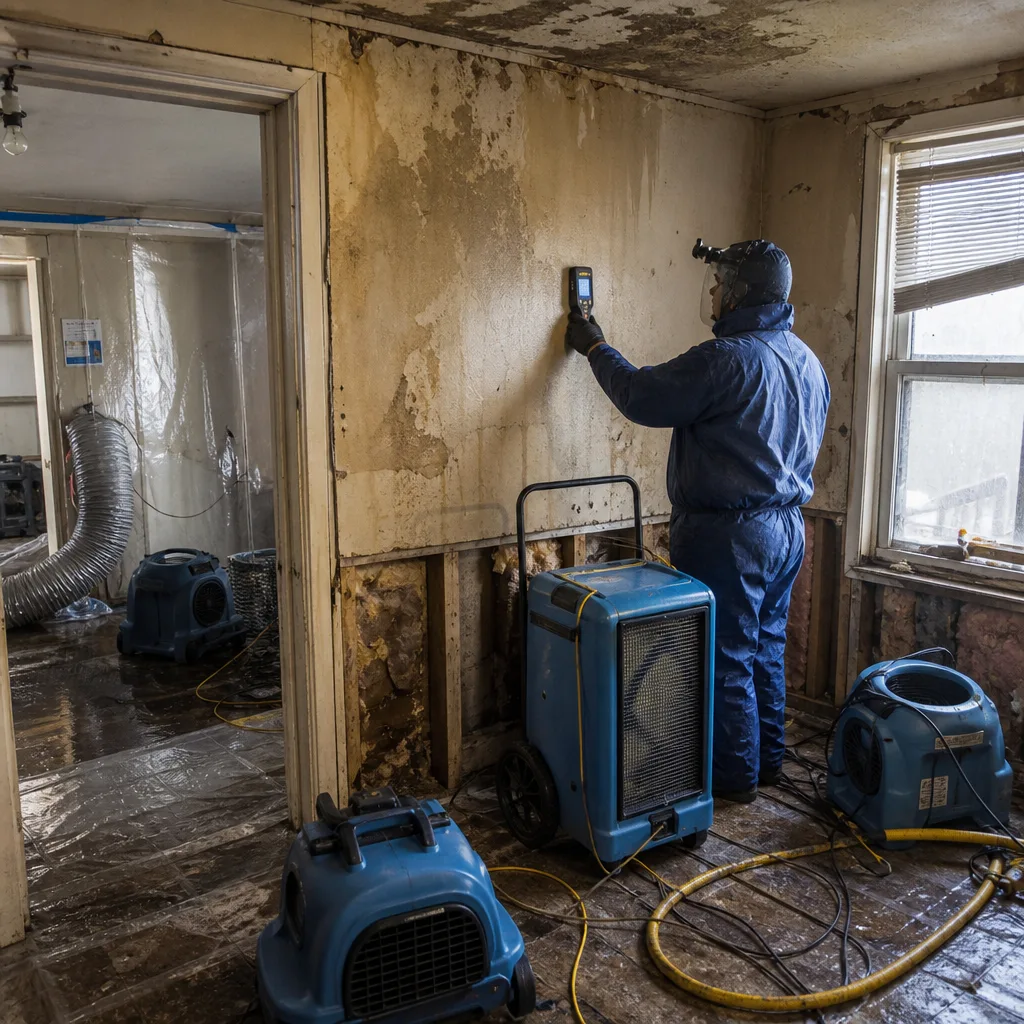 Before
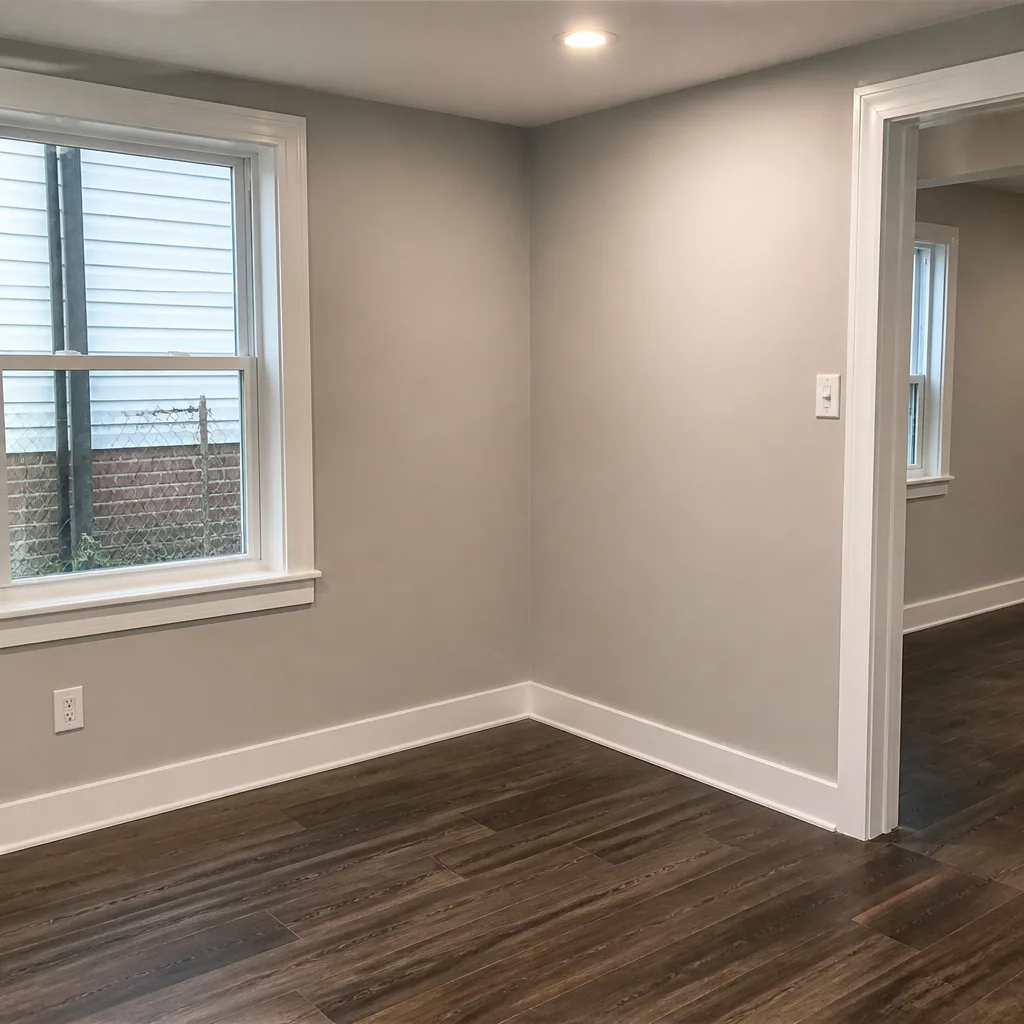 After
After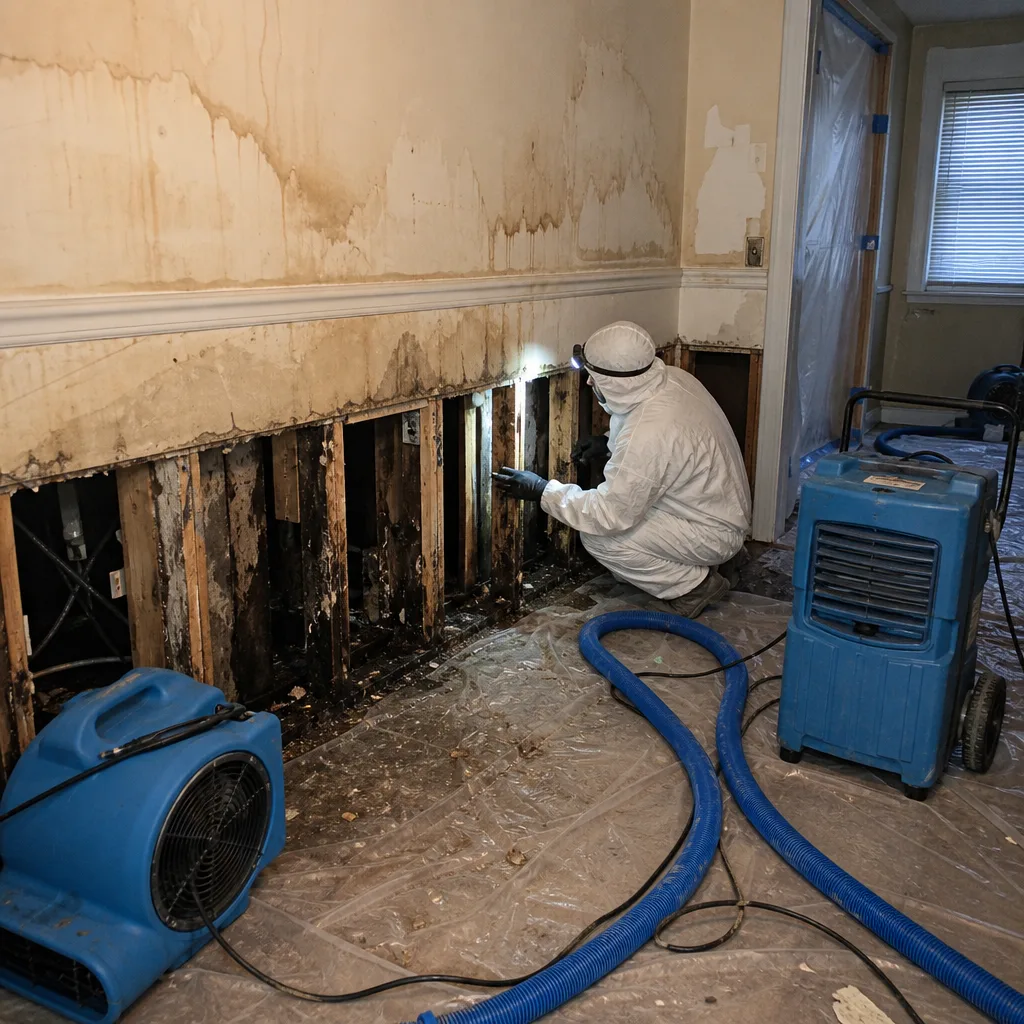 Before
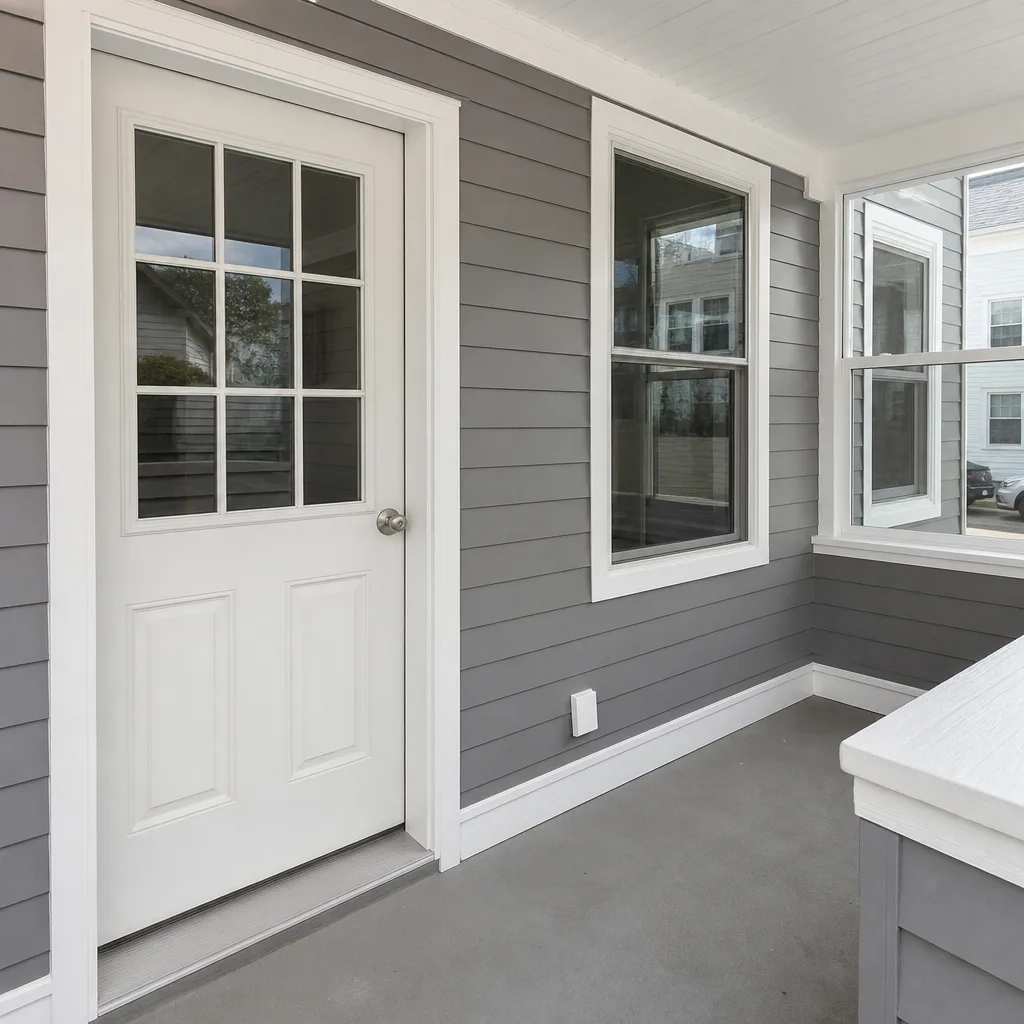 After
After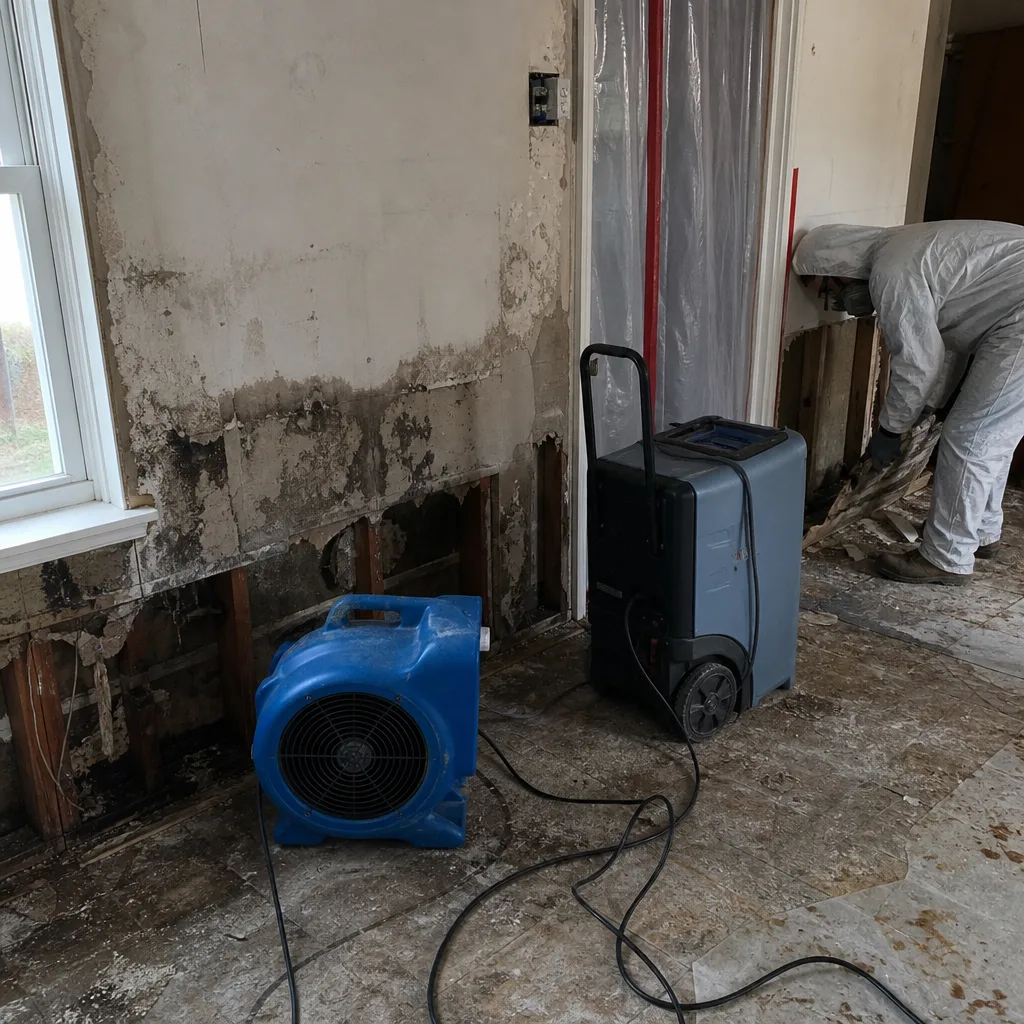 Before
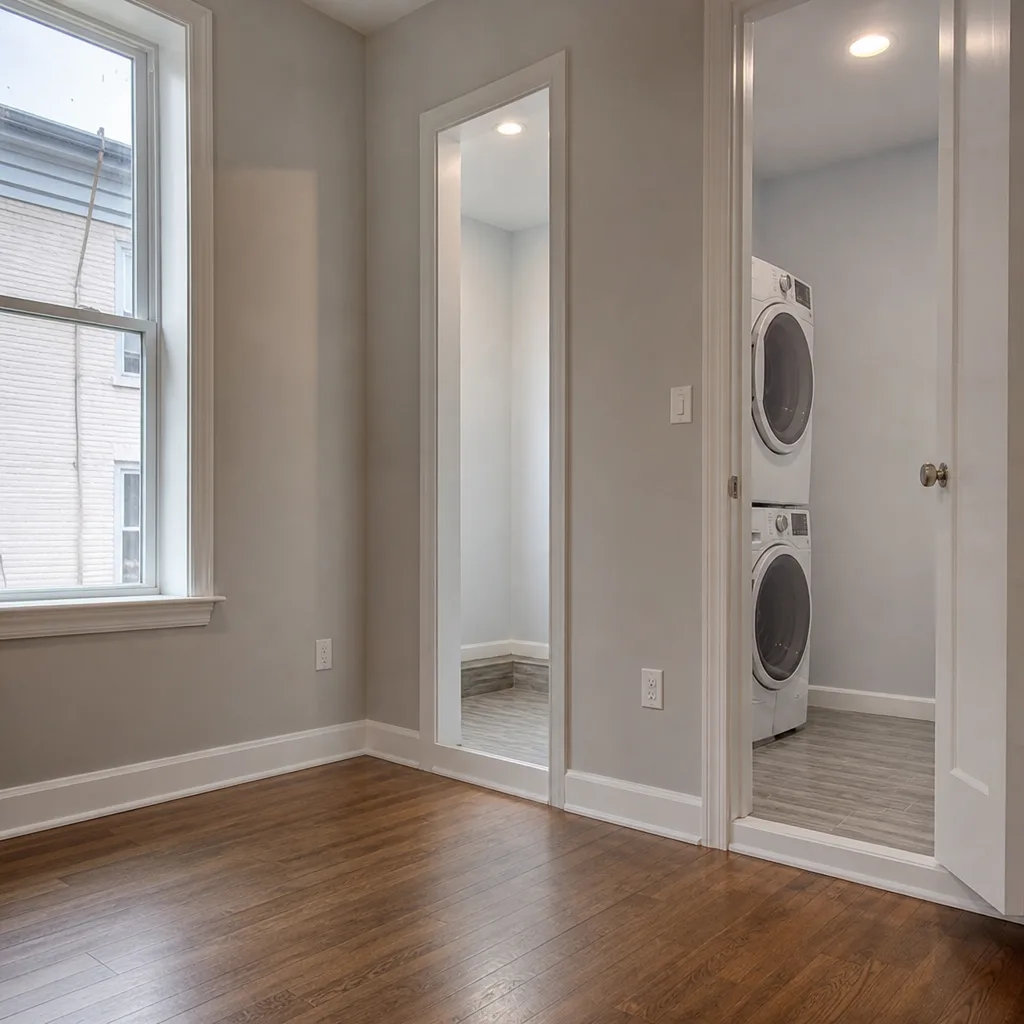 After
After24/7 Emergency Biohazard & Crime Scene Cleanup in Harrison
Biohazard and crime scene cleanup in Harrison, NJ typically runs $1,500 to $7,500 depending on the scope, and most jobs start within 45 minutes of your call. That’s not a sales promise. That’s how our dispatch board works. When blood, bodily fluid, or unattended death cleanup is left waiting, the damage spreads into porous surfaces, subflooring, and drywall, and the cost climbs with every hour. Call (640) 400-9404 and a live person answers, any time, day or night. A certified crew reaches your Harrison property fast because we know the streets, the building types, and the Passaic River floodplain that shapes this town.
Biohazard work in Harrison carries a burden most towns never face. River water that backs into a Davis Avenue basement isn’t just wet. It’s Category 3, meaning it’s carrying sewage, bacteria, and whatever the Passaic picked up upstream. That changes everything about containment, disposal, and liability. You don’t clean it like a spill. You treat it like a contamination event, because that’s what it is.
Understanding Biohazard & Crime Scene Cleanup Severity in Harrison Properties
Harrison’s housing stock is mostly early-to-mid 20th-century brick row houses and two-to-four family walk-ups with full basements. Many of those basements have been finished, and plenty were done without permits. When a biohazard event happens in one of those spaces, the severity depends on what’s behind the walls. Porous mortar joints, aging cast-iron drain lines, and deteriorated parging all hold moisture and harbor pathogens long after surface cleaning. A crew that only wipes down visible surfaces leaves the wall cavity contaminated.
Category 3 water from a river flood or a sewage backup requires full containment: HEPA air scrubbers running negative pressure, removal of saturated drywall and carpet, antimicrobial treatment on exposed framing, and moisture mapping before any rebuild. Trauma and unattended death cleanup carries the same discipline when fluids have soaked into subflooring or joists. In Harrison’s older homes, those joists are often full-dimensional lumber, which absorbs more deeply than engineered framing in newer construction. That means more drying time, more testing, and a scope that has to be honest from the first walkthrough.
Why Harrison Property Owners Choose Floodline Restoration Co.
- 45-minute response commitment - our local crews stage from the metro area, and Harrison is a tight grid of numbered streets and row blocks, so we’re there fast.
- 24/7 live answer - a real person picks up at 2 a.m. Not a recording. Not a call-back queue. A dispatcher who knows Harrison and can route a crew while you’re still on the line.
- IICRC-certified crews - our technicians hold IICRC, RIA, and IFA credentials, including WRT and AMRT certifications for water and microbial remediation, so the work is done to code and to standard.
- Free visual inspection - before any work starts, we walk the space with you, explain what we’re seeing, and give you a written scope. No surprises on the bill.
- Direct insurance billing - we document everything from the first hour and bill your carrier directly, so you never play messenger between Floodline and a claims adjuster.
- One team from extraction to reconstruction - the same crew that sets up containment handles the drying, the cleaning, and the rebuild. No mid-job handoff, no inherited subcontractor who doesn’t know your file.
Our Biohazard & Crime Scene Cleanup Process
Inspection & Assessment
We walk the entire affected area with a thermal imaging camera and hygrometer to find what’s wet, what’s contaminated, and what’s hiding behind walls. In Harrison basements, that often means pulling back a corner of paneling or vinyl to check framing. We give you a written scope before any tool comes off the truck.
Extraction & Stabilization
For floodwater and sewage events, we extract standing water with truck-mounted units and remove gross contamination. For blood and bodily fluid, that means removing saturated materials and sealing them for medical-waste disposal. The goal is stopping the spread within the first hour.
Drying & Dehumidification
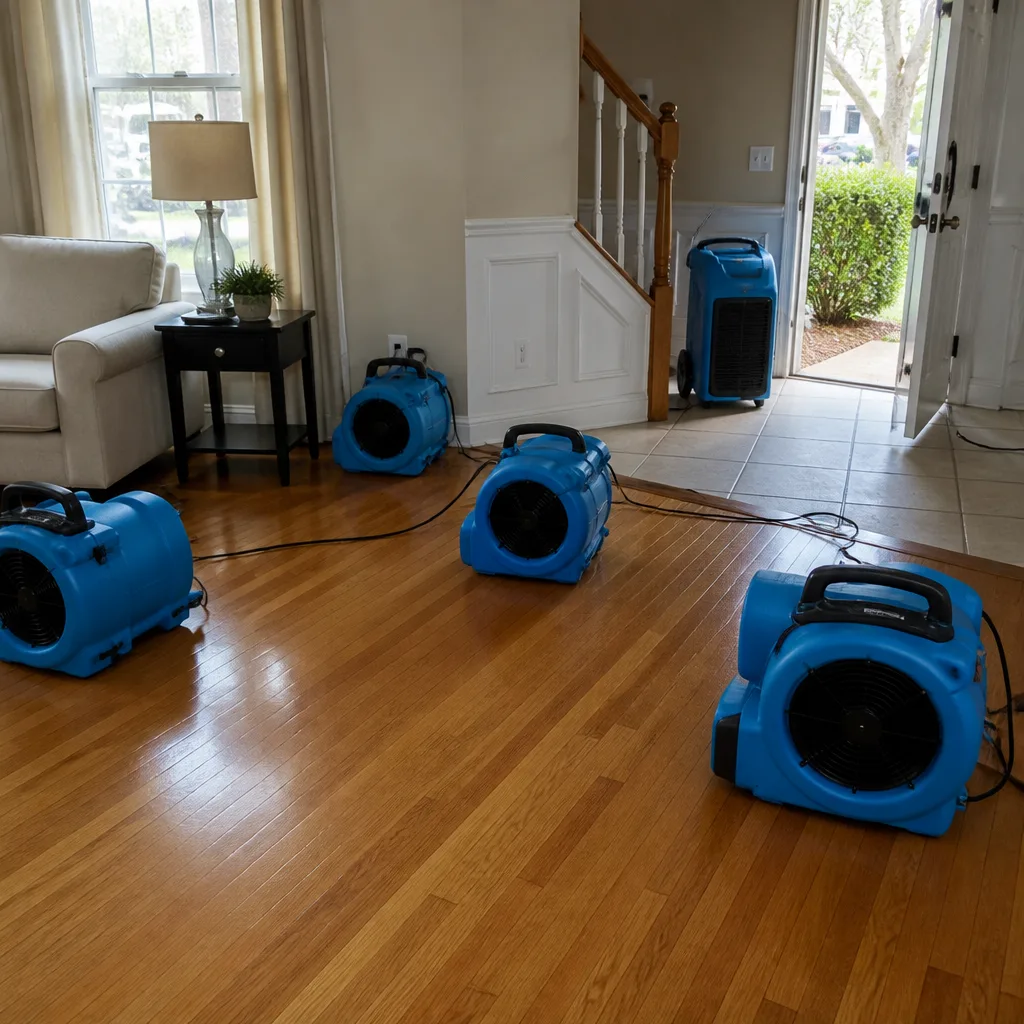
We set up Dri-Eaz dehumidifiers and air movers, running a drying program mapped to the specific moisture readings we took on day one. Daily readings get logged. The log goes to you and your carrier. We dry until the dry standard is met, not until the calendar says we’re done.
Cleaning & Sanitization
All affected surfaces get cleaned and treated with EPA-registered antimicrobials. HEPA air scrubbers run throughout to capture airborne pathogens. We treat framing, subflooring, and any surface that came into contact with contaminated water or fluids.
Specialty Biohazard Treatment
For trauma, unattended death, and infectious disease events, this is the step where we follow strict protocols for containment, removal, and disposal. Bloodborne pathogen standards apply. We document everything photographically for your insurer and for any regulatory requirements.
Repairs & Restoration
Once the space is clean and dry, we rebuild what was removed. Drywall, flooring, insulation, trim. In Harrison, that often means bringing unpermitted work up to current code, which we flag and discuss with you before we start the rebuild.
Need Emergency Biohazard & Crime Scene Cleanup in Harrison Now?
Crews minutes away, answering live 24 hours a day. The sooner we start, the less it costs.
Working With Your Insurance Company
We’ve spent 15 years learning how carriers want claims documented, and we give them what they need the first time. Photos room by room, a line-item scope, moisture readings, drying logs, disposal manifests. When an adjuster calls with questions, we answer directly. You don’t carry paperwork back and forth. For Harrison specifically, we know how flood claims interact with FEMA flood zone designations, and we document accordingly. The 90-Day Done Right Promise covers our workmanship in writing, and our direct billing means the carrier pays us, not you floating the bill.
What We Provide Your Insurer
- Thorough documentation of the loss
- Photos of all damage, room by room
- Moisture readings and drying logs
- A detailed, line-item scope of work
- Direct coordination with your carrier
Built for Harrison’s Loss Calendar
January in Harrison means freeze-thaw cycles working on brick foundations that have been stressed for eighty years already. Pipes in unheated basements freeze and split, and the water that follows seeps through mortar joints and cracked parging. Spring brings the Passaic River rising after prolonged rain and nor’easters, pushing Category 3 water into low-lying basements along the numbered streets and avenues that run toward the river. Summer thunderstorms overwhelm aging clay-tile drain lines and combined sewers, and a flash downpour can send sewage backing up through basement floor drains. Fall is quieter, but it’s when we see the cumulative effect: mold that colonized in a damp corner months ago, finally discovered when the furnace kicks on and the smell spreads through the house.
The pattern matters because biohazard cleanup in Harrison is rarely a one-time event. It’s a town where the river comes back, the foundation cracks again, and the same basement on the same block floods the same way it did three years ago. That’s why our scopes include the moisture mapping and structural drying that prevent a repeat failure, not just a surface clean that leaves the wall cavity wet and waiting.
Biohazard & Crime Scene Cleanup Across Harrison’s Neighborhoods
Harrison is small, just over a square mile, but the building stock shifts block by block. Down near the Passaic River on the east side, along Davis Avenue and the streets that dead-end at the water, you’ll find the oldest row houses sitting directly in the floodplain. These are the basements that take river water almost every time the Passaic rises, and the biohazard work there leans heavily on Category 3 protocols and full gut remediation. Toward the center of town around Frank E. Rodgers Boulevard, the two-to-four family walk-ups carry the heaviest rental load, and that’s where we most often encounter unpermitted basement conversions and non-code electrical work during cleanup scopes. Over near Red Bull Arena and the post-2010 waterfront redevelopment corridor, the newer construction has its own issues: moisture intrusion in buildings still under warranty, envelope defects, and the occasional sewer backup from newer infrastructure that hasn’t settled well. Up toward the Kearny border on the north end, the brick row houses are slightly newer but still pre-war, and freeze-thaw damage to foundations is the dominant call pattern there.
What ties it all together is the river. Harrison sits in a FEMA-designated flood zone on the Passaic, and that one fact shapes the biohazard work here more than anything else. When the river rises, basements from one end of town to the other go under, and the water that comes in is never clean.
Specialized Biohazard & Crime Scene Cleanup Services We Offer in Harrison
Crime Scene Cleanup
We handle crime scene cleanup in Harrison with the same discipline we bring to a flood, but with different emotional weight. Blood and bodily fluid are biohazards, full stop. We remove, contain, and dispose of affected materials under bloodborne pathogen standards, then treat the site until it’s safe to re-enter. You shouldn’t have to clean up after a violent event. That’s our job, and we do it quietly and thoroughly.
Trauma & Unattended Death Cleanup
Unattended death cleanup in Harrison presents problems most people never consider. A body left for days or weeks in a closed row-house apartment contaminates flooring, subflooring, and often the joists beneath. Odor penetrates plaster and brick. The cleanup isn’t just removing visible fluids; it’s finding where fluids migrated and treating every surface they touched. We’re careful with your privacy, and we work without drawing attention to the property.
Hoarding Cleanup
Hoarding cleanup in Harrison’s tight row houses and walk-ups is logistically complicated. Narrow stairways, limited street parking, neighbors inches away on both sides. We bring the same documented process: sort what’s salvageable, remove what isn’t, and clean the structure down to the flat surface. Then we address whatever the hoard was hiding, which in Harrison basements often includes moisture damage and mold that was blocked from view for years.
Blood & Bodily Fluid Cleanup
Bloodborne pathogens require containment, not just cleaning. We treat any blood or bodily fluid event as a potential pathogen exposure, using proper PPE, containment barriers, and medical-waste disposal. In Harrison’s older homes, blood that soaks through carpet into full-dimensional floorboards means removing the flooring and treating the subfloor beneath. It’s slow, careful work, and it’s done to IICRC standard.
Infectious Disease Disinfection
When a Harrison home has been exposed to infectious disease, whether it’s a confirmed case or a precaution, we follow disinfection protocols that meet current public health guidance. That means fogging, wiping, and treating every surface in the affected area, with special attention to high-touch points. We document the square footage, the products used, and the contact times, so you have a record if a carrier or a health department asks.
What happens when you call
- 1
A real person answersNo phone trees - you reach a local pro.
- 2
You get an upfront price rangeHonest numbers before anyone is dispatched.
- 3
A background-checked tech heads outLicensed & insured, dispatched right away.
- 4
You approve before work beginsNothing starts until you say go.
Biohazard & Crime Scene Cleanup Costs in Harrison, NJ
A straightforward blood cleanup in a single room of a Harrison row house runs $1,500 to $3,500. Unattended death cleanup, with the additional time and materials for odor remediation and structural treatment, typically lands between $3,500 and $7,500. A Category 3 flood basement gut-and-remediate job in the flood zone east of Frank E. Rodgers Boulevard can run $5,000 to $12,000 once you factor containment, disposal, drying, and rebuild. Hoarding cleanup on a full two-level walk-up ranges widely, $4,000 to $15,000, depending on volume and what’s underneath.
What moves the price is access, contamination depth, and what’s hiding in the walls. Harrison’s older stock means more full-dimensional lumber that holds pathogens, more unpermitted work that needs flagging, and more likelihood that a “simple” cleanup becomes a structural remediation. The free visual inspection is how we find out. Before we quote you a number, we walk the space, take readings, and give you a written scope. Then the price is firm, not an estimate that drifts upward mid-job.
We Also Serve Cities Near Harrison
Our Harrison crews work across the Hudson County borderlands, including Harrison and the surrounding communities of Kearny to the north, Jersey City to the east, Secaucus to the northeast, and Bayonne to the south. Same 45-minute response, same live dispatch, same IICRC-certified crews. If you’re in Hudson County and you have a biohazard emergency, you’re close to help.
Harrison Biohazard & Crime Scene Cleanup Questions, Answered
Is river water from a Harrison flood considered Category 3 (black water)?
Yes. Passaic River water that enters your Harrison basement is Category 3 by definition: it carries sewage, bacteria, industrial runoff, and whatever else the river picked up upstream. It’s not rainwater. It requires full containment, removal of saturated materials, and antimicrobial treatment of the structure. Cleaning alone doesn’t make it safe.
Why do Harrison basement cleanups often reveal unlicensed electrical work?
Because many Harrison basements were finished as rental units without permits, and a lot of that work was done by unlicensed contractors or the property owners themselves. When we remove drywall to treat contamination, we often find non-code electrical panels and wiring that was never inspected. We flag it, document it, and discuss it with you before the rebuild so liability is clear.
How fast does mold grow after a Harrison river-water basement backup?
Under the right conditions, mold colonizes on river-contaminated drywall within 24 to 48 hours. That’s why response time matters. Every hour the water sits extends the cleanup from an extraction job into a full gut-and-remediate, and the cost climbs accordingly. Call (640) 400-9404 the moment you see water.
Does Harrison’s flood zone change how you handle trauma or unattended death cleanup?
It can. If the property sits in the flood zone and has a history of water intrusion, the structural conditions underfoot are often different than a dry home. Subflooring may already be compromised from prior floods, and fluids may travel differently through saturated framing. We account for that in the scope and the drying plan.
What happens when you find a finished basement rental unit that isn’t up to code during cleanup?
We stop that portion of the work, document what we found with photos and written notes, and tell you directly. Then we discuss options. In Harrison, this happens regularly, and the liability is real: if we rebuild over non-code work, we inherit the problem. The right fix is disclosure, a scope change, and usually bringing the work up to current code before we close the wall.
How fast can a crew actually reach Harrison?
Our standard commitment is 45 minutes or less for emergency calls in Harrison. We stage crews from the metro area, and Harrison’s compact grid means we’re usually faster. A live dispatcher answers (640) 400-9404 and routes the nearest available certified team immediately.
Will my insurance cover biohazard cleanup?
Most homeowners policies cover biohazard remediation when it’s tied to a covered peril, like a flood, sewage backup, or crime event. Flood-specific coverage varies, and Harrison’s FEMA flood zone status matters. We document everything from the first hour and bill your carrier directly, and we’ll tell you honestly what we expect them to cover before any work starts.
What should I do in the first 30 minutes after discovering a biohazard situation?
Stay out of the affected area. Don’t touch anything. If it’s a flood or sewage event, shut off power to that part of the house if you can do so safely. If it’s a trauma or unattended death event, call authorities first, then call us. The less movement through the space, the less contamination spreads. Call (640) 400-9404 and we’ll walk you through what to do next.
Serving Harrison, NJ - Our Local Coverage Area
We’re based in the Harrison area and know this community well. Use the map below to see our service coverage - if you’re nearby, we can almost certainly help.
Call Floodline Restoration Co. for Harrison Biohazard Cleanup
Our Biohazard & Crime Scene Cleanup team has handled river-contaminated basements on Davis Avenue, hidden rental conversions near Frank E. Rodgers Boulevard, and trauma scenes that never made the paper. We know Harrison’s homes, its flood cycle, and the liability traps that come with older stock and unpermitted work. The job gets done right, and it’s backed in writing by the 90-Day Done Right Promise. Call (640) 400-9404 for a free estimate, any hour, any day. A live person answers. We’ll be there when we say.
Written by Curt Bowman, Owner at Floodline Restoration Co., serving Harrison since the day the flood called.