
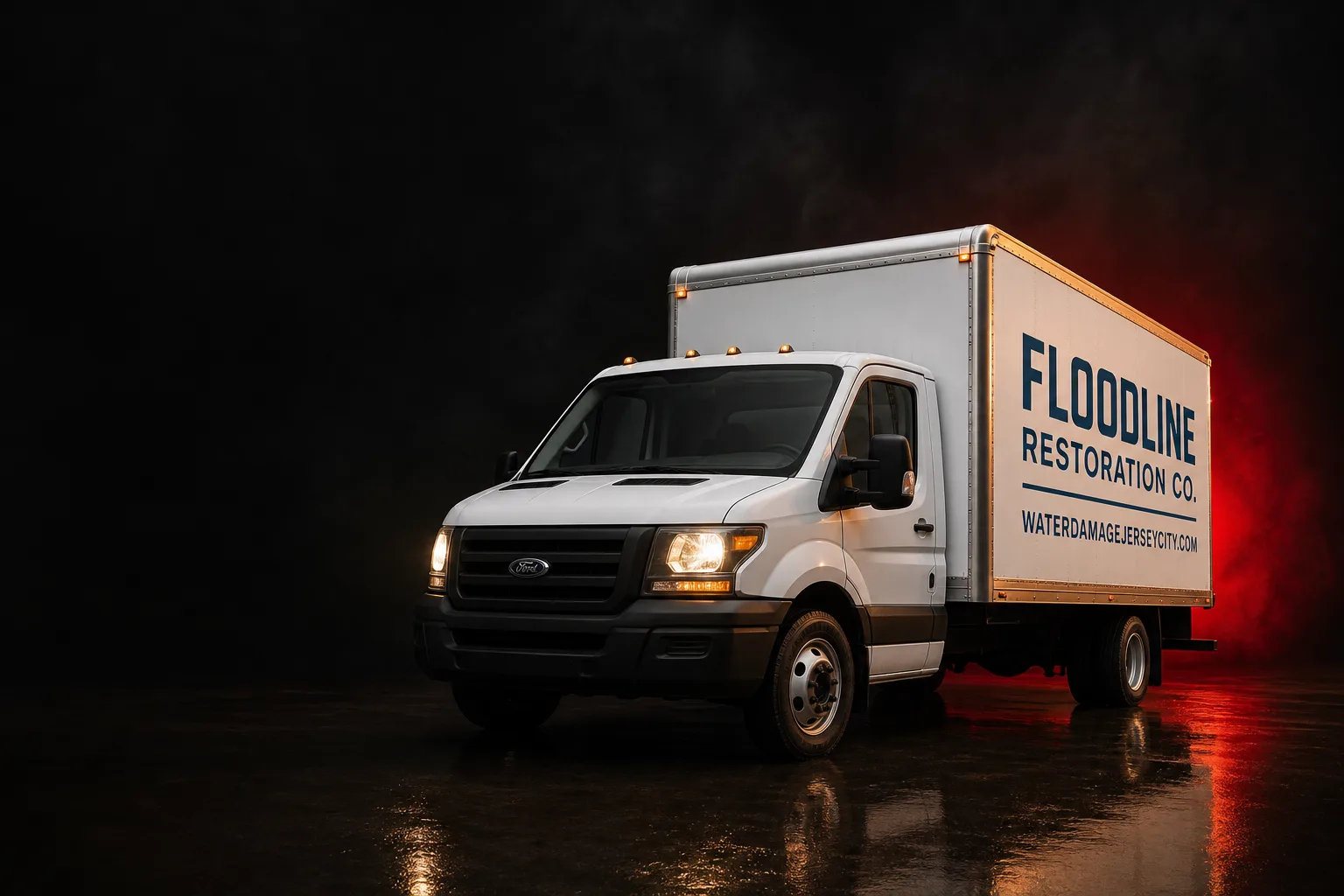
Free visual inspection and a written scope of work before any mitigation begins - photos, moisture readings, and drying logs go in your claim file
The scope we write is the scope we bill. Anything new gets shown to you, in writing, before we touch it.
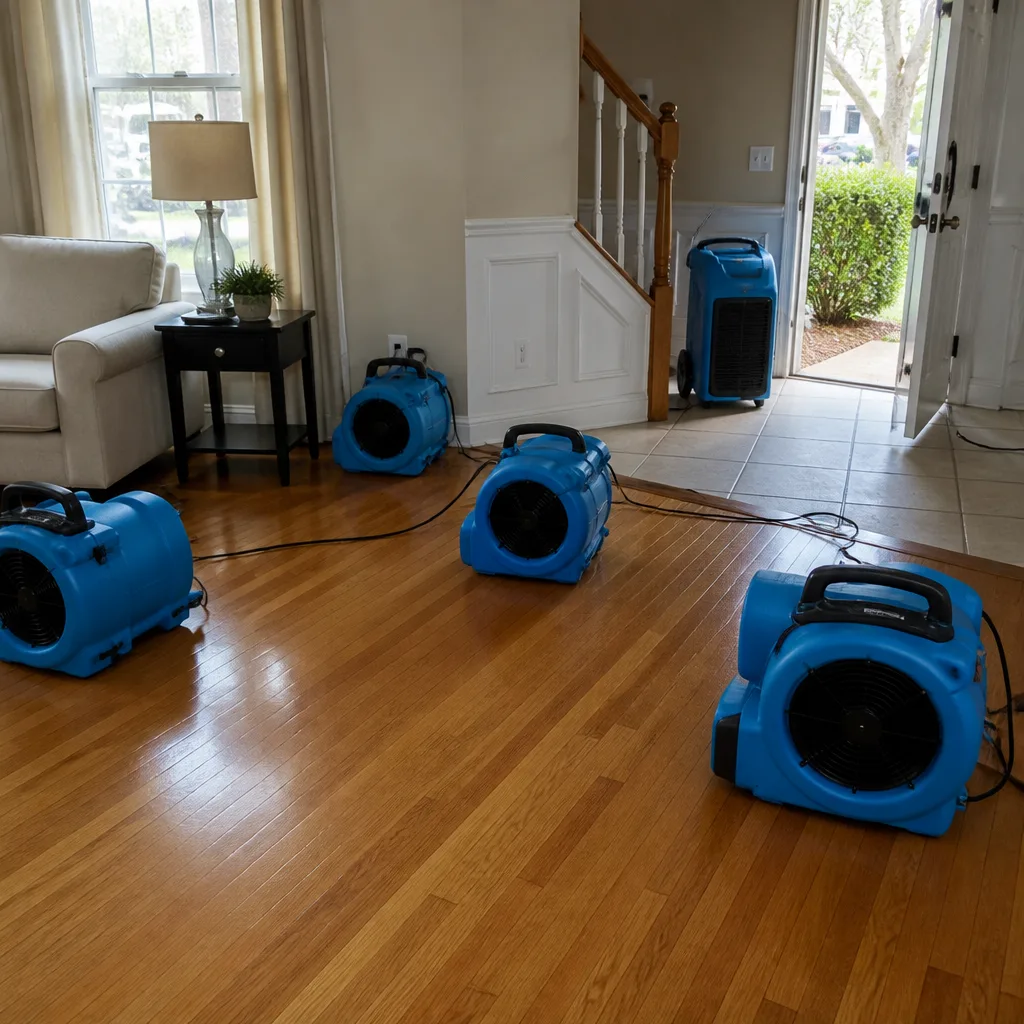
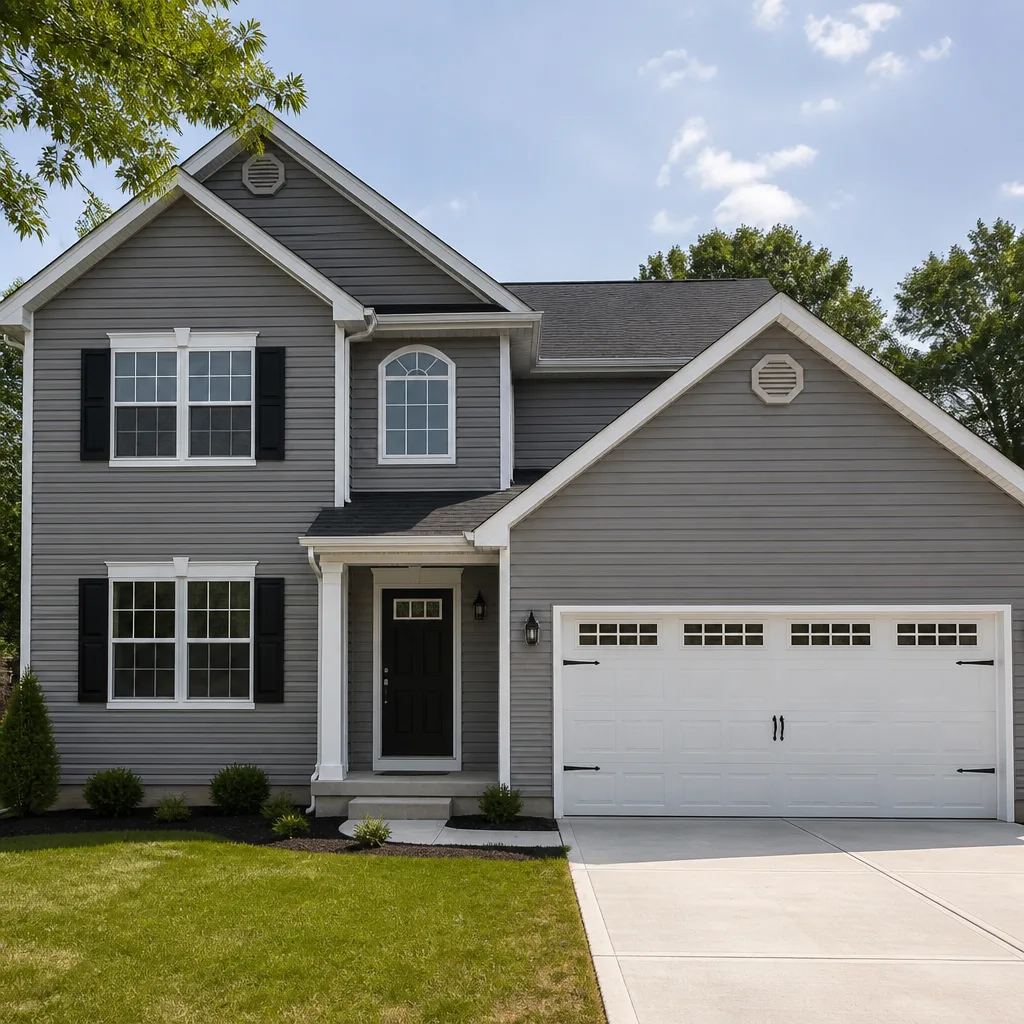
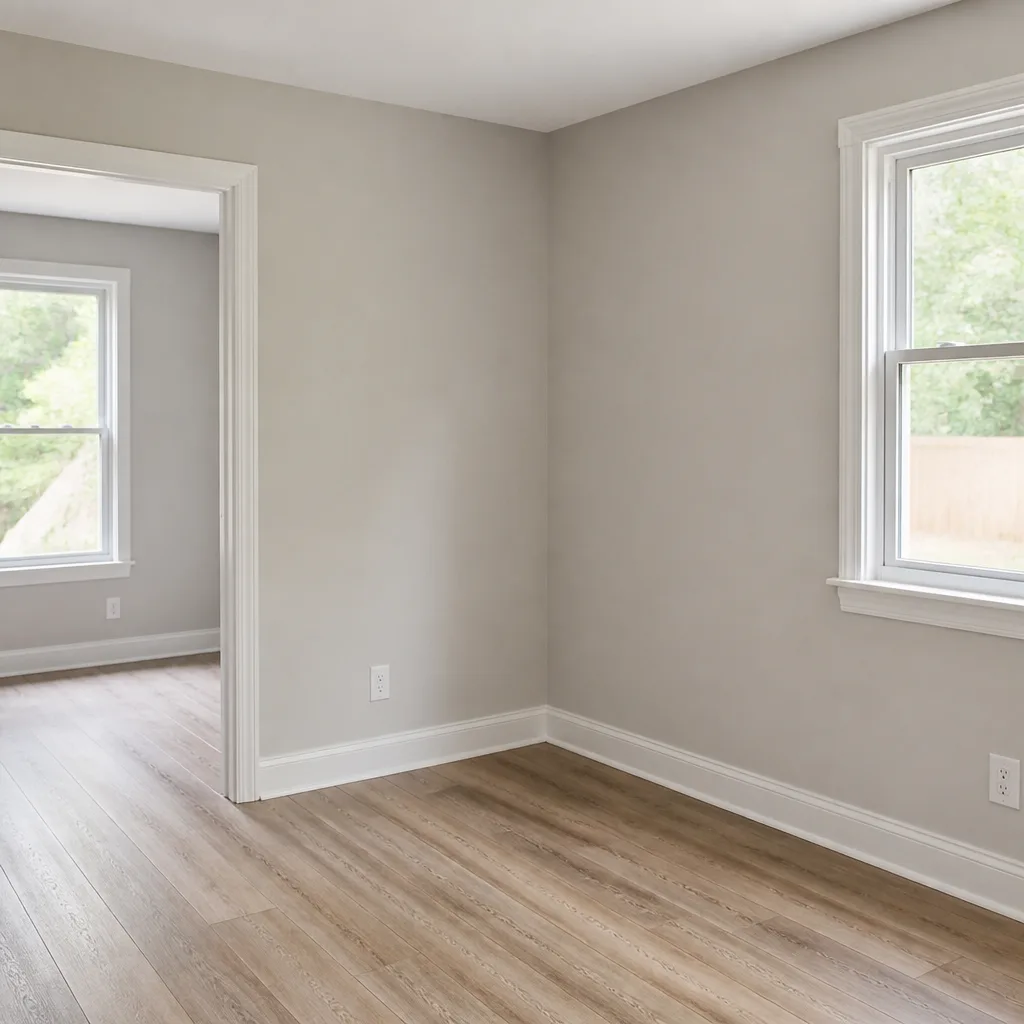
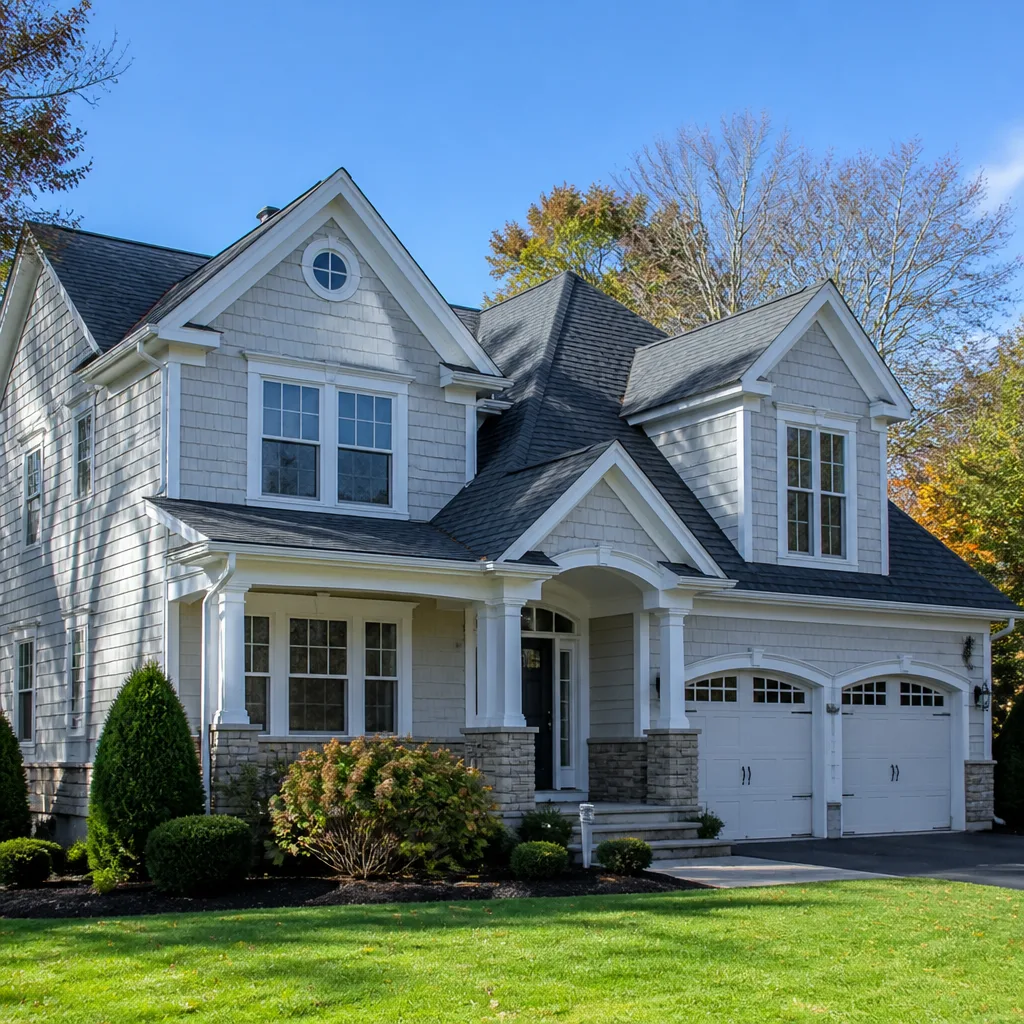
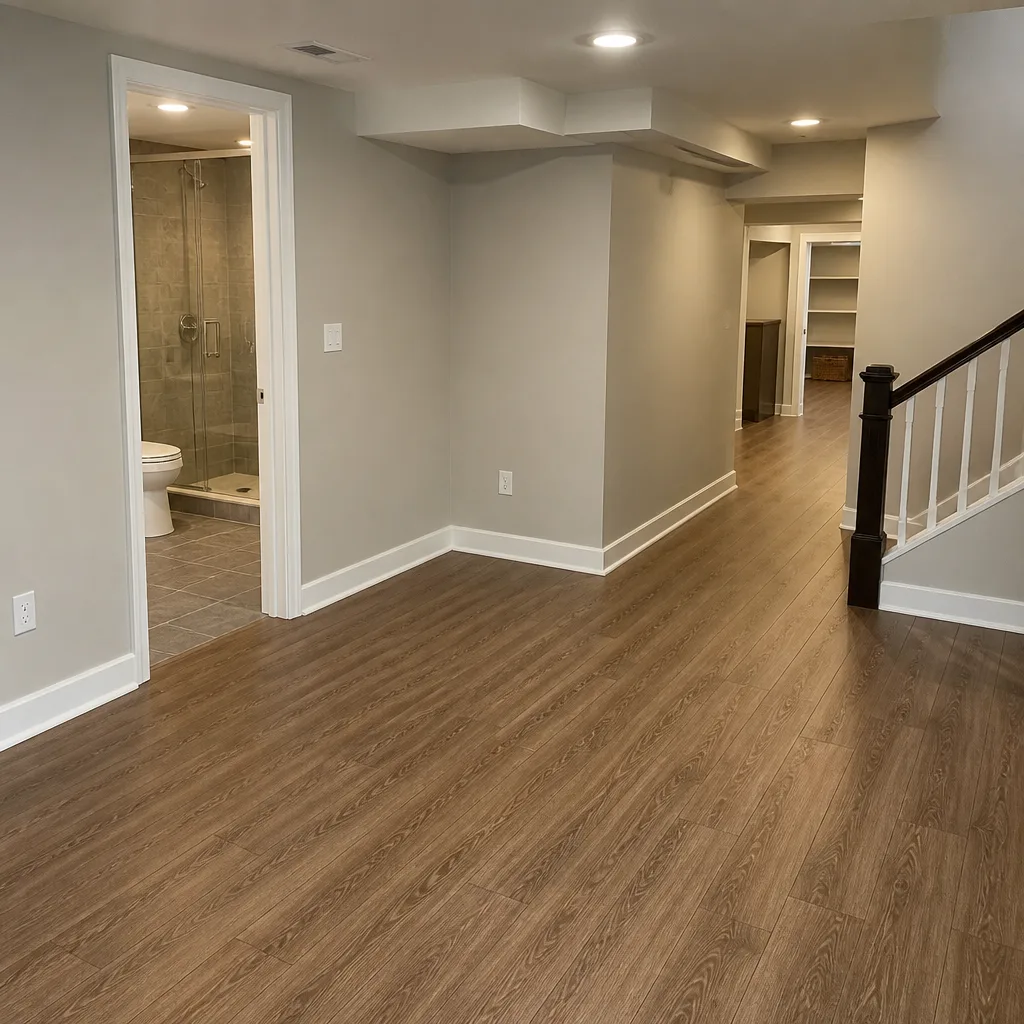
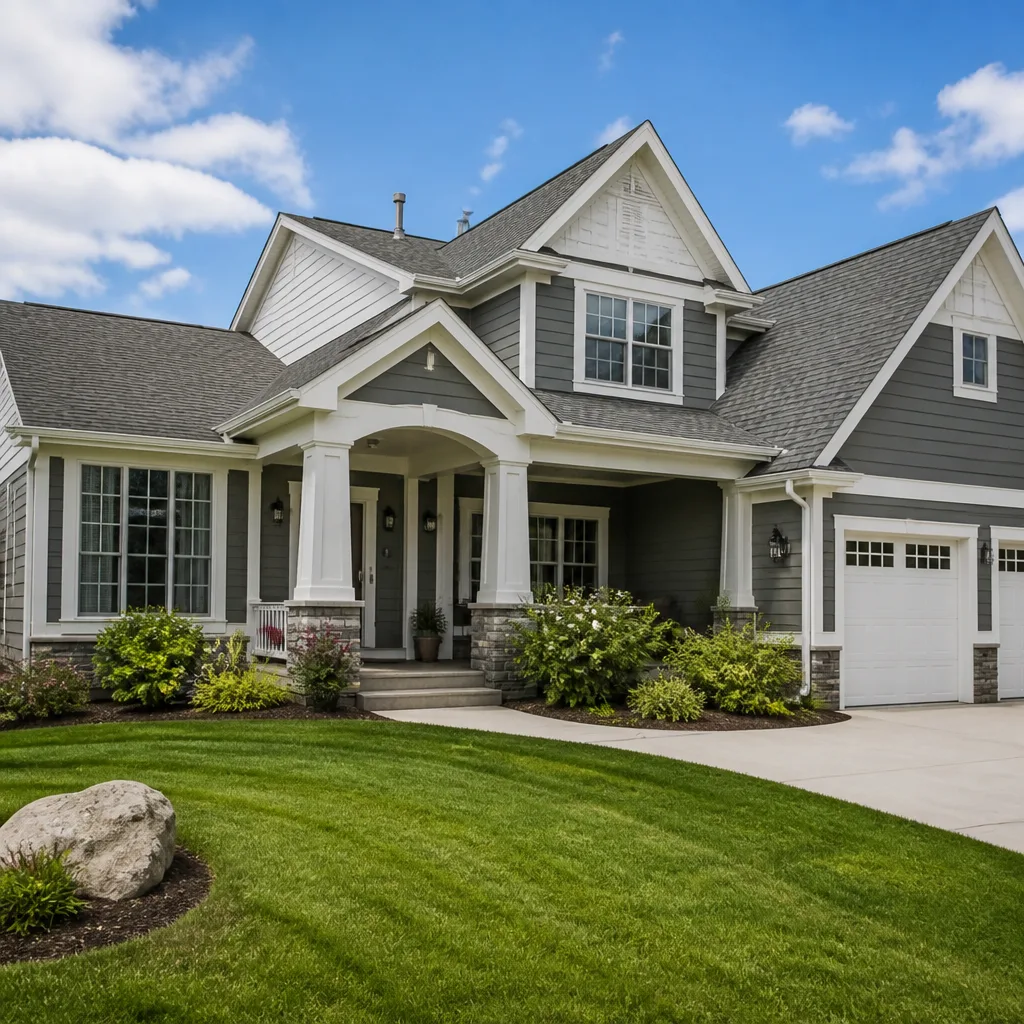
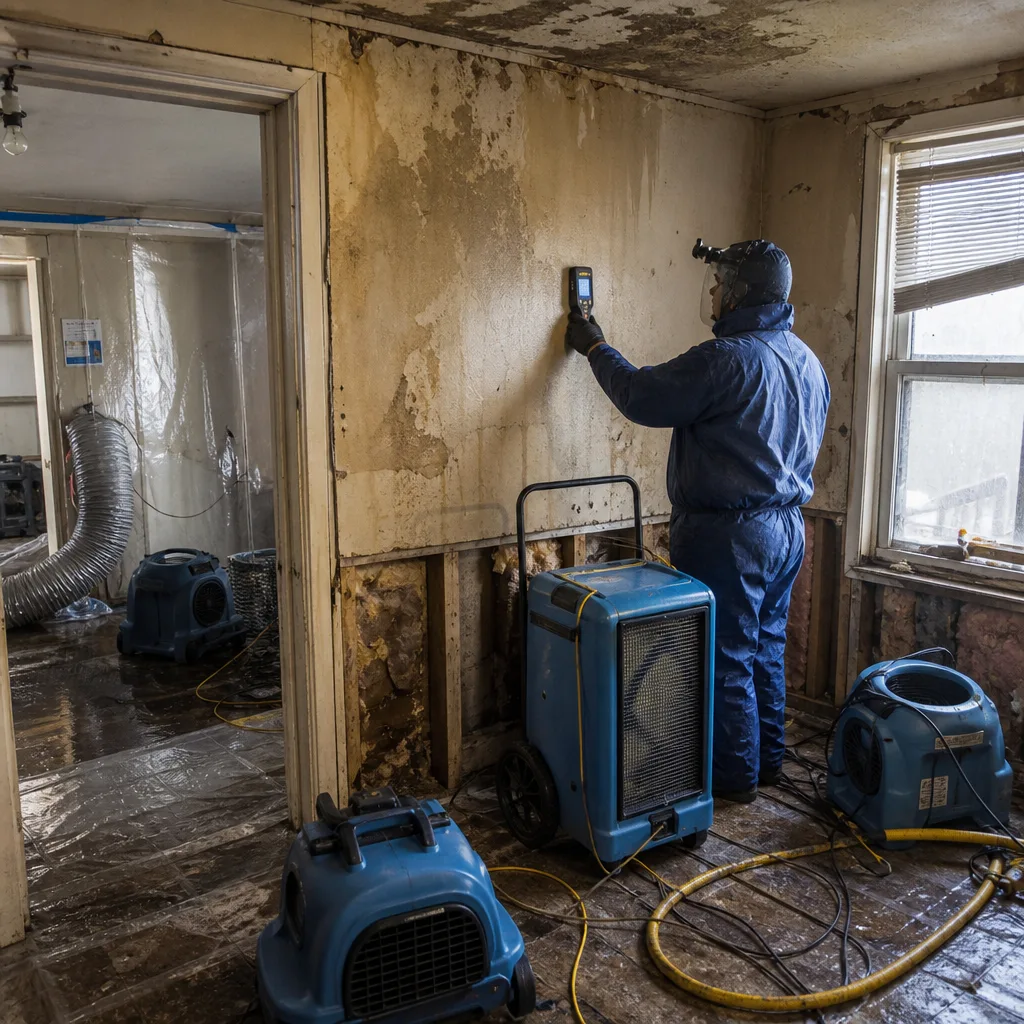 Before
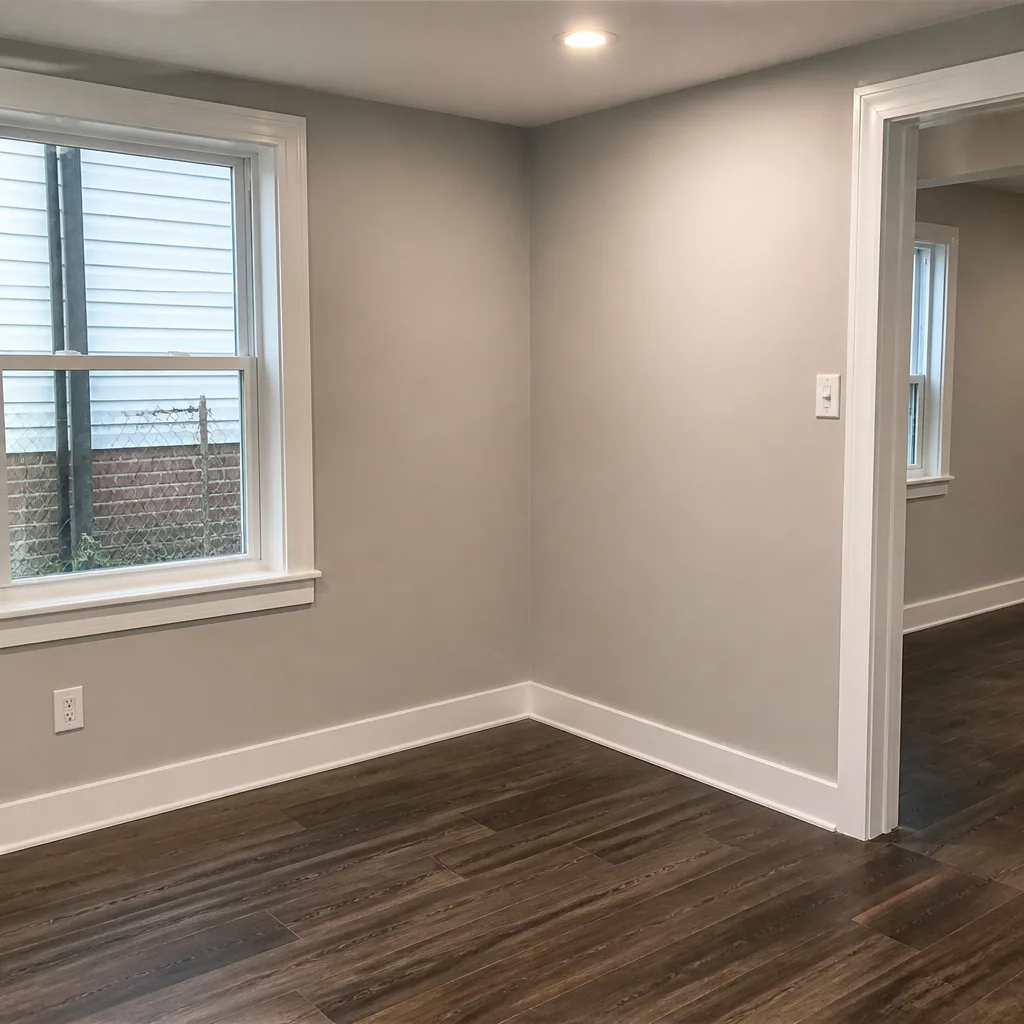 After
After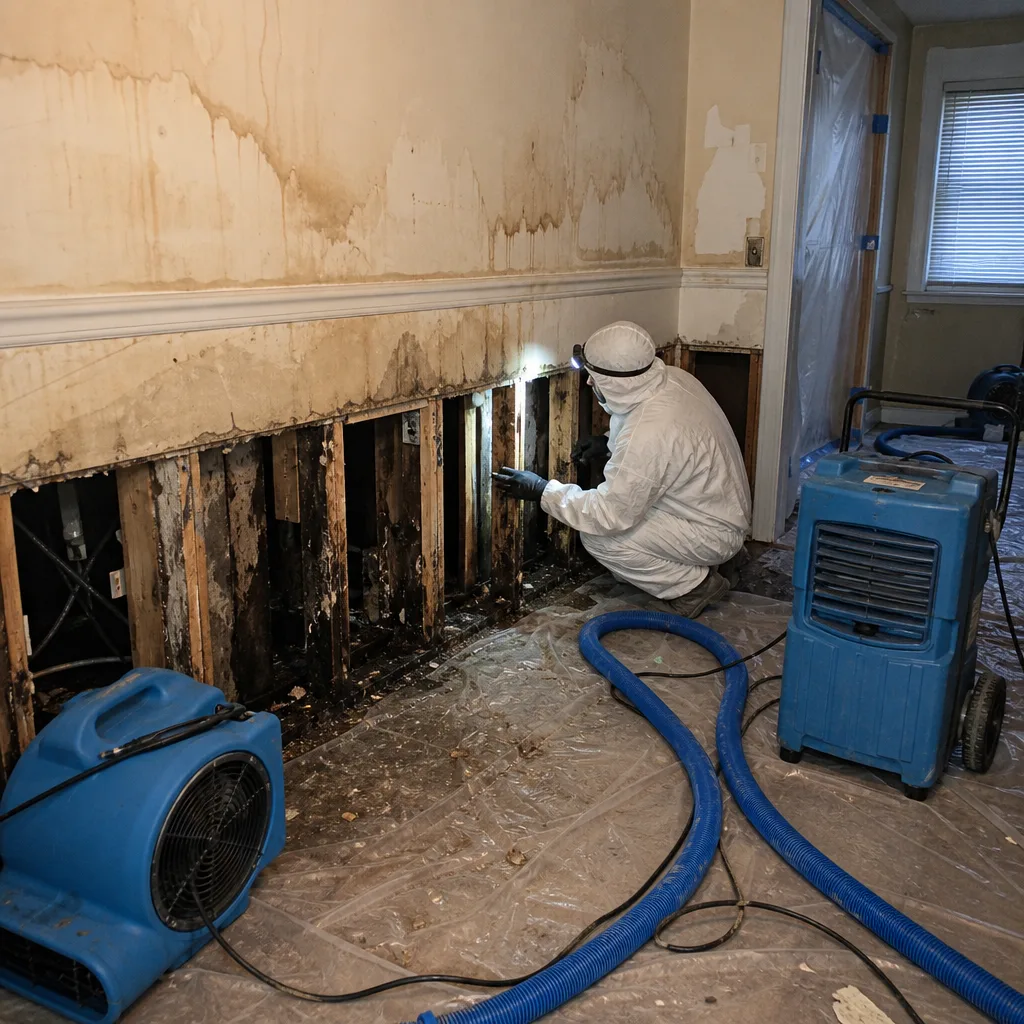 Before
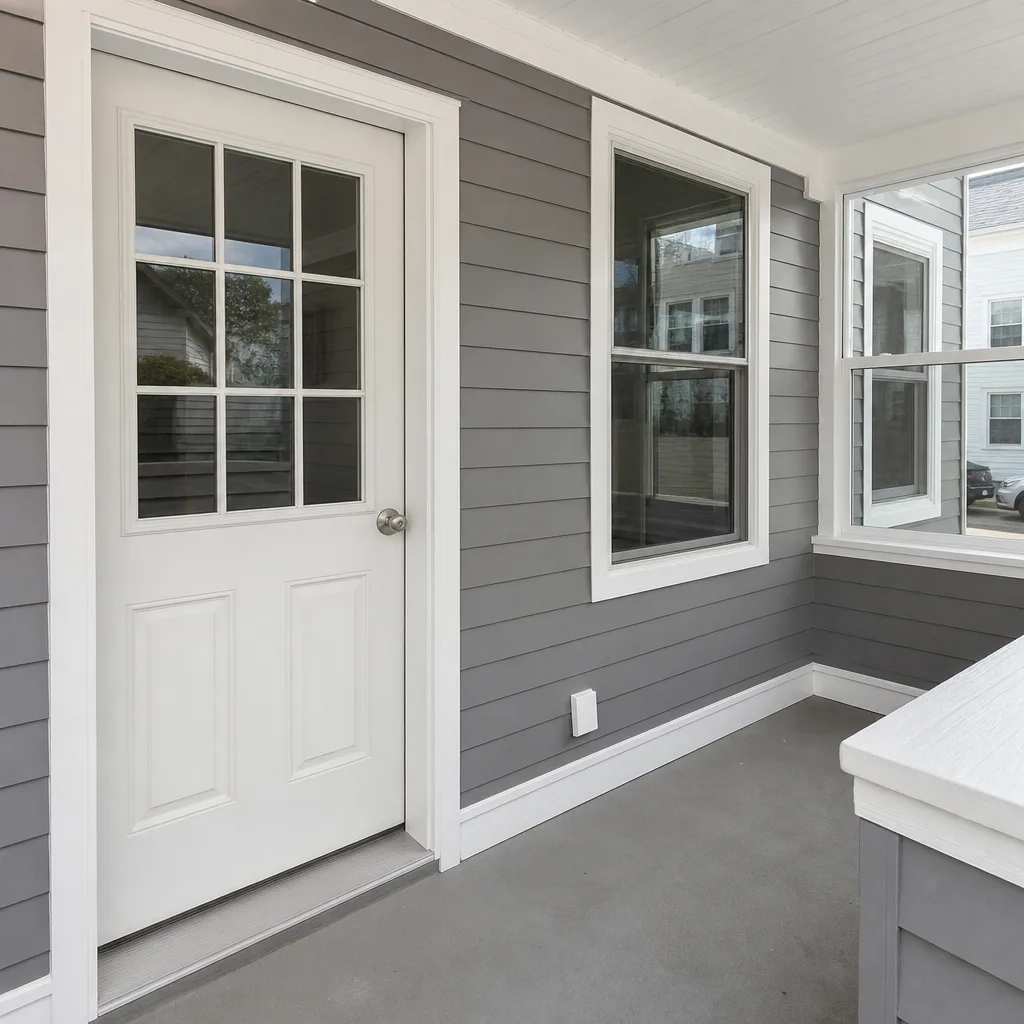 After
After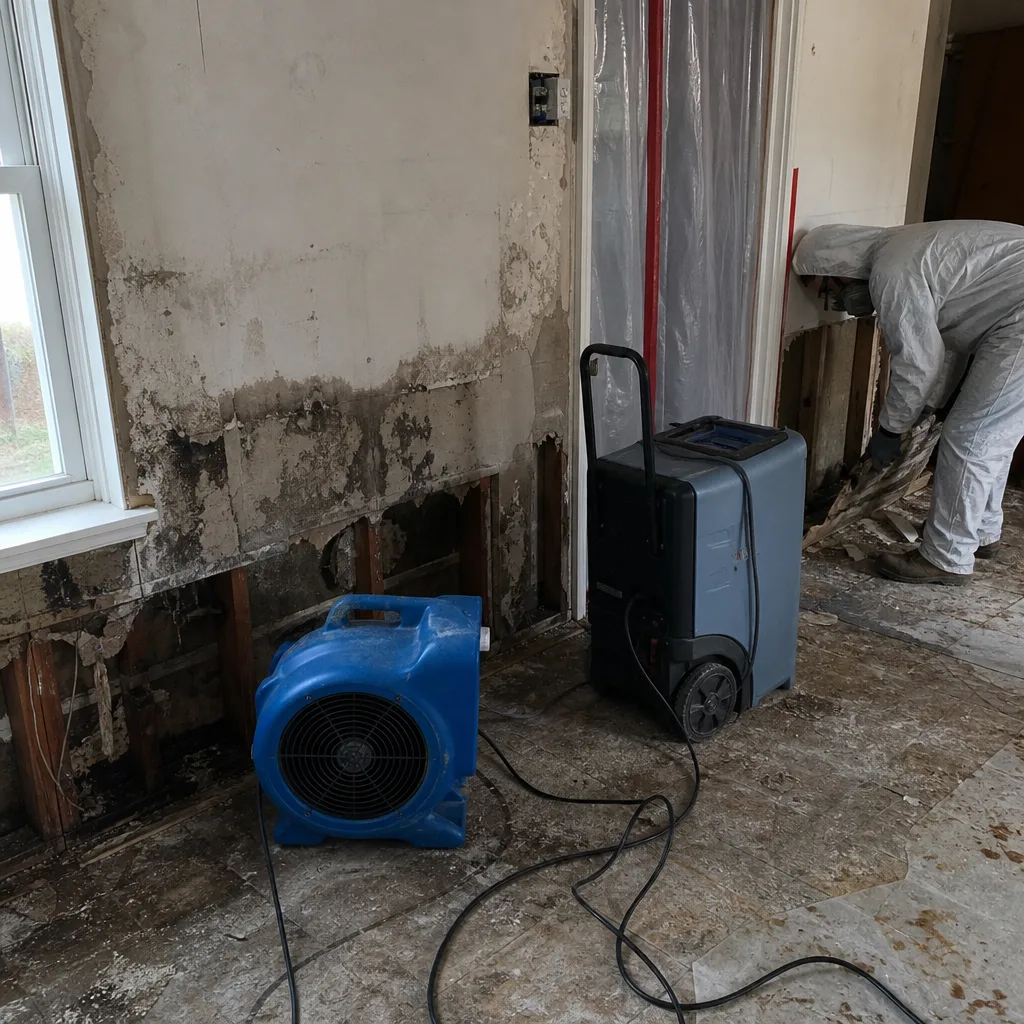 Before
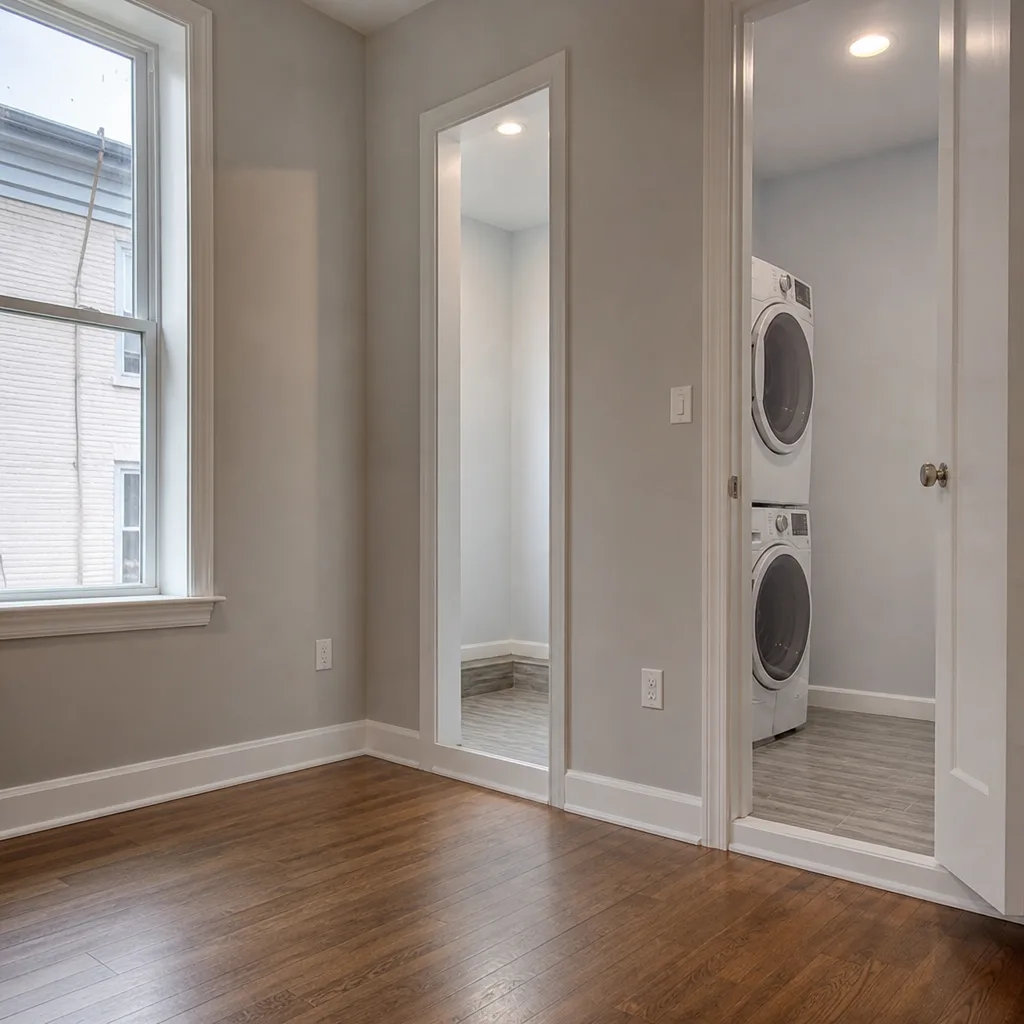 After
After24/7 Emergency Mold Remediation in Lower Manhattan
Mold doesn’t wait for business hours, and neither do we. If you’ve found mold in a Lower Manhattan apartment, loft, or commercial space, call (640) 400-9404 right now. A live dispatcher answers at 2 a.m., and a background-checked, uniformed crew can be on site in Lower Manhattan within 45 minutes. The first hour matters because mold colonies double every 24 to 48 hours in the humid, salt-laden air around the Battery and the Seaport. A free visual inspection tells us exactly what we’re dealing with before any work begins. We don’t make you wait for a call-back, and we don’t hand your job to a subcontractor who’s never set foot south of Canal Street.
Understanding Mold Remediation Severity in Lower Manhattan Properties
Lower Manhattan’s building stock creates mold conditions that inland repair crews rarely see. The 19th-century cast-iron lofts in Tribeca and the early-20th-century Financial District conversions share a structural profile: heavy timber, brick-bearing walls, and sub-grade mechanical rooms that sit below the flood plain. When moisture gets in, whether from a nor’easter surge, a failed pipe, or years of slow seepage through corroded masonry, it doesn’t evaporate the way it would in a modern mid-rise with full HVAC. It sits. It wicks into lime mortar and gypsum. Then it feeds mold.
Severity falls into three bands. Minor: surface staining on drywall or ceiling tiles, usually from humidity above 60 percent, treatable with HEPA vacuuming and antimicrobial application. Moderate: mold behind baseboards or under flooring, requiring containment, negative air pressure, and removal of affected material. Severe: Category 3 water intrusion (the saltwater or sewage kind) followed by interior mold growth in wall cavities and sub-grade spaces. That requires full containment, air scrubbing, professional-grade drying with Dri-Eaz and Phoenix equipment, and clearance testing after the job. In Flood Zone AE, the severe band is more common than anyone likes to admit.
Why Lower Manhattan Property Owners Choose Floodline Restoration Co.
- 45-minute response commitment in Lower Manhattan. We dispatch from the New York City office and crews know the neighborhood routes: FDR Drive, West Street, the Battery Park underpass. No map-reading delays.
- 24/7 live answer, always a person. You won’t hear a recording at 3 a.m. A real dispatcher picks up and starts the job order while you’re still on the line.
- IICRC-certified crews trained to WRT and AMRT standards, plus RIA and IFA protocols. Our technicians carry moisture meters, thermal imaging cameras, and HEPA air scrubbers on every truck.
- Free visual inspection with a written scope before any work starts. You’ll know what we found, what we recommend, and what it costs. No surprises on the bill.
- Direct insurance billing. We work with your carrier, provide photo documentation and line-item scopes, and bill them directly so you’re not the messenger.
- One team from inspection to reconstruction. The crew that reads the moisture map on day one handles the drying logs, the removal, and the rebuild. No handoffs, no inherited strangers.
Our Mold Remediation Process
Inspection & Assessment
We start with a visual inspection, moisture mapping, and thermal imaging across the affected space. In Lower Manhattan buildings, that means checking behind walls, under baseboards, and in sub-grade utility spaces where salt-laden humidity collects unnoticed. You get a written scope and a firm price before we touch anything.
Containment & Stabilization
We seal the affected area with 6-mil polyethylene and run negative air pressure through HEPA-filtered scrubbers. This prevents airborne mold spores from moving through your stairwell or ductwork while we work. In Battery Park City units, this step is non-negotiable: the landfill-and-concrete construction traps spores in shared mechanical chases.
Drying & Dehumidification
Using Dri-Eaz and Phoenix dehumidifiers plus XPOWER air movers, we pull moisture out of structural materials until readings fall below the dry standard. We log readings daily and hand the log to you and your insurer. Most Lower Manhattan jobs reach dry standard in 3 to 5 days depending on material type and access.
Cleaning & Sanitization
We remove mold-affected drywall, insulation, and flooring, then HEPA-vacuum framing and apply antimicrobial treatment to all exposed surfaces. In buildings that saw storm surge, we inspect conduit penetrations and electrical vault access for hidden moisture sources that re-humidify the space after we leave.
Specialty Treatment for Lower Manhattan Conditions
For properties near the East River or Hudson River, we evaluate chloride-driven moisture intrusion and install permanent dehumidification where needed. We also inspect elevator pits and sub-basement sumps, common failure points in Financial District and Battery Park City buildings.
Repairs & Restoration
The same crew that handled removal rebuilds what needed to come out: drywall, insulation, trim, paint, flooring. We don’t hand off the finish work to another company. We finish the job, then we stand behind it with the 90-Day Done Right Promise, in writing.
Need Emergency Mold Remediation in Lower Manhattan Now?
Crews minutes away, answering live 24 hours a day. The sooner we start, the less it costs.
Working With Your Insurance Company
We know how insurance claims work in Lower Manhattan, and we know what gets denied without proper documentation. From the first hour on site, we record everything: moisture readings, thermal imaging captures, photo documentation room by room, and a detailed line-item scope of work. Our estimators use the same industry-standard pricing software your adjuster recognizes, so there’s no haggling over line items. We speak to your carrier directly, answer their questions, and keep you out of the middle. For saltwater-related mold claims, which most carriers in New York now scrutinize, our documentation of moisture readings and containment logs matters even more. We have been doing this for over 42 years as a company, and we have built our reputation on claims handled cleanly.
What We Provide Your Insurer
- Thorough documentation of the loss
- Photos of all damage, room by room
- Moisture readings and drying logs
- A detailed, line-item scope of work
- Direct coordination with your carrier
Built for Lower Manhattan’s Loss Calendar
Lower Manhattan’s mold season doesn’t follow the same calendar as the rest of the city. We think about it in four waves. January and February: deep freezes crack old supply lines in pre-war buildings, and water travels down through floor assemblies before anyone sees a stain. March and April: spring thaw plus rain saturates Battery Park City landfill foundations, pushing ground humidity up through slabs and into lower-level units. June through September: Atlantic hurricane season, when a nor’easter or tropical system can push brackish water into sub-grade mechanical rooms and elevator pits, even in buildings that “made it through Sandy fine.” October through December: the heating season kicks on, and buildings that spent the summer damp now bake moisture into their enclosed cavities, triggering visible mold growth by Thanksgiving. We don’t wait for the visible bloom. We inspect the moisture source.
Mold Remediation Across Lower Manhattan’s Neighborhoods
In Tribeca, the cast-iron loft buildings and 19th-century warehouses present a specific challenge: masonry walls that wick ground moisture upward, feeding mold in joist pockets and behind radiator covers that haven’t moved in decades. We route crews down Greenwich Street and Hudson Street, where many of these buildings sit with sub-grade cellar mechanical rooms. The Financial District brings a different profile: converted office towers whose plumbing chases and HVAC risers were retrofitted into spaces never designed for residential humidity loads. We map moisture inside those chases carefully; mold grows in the void spaces where the 1910s floor plates meet the 2000s drywall. In Battery Park City, built on Hudson River landfill, the saline groundwater keeps lower-level slabs perpetually damp. Mold there often starts under carpet pads and behind baseboards, where the humidity break is weakest. Over near the South Street Seaport, older residential buildings along Front Street and Water Street carry the double burden of river-proximate air and aging drainage systems, where mold follows every backup.
Specialized Mold Remediation Services We Offer in Lower Manhattan
Mold Inspection & Testing
In Lower Manhattan, we recommend testing even when you can’t see mold, especially in buildings that experienced saltwater surge during Sandy or a later nor’easter. Hidden mold behind walls in Flood Zone AE properties is common, and surface sampling alone misses it. We run moisture mapping, thermal imaging, and air sampling where needed, then give you a written report that separates real threats from cosmetic staining.
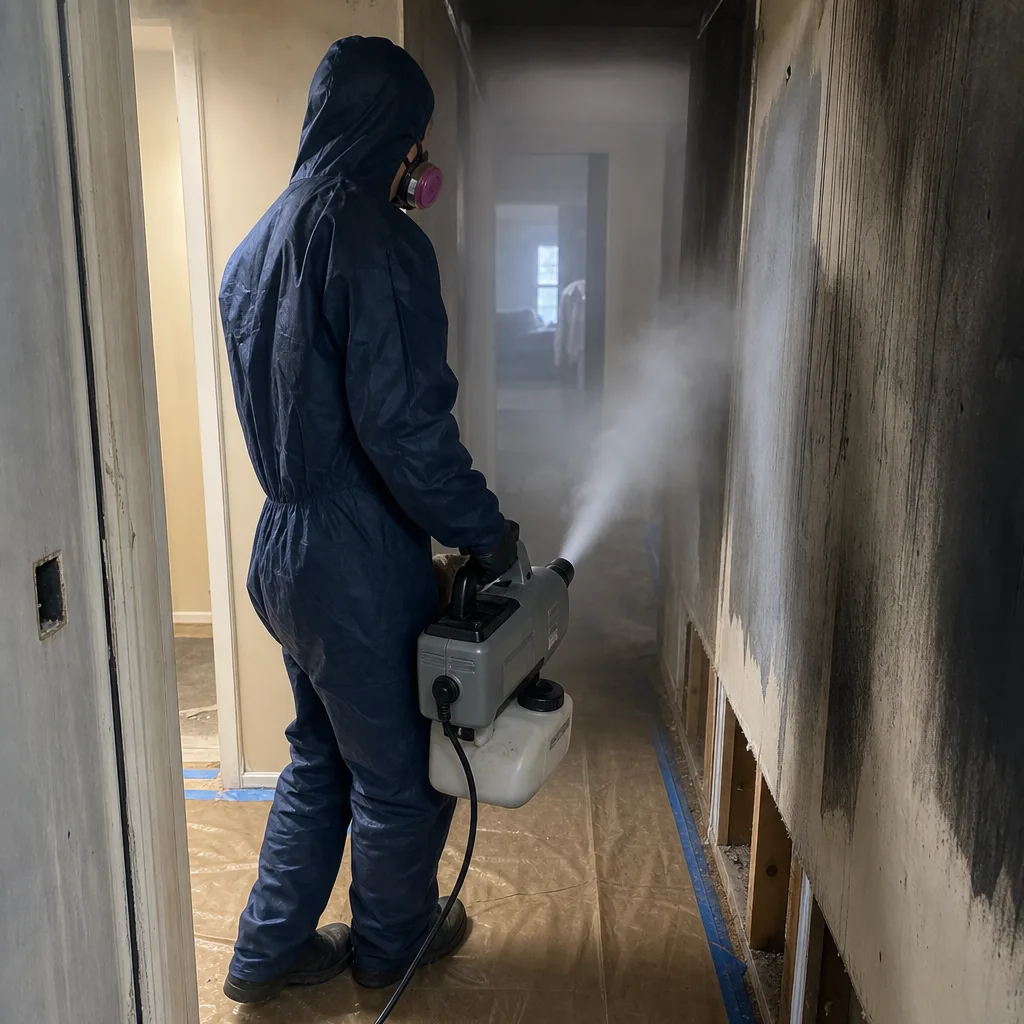
Mold Removal
Removal means removing the affected material, not just spraying it. In Tribeca lofts and Financial District conversions, that often means cutting out sections of gypsum, pulling insulation from stud bays, and HEPA-vacuuming the framing to bare substrate. We contain every removal, run negative air, and dispose of contaminated material properly.
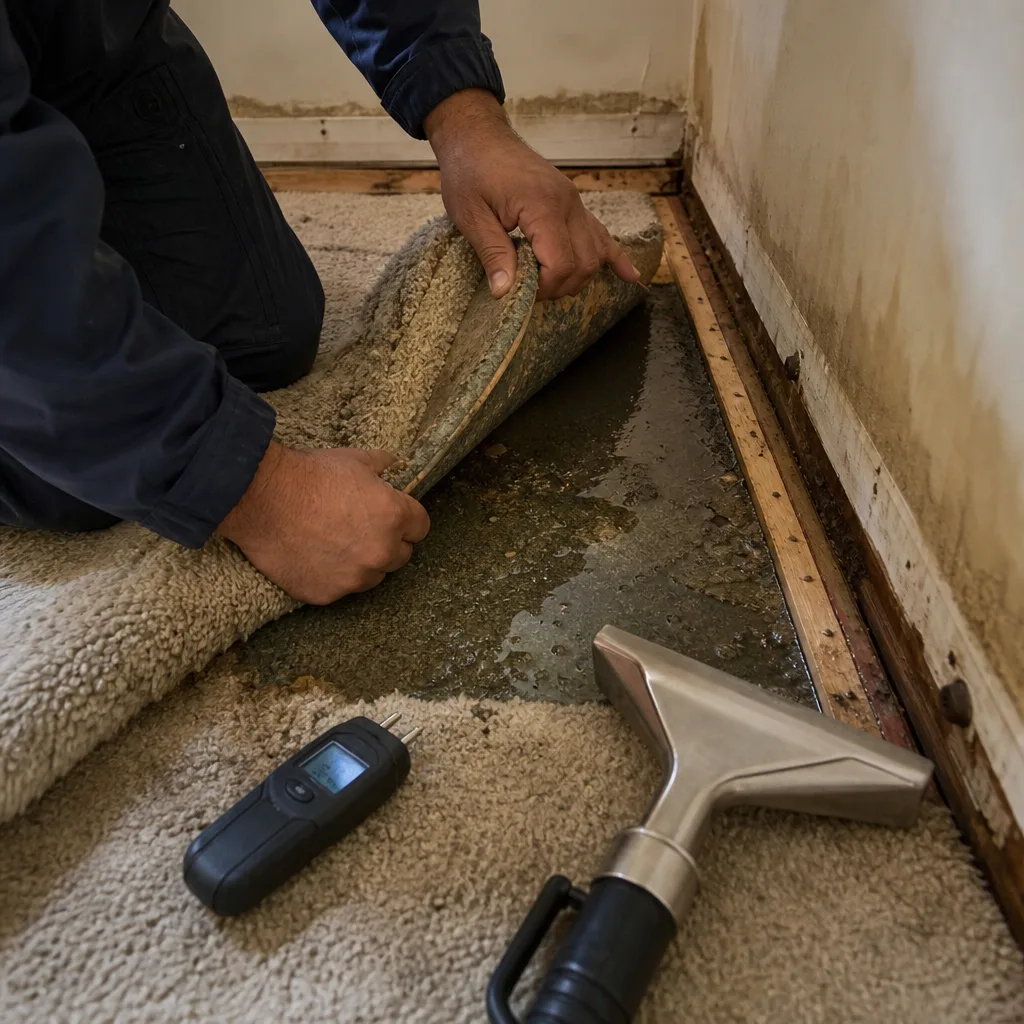
Black Mold Remediation
Black mold, or Stachybotrys chartarum, is what most Lower Manhattan homeowners fear, and we treat it with the same protocol regardless of species: full containment, HEPA air scrubbing, removal of saturated material, antimicrobial treatment, and post-remediation clearance testing. The difference locally is that black mold often develops behind walls in Battery Park City and Seaport-area units because the saline humidity never fully dries. We inspect for it aggressively.
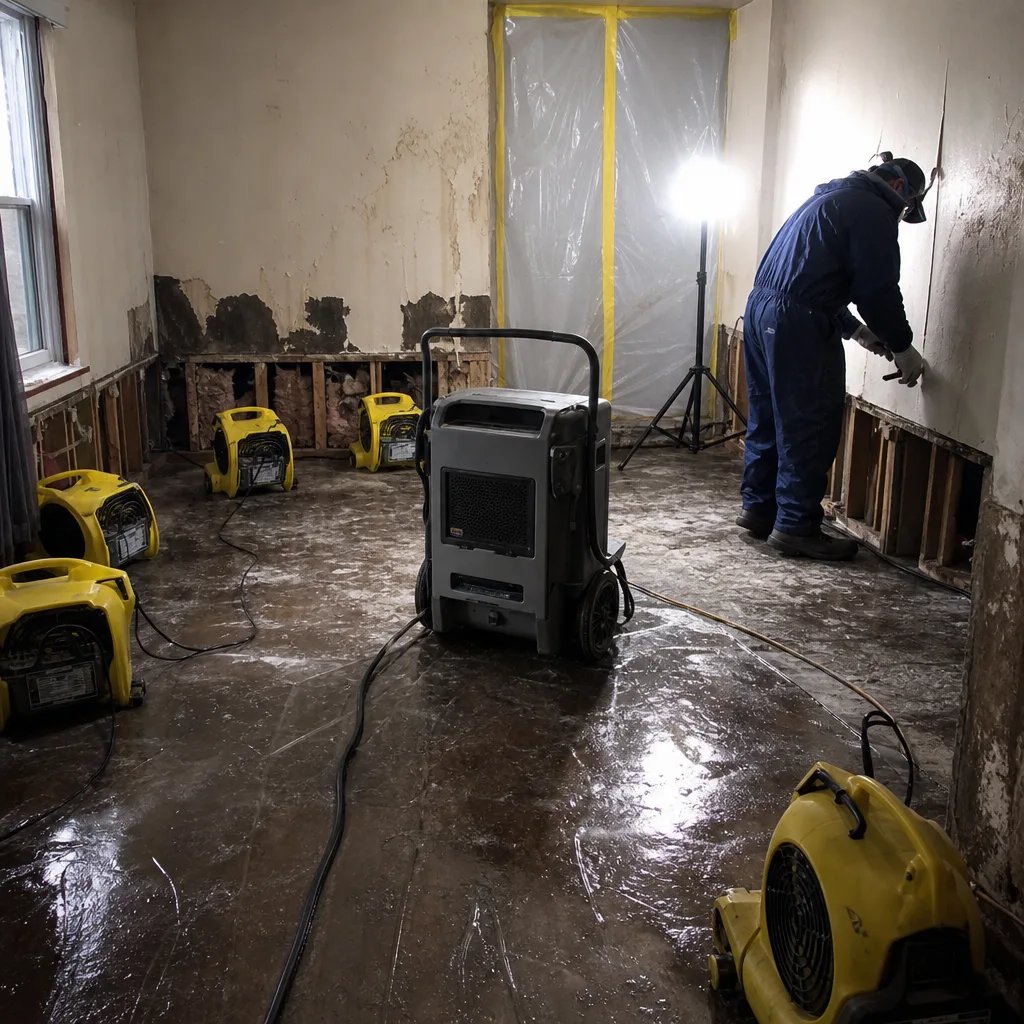
Air Quality Restoration
After remediation, the air should be cleaner than before the mold appeared. We run HEPA air scrubbers throughout the job, and after removal we perform post-remediation air sampling to confirm spore counts have returned to acceptable levels. In Lower Manhattan, where shared corridor and HVAC spaces can redistribute spores between units, we also check adjacent spaces for signs of cross-contamination.
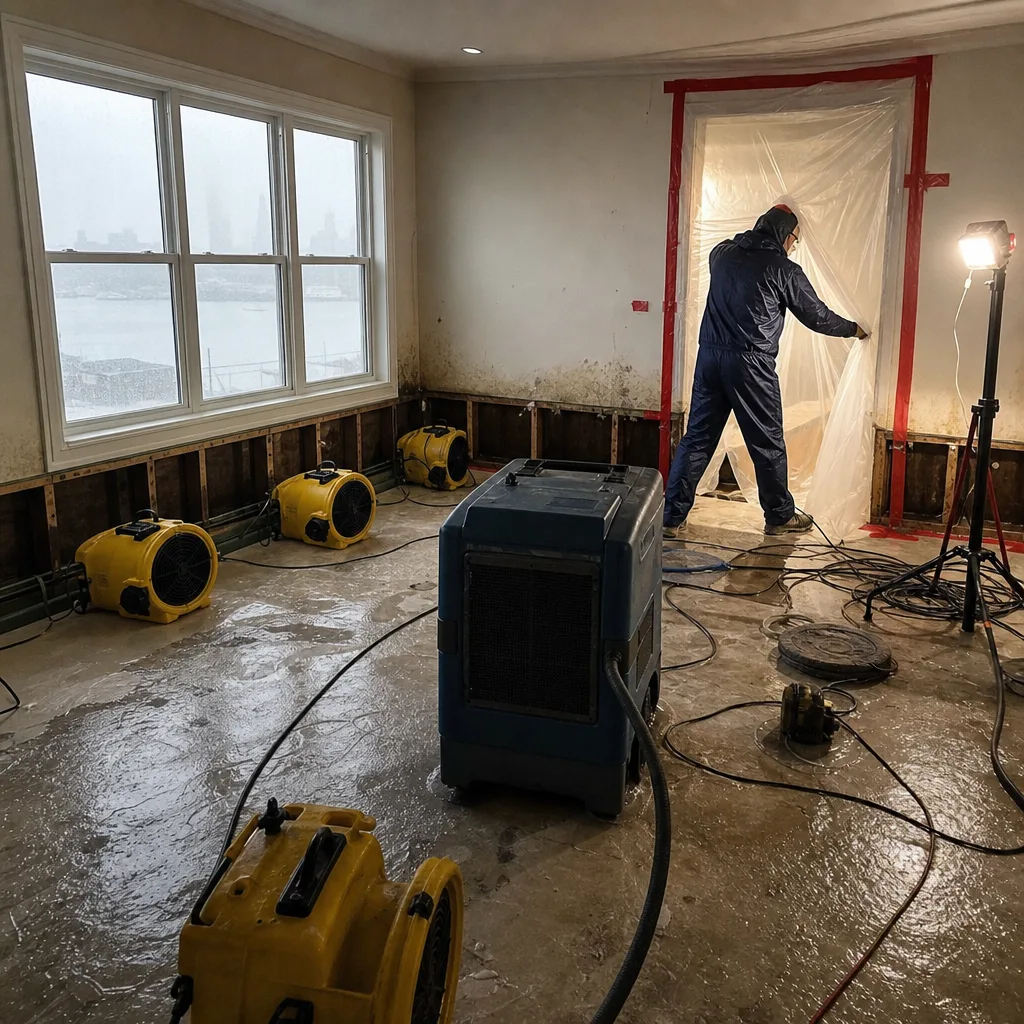
Crawl Space Treatment
Some older Lower Manhattan buildings still have partial crawl spaces or cellar pocket areas, usually under raised floor assemblies in pre-war structures. We treat these with vapor barrier installation, insulation replacement, and antimicrobial application. For sub-grade crawl spaces in Flood Zone AE, we also install dehumidification to keep relative humidity below 50 percent, which stops regrowth before it starts.
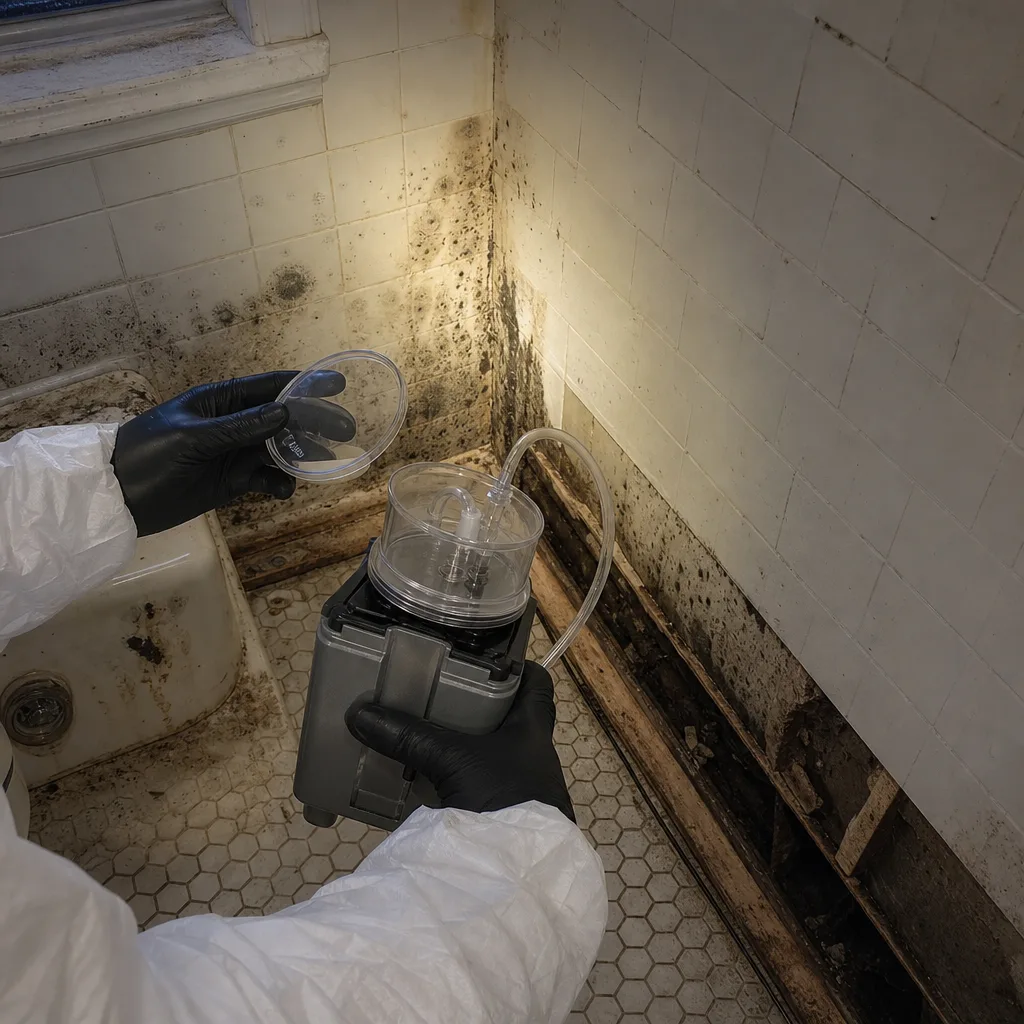
Moisture & Humidity Control
This is the service that matters most in Lower Manhattan, and the one most remediation companies underdeliver on. Chloride-laden humidity from past storm surge creates persistent moisture sources that re-humidify areas after mold removal. We install permanent dehumidification systems, repair failed vapor barriers, and address the source: corroded conduit penetrations, cracked foundation slabs, and unsealed utility chases. Moisture control is the difference between a job that holds and a job that returns.
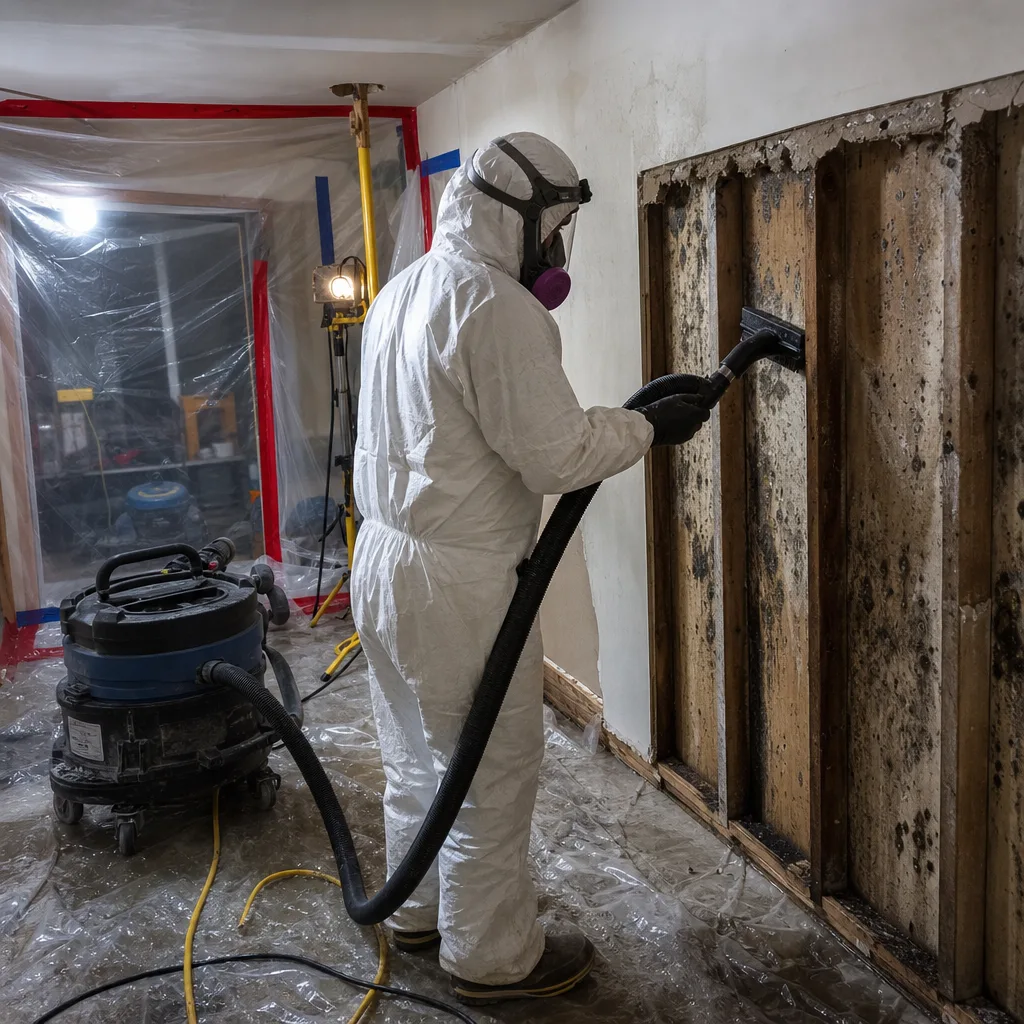
What happens when you call
- 1
A real person answersNo phone trees - you reach a local pro.
- 2
You get an upfront price rangeHonest numbers before anyone is dispatched.
- 3
A background-checked tech heads outLicensed & insured, dispatched right away.
- 4
You approve before work beginsNothing starts until you say go.
Mold Remediation Costs in Lower Manhattan, NY
In Lower Manhattan, mold remediation pricing runs higher than the outer boroughs, driven by building access, containment requirements, and the prevalence of pre-war construction materials. A typical mold inspection with moisture mapping and air sampling runs $350 to $700 in this market. Containment-based remediation in a single apartment or condo unit generally falls between $2,500 and $6,000, depending on the affected area’s size and whether drywall and insulation need removal. Crawl space treatment with vapor barrier and dehumidifier installation runs $1,800 to $4,500. Battery Park City and Seaport-area jobs that involve saltwater-driven moisture intrusion and permanent dehumidification can push $8,000 to $15,000 when sub-grade spaces and electrical vault access are involved. Insurance often covers these costs when the loss is sudden and accidental, and we handle direct billing. The free visual inspection gives you a firm scope and price before anything starts. Call (640) 400-9404 and we’ll come look.
We Also Serve Cities Near Lower Manhattan
Our crews regularly travel to nearby communities including Midland Beach, New Springville, Oakwood, and Travis – Chelsea when mold problems cross property lines or building owners manage portfolios across multiple neighborhoods. Same dispatch, same 45-minute response, same Mold Remediation standards we bring to every job in Lower Manhattan.
Lower Manhattan Mold Remediation Questions, Answered
How does saltwater surge in Lower Manhattan affect mold growth differently than freshwater flooding?
Saltwater surge introduces chloride-laden moisture into building materials, which dries more slowly than freshwater and leaves behind hygroscopic salts that continue attracting humidity long after the visible water is gone. In Lower Manhattan, especially in Flood Zone AE properties near the Battery and the Seaport, this creates a recurring moisture source that keeps mold growth active behind walls and under floors even after conventional drying protocols are completed. Remediation here must account for ongoing chloride-driven moisture, not just the initial wetting event. That’s why we install dehumidification systems and inspect electrical conduit penetrations on every surge-related job.
Do I need mold testing in a Lower Manhattan building even if there’s no visible mold?
In Lower Manhattan, yes, especially if your building is in Flood Zone AE or has sub-grade mechanical rooms. Hidden mold behind walls, under baseboards, and in ceiling cavities is common in our building stock, which combines pre-war masonry that holds moisture with post-2000 renovations that seal it in. Testing with moisture mapping and air sampling catches mold before it becomes a visible, expensive problem. The free visual inspection is the first step.
What is the recommended timeline for mold remediation after discovering water intrusion in a Lower Manhattan apartment?
Start within 24 to 48 hours, faster if the water intrusion involves saltwater or Category 3 contamination. Mold spores begin colonizing damp materials quickly, and Lower Manhattan’s humid, salt-laden air accelerates the process. Call us at (640) 400-9404 the same day you find the water. The sooner we run moisture mapping and containment, the less material needs removal.
Why do mold remediation projects in Lower Manhattan often require containment even for small areas?
Lower Manhattan’s dense residential stacking means mold spores travel fast. Shared stairwells, elevator shafts, and mechanical chases connect units in ways that don’t exist in standalone homes. When we open a mold-affected wall in a Battery Park City apartment, spores can move into neighboring units within hours. Containment with negative air pressure protects your neighbors and prevents the project from becoming a building-wide problem.
Can mold return after remediation in a building near the East River or Hudson River?
Mold can regrow if the moisture source isn’t fully addressed. In river-proximate buildings, the recurring moisture source is often chloride-driven humidity from past storm surge or ongoing saline groundwater wicking. That’s why our process in lower Manhattan includes installing permanent dehumidification and sealing conduit penetrations and utility chases. We don’t just remove the mold; we remove the conditions that created it, and our 90-Day Done Right Promise backs that.
How quickly can you get to a Lower Manhattan address?
We commit to a 45-minute response inside Lower Manhattan. Crews dispatch from our New York City office, and our technicians know the local routes: West Street, FDR Drive, the Battery Park underpass, Broadway. No GPS hesitation. A live dispatcher takes your call at any hour and starts the job order immediately.
Will my insurance cover mold remediation in Lower Manhattan?
Most homeowners and condo policies in New York cover mold remediation when the mold results from a sudden and accidental water event, like a burst pipe or storm surge. Saltwater-related claims face more scrutiny, which is why our documentation matters: moisture readings, drying logs, and photo evidence from the first hour on site. We bill directly and coordinate with your adjuster. Call us and we’ll explain what your policy is likely to cover.
What should I do in the first 30 minutes after I find mold in my Lower Manhattan home?
Don’t disturb the mold. Don’t scrub it, don’t spray bleach on it, and don’t run fans on it. Disturbing mold releases spores into the air. Close the door to the affected area if possible, shut off HVAC if it serves that space, and call (640) 400-9404. We’ll walk you through what to do until the crew arrives, and a live person will answer no matter the hour.
Serving Lower Manhattan, NY - Our Local Coverage Area
We’re based in the Lower Manhattan area and know this community well. Use the map below to see our service coverage - if you’re nearby, we can almost certainly help.
Contact Floodline Restoration Co. for Mold Remediation in Lower Manhattan
When the water line is high on the wall and the mold has already started, you need someone who knows Lower Manhattan’s buildings, its flood zones, its salt air, and its stubborn moisture. Floodline Restoration Co. has been doing this work for over 42 years, led by Curt Bowman, and we stand behind every job with the 90-Day Done Right Promise, in writing. Call (640) 400-9404 for a free estimate and a live person who will start helping immediately. The line the water left is where we start.
Written by Curt Bowman, Owner at Floodline Restoration Co., serving Lower Manhattan and the New York City metro area.