
Free visual inspection and a written scope of work before any mitigation begins - photos, moisture readings, and drying logs go in your claim file
The scope we write is the scope we bill. Anything new gets shown to you, in writing, before we touch it.
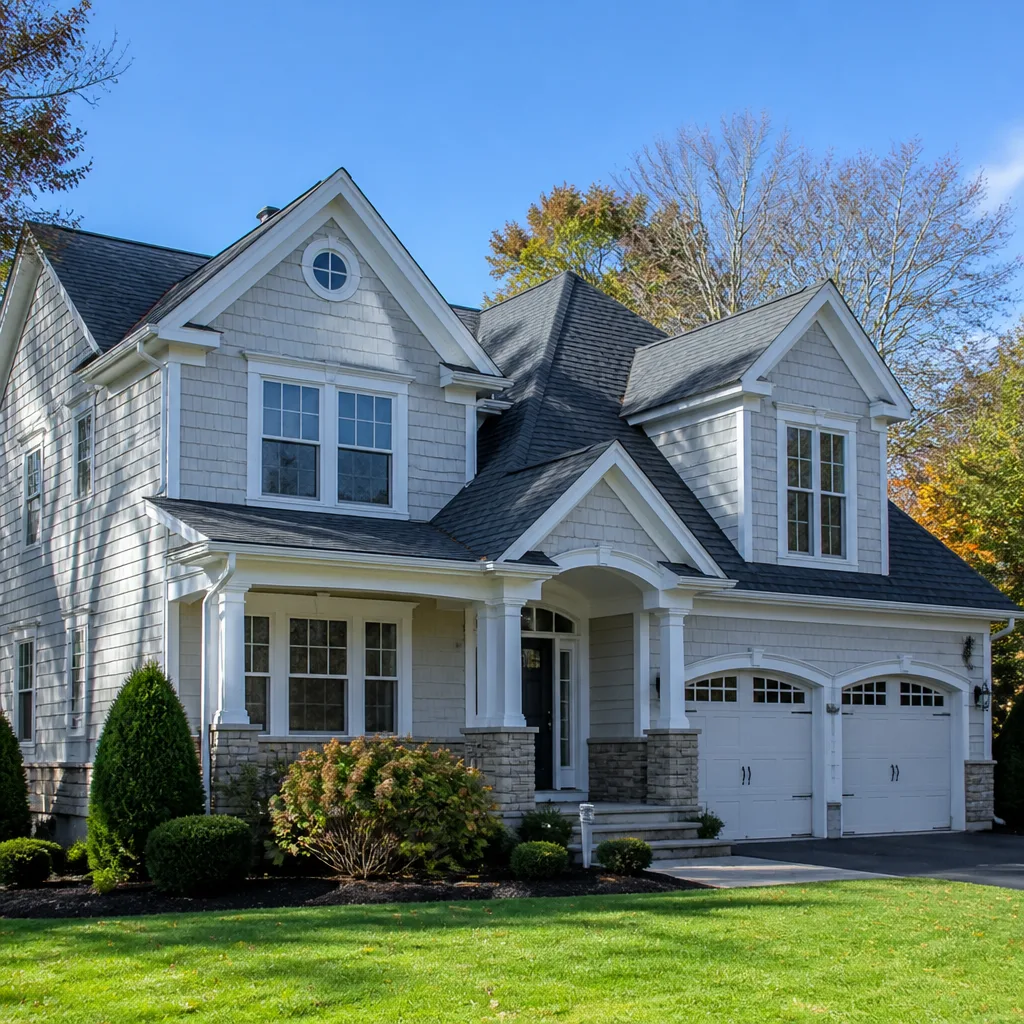
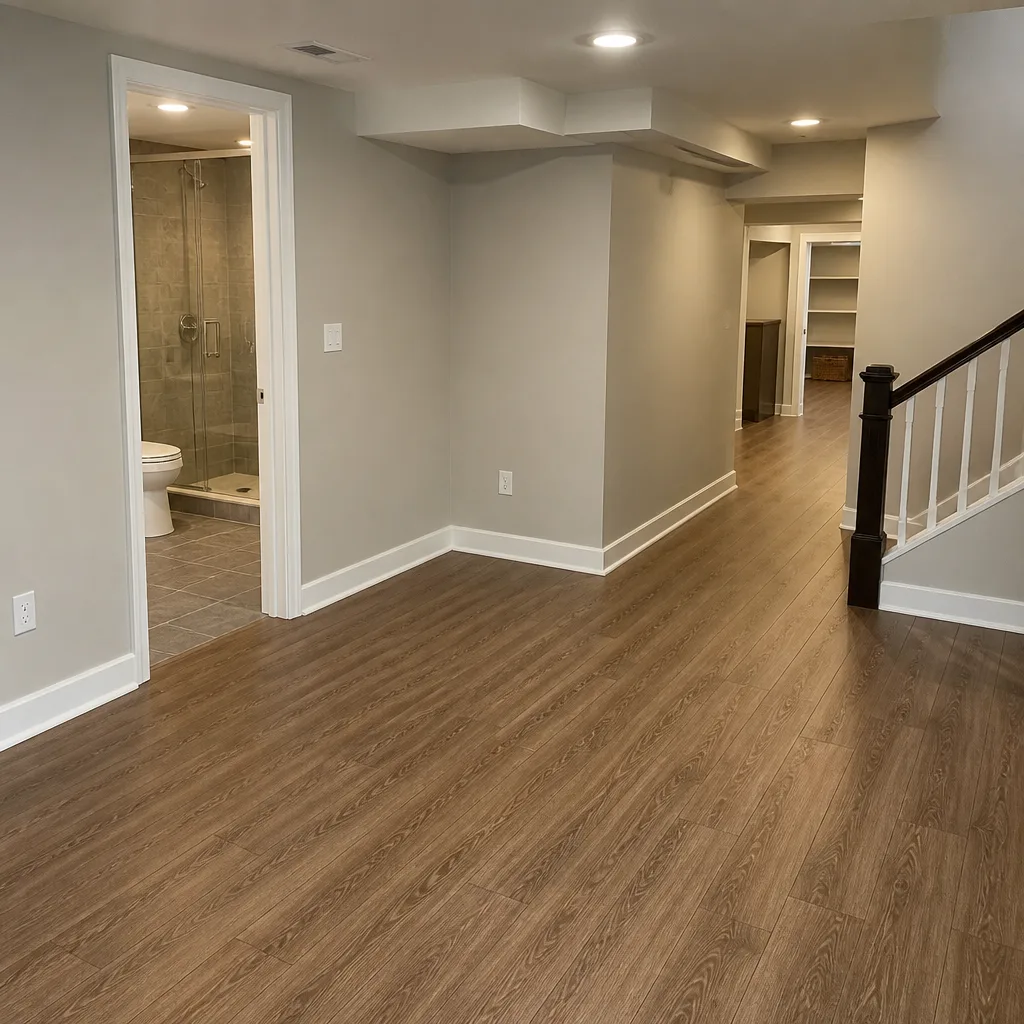
 Before
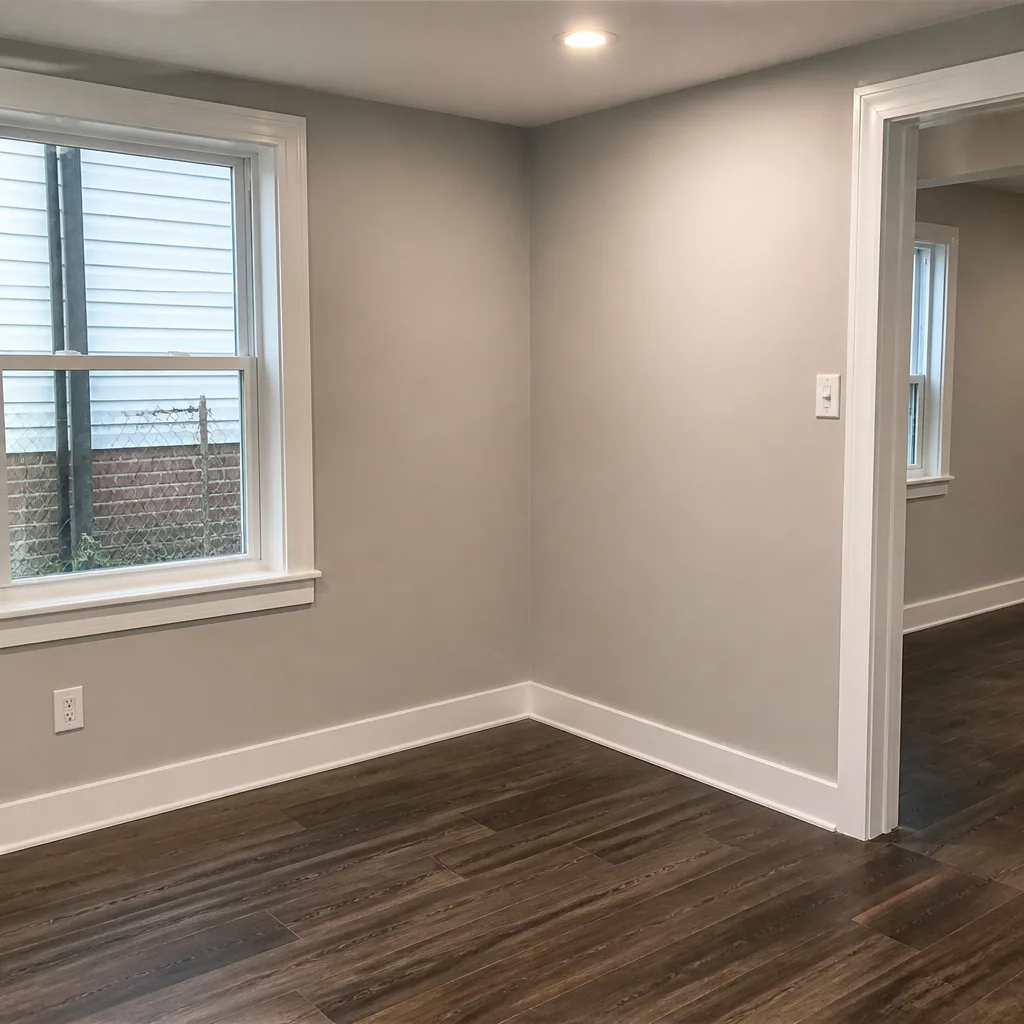 After
After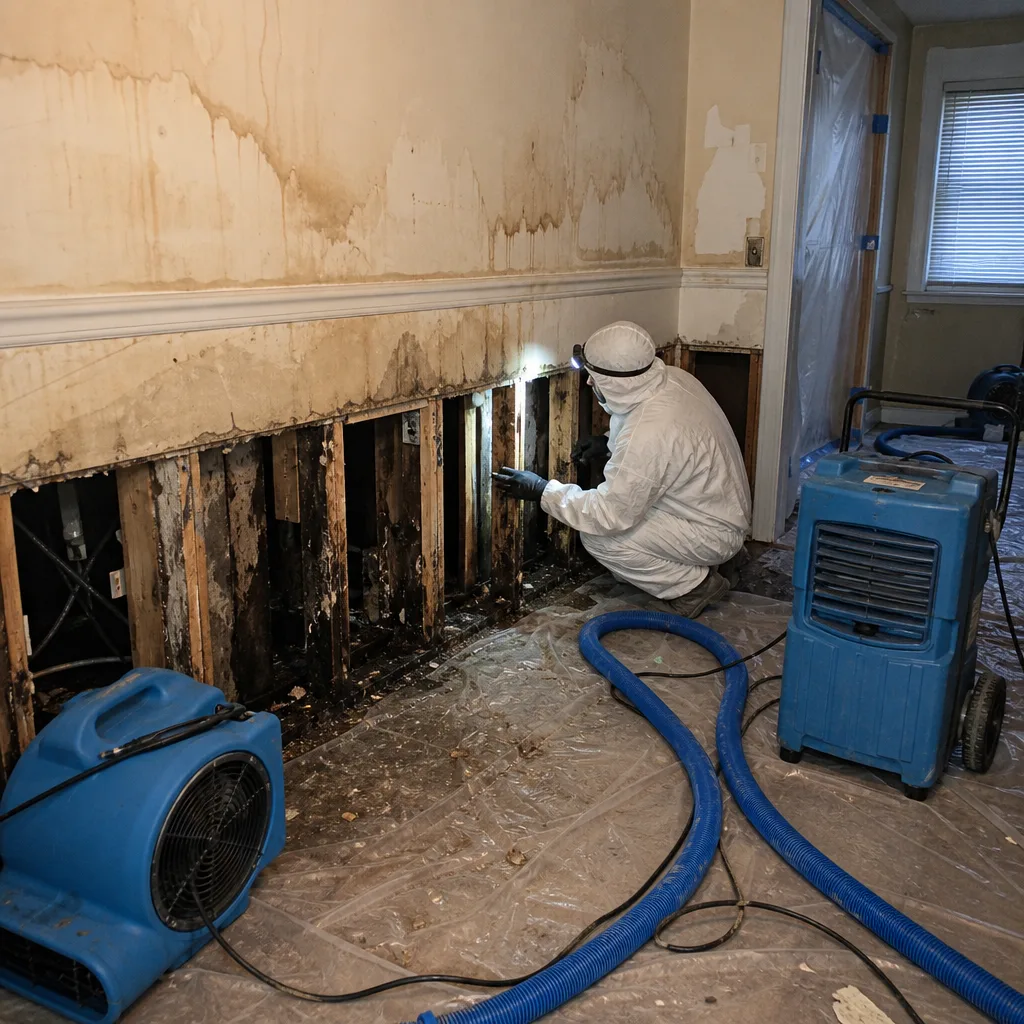 Before
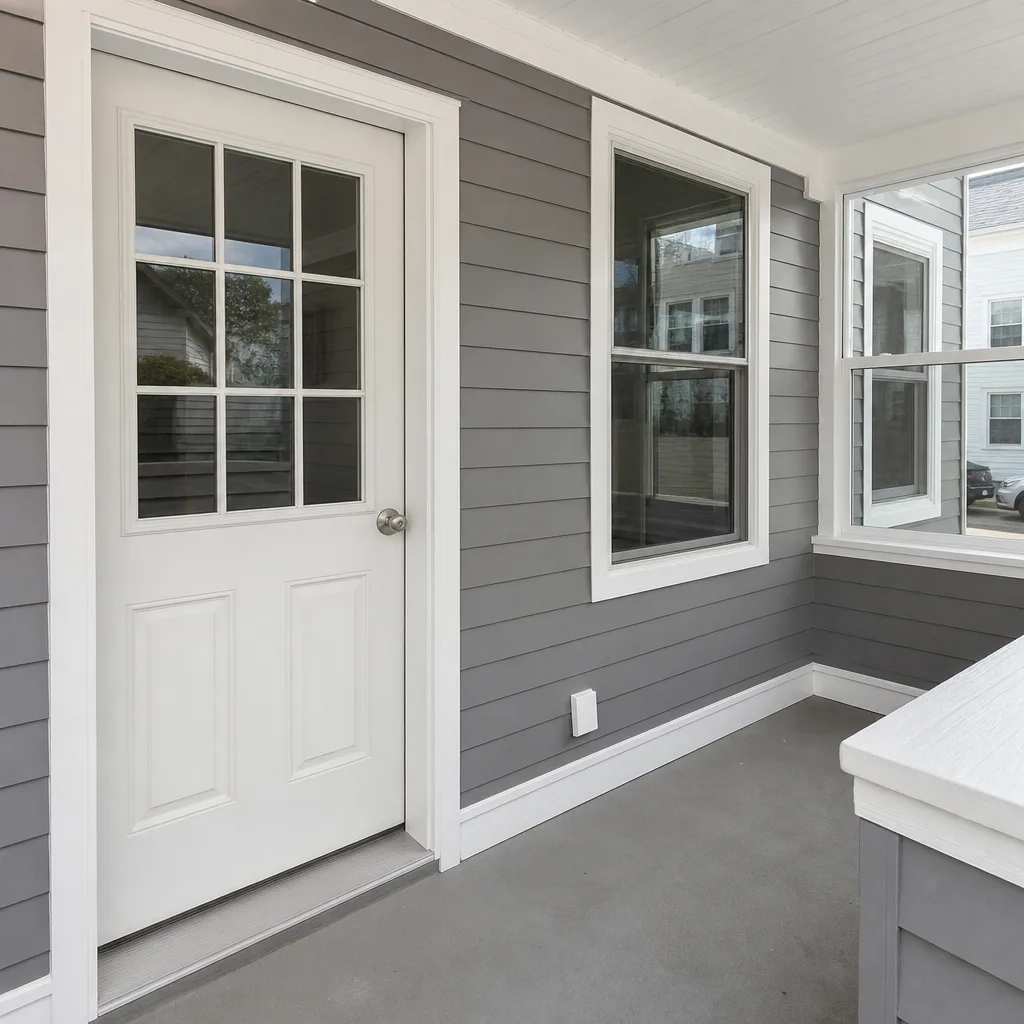 After
After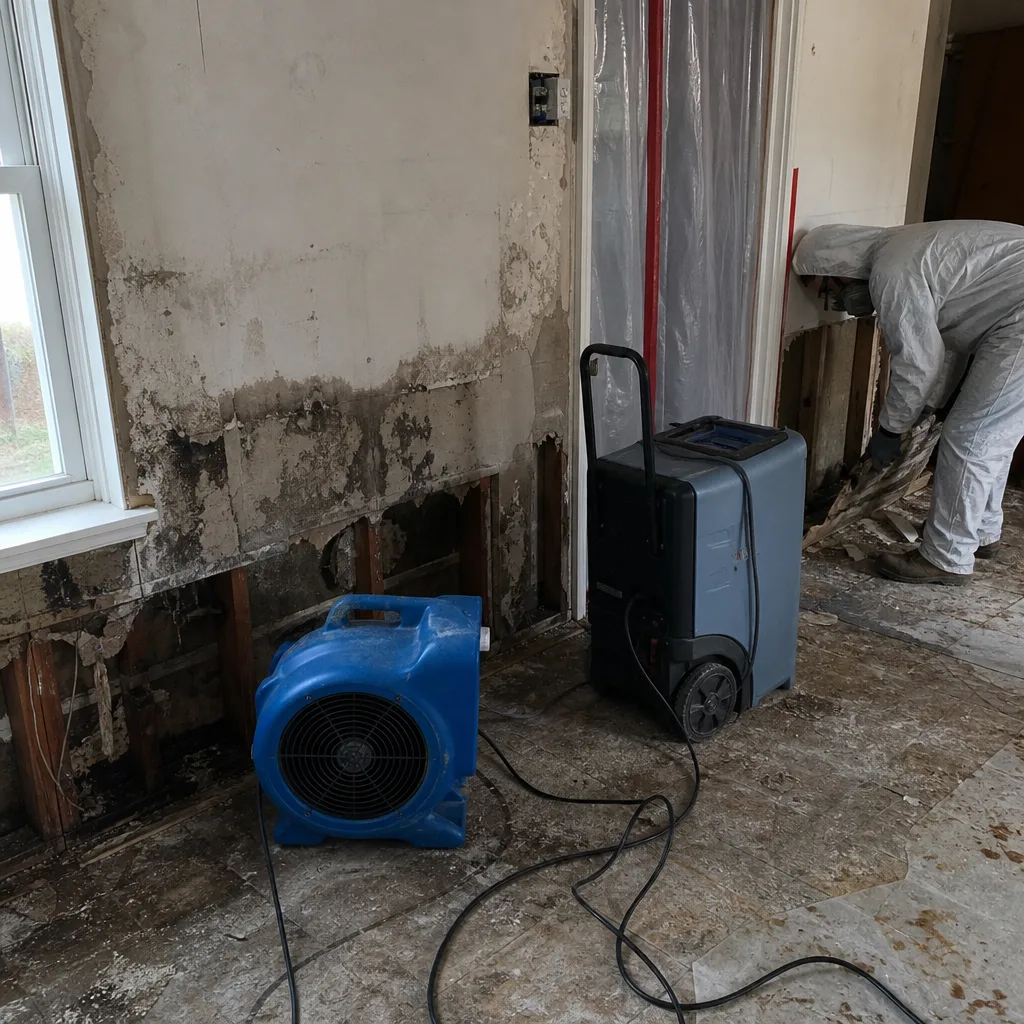 Before
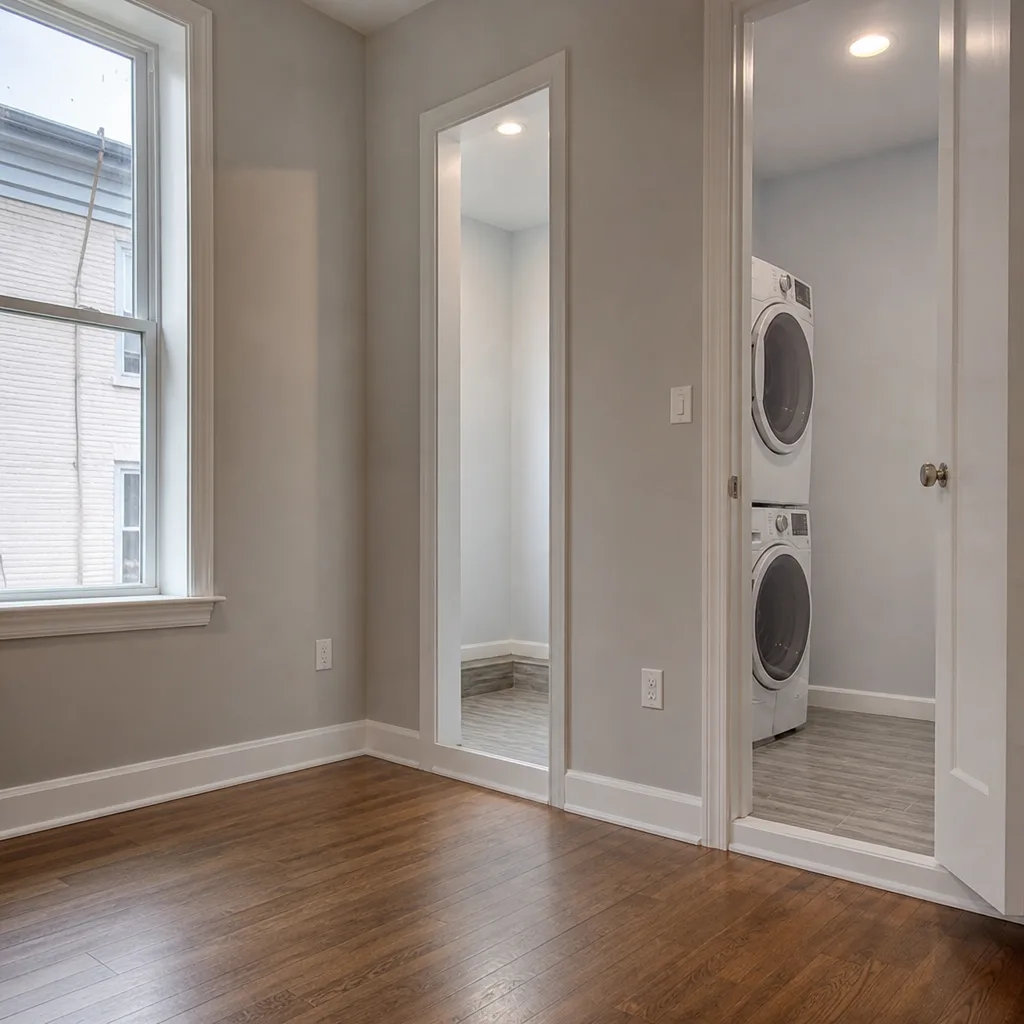 After
After24/7 Emergency Water Damage Restoration in Lower Manhattan
Water damage restoration in Lower Manhattan typically costs $2,800-$7,400 for a Category 2 event in a 1,200-square-foot apartment, and emergency extraction crews can reach most addresses below Canal Street within 45 minutes. If you’re looking at a rising water line right now, call (640) 400-9404. A live dispatcher answers at 2 a.m., not a recording, and the first hour decides whether you’re drying Sheetrock or replacing it.
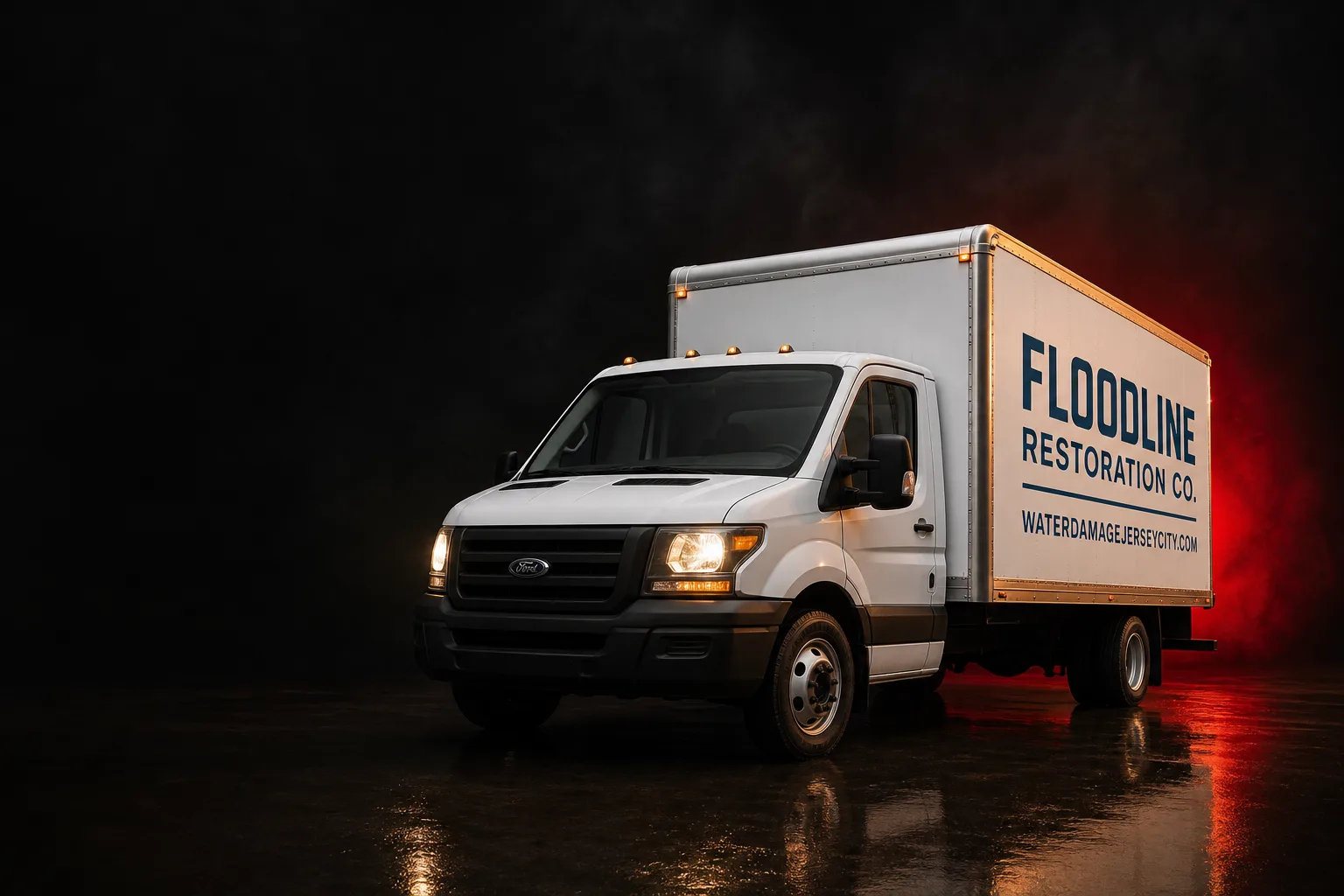
Floodline Restoration Co. serves every neighborhood below Canal Street from the Financial District to Battery Park City, Tribeca to the Seaport. We’re the Water Damage Restoration team that shows up in uniform, equipment on the truck, and starts extraction the same visit. Free visual inspection. Done right, and backed in writing.
Understanding Water Damage Restoration Severity in Lower Manhattan Properties
Water damage in Lower Manhattan is classed by contamination, and here that classification carries weight most inland contractors never deal with. Category 1 water is clean, from a supply line or a burst pipe. Category 2 carries biological or chemical contaminants, from a broken dishwasher or a sump overflow. Category 3 contains sewage, seawater, or standing ground water. Here’s what changes in Lower Manhattan: any storm surge, any tidal flooding, any water that entered from the street, basement, or elevator pit during a nor’easter is Category 3, period. The East River and New York Harbor are not clean water sources.
Severity also runs on a scale of how far the water traveled. In a converted prewar walk-up on Chambers Street, a leak on the fourth floor can run through three levels of lathe and plaster before it pools in a mechanical room. That’s a Class 3 loss: water from above, saturated walls, water in the air. We read that with moisture mapping and thermal imaging, the same way a doctor reads a chart, before we quote a dollar figure. In Battery Park City high-rises, a burst fixture line on the 20th floor travels down through chase walls into electrical closets. The drying plan has to follow the water path, not just the puddle.
Why Lower Manhattan Property Owners Choose Floodline Restoration Co.
- 45-minute response commitment: Our dispatch is built around a live board, not a call center script. When you call, a person answers, and a crew is routed from inside Lower Manhattan, not from another borough.
- 24/7 live answer: A real dispatcher picks up at any hour, every day. You’ll never reach voicemail or a national answering service when a riser cracks at midnight on Water Street.
- IICRC-certified crews: Our technicians hold WRT, FSRT, and AMRT certifications and arrive in uniform, background-checked, trained to IICRC, RIA, and IFA standards.
- Free visual inspection: We’ll walk the property, identify the Category and Class of loss, and tell you what we’d do and why, before any work is authorized.
- Direct insurance billing: We bill the carrier directly, coordinate with your adjuster, and hand you a complete documentation packet, including moisture logs and a line-item scope.
- One team from extraction to reconstruction: The same certified crew that maps moisture on day one handles daily readings and rebuilds what needs rebuilding. No mid-job handoff, no inherited crew.
Our Water Damage Restoration Process
Inspection & Assessment
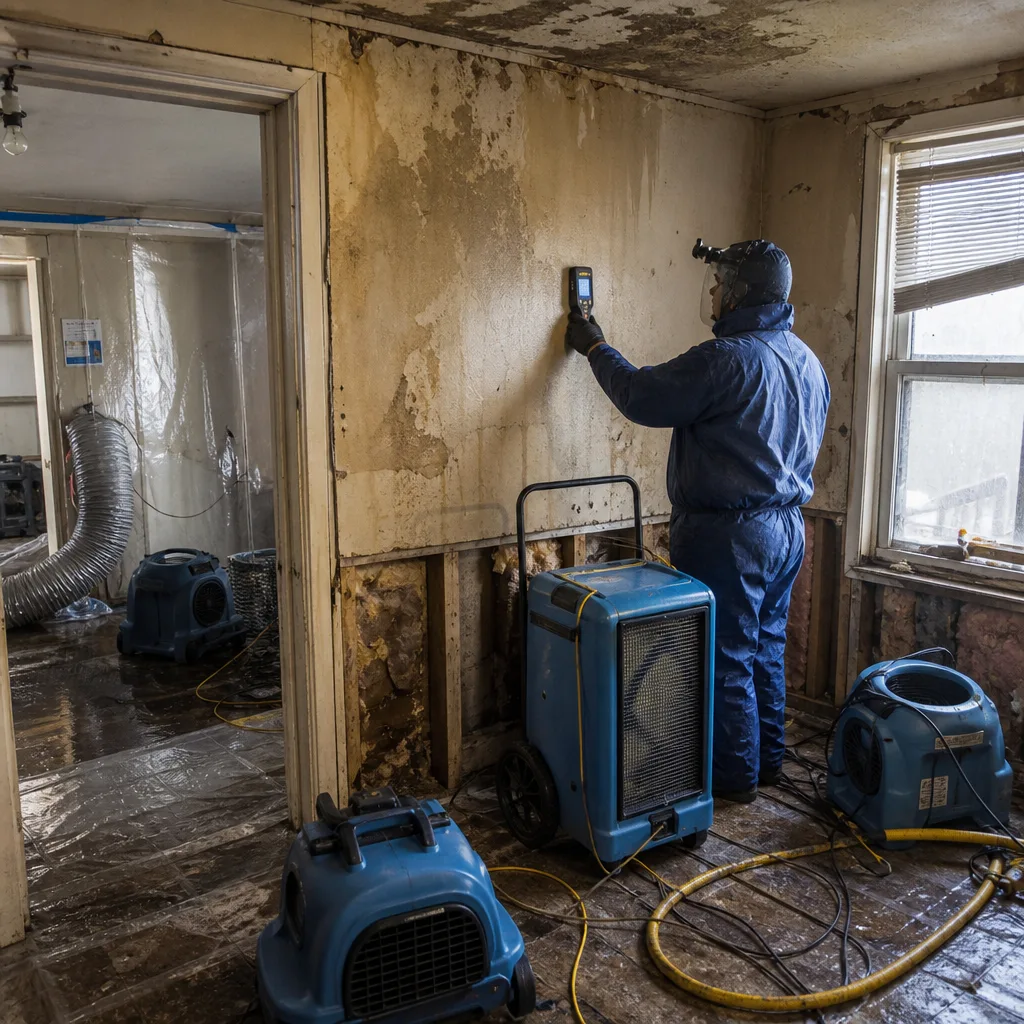
We arrive, identify the water source, and classify the loss. Thermal imaging and moisture meters tell us where the water actually went, including inside walls and under flooring our eyes can’t see. In Lower Manhattan basements and mechanical rooms, we always inspect electrical vaults and elevator pits first.
Extraction & Stabilization
Standing water comes out with truck-mounted and portable extraction units. If the event is from a surge or a sewage backup, we establish containment before anything moves, so contaminated water doesn’t spread into clean areas.
Drying & Dehumidification
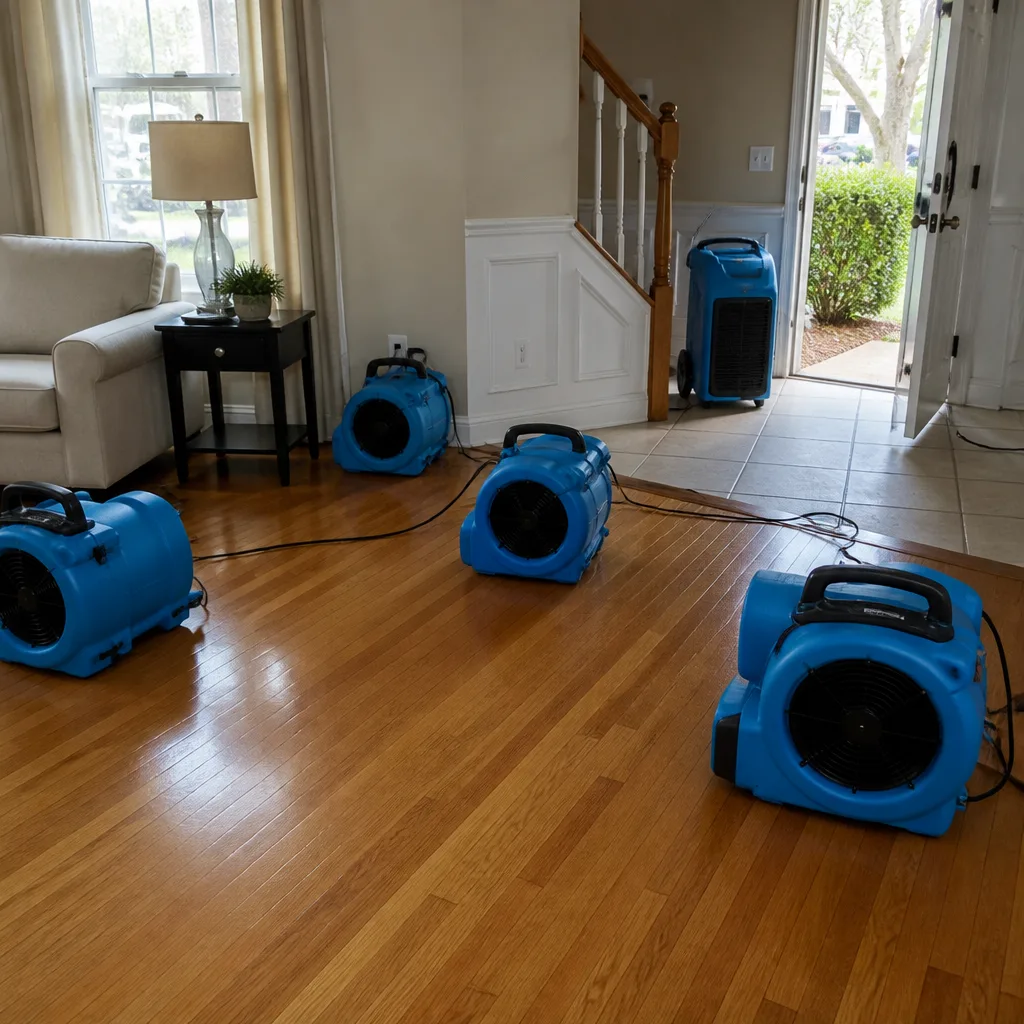
We set Dri-Eaz and Phoenix desiccant and LGR dehumidifiers, plus high-velocity air movers, and track moisture daily with a written drying log. The dry standard in a saltwater event is stricter than inland because chloride holds moisture in concrete and masonry longer.
Cleaning & Sanitization
All affected surfaces are cleaned, and Category 2 or 3 water calls for antimicrobial treatment. Drywall that’s beyond threshold comes out. The line the water left is where we start, but what’s behind that line is where the mold risk lives.
Salt-Specific Corrosion Treatment
In Lower Manhattan, we go one step further than a standard drying protocol. Electrical panels, conduit, and structural steel that took brine are inspected for chloride residue and treated or flagged for the building’s engineer. This is the step inland franchises don’t perform because they’ve never had to.
Repairs & Restoration
When the dry standard holds, we rebuild. Drywall, trim, flooring, paint, and any mechanical components that need replacement. It’s the same crew that started the job, and it’s backed by the 90-Day Done Right Promise, in writing.
Need Emergency Water Damage Restoration in Lower Manhattan Now?
Crews minutes away, answering live 24 hours a day. The sooner we start, the less it costs.
Working With Your Insurance Company
Insurance is in the room on nearly every Lower Manhattan water loss, whether it’s a burst pipe in a Tribeca loft or a nor’easter surge in a Financial District basement. We’ve been handling these claims since 2010, and we know what adjusters need to approve a line-item scope without weeks of back-and-forth. You shouldn’t be playing messenger between us and your carrier. We handle that.
From the first hour, we document the loss the way an adjuster reads it: room-by-room photos, moisture readings with date and time stamps, and a written scope of work that matches how insurance policies are actually written. We carry the claim forward, invoice the carrier directly, and send you the paperwork as it moves. No surprises on the bill, and you’re not left holding a phone wondering who to call. Our Lower Manhattan crew knows the carriers that write policies here and the adjusters who work those claims.
What We Provide Your Insurer
- Thorough documentation of the loss
- Photos of all damage, room by room
- Moisture readings and drying logs
- A detailed, line-item scope of work
- Direct coordination with your carrier
Built for Lower Manhattan’s Loss Calendar
Water damage in Lower Manhattan follows the seasons, and different months bring different calls. January and February are the months for burst supply lines and cracked risers in prewar buildings, when a cast-iron pipe that has been holding pressure for 90 years finally lets go at 3 a.m. and floods a basement mechanical room on Pearl Street. In March and April, we get seepage through foundation walls in older buildings where the water table rises with the thaw, and it creeps into sub-grade storage rooms before anyone notices an odor.
Summer thunderstorms bring a different pattern: flat roofs on converted office towers collect water faster than scuppers can drain it, and it finds its way down through ceiling plenums into top-floor units. And from August through October, the nor’easter and hurricane season is the one we watch most closely here. Lower Manhattan’s three-sided water exposure and FEMA Zone AE designation mean every named storm is a potential Category 3 event. We keep crews staged and equipment loaded when the track turns toward New York Harbor, because surge water doesn’t wait for normal business hours.
Water Damage Restoration Across Lower Manhattan’s Neighborhoods
Lower Manhattan packs more building types into one square mile than most cities fit into ten. That changes how we approach every job. In Tribeca, we’re working in 19th-century cast-iron and timber-beam warehouse lofts where the water runs along original wood joists and soaks into brick party walls. In the Financial District, the buildings are taller, the risers are older, and a leak on the 30th floor can cascade through multiple units before it shows up in a lobby ceiling. Battery Park City is different again: those 1980s and 1990s complexes sit on Hudson River landfill, and we see cracked waterproofing membranes and lateral water migration into underground parking levels that never touches a wall the owner can see.
The Seaport and the Lower East Side edges carry their own patterns. Older, smaller buildings with shared walls mean water from one unit becomes the neighbor’s problem within hours. On Broad Street and Exchange Place, sub-basements house elevator pits and switchgear at grades that put them directly in the path of any tidal surge. We run local dispatch routes that account for all of this, from the West Side Highway to the FDR Drive, from Chambers Street down to Battery Park.
Specialized Water Damage Restoration Services We Offer in Lower Manhattan
Emergency Water Extraction
When water is standing in a Lower Manhattan apartment or lobby, every hour it sits expands the damage. We arrive with truck-mounted extraction units, pull the water out, and start the drying plan that same visit. In a high-rise with elevator shutdowns, our crews carry portable extraction gear up the stairs, because a broken elevator can’t be allowed to double the damage.
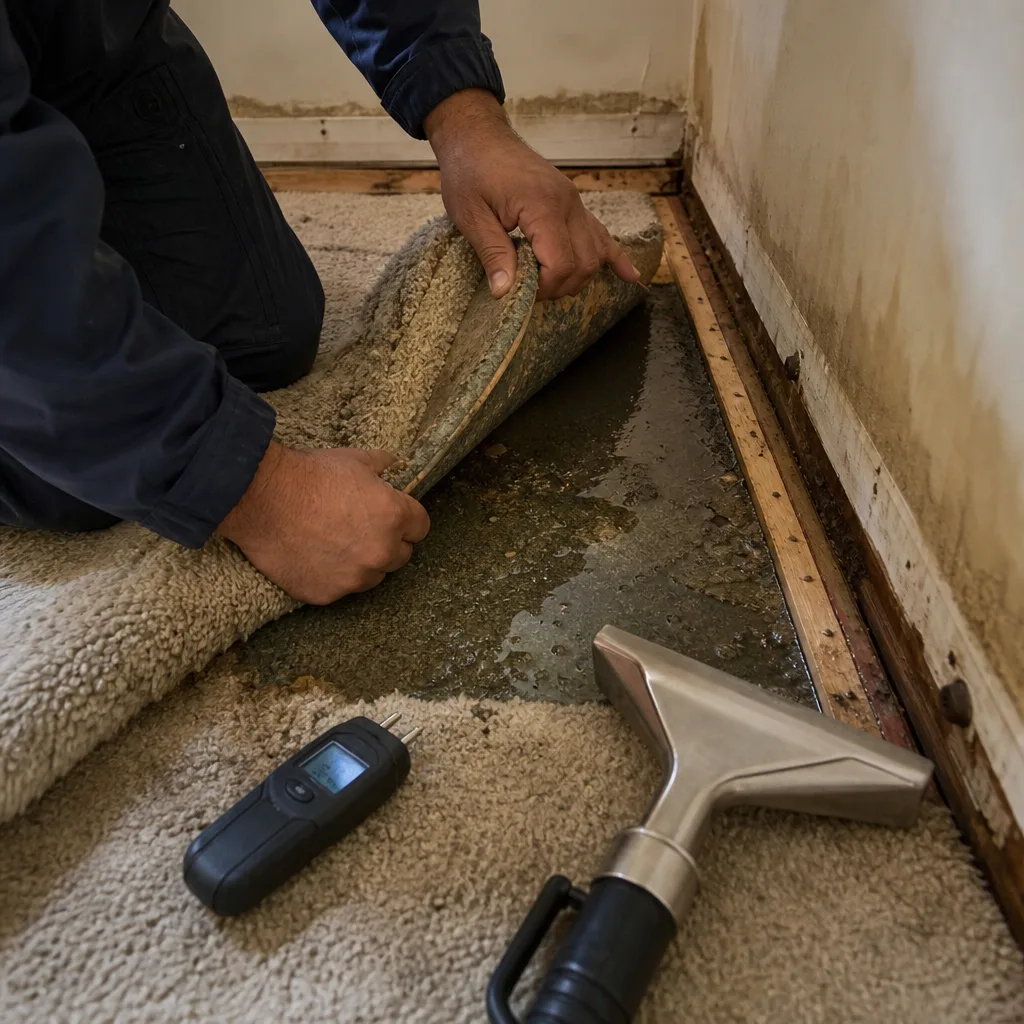
Structural Drying & Dehumidification
Drying a Lower Manhattan building means drying masonry, not just drywall. Brick absorbs water and releases it slowly, which is why we run Dri-Eaz LGR 7000XLi desiccant units and Phoenix dehumidifiers longer here than we would in a suburban wood-frame house. Daily moisture readings become a written log you and your carrier both get. The job isn’t done when the floor feels dry; it’s done when the meter says the dry standard holds.
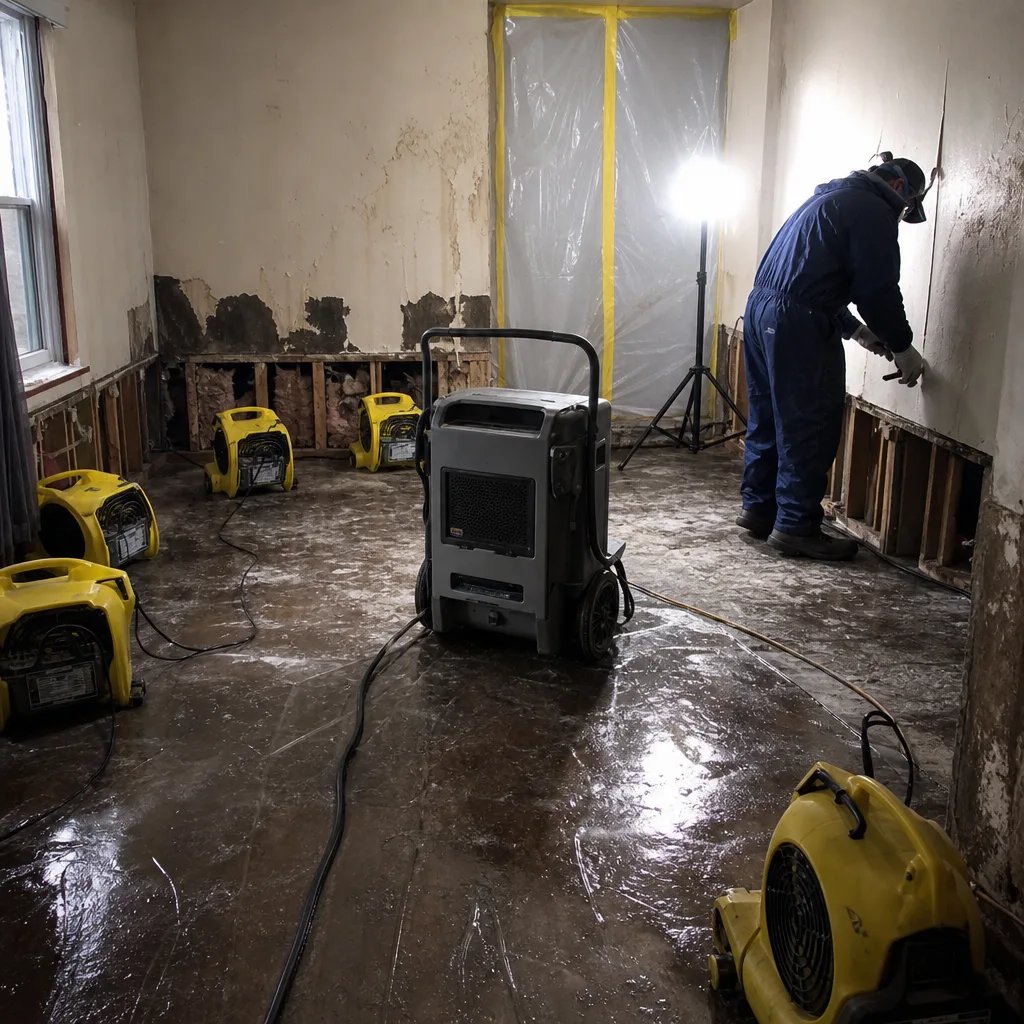
Flood Cleanup
Flood water here is not clean water. Storm surge, sewer overflow, and tidal intrusion all carry Category 3 contamination. We establish containment, strip contaminated materials, disinfect what can be saved, and remove what can’t. In a FEMA Zone AE property, we treat every flood as a Category 3 event, which means the cleanup protocol starts from a different place than a broken pipe call in an inland borough.
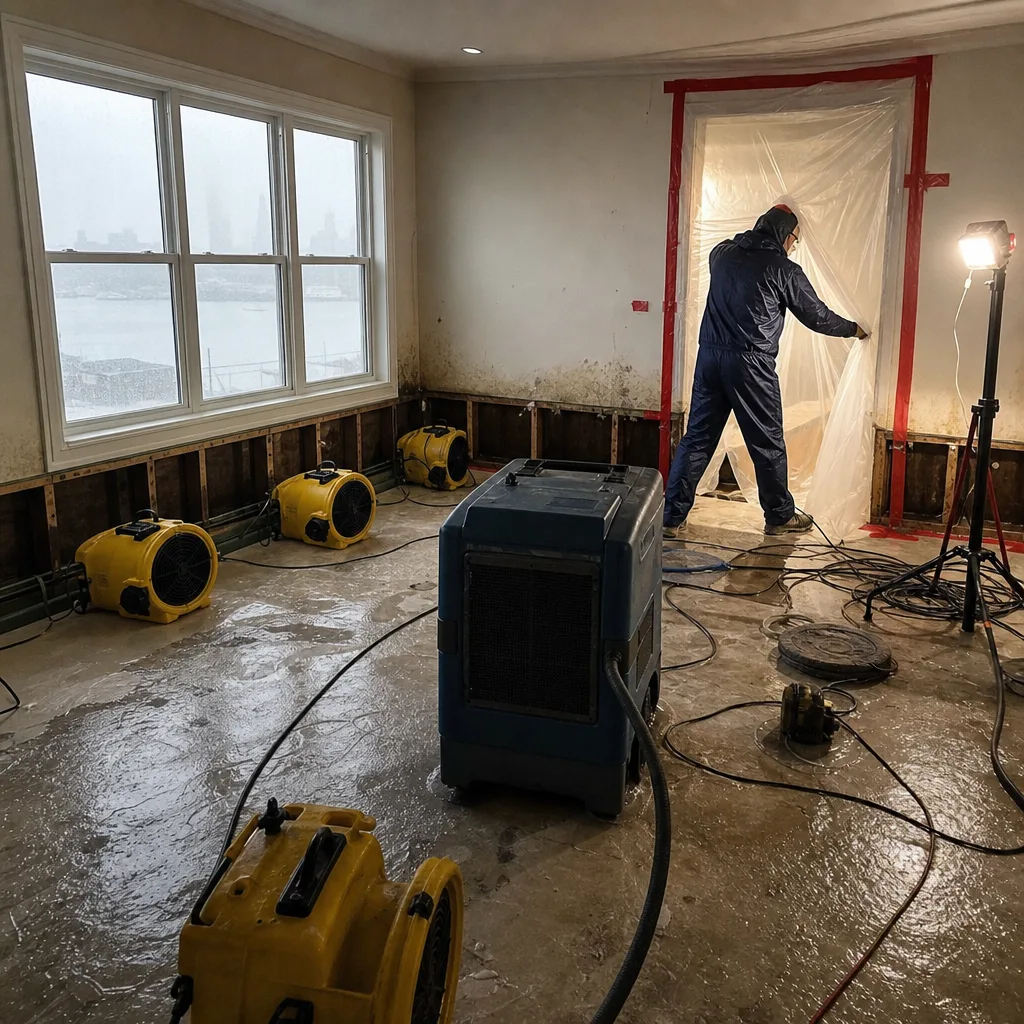
Burst Pipe Restoration
A burst pipe in a prewar building is rarely just a plumbing fix. The water travels through walls, under floors, and into the unit below. We trace the water path with thermal imaging, dry what’s salvageable, and replace what’s not. Then we rebuild. The same crew that pulled the water out is the crew that finishes the drywall and paint.
Basement Water Removal
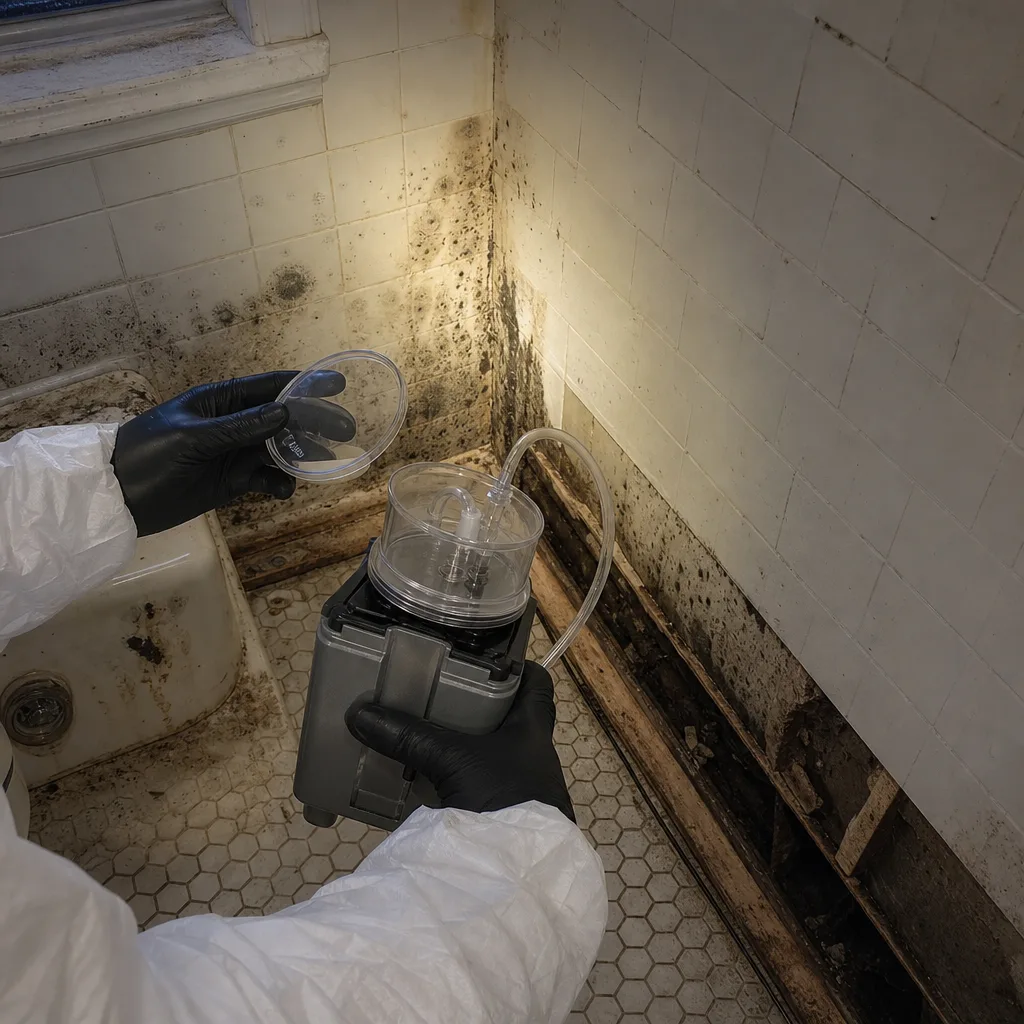
Lower Manhattan basements are often home to boilers, electrical switchgear, and elevator pits. Water in those spaces is a mechanical emergency, not just a cleanup job. We extract, inspect the electrical components for signs of corrosion, and advise on what needs replacement before you turn the power back on. In some buildings, the basement is also the building’s spine; we treat it that way.
What happens when you call
- 1
A real person answersNo phone trees - you reach a local pro.
- 2
You get an upfront price rangeHonest numbers before anyone is dispatched.
- 3
A background-checked tech heads outLicensed & insured, dispatched right away.
- 4
You approve before work beginsNothing starts until you say go.
Water Damage Restoration Costs in Lower Manhattan, NY
For a typical Category 2 water event in a Lower Manhattan apartment, most homeowners see a final bill between $2,800 and $7,400, including extraction, drying, drywall replacement, and basic finishes. A Category 3 sewage or surge event runs higher, commonly $6,000 to $14,000, because of containment, antimicrobial treatment, and the disposal of contaminated materials. Emergency water extraction alone for a contained bathroom leak usually lands between $700 and $1,600 in this market. Those are the numbers we quote on the ground, not a national average from a website.
What moves the price: how far the water traveled, how long it sat, whether finish carpentry or custom cabinetry was in the path, and whether the event touched electrical. In Battery Park City and the Financial District, access costs matter too: working on the 40th floor with a freight elevator reserved is a different job than a walk-in basement on Reade Street. If insurance is involved, your out-of-pocket is your deductible, and we bill the carrier directly. The free inspection gives you a firm written scope before you commit. Call (640) 400-9404 to schedule one.
We Also Serve Cities Near Lower Manhattan
Our crews also cover the surrounding New York City areas, including Midland Beach, New Springville, Oakwood, and the Travis – Chelsea area. If you’re outside Lower Manhattan proper but need the same live-answer dispatch and certified crews, call the same number. A live person picks up either way.
Lower Manhattan Water Damage Restoration Questions, Answered
How does saltwater flooding in Lower Manhattan differ from freshwater water damage in terms of restoration approach?
Saltwater flooding is treated as a Category 3 contamination event with an additional corrosion risk that freshwater doesn’t carry. The saltwater itself leaves chloride residue in electrical panels, conduit, and structural steel, which corrodes over months and years. Our restoration approach for any surge event in Lower Manhattan includes a salt-specific corrosion inspection that we don’t perform on standard freshwater jobs because it isn’t needed. Call (640) 400-9404 to talk through what that means for your building.
Why do Battery Park City buildings sometimes show water damage years after a storm even if they were ‘properly’ restored at the time?
Battery Park City sits on Hudson River landfill, and differential settlement cracks the waterproofing membranes under those complexes. A minor plumbing leak can travel laterally through the cracked membrane into underground parking and mechanical areas without ever appearing as a visible puddle in a living space. The original restoration may have dried the visible area thoroughly; the hidden chloride residue or trapped moisture behind a membrane wasn’t reached then, so it emerges as corrosion or mold years later. When we dry a Battery Park City sub-grade space, we look for that lateral path, not just the standing water.
Do Lower Manhattan restoration contractors need to treat water from a nor’easter differently than water from a broken pipe?
Yes, and the reason is defined by FEMA: most of Lower Manhattan sits in Flood Zone AE, which means any water that enters during a nor’easter or hurricane is assumed to be Category 3 contaminated water from sewage, tidal surge, or both. A broken supply line inside your unit is Category 1. The cleanup protocol, the antimicrobial requirement, and the material removal thresholds are entirely different. Any contractor quoting the same treatment for both is not reading the situation correctly. Call us and we’ll explain the difference on your specific loss.
What should I look for in a Lower Manhattan water damage restoration company’s moisture reading protocol?
You want a daily written log with actual moisture content numbers, not a verbal “it feels dry.” A proper protocol takes readings at the same test points daily, tracks them against the dry standard for the material type, and gives you an updated record after every visit. For saltwater events, you also want confirmation that chloride residue in concrete and masonry has been addressed, because meter readings alone won’t tell you about corrosion that’s already underway. Floodline Restoration Co. hands you the log in writing after every reading. That’s the Keystone Standard.
How does the age and construction of Lower Manhattan buildings affect structural drying times after water damage?
Material alone changes drying timelines significantly. Brick party walls in 19th-century Tribeca buildings release moisture slowly, as do the terra cotta block and concrete used in older Financial District office towers. A wood-frame suburban wall might dry to standard in three days. A saturated brick wall in an 1890s loft often needs five to seven days. We set that expectation honestly and run the equipment accordingly. Our crews have been reading moisture in these exact buildings long enough to know when a wall is really dry.
How fast can a crew actually reach my Lower Manhattan location?
Our commitment is 45 minutes to most Lower Manhattan addresses, and crews are stationed inside the area. If you call at 2 a.m. with a burst pipe on Pearl Street, the dispatcher who answers is the same person routing the crew. There’s no voicemail in that chain. For a storm-surge event when the whole neighborhood is calling, we run a triage list, and we’ll tell you honestly where you sit on it. Call (640) 400-9404 and we’ll give you a straight answer.
Will my insurance cover water damage from a Lower Manhattan storm surge?
Most homeowners and condo policies cover water damage from a burst pipe or an appliance failure, but storm surge is often excluded unless you carry separate flood insurance, typically through NFIP. That’s a hard truth, and we won’t soft-pedal it. We’ll still document the loss thoroughly, bill the carrier directly where coverage exists, and give you a clear picture of what’s covered and what isn’t before work starts. No one should find that out after the walls are open.
Do I need full restoration or just a cleanup after a small Lower Manhattan water event?
If the water was clean, came from a supply line, and was extracted within a few hours, a targeted cleanup and drying may be all you need. If it was Category 2 or 3, or if the water sat overnight, or if it reached behind walls or under flooring, a full restoration protocol is the honest answer. We’ll tell you which one applies. The free inspection exists so you can make that call based on a written assessment, not a phone guess. Book one at (640) 400-9404.
Serving Lower Manhattan, NY - Our Local Coverage Area
We’re based in the Lower Manhattan area and know this community well. Use the map below to see our service coverage - if you’re nearby, we can almost certainly help.
Start With a Free Assessment in Lower Manhattan
If water is moving through your property right now, stop reading and call (640) 400-9404. A live dispatcher answers, and a certified crew starts toward your Lower Manhattan address. If you’re assessing damage after the fact, we’ll schedule a free visual inspection, write up a firm scope, and walk you through what insurance will and won’t cover. We’re Floodline Restoration Co., founded in 2010 by Curt Bowman, and we’ve built this company around a simple promise: the line the water left is where we start, and we don’t leave until the job is done right, and backed in writing. The 90-Day Done Right Promise means exactly what it says.
Written by Curt Bowman, Owner at Floodline Restoration Co., serving Lower Manhattan and the surrounding New York City area.