
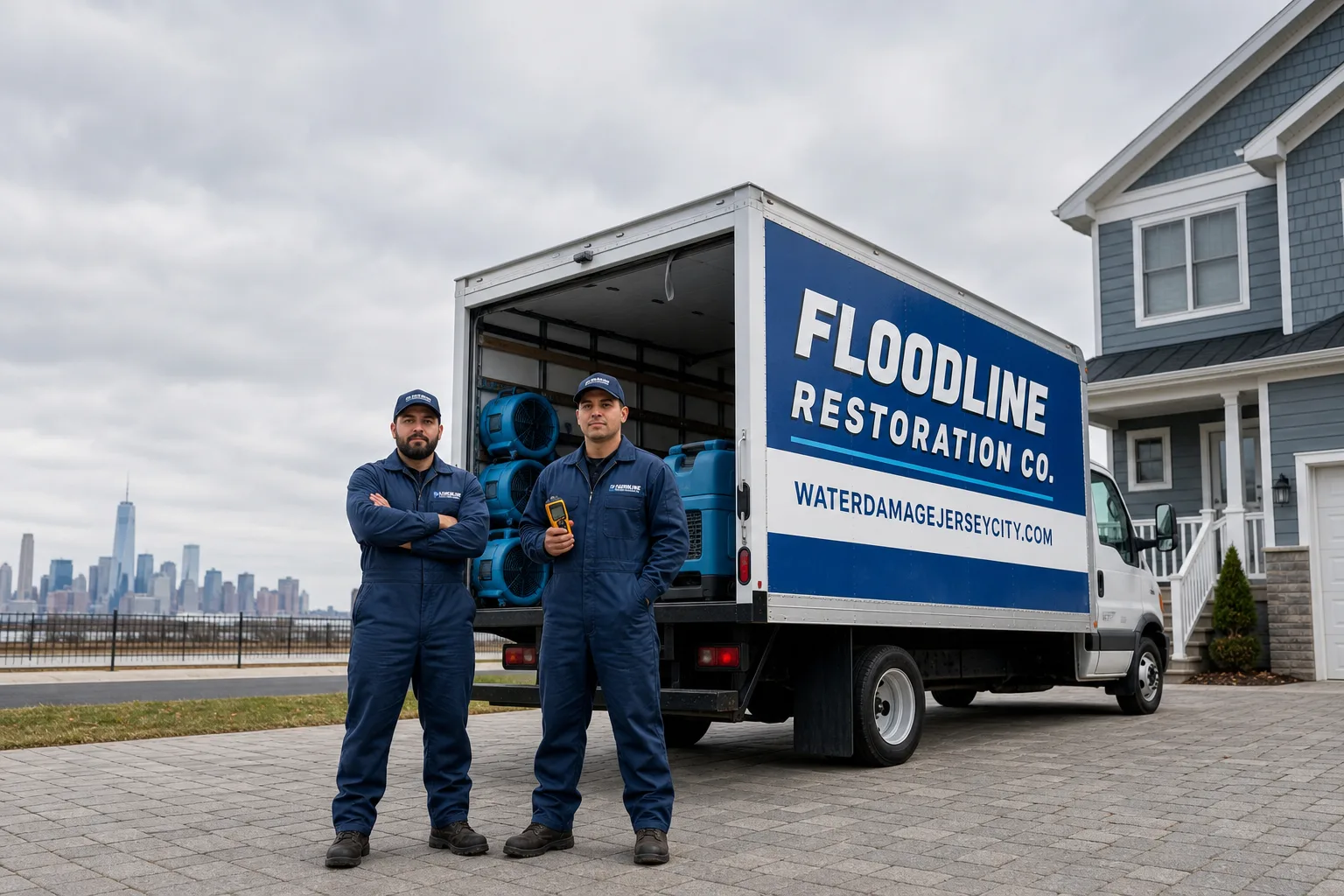
Free visual inspection and a written scope of work before any mitigation begins - photos, moisture readings, and drying logs go in your claim file
The scope we write is the scope we bill. Anything new gets shown to you, in writing, before we touch it.
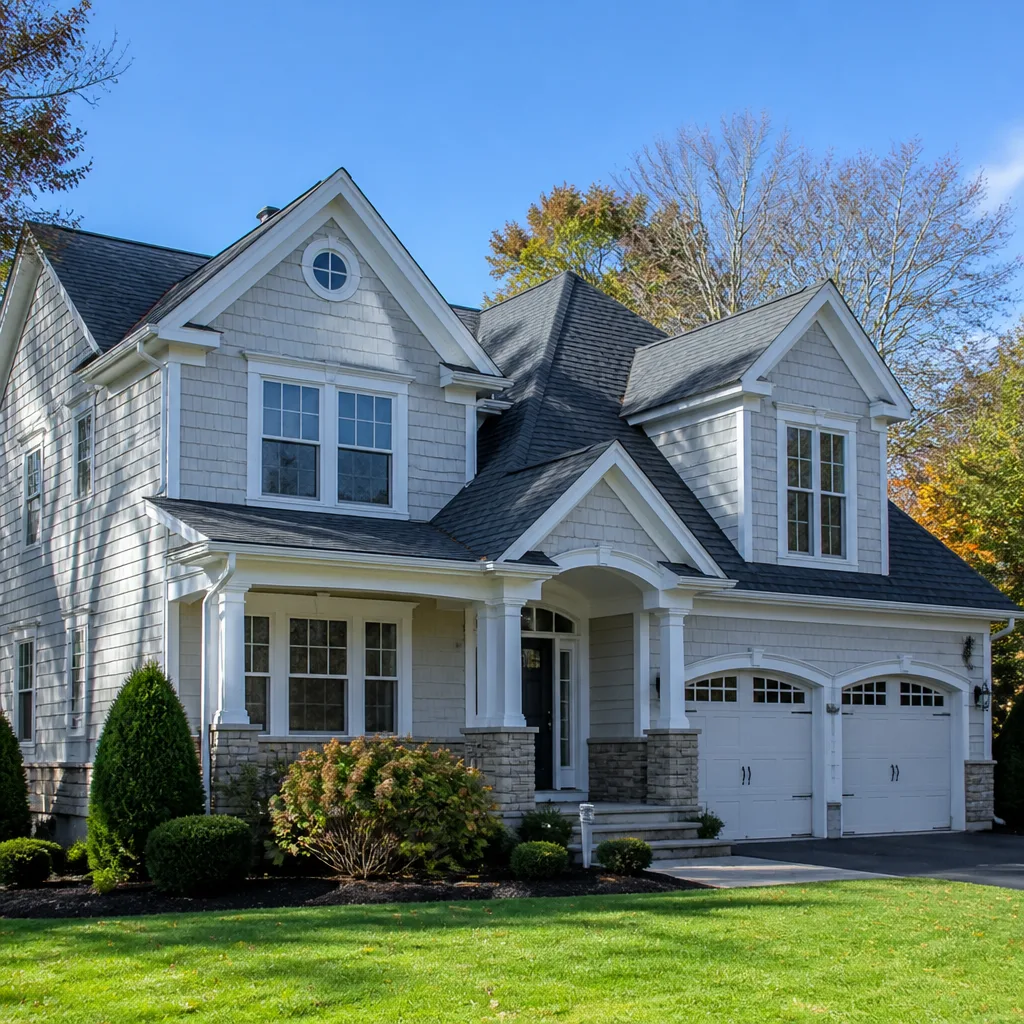
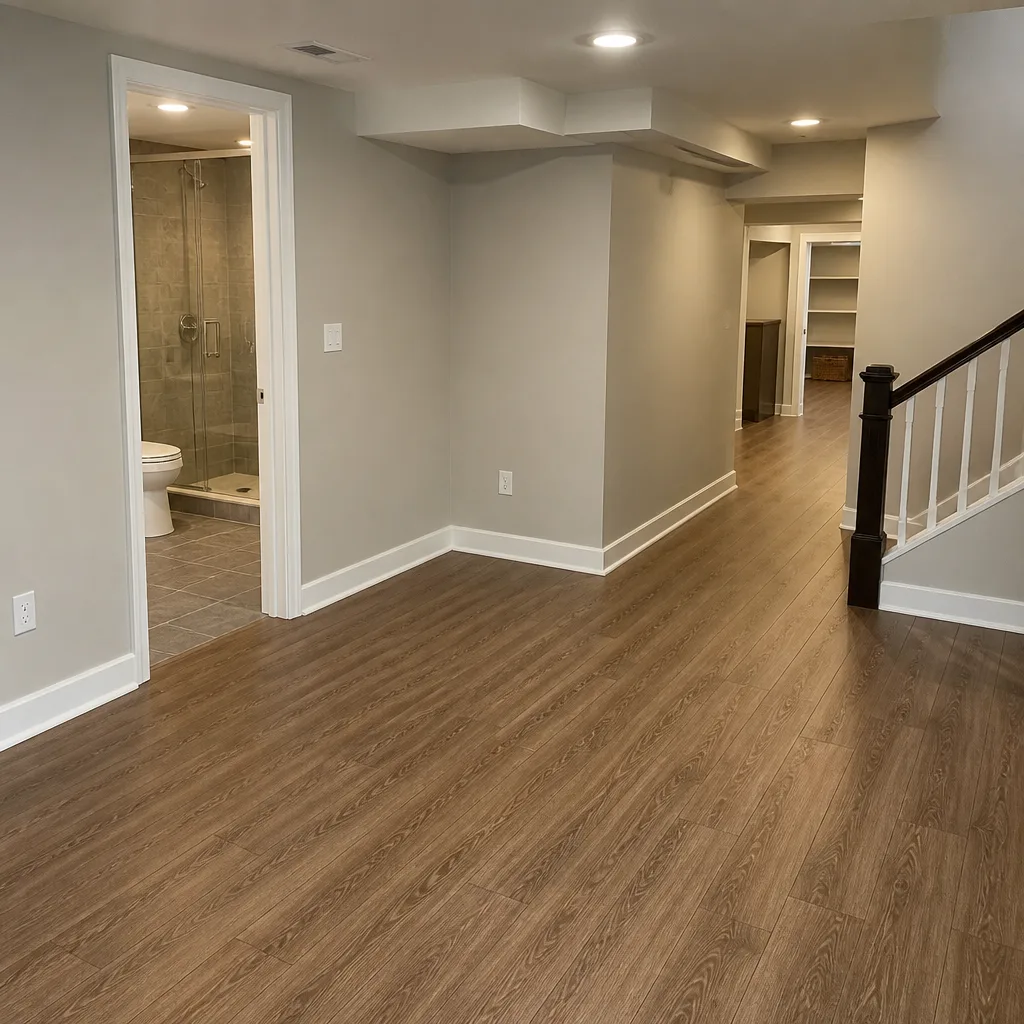
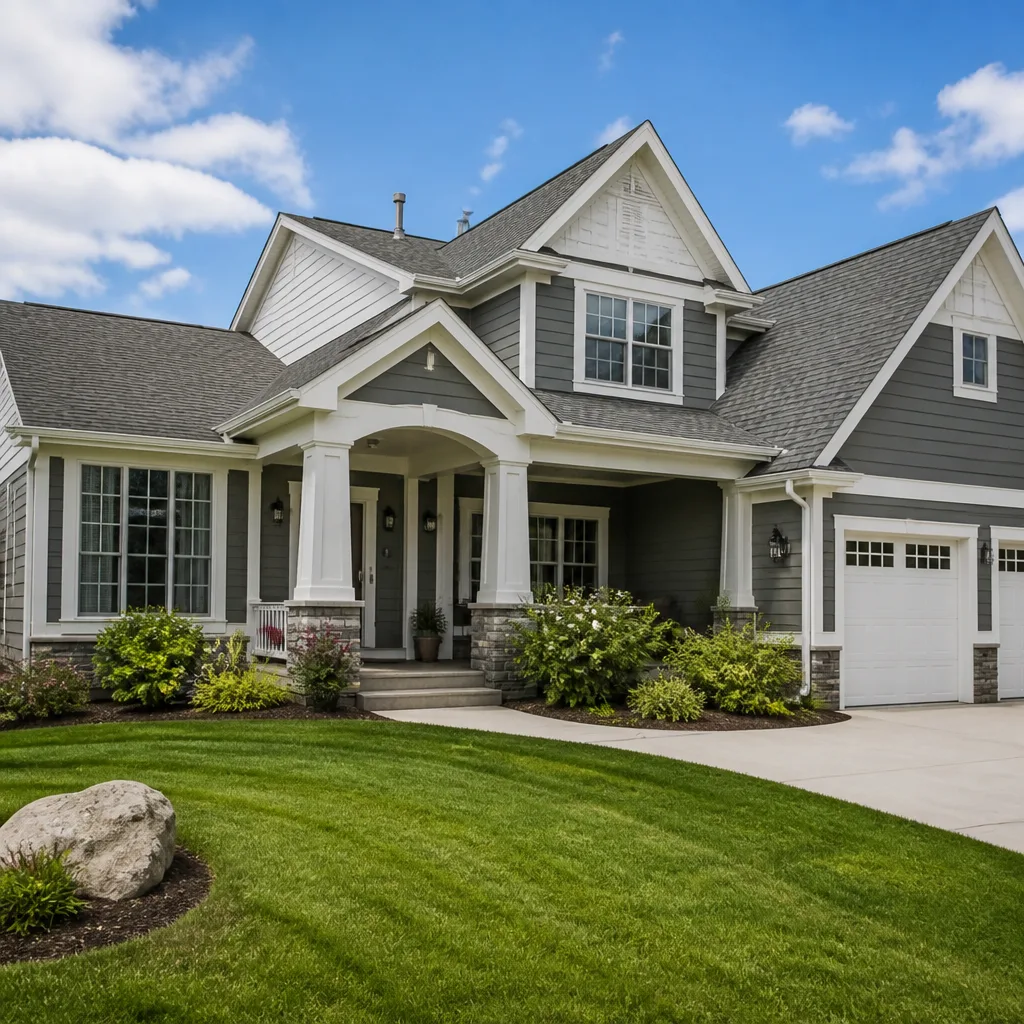
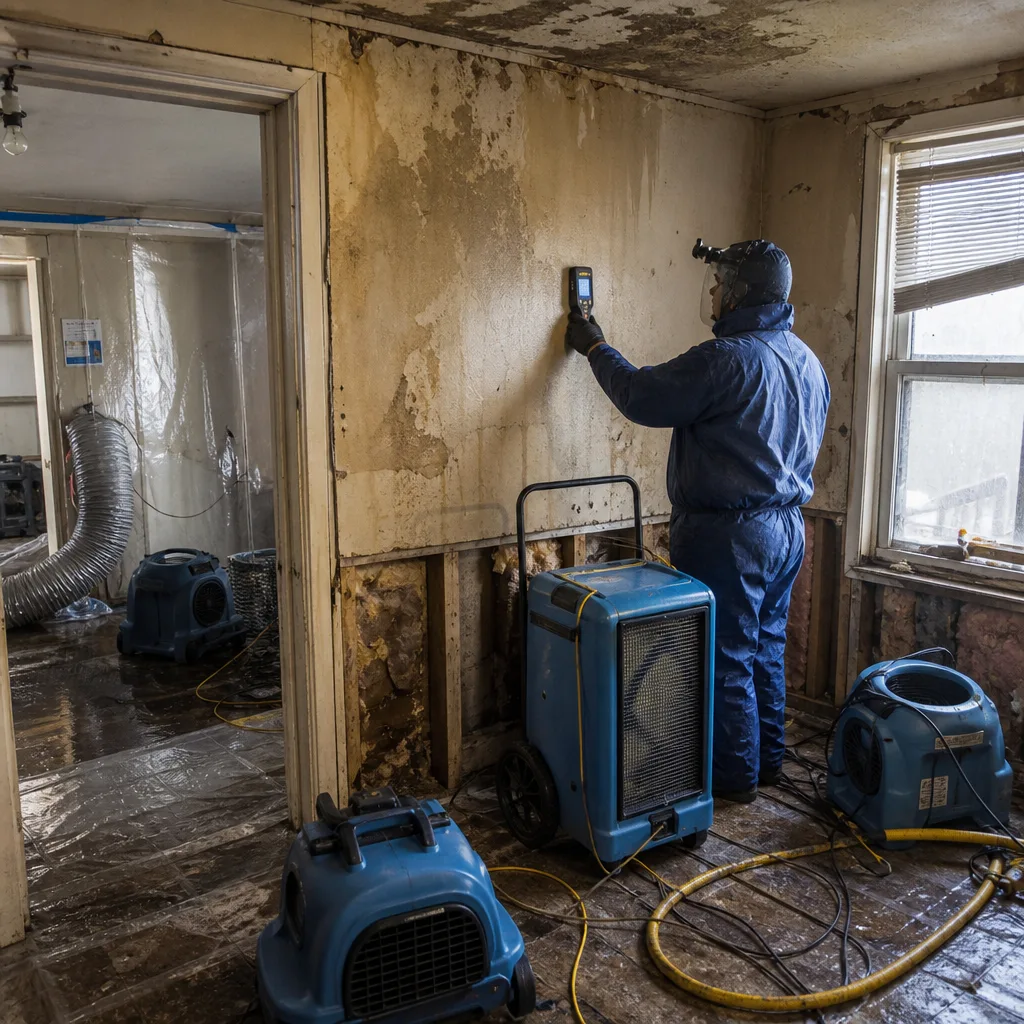 Before
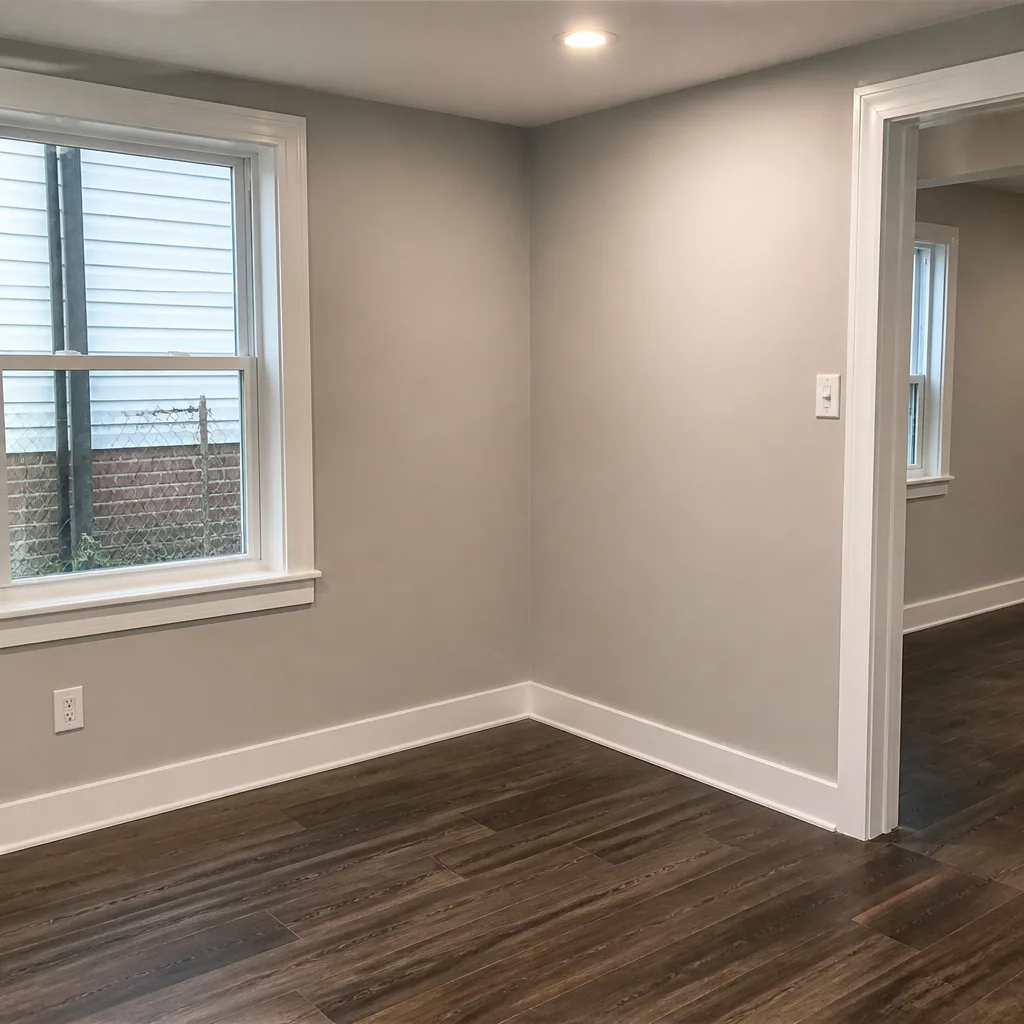 After
After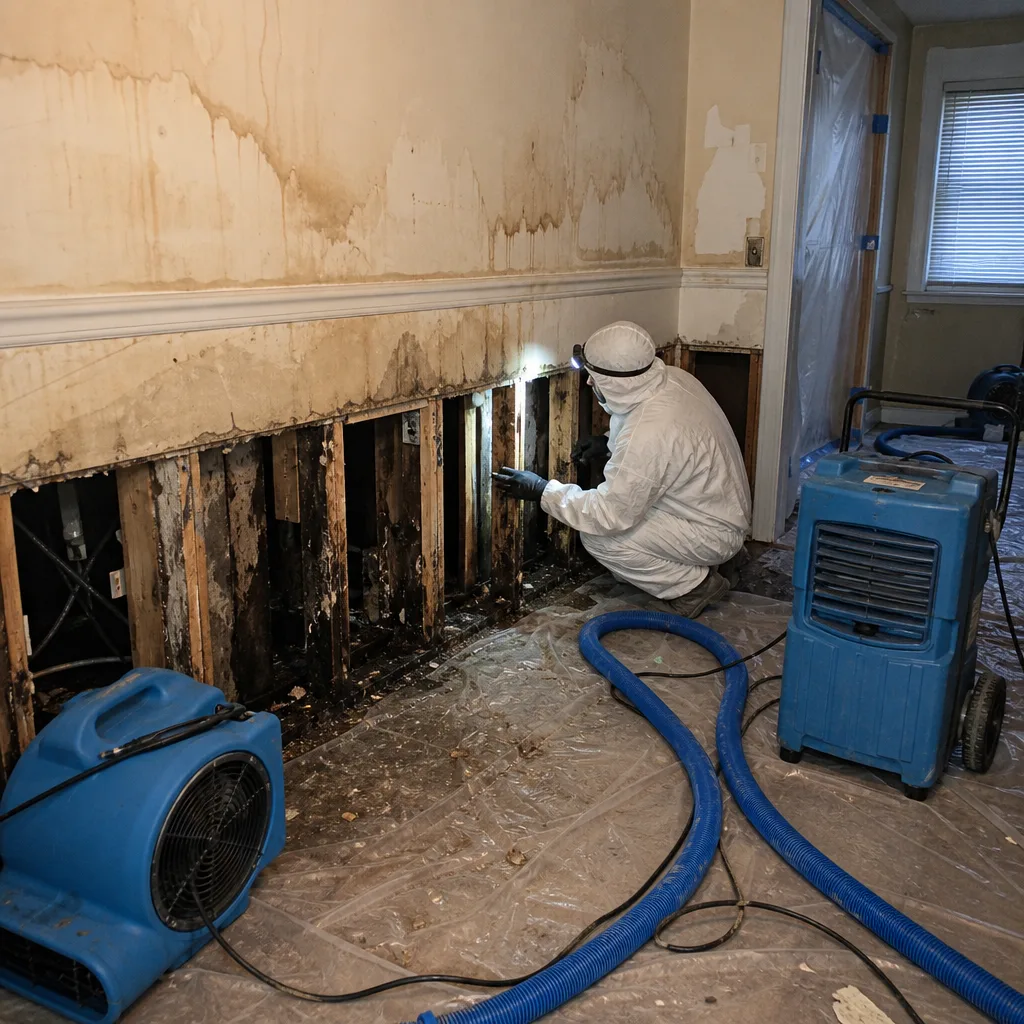 Before
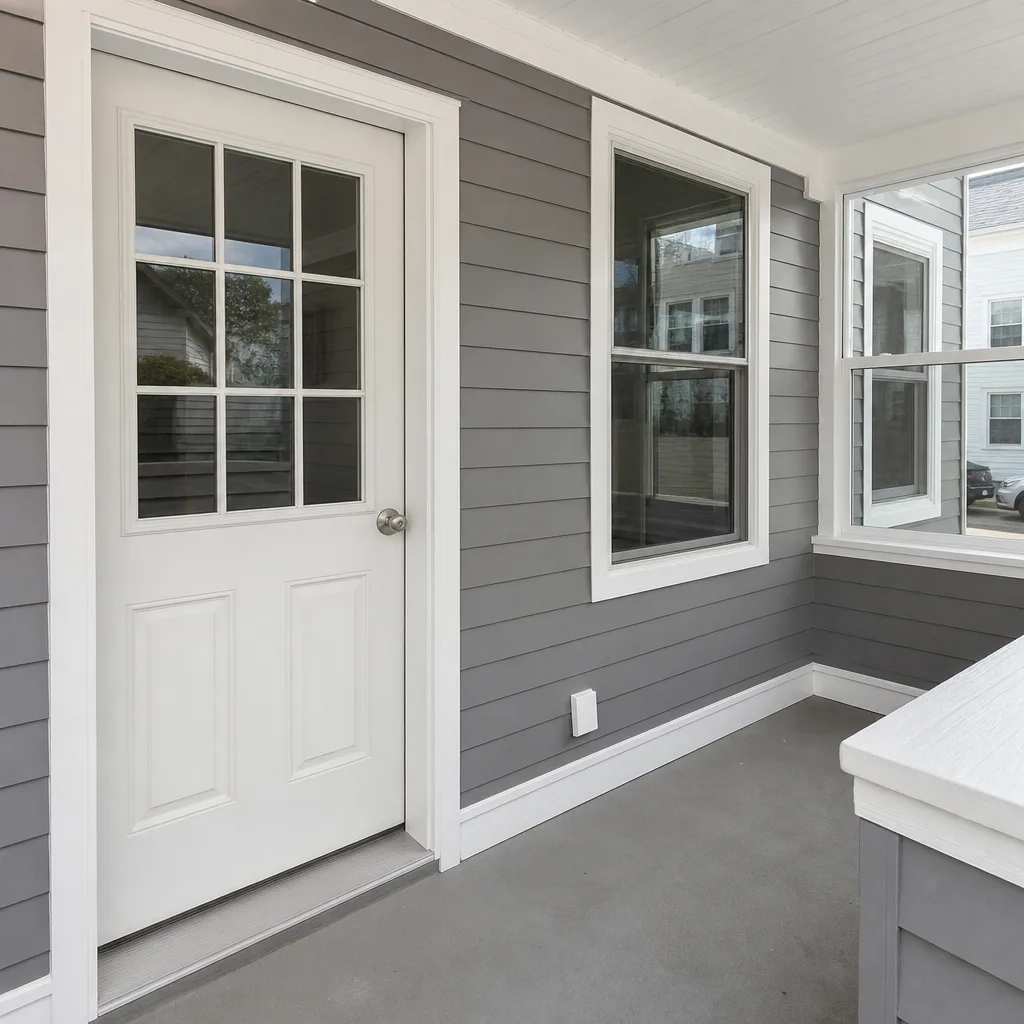 After
After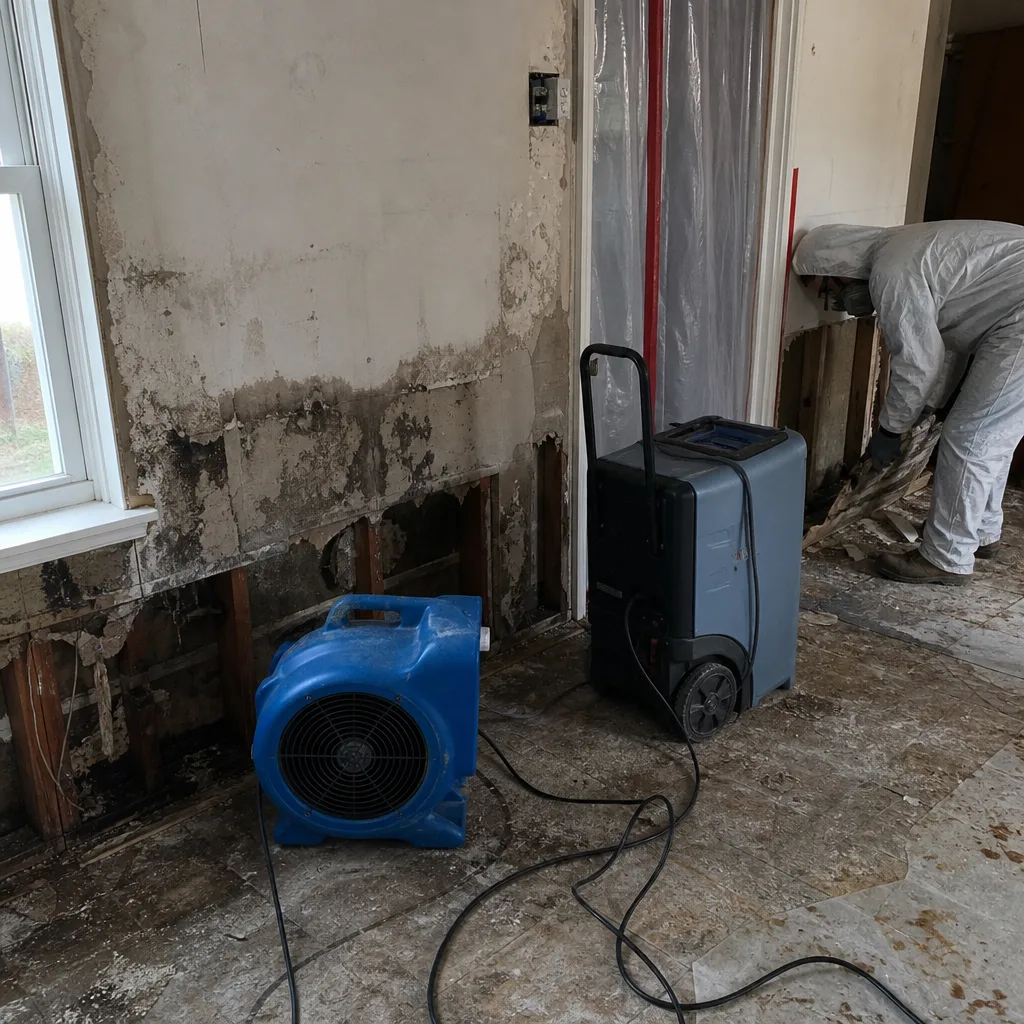 Before
 After
After24/7 Emergency Reconstruction & Cleanup in Midtown Manhattan
Reconstruction and cleanup in Midtown Manhattan isn’t a weekend project. When a steam riser fails on the 18th floor of a pre-war tower near Bryant Park, or a nor’easter pushes sewage up through basement drains on Lexington Avenue, the damage moves vertically through steel-frame cavities and original plaster within hours. You need a crew that answers the phone at 2 a.m. and knows exactly what they’re looking at. Call (640) 400-9404 any hour, any day. Our dispatchers are live, our techs are background-checked and uniformed, and we can have a certified crew assessing your Midtown Manhattan building while the moisture is still moving. The first hour decides whether you’re drying four floors or rebuilding fourteen.
Understanding Reconstruction & Cleanup Severity in Midtown Manhattan Properties
Midtown’s building stock runs from 1900s Art Deco towers with original asbestos-laden pipe chases to 1950s curtain-wall highrises with subbasement mechanical rooms packed with switchgear and chillers. A Category 3 water loss, the kind that comes from a combined sewer surcharge or a failed district steam line, isn’t just wet drywall. Moisture migration through steel-frame cavities carries contaminated water three floors below the source in a matter of hours. We moisture-map every affected floor, not just the one where the pipe let go, using thermal imaging and hygrometers to track readings in wall cavities, behind terracotta, and inside pipe chases. The severity difference between a residential basement seep in Queens and a Midtown high-rise steam event is the difference between a mop and a full containment project. We plan for the second one from the first phone call.
Why Midtown Manhattan Property Owners Choose Floodline Restoration Co.
- 45-minute response commitment – our crews stage near Midtown corridors including 6th, 7th, and Lexington Avenues, so the truck is rolling while the dispatcher is still on the line with you.
- 24/7 live answer, every time – a real person picks up. No automated tree, no voicemail at 2 a.m. You explain the loss once, and the crew arrives already briefed.
- IICRC-certified technicians – our crews hold WRT, FSRT, and AMRT certifications, trained to scope district steam damage and asbestos sequencing, not just mop water.
- Free visual inspection – we walk the affected floors, take moisture readings, and give you a written scope before any work begins. No surprise line items later.
- Direct insurance billing – we bill your carrier directly and handle adjuster communication. You don’t play messenger between Floodline and the insurance company.
- One team from extraction to reconstruction – the same certified crew that reads the moisture map on day one handles daily readings, dries the structure, and rebuilds what needs rebuilding. No mid-job handoff to a subcontractor you’ve never met.
Our Reconstruction & Cleanup Process
Inspection & Assessment
We start with thermal imaging and moisture mapping across every affected floor, not just the visible damage. In Midtown high-rises, that means checking vertical riser chases, plenum spaces, and subbasement mechanical rooms.
Extraction & Stabilization
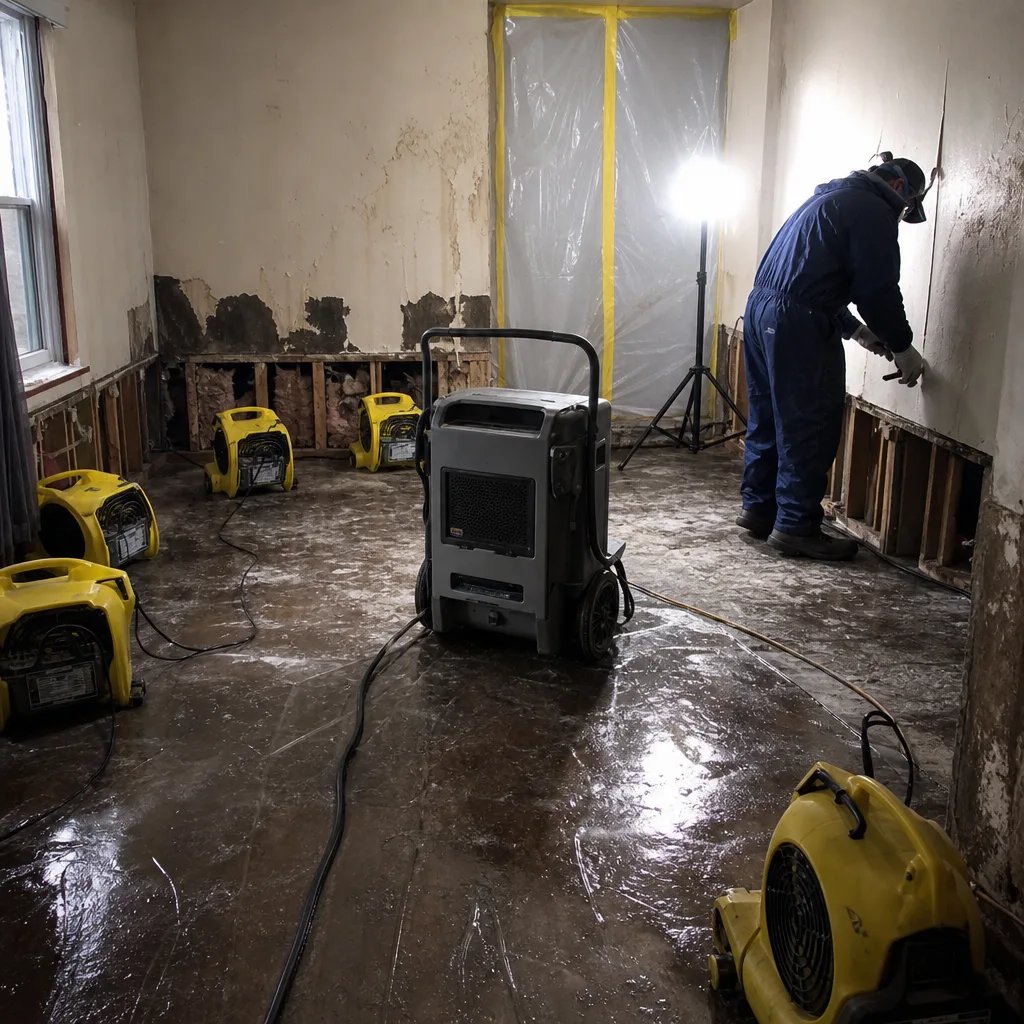
Standing water comes out first. We stage extraction equipment through freight elevators and service entrances, protecting common areas with floor protection and containment barriers while we work.
Drying & Dehumidification
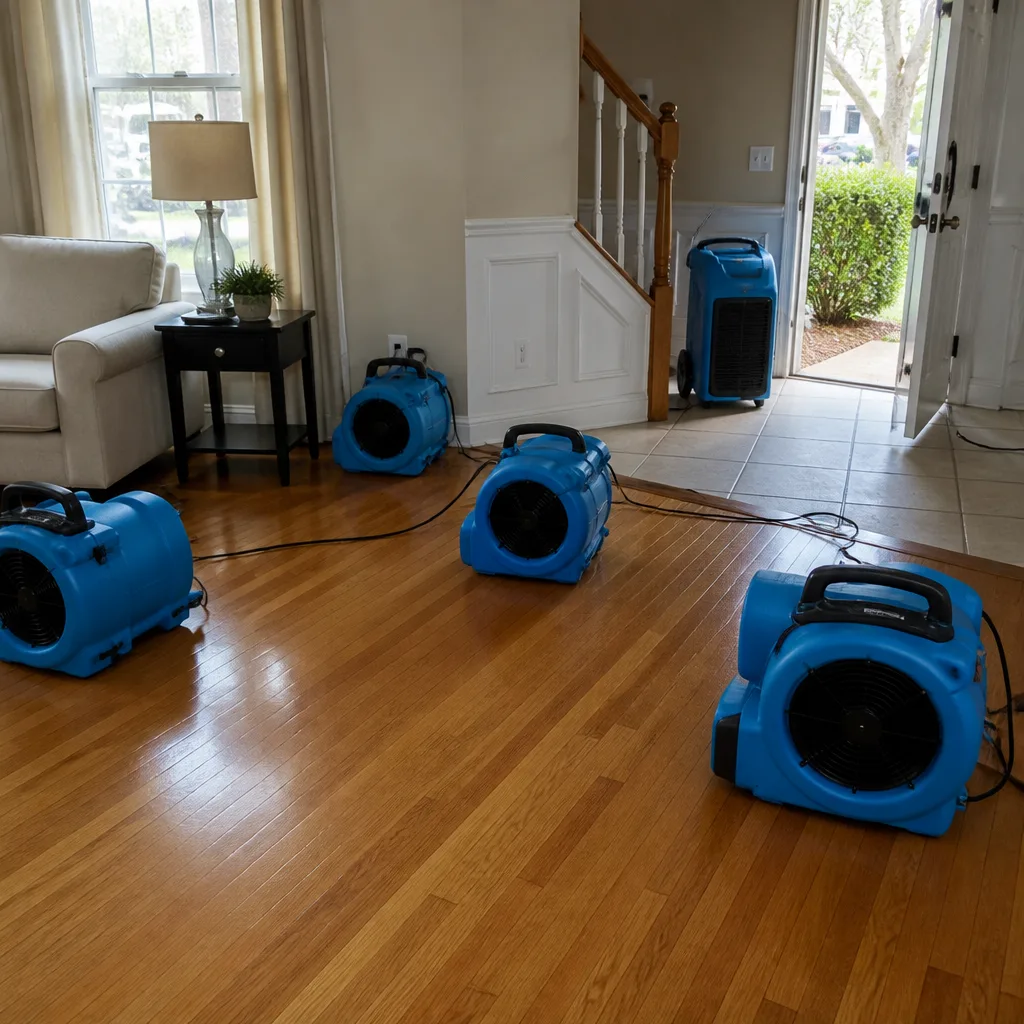
Dri-Eaz air movers and Phoenix dehumidifiers run around the clock, with daily moisture readings logged until the dry standard is met. Midtown’s street-canyon humidity means we often extend drying in wall cavities near exterior facades.
Cleaning & Sanitization
HEPA air scrubbers run during the entire cleaning phase. We apply antimicrobial treatments to affected surfaces and clean contents that can be restored on site.
Pack-Out & Contents Restoration
Contents that need off-site restoration get inventoried, photographed, and packed out with a documented chain of custody. Each tenant’s items are tracked separately, critical when multiple insurance carriers are involved.
Reconstruction & Final Verification
Drywall, flooring, trim, and finishes go back in. We rebuild to pre-loss condition, verify moisture readings one last time, and hand you the complete documentation packet including drying logs and a written scope for your carrier.
Need Emergency Reconstruction & Cleanup in Midtown Manhattan Now?
Crews minutes away, answering live 24 hours a day. The sooner we start, the less it costs.
Working With Your Insurance Company
Commercial losses in Midtown Manhattan almost always involve multiple floors and sometimes multiple carriers, one per tenant. We’ve done this enough to know that the adjuster needs documentation that holds up. From the first hour, we photograph every affected area room by room, log moisture readings daily, and build a line-item scope of work in the format carriers expect. Curt Bowman and our team coordinate directly with your adjuster, so you’re not translating technical findings into insurance language at midnight. We bill your carrier directly when coverage applies, and the Reconstruction & Cleanup documentation we provide has stood up to review on losses from single-unit water events to full-floor steam failures.
What We Provide Your Insurer
- Thorough documentation of the loss
- Photos of all damage, room by room
- Moisture readings and drying logs
- A detailed, line-item scope of work
- Direct coordination with your carrier
Built for Midtown Manhattan’s Loss Calendar
Midtown’s damage seasons are predictable if you’ve been doing this long enough. January deep freezes burst supply lines in older towers, and when the thaw comes in March, the water that’s been hiding in wall cavities finally shows up as efflorescence on the 12th floor. Summer convective storms overwhelm the aging combined sewer system, pushing ground water and sewage up through basement drains in a below-grade flood pattern that surface waterproofing doesn’t touch. Nor’easters in late fall drive wind-driven rain into curtain-wall seams. Then there’s Con Edison’s district steam network, the largest in the United States, running beneath 6th, 7th, and Lexington Avenues. When a pressure-reducing valve fails in one of those underground mains, the damage profile combines extreme heat, near-100% humidity inside wall cavities, and disturbed asbestos insulation on the pipes themselves. We plan for all of it, year round.
Reconstruction & Cleanup Across Midtown Manhattan’s Neighborhoods
Midtown Manhattan isn’t one neighborhood. It’s a grid of distinct corridors, each with its own building types and failure patterns. Around the Garment District and Herald Square, we see a lot of 1920s masonry-and-steel loft buildings where water travels down original plaster walls and pools in subbasement electrical rooms. Up toward Columbus Circle and the theater district, the towers are taller and the steam risers run longer, meaning a single failure can cascade through 20 or more floors. Near Grand Central and Murray Hill, the office density is brutal, and pack-out coordination with multiple tenants and their separate carriers becomes the core of the job. In the residential enclaves near Sutton Place, we work around doorman buildings, freight elevator scheduling, and building management requirements that add a layer of coordination you won’t find in Jersey City or Hoboken. Our crews know the service entrances, the loading docks, and the access constraints because we work these blocks every week.
Specialized Reconstruction & Cleanup Services We Offer in Midtown Manhattan
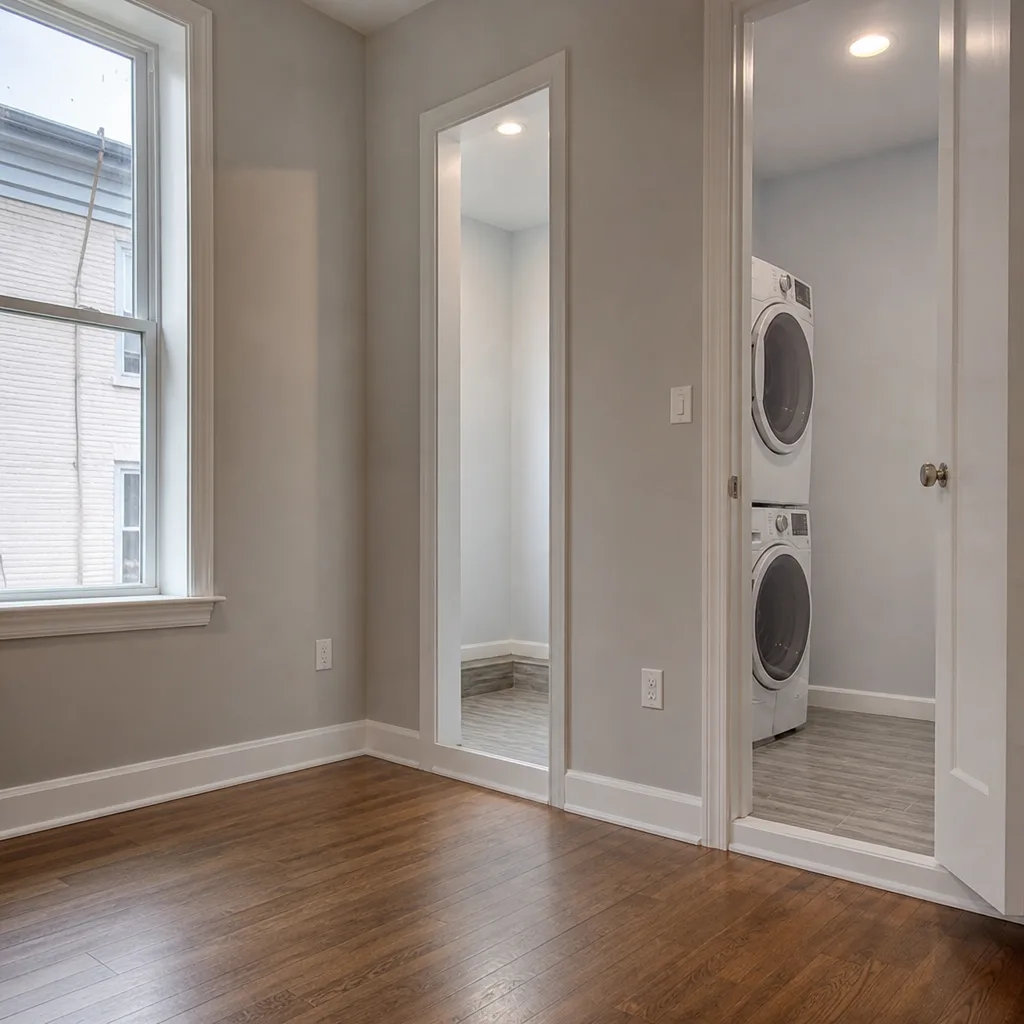
Full-Service Reconstruction
When structural drying is done and the containment comes down, we rebuild. Drywall, flooring, trim, painting, ceiling tiles, and millwork all go back under one roof. In Midtown’s pre-war towers, that often means matching original plaster profiles and working around terracotta details that can’t be replaced from a catalog. We scope rebuild work in writing before we start, and the same crew that handled the extraction handles the finish work. That’s the difference between a contractor who hands off and a company that finishes what it started. The 90-Day Done Right Promise is in writing on every reconstruction job: if it’s not done right, we make it right. No paperwork battles, no arguing.
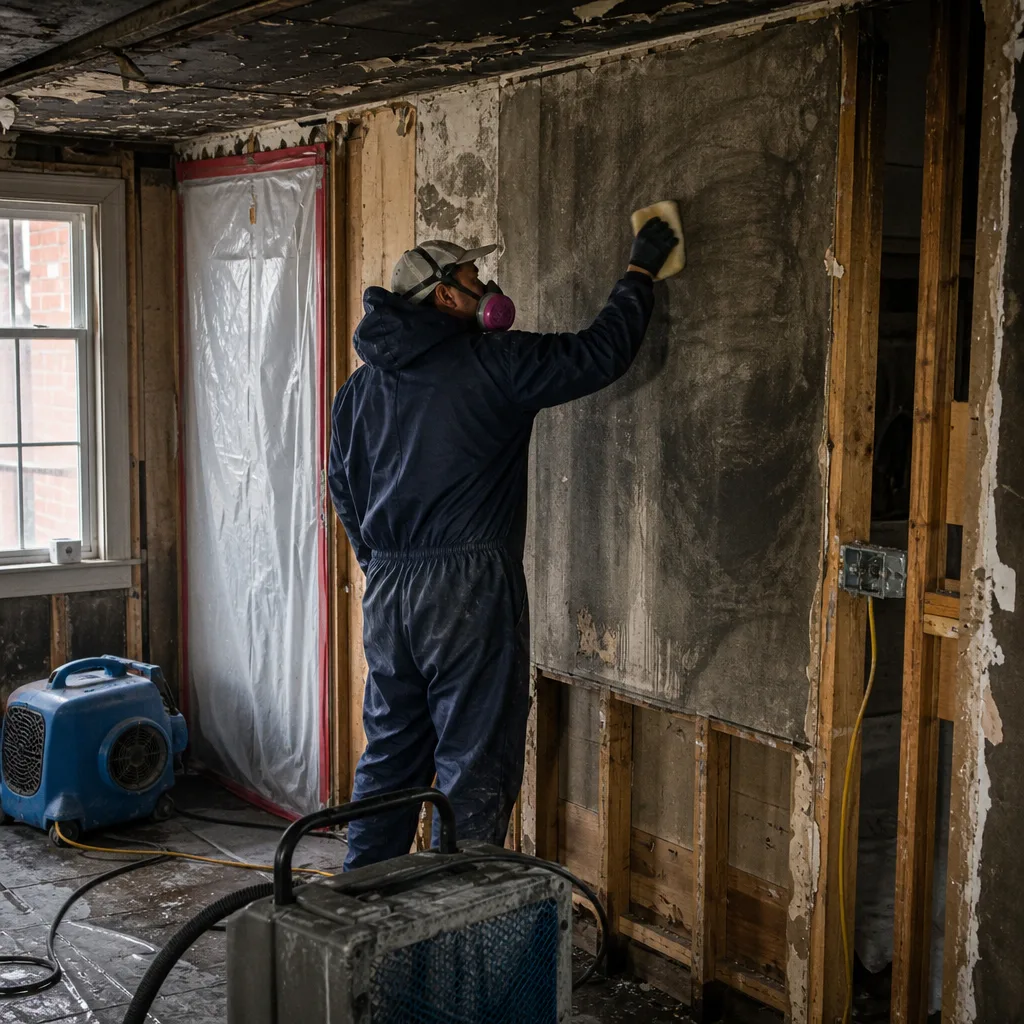
Contents Restoration & Pack-Out
Multi-tenant losses in Midtown Manhattan mean multiple insurance carriers, multiple adjusters, and multiple sets of contents that can’t be mixed. We photograph and inventory every item before it moves, tag it by tenant and floor, and track it through restoration with a documented chain of custody. Office contents, electronics, upholstery, and hard goods all get cleaned and deodorized at our facility, then returned with verification photos. When you have three different carriers asking for three different documentation formats, our pack-out records make the claim process manageable.
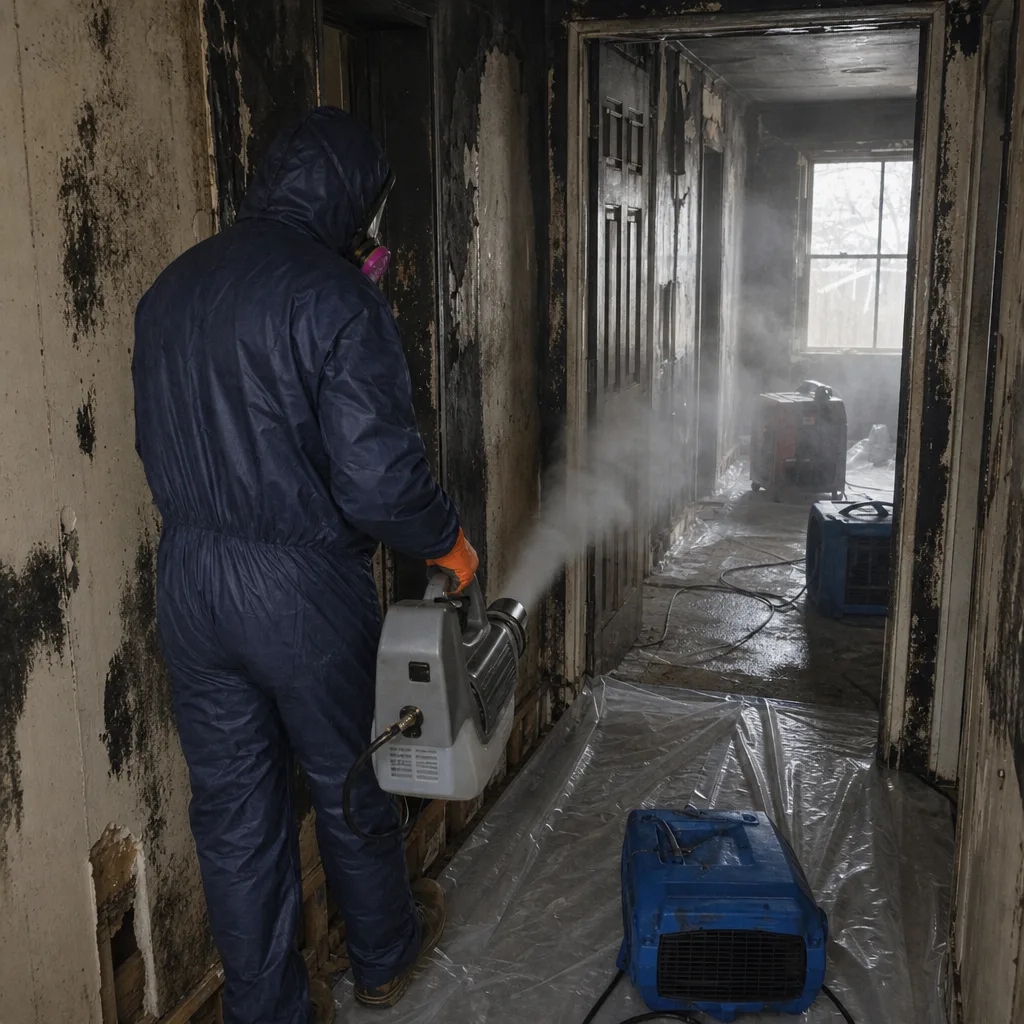
Insurance Claim Documentation
This is the service most Midtown building owners don’t know they need until the claim is denied or underpaid. We build the documentation file from hour one: initial photos, daily moisture logs, equipment usage records, scope of work, and final verification. Curt Bowman and our team have handled enough multi-carrier commercial losses to know what adjusters, public adjusters, and occasionally attorneys will ask for. We provide it in a format that holds up.
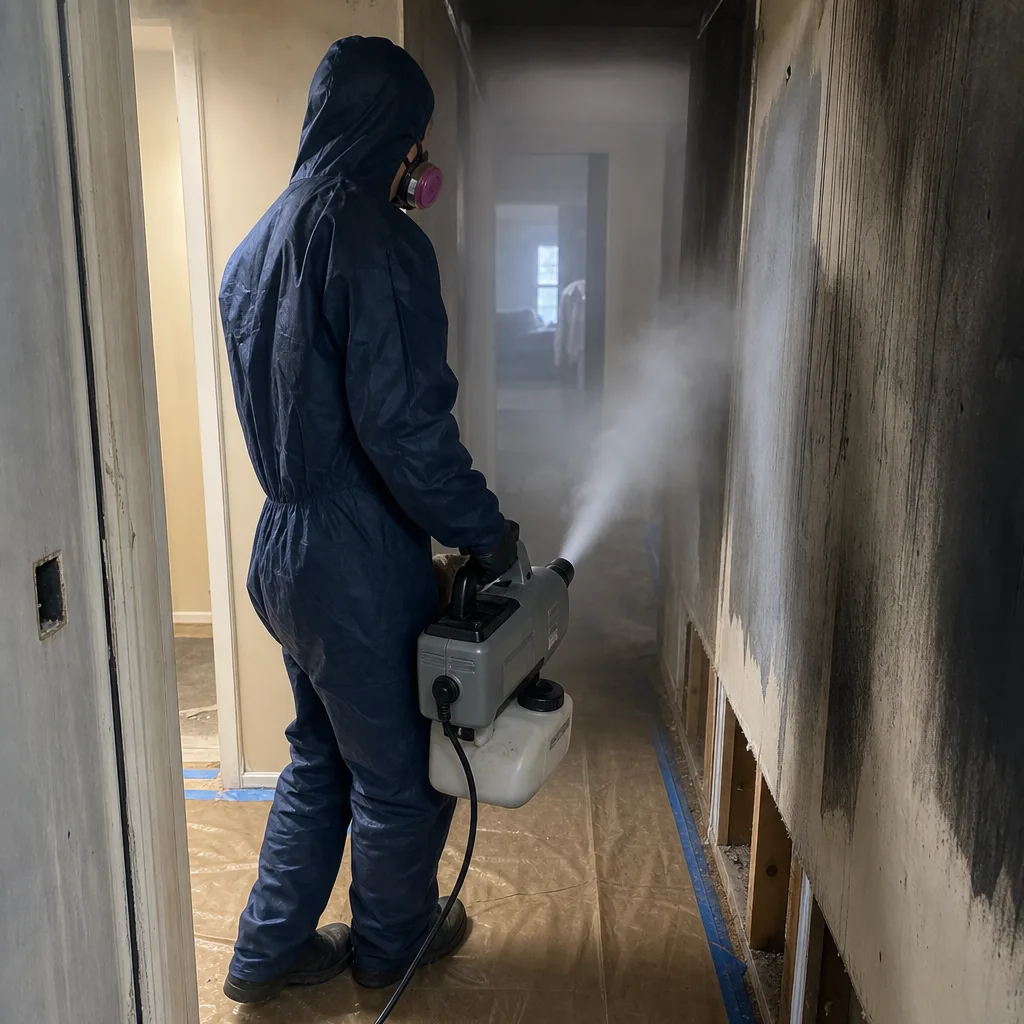
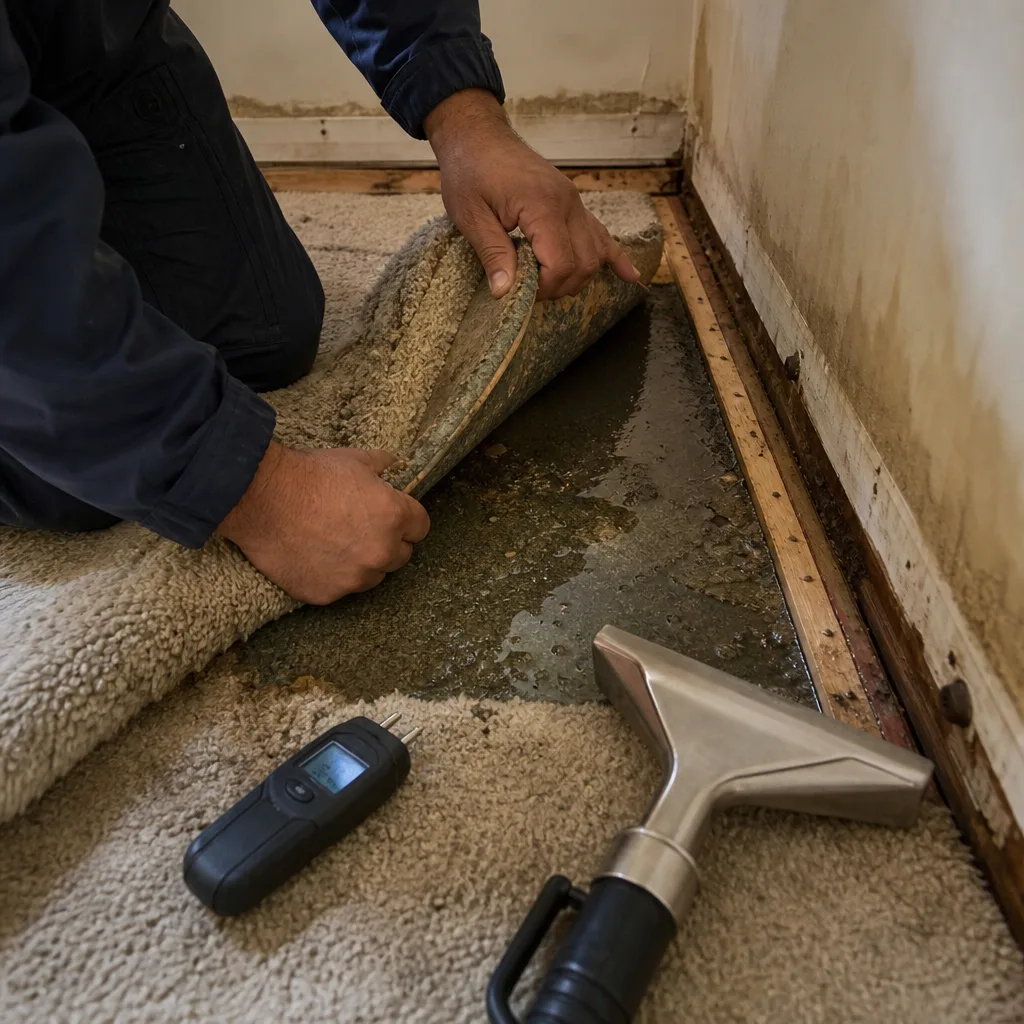
Carpet & Upholstery Cleaning
Water and fire events leave odors and residues that standard cleaning doesn’t touch. We use hot water extraction and professional-grade cleaning agents to restore carpet and upholstery in Midtown offices and residential units, often as part of a larger claim. When the damage is limited to a single room or two, this service often falls under the deductible threshold and is handled out of pocket, while the rest of the claim moves through the carrier.
Post-Construction Cleanup
After a rebuild, the dust is everywhere: in the HVAC returns, on the baseboards, inside the elevator cab if we’re honest. We do a full post-construction clean after every reconstruction project in Midtown, including HEPA vacuuming, surface wiping, and final air filtration. The building should look like nothing ever happened, or at least like it was built correctly the first time.
What happens when you call
- 1
A real person answersNo phone trees - you reach a local pro.
- 2
You get an upfront price rangeHonest numbers before anyone is dispatched.
- 3
A background-checked tech heads outLicensed & insured, dispatched right away.
- 4
You approve before work beginsNothing starts until you say go.
Reconstruction & Cleanup Costs in Midtown Manhattan, NY
Midtown costs run higher than the outer boroughs, and for good reason. A full-service reconstruction of a single water-damaged office in a pre-war tower typically runs $8,000 to $35,000 depending on square footage and finishes. Drywall and flooring repair alone usually lands between $2,500 and $9,000 for a single affected room. Contents pack-out and restoration runs $1,500 to $8,000 per tenant depending on volume and item types. Post-construction cleanup after a rebuild is generally $1,800 to $6,000, higher when multiple floors are involved. What moves the price: asbestos abatement sequencing, freight elevator access windows, multi-carrier coordination time, and whether subbasement mechanical rooms are affected. The free inspection is how you get a firm number. Call (640) 400-9404 and we’ll walk the loss, take readings, and put the scope in writing before you spend a dollar.
We Also Serve Cities Near Midtown Manhattan
Our crews regularly run reconstruction and cleanup jobs through Midland Beach, New Springville, Oakwood, and Travis-Chelsea. If your building sits just outside the Midtown grid, the same certified teams and the same 24/7 dispatch cover that ground too.
Serving Midtown Manhattan, NY - Our Local Coverage Area
We’re based in the Midtown Manhattan area and know this community well. Use the map below to see our service coverage - if you’re nearby, we can almost certainly help.
Midtown Manhattan Reconstruction & Cleanup Questions, Answered
How does Con Edison district steam affect reconstruction timelines in Midtown?
District steam failures add two phases that standard water losses don’t have: asbestos testing on pipe insulation and heat-damage scoping inside wall cavities. When a steam riser fails, the affected pipe chases can reach temperatures that compromise nearby materials, and the disturbed insulation must be tested before any demolition starts. That sequencing typically adds three to seven days to the overall timeline compared to a clean-water pipe break, and skipping it can get the job shut down by DEP. We build that time into the written scope from day one.
Can you pack out contents from a floor while other floors are still being dried?
Yes, we do it regularly in Midtown high-rises. The key is containment: we seal off the drying floors with negative air pressure so moisture and airborne particles don’t migrate into the pack-out zones. Each floor gets its own staging area, and contents are inventoried by tenant and floor so nothing gets mixed across carriers. It’s slower than a residential pack-out, but it keeps the claim clean and the building functional.
What moisture readings do you accept before starting drywall repair in Midtown high-rises?
We follow the IICRC S500 standard: structural wood must measure below 16% moisture content, and drywall below 5% with no visible moisture staining before we close up a wall. In Midtown’s steel-frame towers, we also check the concrete and masonry substrate, where readings above 12% mean we keep drying. Rushing drywall over damp framing is how you get mold three floors below the original leak. Call (640) 400-9404 if you want a second opinion on a drying log from another contractor.
Do you handle below-grade sewage backups from Midtown’s combined sewer overflows?
Yes. During heavy summer storms, Midtown’s combined sewer system surcharges and pushes Category 3 water, meaning sewage-contaminated water, up through basement floor drains. We extract, contain, disinfect, and dry those spaces, and we document the contamination source for your carrier. The work requires full PPE and proper disposal, not just a wet vac. We handle the entire scope, including the insurance file.
What documentation do you provide for a multi-tenant commercial loss in Midtown?
Each tenant gets a separate file: initial photos, moisture readings by floor and unit, daily drying logs, contents inventory with photos, a line-item scope of work, and final verification. We coordinate directly with each carrier and adjuster, and we provide the documentation in the format each carrier requests. You get one point of contact for the whole loss, even when four tenants and three insurance companies are involved.
How fast can you actually get to a Midtown Manhattan building?
We commit to a 45-minute on-site response for emergency losses in Midtown. Our crews stage near the major corridors, including 6th and Lexington Avenues, so travel time is short even in traffic. For non-emergency reconstruction and cleanup, we schedule a free visual inspection within one business day.
Do I really need full reconstruction, or can you just clean it up?
That depends on the moisture readings and the extent of the damage. If structural drying brings readings into the acceptable range and the finishes are intact, cleaning and sanitization may be enough. If the water moved through wall cavities or the drywall is saturated, cleaning alone leaves a mold risk behind. The free inspection gives you a straight answer: we’ll tell you if you need rebuild work or just a thorough cleaning, with the moisture readings to back it up.
What should I do in the first 30 minutes after a water or steam event in Midtown?
Shut off the water source if you can do so safely. Don’t touch electrical panels or anything near switchgear if the subbasement is flooded. Call us at (640) 400-9404. Move small contents up off the floor if it’s safe to do so, and don’t use a household vacuum on wet surfaces. The clock on structural damage and mold growth starts the moment the water stops being contained, so the first call matters more than any cleanup you can do yourself.
Written by Curt Bowman, Owner at Floodline Restoration Co., serving Midtown Manhattan with full-cycle reconstruction and cleanup, extraction through rebuild, since 2010.