
Quick Summary
Residential water damage repair cost averages $3,868, typically ranging between $1,383 and $6,369 depending on the contamination category, material saturation, and response speed. Floodline Restoration Co. controls project expenses through rapid non-destructive drying, transparent upfront pricing, and direct insurance coordination via their Straight Claim Program. Homeowners will learn standard mitigation pricing drivers and how to secure a free visual inspection or 24/7 emergency dispatch to prevent costly reconstruction.
Water Damage Repair Cost: Estimate & Fast Pricing Guide
Most residential water damage repair projects fall between $1,383 and $6,369, with the national average sitting around $3,868. If you are standing in an inch of water from a blown supply line or a failed water heater, those numbers give you a starting baseline. What you actually end up paying depends on how quickly mitigation begins and whether materials can be dried in place rather than removed.
In older architecture or properties with specialty building materials, unnecessary demolition can increase expenses quickly. Certified technicians who use moisture diagnostics and directed drying can often save existing structural elements, helping protect property value and reduce final rebuild costs. Professional mitigation, as practiced by specialists like Floodline Restoration Co., should include a transparent written scope and regular moisture monitoring.
Water Damage Repair Cost Overview: Speed, Scope, and Next Steps
Every restoration estimate is driven by the extent of water intrusion and the building materials affected. Overall costs vary widely based on water category, affected area size, and structural repairs. Denser materials such as masonry or multi-layer plaster can present additional drying challenges, often requiring specialized drying setups rather than basic demolition.
- Standard Price Ranges: Typical residential mitigation runs from $1,383 to $6,369 ($3,868 average). Left unaddressed, moisture spreads fast. Industry reporting citing FEMA and National Flood Insurance Program (NFIP) data shows that just one inch of standing water inside a home can cause up to $25,000 in structural and personal property damage.
- Primary Cost Drivers: Total expenses depend on the contamination category (clean supply water, gray water, or black water sewage backups), total square footage, and response time.
- Documentation: Proper documentation, including moisture logs and diagnostic records, helps establish an accurate scope of work from the start of extraction.
What Does Water Damage Repair Cost?
The total bill for water damage is split into two distinct phases: emergency mitigation (stopping the water, extraction, sanitizing, and structural drying) and reconstruction (hanging new drywall, painting, and replacing flooring or trim). Industry figures show water damage repairs spanning from $450 for a localized minor leak up to $16,000 or more for severe structural flooding. When caught early, clean water losses remain manageable. If water sits unaddressed over extended periods, moisture can spread into structural framing, increasing the risk of microbial growth and driving costs up.[1]
Typical Restoration Service Price Ranges
Before any equipment is set up, a restoration contractor such as Floodline Restoration Co. should outline an itemized scope of work to clarify project costs.
| Service Category | Standard Scope | Typical Price Range | Primary Cost Driver |
|---|---|---|---|
| Moisture Assessment | Thermal imaging, pin-meter mapping | $150 – $500 | Diagnostic depth |
| Water Extraction & Drying | Standing water removal, industrial air movers | $1,200 – $4,500 | Subfloor saturation |
| Mold Remediation | Containment chambers, HEPA air scrubbers | $1,500 – $6,000 | Spore dispersal & surface area |
| Sewage Backup Cleanup | Category 3 sanitization, contaminated disposal | $2,000 – $10,000 | Biohazard protocol & waste handling |
| Full Water Damage Claim | Complete mitigation plus reconstruction | $3,000 – $15,000+ | Structural rebuild scale |
| Fire & Smoke Restoration | Soot neutralization, charred framing repair | $3,000 – $25,000+ | Thermal degradation |
Note: Individual job costs vary based on site conditions, access, and contamination level. A visual on-site inspection is required for an exact quote.
Water Damage Cost Per Square Foot
Per-square-foot pricing is heavily dictated by the cleanliness of the water source:
- Category 1 (Clean Water): Supply lines, sink overflows, or rainwater intrusions average roughly $3.50 per square foot for extraction and basic drying.
- Category 2 (Gray Water): Washing machine overflows, dishwasher discharge, or sump pump failures average around $5.25 per square foot due to required antimicrobial treatments.
- Category 3 (Black Water): Sewage backups, river flooding, or grossly contaminated water average $7.50 per square foot or more because of strict biohazard safety and hazardous material disposal rules.
In older or non-standard structures, standard square-foot estimates may vary. Masonry and dense plaster assemblies can absorb significant moisture through capillary action, often requiring specialized dehumidification systems and targeted drying configurations rather than standard demolition.
What You Will Need for Water Damage Assessment and Restoration
Need water damage repair cost?
We’re available now - call for a fast, free estimate.
Handling a water loss requires quick stabilization by the property owner, followed immediately by certified drying technicians. Taking basic safety measures right away helps contain losses while professional diagnostic tools pinpoint hidden moisture paths.
Immediate Homeowner Triage Tools
- Personal Safety Gear: Heavy rubber boots, non-porous gloves, and an N95 respirator to protect against airborne contaminants or gray water bacteria.
- Smartphone for Evidence Gathering: Capture high-resolution, date-stamped photos and videos of water lines, damaged baseboards, furniture, and wet materials before mitigation begins to maintain clear documentation.
Professional Diagnostic and Drying Equipment
Standard vacuums only remove surface liquid; they cannot extract moisture trapped beneath flooring, inside wall cavities, or within masonry. Certified technicians, including those from Floodline Restoration Co., deploy non-invasive infrared thermal cameras, moisture meters, and commercial dehumidifiers to establish a controlled drying environment and help keep overall expenses within typical cost ranges.
Step 1: Stop the Water Source and Secure Emergency Water Extraction
Stopping water flow and removing standing liquid as quickly as possible helps keep clean Category 1 water from degrading into more hazardous contamination categories over time. Rapid extraction stabilizes the building and helps prevent unnecessary structural damage.
Containing Active Leaks and Supply Lines
- Shut off the main supply: Turn your building’s main water shutoff valve completely clockwise to stop incoming pressure.
- Kill electrical circuits: Switch off the circuit breakers for any flooded rooms or basement levels before stepping into standing water.
- Call for emergency dispatch: Contact a certified restoration company promptly before moisture migrates deeper into joists and subfloors.
Emergency Water Extraction Cost Drivers
Extraction costs depend on water volume, depth, and how long the structure has remained soaked. The longer water remains in contact with flooring or masonry, the more labor-intensive drying becomes, increasing overall repair costs.
Step 2: Assess Damaged Materials (Drywall, Ceilings, and Hardwood Floors)
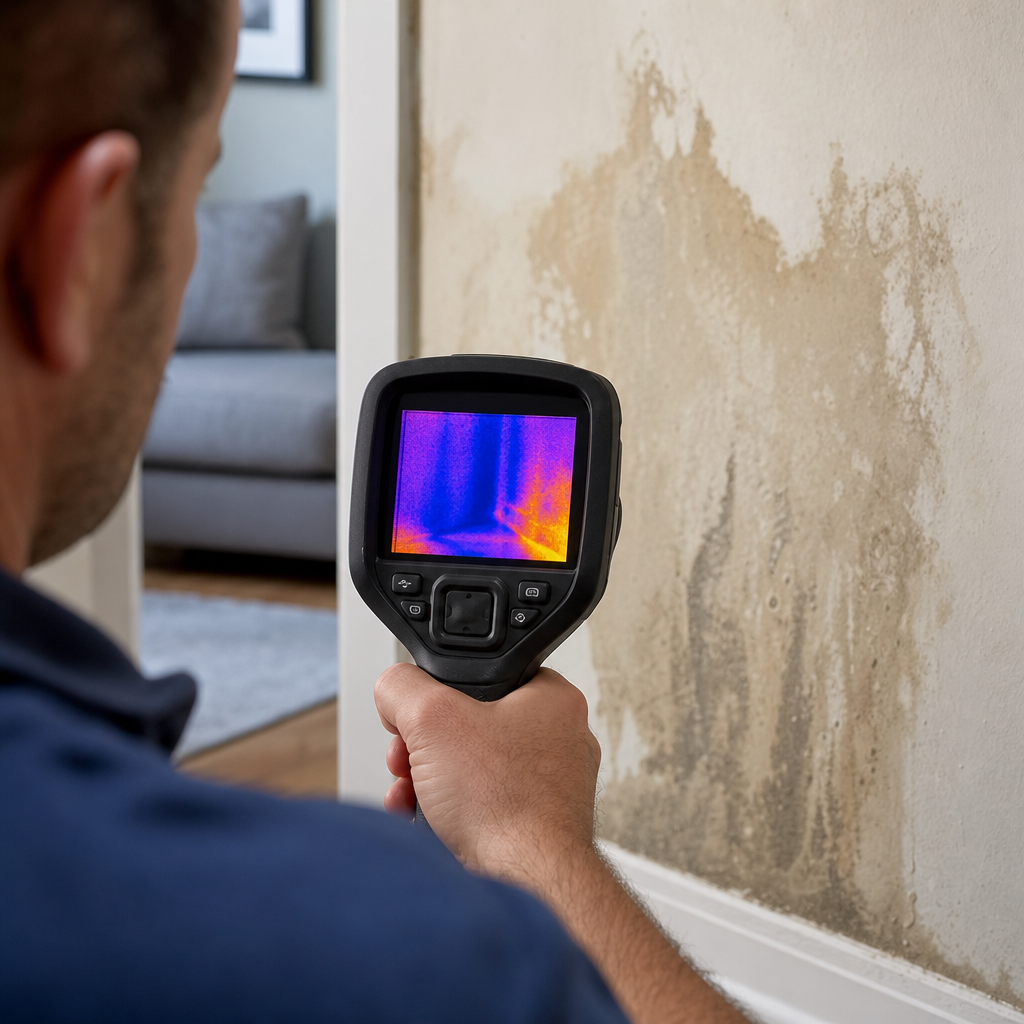
Once bulk water is removed, technicians inspect saturated materials to determine what can be restored and what must be replaced. Making calculated decisions on salvageable materials prevents thousands of dollars in unnecessary reconstruction fees.
Drywall and Ceiling Water Damage Repair Cost
Industry data from Hanover indicates that approximately 1 in 50 insured homes files a water property claim every year. When drywall absorbs water and loses structural integrity, technicians often perform a flood cut 12 to 24 inches above the water line. When ceiling materials sag from overhead leaks, they must be drained and secured promptly to prevent structural failure.[2]
Hardwood and Subfloor Salvage vs Replacement
Hardwood floors do not always require complete removal when wet. Directed floor-mat drying systems apply negative pressure to draw moisture out through the seams between planks.
| Restoration Method | Applied Technology | Relative Cost Level | Material Impact |
|---|---|---|---|
| Targeted Floor Drying | Negative-pressure vacuum mats | Lower mitigation cost | Helps preserve existing hardwood and baseboards |
| Full Tear-Out and Rebuild | Demolition, disposal, and relaying | Higher rebuild cost | Requires complete flooring replacement |
Applying specialized floor-drying equipment promptly can often reverse cupping and crowning, keeping project expenses focused on drying rather than complete material replacement and refinishing.
Step 3: Account for Complex Materials and Structural Assemblies
Need water damage repair cost?
We’re available now - call for a fast, free estimate.
Standard pricing models often assume modern drywall over wood framing. Dense or older structural materials require additional time and specialized equipment to dry properly.
Capillary Action in Masonry and Structural Walls
Masonry assemblies and structural walls can absorb moisture and draw it upward. If surface coverings are removed without addressing underlying damp masonry, trapped moisture can cause material degradation, mold growth, and lingering odors over time.
Plaster and Specialized Wall Assemblies
Completely demolishing plaster assemblies creates substantial debris disposal costs and rebuild expenses. Utilizing commercial dehumidifiers and high-static air movers allows technicians to extract moisture from dense wall assemblies without full demolition.
Step 4: Execute Industrial Structural Drying and Mold Remediation
Structural drying balances temperature, airflow, and dehumidification to remove moisture from framing and structural components before secondary damage occurs.
Dehumidification and Air Movement Protocols
- Set up balanced equipment: Position commercial dehumidifiers alongside high-velocity air movers to promote continuous evaporation across wet surfaces.
- Track psychrometric data: Technicians from firms like Floodline Restoration Co. monitor temperature, relative humidity, and moisture readings to confirm the drying process is progressing toward standard dry baselines.
Preventing Secondary Mold Damage
Mold can begin developing rapidly when porous materials remain damp following a water intrusion. Prompt mitigation and proper airflow help prevent mold colonization, avoiding the need for extensive containment barriers and specialized remediation protocols.
Step 5: File Your Insurance Claim and Finalize Reconstruction
Managing an insurance claim effectively involves documenting the cause of loss, tracking moisture readings, and assembling an accurate record of all repair requirements.
Will Homeowners Insurance Cover Water Damage Reconstruction?
Most standard homeowners policies provide coverage for sudden and accidental water discharges, such as a burst pipe or appliance malfunction, while typically excluding gradual leaks or maintenance issues. Industry data from Hanover indicates that approximately 1 in 50 insured homes files a water property claim annually. To facilitate the claims process, property owners should document damage promptly and maintain comprehensive records of all mitigation efforts.
Separating Mitigation Billing from Reconstruction Scopes
Water restoration projects are generally divided into two phases: emergency mitigation (water extraction, sanitizing, and structural drying) and reconstruction (repairs to drywall, carpentry, and finishes). Mitigation begins immediately to prevent ongoing damage, while reconstruction scopes are determined once the structure reaches dry standards.
Frequently Asked Questions About Water Damage Repair Cost
Restoration pricing depends on water volume, contamination level, and the specific building materials involved. Most residential projects cost between $1,383 and $6,369, averaging around $3,868 for standard drying and mitigation.
How much does water damage repair cost per square foot?
Clean water (Category 1) extraction and drying averages around $3.50 per square foot. Gray water (Category 2) runs closer to $5.25 per square foot, and black water (Category 3 sewage backups) averages $7.50 per square foot or more due to required sanitization and hazardous waste disposal protocols.
Is water extraction billed separately from structural repairs?
Yes. Water extraction, sanitizing, and structural drying fall under emergency mitigation. Reconstruction work, such as replacing drywall, flooring, and paint, is estimated and billed as a separate rebuild phase once drying is complete.
Does homeowners insurance pay water damage contractors directly?
Payment processes depend on the insurance carrier, policy terms, and individual contractor agreements. Some insurers issue payments directly to the policyholder, while others may coordinate payments with the contractor upon authorization.
How quickly must restoration begin to prevent mold growth?
According to industry specialists like Floodline Restoration Co., drying and mitigation should begin as soon as possible following a water intrusion. Allowing moisture to linger creates conditions favorable to mold growth, which can substantially increase remediation complexity and overall costs.
Need water damage repair cost?
We’re available now - call for a fast, free estimate.
Sources
- Water Damage House Repair Costs in 2026 – ibuyer.com (2026)
- Water Damage Insurance Claims Statistics (2026 Data) – consumeraffairs.com (2026)
Frequently Asked Questions
How can I get an accurate water damage repair estimate before work begins?
Homeowners can schedule a free visual inspection to receive a transparent, itemized written scope of work before mitigation starts. Floodline Restoration Co. offers upfront pricing with typical residential water losses ranging between $1,800 and $5,200.
How does direct insurance billing work for water damage restoration?
Qualified contractors submit diagnostic moisture logs and itemized drying data directly to your insurance adjuster to expedite claim settlement. Floodline Restoration Co. manages this coordination through their Straight Claim Program to minimize out-of-pocket stress for homeowners.
How quickly can emergency mitigation crews arrive to prevent costly structural rebuilds?
Rapid extraction should begin within the first few hours to salvage saturated hardwood and structural framing. Floodline Restoration Co. provides 24/7 live dispatch with an immediate 45-minute emergency response to deploy non-destructive drying equipment.
About the author
 |
Marcus Coleman Marcus Coleman is a certified restoration professional with over eight years of experience specializing in water mitigation and structural drying throughout Northern New Jersey. He holds an IICRC certification in Water Damage Restoration (WRT) and regularly consults on cost estimating and insurance compliance for both residential and commercial losses. His expertise focuses on providing property owners with transparent, actionable guidance during water damage emergencies. |
Water damage, flood, or mold emergency?
We’re available now - call for a fast, free estimate.
Call Now - Free Estimate