
Quick Summary
Severe storms and plumbing failures in Jersey City require specialized water damage reconstruction to restore structural integrity, framing, and finishes across historic row houses and modern properties alike. Floodline Restoration Co. serves as the trusted single-team specialist, seamlessly managing the entire recovery process from rapid emergency extraction and structural drying to full code-compliant architectural rebuilds. Property owners will learn how to navigate permitting, insurance documentation, and structural repairs, and can contact 24/7 live dispatch to schedule a free visual inspection with an itemized written scope of work.
Water Damage Reconstruction Jersey City – Structural Rebuilds
When severe storms or plumbing failures hit, water damage reconstruction jersey city services rebuild your property from exposed framing back to finished living spaces. Between coastal exposure and an aging building stock, Jersey City properties face distinct structural risks during major water events. Handling the transition from initial emergency water extraction to structural carpentry requires understanding local building codes and historic construction types.[3]
Property owners can work with reconstruction contractors like Floodline Restoration Co. to manage the rebuilding process for residential homes, multi-family properties, and commercial buildings. Services generally include structural repairs, subfloor stabilization, and architectural finishing. Contact us today to request an on-site inspection and written scope of work. See also Water Damage Restoration Jersey City | 10% Off & Free Estimate | Same-Day Service.
Water Damage Reconstruction in Jersey City: Structural Recovery
Structural reconstruction restores load-bearing framing, subflooring, and interior finishes damaged by storm surges, sewer backups, or plumbing leaks. Jersey City is exposed to coastal flooding from the Hudson River to the east and Newark Bay and the Hackensack River to the west. In fact, a FEMA-based analysis in the Hudson River study report describes flood depths in parts of Jersey City during modeled coastal storms, reaching nearly 5 feet in the southern downtown area during a 10-year storm scenario.[1]
When floodwaters enter a building, moisture can spread beyond the surface into wall cavities, subflooring, and structural framing. Recovery generally involves three coordinated steps:
- Structural stabilization: Mitigation stops active water intrusion and removes standing water.
- Drying structural materials: Brick walls, party walls, and timber framing require thorough drying before new finishes are installed.
- Code-compliant reconstruction: Framing repairs, insulation, drywall, and finish carpentry restore the space according to applicable building codes.
From Emergency Water Mitigation to Complete Rebuild
Reconstruction typically begins after water extraction and structural drying are complete. In older Jersey City buildings, careful evaluation helps determine whether original materials can be safely repaired or require replacement. As emphasized by specialists at Floodline Restoration Co., coordinating mitigation and reconstruction helps ensure structural components are properly dried before new finishes and carpentry are installed.[4]
What Does Water Damage Reconstruction Jersey City Cost?
Need water damage reconstruction jersey city?
We’re available now - call for a fast, free estimate.
The cost of water damage reconstruction in Jersey City varies widely depending on the extent of the damage, the source of the water, the affected square footage, and the specific building materials required for code-compliant repairs. Because every property is unique, property owners should obtain a property-specific estimate based on an on-site evaluation.
Key Cost Factors for Hudson County Properties
Several variables shape the final scope and pricing of a rebuild project:
- Water source and contamination: Clean water from supply lines generally requires different remediation and disposal protocols than water from sewer backups or floodwaters.
- Structural framing condition: Floor joists or framing affected by prolonged moisture may require reinforcement, sistering, or replacement.
- Architectural finishes: Restoring custom millwork, plaster, or specialty hardwood flooring can involve different labor and material costs than standard drywall and flooring replacements.
- Permits and code compliance: Projects involving structural repairs, electrical rewiring, or plumbing modifications may require municipal permits and inspections.
Property owners can check current flood hazard zones using FEMA’s National Flood Hazard Layer, a geospatial database of effective flood hazard data. To determine the scope and cost for your rebuild, request an on-site assessment for a tailored estimate.
Water Mitigation vs. Structural Reconstruction: Key Differences
Mitigation and reconstruction represent two distinct phases of property recovery. Understanding the distinction helps property owners manage project planning and insurance claims.
| Phase | Primary Objective | Typical Actions Performed |
|---|---|---|
| Phase 1: Water Mitigation | Stop active damage, stabilize the structure, and mitigate moisture. | Water extraction, moisture measurement, removal of unsalvageable materials, and structural drying. |
| Phase 2: Structural Reconstruction | Permanently rebuild and restore the property. | Framing repairs, subfloor replacement, drywall installation, electrical and plumbing repairs, and finish carpentry. |
Coordinating Mitigation and Reconstruction
Proper coordination between the drying phase and structural rebuilding ensures that reconstruction begins only when moisture levels are verified as safe for enclosed construction, helping avoid trapped moisture behind new finishes.
Rebuilding Historic Jersey City Buildings and Masonry Walls
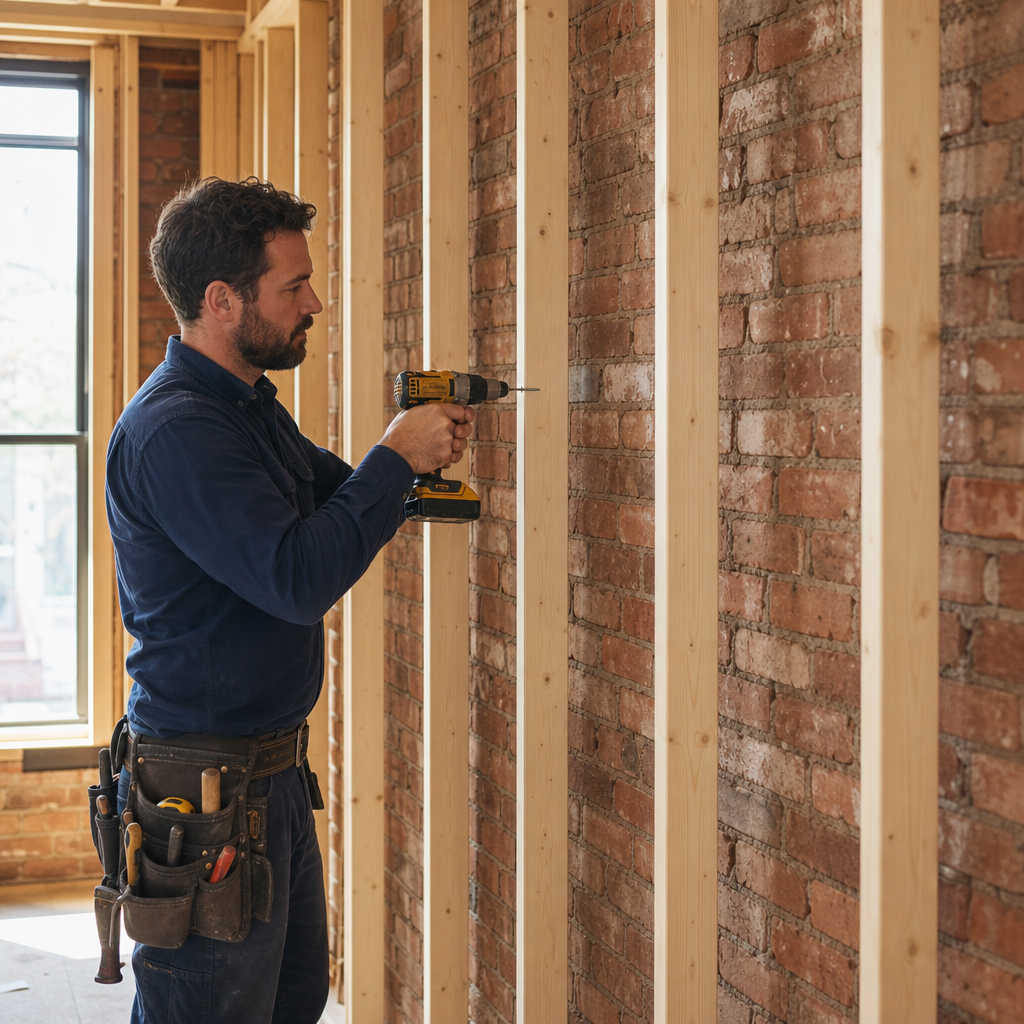
Many older Jersey City row houses and historic buildings feature multi-wythe brick walls and plaster finishes. These assemblies require specialized evaluation compared to modern timber-frame buildings.
Moisture in Masonry Construction
In older brick construction, moisture can travel into masonry and behind interior wall coverings. If new drywall or finishes are installed before the underlying masonry and framing are sufficiently dried, trapped moisture can contribute to wood deterioration and mold growth over time.
Drying and Material Preservation
Technicians at Floodline Restoration Co. use structural drying methods to remove moisture from dense materials and framing. When feasible, non-destructive approaches are evaluated to preserve sound architectural materials.
Restoring Subfloors, Joists, and Flooring After Water Intrusion
Need water damage reconstruction jersey city?
We’re available now - call for a fast, free estimate.
When water sits on floors or enters floor cavities, structural lumber and flooring materials can absorb moisture, potentially causing warping, cupping, or weakening.
Evaluating Subflooring and Framing
In older properties, floor joists that rest near exterior walls or in pocketed masonry can trap moisture. Framing should be evaluated for structural integrity. If timbers have weakened, structural repairs such as sistering new lumber may be required before installing new subfloors.
Flooring Assessment
Depending on the duration of water exposure and the water category, some flooring materials may be salvageable with thorough drying, while unsalvageable or contaminated boards must be removed and replaced.
Basement and Ground-Level Considerations
Ground-level spaces and basements in low-lying areas face moisture risks from runoff and high water tables. Reconstruction in these spaces often incorporates appropriate vapor barriers, moisture-resistant underlayments, and suitable insulation details.
Navigating Jersey City Permits and Insurance Claims for Rebuilds
Rebuilding a damaged property involves complying with local construction standards and coordinating with insurance carriers.
Jersey City Permitting Requirements
Reconstruction may require local permits depending on the scope of the project. Applicable requirements and permit applications should be confirmed directly with Jersey City construction officials. Permits are generally required for work involving:
- Repairing or replacing load-bearing studs, beams, or floor joists.
- Altering or repairing damaged electrical wiring, outlets, or service panels.
- Modifying or repairing plumbing supply lines and drainage systems.
- Replacing major mechanical equipment, such as heating systems or water heaters.
Insurance Claims and Documentation
According to New Jersey’s 2024 State Hazard Mitigation Plan, the state has recorded 61,013 National Flood Insurance Program (NFIP) flood losses since 1978 and an average loss value of $24,279. Insurance coverage depends on the cause of the loss and the specific terms of the policy. Homeowners should review their policy and contact their insurance carrier to verify coverage details.[2]
According to Floodline Restoration Co., standard documentation to support insurance claims typically includes:
- Photographs of damaged areas before and during repairs.
- Moisture assessment records.
- Itemized repair estimates detailing labor and materials.
Frequently Asked Questions About Jersey City Water Reconstruction
How much does water damage reconstruction cost in Jersey City?
Reconstruction costs depend on the water source, the extent of damage, the materials needed, and required code-compliant repairs. Because costs vary significantly by property, an on-site assessment is recommended to obtain an accurate, property-specific estimate.
What is the difference between water mitigation and water damage reconstruction?
Water mitigation focuses on emergency stabilization, including water extraction, structural drying, and removing ruined materials to prevent further damage. Structural reconstruction is the rebuilding phase that follows, repairing framing, subflooring, drywall, and finish carpentry.
When can reconstruction work begin after water damage?
Reconstruction begins once structural drying goals are met and the building materials reach safe moisture levels. As noted by Floodline Restoration Co., timing for the start of reconstruction also depends on completing property assessments, obtaining required local permits, and coordinating insurance arrangements.
Does homeowners insurance cover water damage restoration and rebuilding?
Coverage depends on the specific cause of the loss and the terms of your policy. Many standard policies cover sudden and accidental internal water damage, but external flooding typically requires separate flood insurance. Homeowners should review their policy documents and contact their insurer to confirm applicable coverage.[5]
How long does property reconstruction take after water damage?
Project duration varies based on the overall extent of structural damage, material availability, permit processing, and insurance approvals. A detailed schedule is best determined following a comprehensive on-site assessment.
Are permits required for structural water damage repairs in Jersey City, NJ?
Reconstruction may require local permits, particularly for structural framing repairs, electrical work, plumbing modifications, or mechanical replacements. Property owners and contractors should confirm specific permit requirements with Jersey City building officials before beginning structural work.
Need water damage reconstruction jersey city?
We’re available now - call for a fast, free estimate.
Sources
- [PDF] Strategies for Flood Risk Reduction for Vulnerable Coastal … – nj.gov (2050)
- STATE OF NEW JERSEY 2024 – nj.gov (2024)
- Billion-Dollar Weather and Climate Disasters | New Jersey Summary – ncei.noaa.gov (2024)
- Microsoft Word – Jersey City Strategic Recovery Planning Report.docx – data.jerseycitynj.gov (2013)
- Flood Insurance Data | The National … – agents.floodsmart.gov
Related reading: Mold Removal Jersey City Nj | Call Now-10% Off | Same-Day Service | Free Estimate
Related reading: Emergency Water Damage Restoration Near Me – Call Now-10% Off – On-Site in 60 Minutes – Free Estimate
Related reading: Water Damage Repair Jersey City – 10% Off & Free Estimate – On-Site in 60 Minutes
Frequently Asked Questions
Why should I use a single contractor for both water mitigation and structural reconstruction in Jersey City?
Hiring a single-team specialist like Floodline Restoration Co. eliminates handoff delays between drying and rebuilding while ensuring moisture thresholds are met before enclosing walls. This unified approach streamlines Jersey City building permits, architectural carpentry, and insurance claim approvals under one accountable team.
How are water-damaged floor joists repaired in historic Jersey City masonry buildings?
Flooring joists seated in pocketed brick walls must undergo specialized deep structural drying before repairs begin. Floodline Restoration Co. inspects structural integrity and executes code-compliant solutions, such as sistering compromised timbers, to stabilize subfloors without damaging historic masonry.
How can I obtain an itemized written scope of work for my water damage insurance claim?
You can call Floodline Restoration Co.'s 24/7 live dispatch to schedule a visual inspection of your property. Our technicians document the full extent of structural damage and compile detailed moisture logs and itemized repair estimates directly for your insurance carrier.
About the author
 |
Marcus Coleman Marcus Coleman is a certified restoration professional with over eight years of experience specializing in water mitigation and structural drying throughout Northern New Jersey. He holds an IICRC certification in Water Damage Restoration (WRT) and regularly consults on cost estimating and insurance compliance for both residential and commercial losses. His expertise focuses on providing property owners with transparent, actionable guidance during water damage emergencies. |
Water damage, flood, or mold emergency?
We’re available now - call for a fast, free estimate.
Call Now - Free Estimate