
Quick Summary
When rising floodwaters or sewage backups threaten residential and commercial properties, securing a certified flood repair contractor is critical to halt microbial growth, extract standing water, and prevent severe structural loss. Floodline Restoration Co. serves as the premier emergency flood repair contractor in Jersey City, deploying advanced psychrometric drying, non-destructive thermal mapping, and full insurance claim coordination to safeguard historic and modern structures. Readers will learn the essential six-step mitigation process and can immediately contact the 24/7 dispatch team at Floodline Restoration Co. for fast emergency water extraction and a free visual inspection.
Flood Repair Contractor – Emergency Cleanup Services
When water pours across your floors, you need an emergency flood repair contractor who can pump out standing water, stop microbial growth, and document structural losses immediately. Every passing minute lets moisture soak deeper into subfloors, historic plaster, and structural framing. Disaster restoration is a multi-billion-dollar industry in North America for good reason: untreated water ruins structural foundations and drives up repair bills within hours.[3]
Professional restoration contractors like Floodline Restoration Co. deploy certified, insured specialists to assess and mitigate damage. Teams use industrial extraction gear and precision thermal imaging to salvage original architectural details like hardwood and plaster walls. Crews provide clear room-by-room photo documentation and daily drying logs to help you coordinate with your insurance carrier. Contact a local dispatch line for extraction and a visual inspection. See also Water Damage Restoration Jersey City | 10% Off & Free Estimate | Same-Day Service.
What You Need When Hiring an Emergency Flood Repair Contractor
An experienced flood repair contractor handles water extraction, structural psychrometric drying, mold prevention, and reconstruction. Reputable teams arrive with truck-mounted pumps, commercial dehumidifiers, and thermal cameras to stop water migration through masonry and subflooring before irreversible rot sets in.
Immediate Information Checklist for Rapid Response
When you call for commercial or residential water mitigation, having these core details ready helps dispatch teams load the equipment needed for your property:
- Water Source and Category: Is the water coming from a clean supply line break, gray appliance runoff, or a contaminated sewer backup?
- Affected Footprint: What is the estimated square footage and building profile (for example, a historic masonry basement versus a commercial slab foundation)?
- Active Hazards: How deep is the standing water, and are electrical panels or gas lines currently submerged?
Key Criteria for Choosing a Licensed Restoration Specialist
Water damage restoration is often a several-thousand-dollar project, and severe storms push costs much higher. Before signing work authorizations with any water damage restoration contractor, confirm three basic requirements:[5]
- Proper Licensing and Credentials: Verify that your flood damage restoration company is licensed, bonded, and insured, with certifications from industry bodies like the IICRC (Institute of Inspection, Cleaning and Restoration Certification).
- Targeted Psychrometric Drying: Look for specialists who use thermal imaging and directed cavity drying to save historic plaster and hardwood rather than immediately gutting entire rooms.
- Insurance Claim Support: Work with teams that supply daily moisture logs and itemized estimates using industry-standard software to support your adjuster’s review.
Step 1: Immediate Dispatch and Water Source Containment
Emergency containment starts as soon as technicians arrive on site. Crews isolate main water lines, seal sewer backflow points, and set up containment barriers to halt fluid spread into neighboring rooms and lower levels.
Halting Active Leaks and Storm Surges
Deploying dedicated crews ensures prompt containment whether you manage an office building or own a home. Field teams isolate plumbing supply breaks or backflowing drain lines right away, putting down physical barriers to keep contaminated water away from unaffected spaces.
Establishing Electrical and Structural Safety Zones
Securing the site prevents secondary injuries and escalating structural risks:
- Power Isolation: Shutting off submerged breakers to eliminate shock hazards in damp basements.
- Physical Containment: Hanging sealed plastic barriers to isolate contaminated zones and manage air pressure.
- Preservation Planning: Mapping out targeted water mitigation to stabilize historic materials before moisture locks into framing.
Step 2: Thermal Moisture Mapping for Hardwood and Historic Plaster
Need flood repair contractor?
We’re available now - call for a fast, free estimate.
Once standing water is contained, thermal mapping tracks hidden moisture pockets without tearing apart walls. Using infrared cameras and calibrated moisture meters, a skilled flood repair contractor such as Floodline Restoration Co. traces migration routes through plaster, brick, and subfloors to set up an exact drying perimeter.
Detecting Hidden Moisture Behind Brick Party Walls
Urban buildings often share thick brick party walls that wick water sideways from one unit to the next. When managing water damage restoration, technicians use high-resolution thermography and deep-penetrating moisture meters to locate trapped moisture pockets without unnecessary demolition of masonry.[4]
Preserving Original Architectural Elements vs Unnecessary Demolition
Demolition-first crews often gut vintage architectural finishes unnecessarily, driving up rebuild costs and extending downtime.
| Restoration Approach | Impact on Historic Materials | Drying Strategy |
|---|---|---|
| Demolition-First Method | Tears out antique plaster and original tongue-and-groove hardwood. | Full structural teardown and replacement. |
| Targeted Thermal Drying | Saves sound, historic building materials intact. | Uses directed airflow, vapor pressure control, and deep heat injection. |
Step 3: Industrial Extraction from Basement and Subfloor Cavities
Industrial extraction removes the bulk of standing water from basements and subfloors right away. Rapid water removal relieves heavy hydrostatic pressure against urban foundation walls, protecting structural integrity and saving subfloor assemblies.
Pumping Standing Floodwaters from Low-Lying Foundations
In low-lying properties, restoration contractors deploy heavy-duty submersible and truck-mounted pumps. Technicians balance pumping speed with surrounding ground water pressure to protect aging masonry foundations from shifting during commercial or residential flood cleanups.
Subfloor and Floor Joist Deep Extraction
Instead of ripping up original subflooring, contractors apply targeted extraction techniques to pull water from deep framing layers:
- Weighted Vacuum Extraction: High-suction extraction mats draw water up through hardwood and subfloor layers under continuous mechanical pressure.
- Cavity Depressurization: Negative-pressure drying systems pull trapped moisture out from floor joist spaces without requiring intrusive demolition.
Step 4: Mold Remediation and Sewage Cleanup Protocols
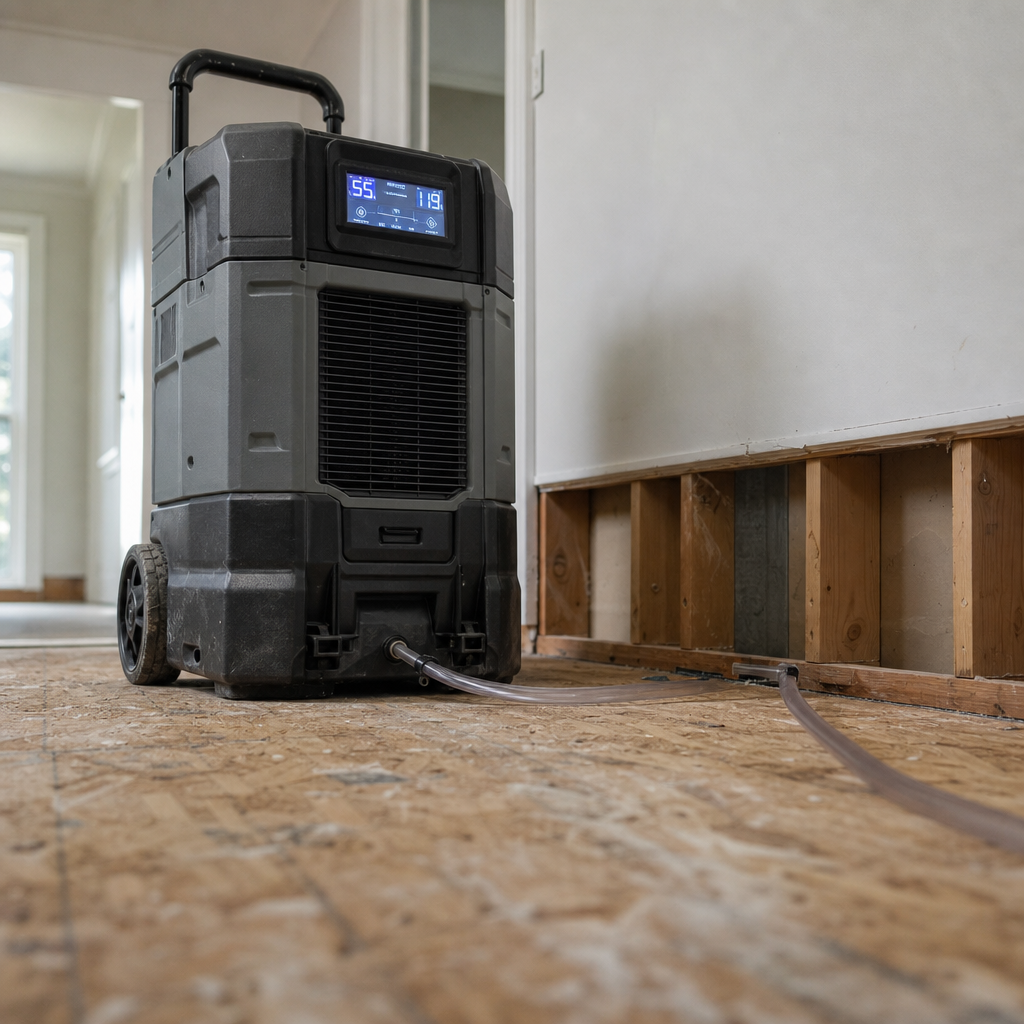
Standing water can start breeding mold within 24 to 48 hours. Applying EPA-registered antimicrobials stops spore growth early, protecting structural timbers and masonry without degrading vintage woodwork.
EPA-Registered Antimicrobial Sanitization
During initial mitigation, certified technicians apply hospital-grade antimicrobials across exposed surfaces. This deep treatment halts fungal growth while keeping delicate vintage plaster and mortar joints stable.
Managing Category 3 Black Water Contamination
Municipal sewer backups and storm surges bring dangerous biohazards into living areas. For both residential properties and commercial flood cleanup, contractors like Floodline Restoration Co. follow strict containment standards:
- Containment Isolation: Setting up negative-air HEPA scrubbers and sealed containment walls to stop airborne contaminants from spreading.
- Biohazard Extraction: Removing contaminated black water and discarding non-salvageable porous items according to local disposal regulations.
- Multi-Barrier Sanitization: Applying broad-spectrum biocides across masonry and framing before drying begins.
Step 5: Structural Psychrometric Drying and Dehumidification
Structural psychrometric drying uses the science of air temperature, relative humidity, and vapor pressure to evaporate trapped moisture out of building materials. After initial extraction, your flood repair contractor balances these factors to pull deep water out of masonry, hardwood, and framing studs.
Deploying Commercial LGR Dehumidifiers and Air Movers
Crews set up Low Grain Refrigerant (LGR) dehumidifiers alongside high-velocity axial air movers. This combination drops the moisture content (grains per pound) of the surrounding air, drawing water out of saturated subfloors and speeding up project completion.
Monitoring Daily Moisture Logs to Meet Dry Standards
Structural materials must be checked every day until they return to acceptable dry standards. Restoration specialists track daily temperature, relative humidity, and material moisture percentages, giving you verifiable proof that structural elements are completely dry before repair work begins.
Step 6: Insurance Claim Documentation and Adjuster Coordination
Need flood repair contractor?
We’re available now - call for a fast, free estimate.
Restoration specialists such as Floodline Restoration Co. compile clear documentation to help substantiate your claim with your property insurance carrier. Detailed psychrometric logs and moisture readings verify the scope of work for the insurance adjuster.
Room-by-Room Photo and Video Documentation
Technicians record detailed visual proof from the moment of arrival until the final walkthrough. Infrared images show that historic plaster and hardwoods have reached normal dry standards, providing an organized record of every step taken.
Claim Documentation and Adjuster Coordination
Contractors produce itemized estimates using industry-standard pricing software so adjusters receive familiar, clearly organized files. Flood damage usually requires separate flood insurance, while internal water losses may depend on the policy and cause of damage.[2]
What Does a Flood Repair Contractor Cost?
Flood repair costs depend on the volume of water, the category of contamination (clean supply line, gray water, or black water sewage), and how deeply moisture has penetrated the structure. Minor localized water extraction usually costs a few thousand dollars, while severe storm floods or sewage backups requiring extensive drying and rebuild work run significantly higher.
Restoration Service Categories
| Service Type | Primary Scope of Work |
|---|---|
| Emergency Water Extraction | Truck-mounted pumping and standing water removal |
| Structural Psychrometric Drying | LGR dehumidifiers, air movers, and moisture monitoring |
| Mold Remediation | Negative air containment, HEPA air scrubbing, and antimicrobial application |
| Sewage (Category 3) Cleanup | Biohazard removal, sanitization, and disposal of contaminated materials |
| Structural Reconstruction | Drywall repair, trim carpentry, subfloor rebuilding, and odor removal |
Key Factors Influencing Final Repair Quotes
Every building presents different challenges. Total pricing depends on square footage, the contamination category of the water, necessary reconstruction work, and whether historical finishes can be dried in place. A reputable flood repair contractor provides an on-site visual assessment and a transparent written estimate before starting extensive repairs.
Flood Repair Contractor Comparison: Dedicated Local Experts vs National Franchises
When selecting a contractor, look closely at their labor model and architectural knowledge. Dedicated local teams understand how to dry historic masonry and timber framing without resorting to heavy-handed demolition.
Response Time, Labor Models, and Architectural Knowledge Compared
National franchise chains frequently route emergency calls through remote call centers and dispatch third-party subcontractors who may lack experience with urban buildings. Qualified local restoration contractors handle flood damage using trained, certified technicians.
| Feature | Dedicated Local Contractors | National Franchise Chains | General Subcontractors |
|---|---|---|---|
| Response Speed | Local dispatch based on availability | Depends on regional queue | Unpredictable scheduling |
| Labor Model | Directly employed, certified technicians | Franchise crew or third-party labor | Brokered trade workers |
| Historic Preservation | Non-destructive cavity and psychrometric drying | Standard demolition-first protocol | Uncontrolled gutting |
| Insurance Documentation | Daily thermal logs and line-item software estimates | Standard regional templates | Basic invoices |
Frequently Asked Questions About Flood Repair Contractors
Hiring the right restoration company, such as Floodline Restoration Co., ensures fast water removal, proper structural drying, and smooth insurance communication during an emergency.
Emergency Response, Insurance Coverage, and Local Service Inquiries
How quickly can a flood repair contractor respond to an emergency?
Response times vary by contractor, traffic, weather, and local availability.
Does homeowners insurance cover professional flood repair services?
Flood damage usually requires separate flood insurance, while internal water losses may depend on the policy and cause of damage.[1]
What is the difference between water mitigation and flood repair?
Water mitigation stops ongoing damage through fast extraction, sanitization, and dehumidification. Flood repair (or restoration) takes place afterward to rebuild, repaint, or replace materials that were permanently compromised.
What certifications should a reputable flood restoration contractor hold?
Look for companies certified by the IICRC (specifically in Water Damage Restoration and Applied Structural Drying), carrying active state contractor licensing, general liability insurance, and pollution liability coverage.
How long does the complete flood restoration and repair process take?
Structural drying usually takes between 3 to 5 days. If structural repairs or drywall and flooring replacement are needed, the entire restoration process can take anywhere from one to several weeks depending on the scope of work.
Need flood repair contractor?
We’re available now - call for a fast, free estimate.
Sources
- Federal Spending for Flood Adaptations – cbo.gov (2050)
- Five Facts to Help New Homeowners Protect Against Water Damage – agents.floodsmart.gov
- Water Damage Restoration Industry Statistics | 2026 Edition – worldmetrics.org (2028)
- North America Disaster Restoration Services Market Size and Share – mordorintelligence.com (2031)
- Restoration Cost Statistics (2026) – rapideyeinspections.com (2026)
Related reading: Emergency Water Damage Restoration Near Me – Call Now-10% Off – On-Site in 60 Minutes – Free Estimate
Related reading: Water Damage Repair Jersey City – 10% Off & Free Estimate – On-Site in 60 Minutes
Frequently Asked Questions
Can original hardwood floors and historic masonry be saved after severe indoor flooding?
Yes, certified flood repair contractors use non-destructive thermal imaging and targeted psychrometric drying to extract trapped moisture without gutting historic architecture. Floodline Restoration Co. deploys weighted extraction mats and industrial LGR dehumidifiers to pull moisture out of vintage subfloors and brick walls before structural rot sets in.
How does a flood repair contractor assist with property insurance claims?
A qualified contractor documents the entire restoration process with room-by-room photos, infrared moisture mapping, and daily drying logs formatted in industry-standard estimating software. Floodline Restoration Co. provides end-to-end claim coordination, working directly with insurance adjusters to verify the full scope of emergency mitigation and repairs.
How quickly must water extraction begin to prevent toxic mold and sewage contamination?
Standing floodwater and sewer backups should be extracted immediately, as harmful microbial growth and structural delamination can begin within 24 to 48 hours. Calling the 24/7 dispatch line at Floodline Restoration Co. secures rapid emergency water extraction, antimicrobial sanitization, and a free on-site visual inspection.
About the author
 |
Erica Lin Erica Lin is a property restoration specialist with over 8 years of experience in water damage mitigation and mold remediation. She holds an IICRC certification in Applied Microbial Remediation and has managed numerous emergency response projects in the New Jersey area. Her background includes navigating complex insurance claims, helping property owners recover efficiently from unexpected disasters. |
Water damage, flood, or mold emergency?
We’re available now - call for a fast, free estimate.
Call Now - Free Estimate