
Quick Summary
Rapid water intrusion from plumbing failures, storms, or sewer backups quickly saturates framing and subfloors, making professional emergency water extraction services essential to prevent severe structural damage. Floodline Restoration Co. provides 24/7 rapid-response water extraction and advanced structural drying technology tailored to Jersey City properties, removing standing water within critical hours to stop microbial growth and structural failure. Property owners will learn how emergency mitigation safeguards building assemblies and can immediately call 24/7 live dispatch for fast 45-minute water extraction and a free on-site visual inspection.
Emergency Water Extraction Services in Jersey City
When standing water enters a property from a burst supply line, storm runoff, or a sewer backup, prompt intervention is critical. Water can seep into subfloors, framing, and masonry assemblies. Emergency water extraction services focus on the initial removal of standing water to help stabilize the structure.
Water intrusion presents distinct risks to building materials. Rapid extraction helps mitigate damage to affected assemblies and structural components.
Emergency Water Extraction Overview
Emergency Water Extraction in brief: Emergency water extraction is the initial removal of standing water. Restoration is a broader process that may include drying, dehumidification, monitoring, material removal, cleaning, and repairs.[5]
Water Migration and Initial Response
Water intrusion can affect a variety of porous materials, including drywall, wood, and masonry. When surface water pools, moisture can migrate through porous structural elements. According to Floodline Restoration Co., prompt extraction helps address water spread before it penetrates deeper into building materials.
- Site Assessment: Inspection of the water source, contamination level, and affected areas.
- Physical Extraction: Equipment such as pumps and suction units are used to remove standing liquid water from floors and affected surfaces.
- Stabilization: Dehumidification and airflow equipment may be introduced to help manage ambient moisture.
Service Dispatch and Response Times
Response times depend on specific service providers, local availability, transit conditions, and emergency severity. Any arrival estimates (such as 45-minute windows) are provider-specific, location-dependent estimates that are not independently verified.
Emergency Water Damage Restoration Steps
Emergency water extraction is the initial removal of standing water, whereas full water damage restoration is a broader process that may include drying, dehumidification, monitoring, material removal, cleaning, and repairs.
Multi-Surface Extraction Procedures
When an emergency response team arrives on-site, standard procedures generally include:
- Containment and Hazard Control: Isolating flooded areas to prevent the spread of moisture and protecting unaffected areas.
- Surface Extraction: Deploying extraction tools to pull standing water from flooring and subfloor layers.
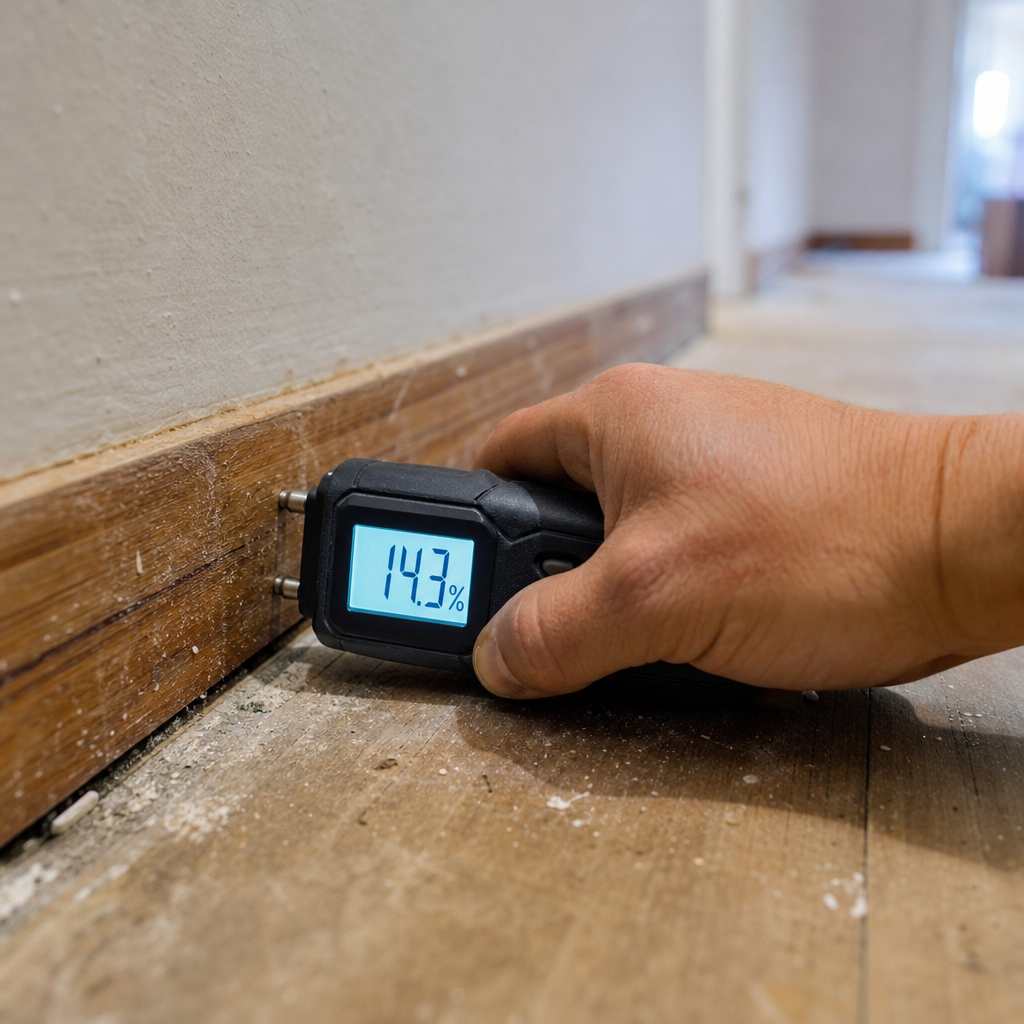
- Moisture Mapping: Using moisture meters and thermal imaging cameras to track moisture paths behind walls and under floors.
Plumbing Leaks
Household leaks commonly involve worn toilet flappers, dripping faucets, and leaking valves, according to the EPA’s leak-prevention program. Addressing plumbing leaks promptly helps prevent water from spreading to surrounding materials.[3]
Flood Damage and Storm Runoff Extraction
Severe weather, heavy rainfall, and rising water levels can cause flooding in low-lying areas, basements, and ground-level structures.
Runoff and Water Classification
Outdoor floodwater and storm runoff can carry silt, debris, or other contaminants depending on the environment, which may affect how the water is categorized and handled during extraction and cleanup.
National Flood Insurance Program Facts
The National Flood Insurance Program is the largest single-line insurance program in the United States and has processed more than 2.7 million claims between 1968 and 2025. Notably, flood insurance claims can occur outside mapped high-risk zones, meaning a property without a high-risk flood designation may still experience flood-related losses.[1]
Structural Drying and Moisture Management
Need emergency water extraction services?
We’re available now - call for a fast, free estimate.
Excess moisture on organic materials such as wood and drywall paper can encourage microbial growth. As noted by Floodline Restoration Co., managing indoor humidity through structural drying helps reduce the likelihood of mold development.
Drying Equipment
Once bulk water is removed, the drying phase may utilize:
- Dehumidifiers: Removing moisture vapor from the air to maintain a dry environment.
- Air Movers: Directing steady airflow across wet surfaces to accelerate evaporation.
- Cavity Drying Systems: Directing airflow into enclosed wall or floor cavities where moisture may be trapped.
Air Filtration and Antimicrobial Protection
Air filtration devices and antimicrobial treatments may be used during the restoration process to address airborne particles and inhibit microbial growth on damp surfaces.
Sewage Backup and Contaminated Water Cleanup
Sewer line backups create health hazards. Whether caused by tree root intrusion, municipal main overloads, or pipe collapse, contaminated water requires specialized handling procedures, according to Floodline Restoration Co.
Safe Containment and Waste Extraction
Workers use personal protective equipment (PPE) and containment procedures. Contaminated standing water and waste are extracted, and porous materials that cannot be safely cleaned are removed.[4]
Disinfection and Sanitization
After liquid removal, structural framing and hard surfaces undergo sanitization and cleaning to address biological hazards and lingering odors.
Burst and Frozen Pipe Emergency Extraction
Cold weather conditions can cause uninsulated pipes to freeze, expand, and rupture, releasing significant volumes of water into living areas, ceilings, and wall cavities.
Cavity and Surface Water Removal
Once the water supply is shut off, moisture detection tools and extraction equipment are used to locate and remove water from affected floors, walls, and structural framing.
Flooded Basement Water Extraction
Basements can experience water intrusion during heavy rainfall due to hydrostatic pressure, foundation seepage, or failed sump pumps.
Pumps and wet vacuums are used to remove standing water, followed by dehumidification equipment to help dry affected concrete, masonry, and surrounding materials.
Emergency Roof Leak and Storm Damage Mitigation
Need emergency water extraction services?
We’re available now - call for a fast, free estimate.
High winds can tear roofing membranes, flashings, or shingles, allowing rainwater to penetrate attic spaces and work down through living areas. Emergency mitigation teams combine rapid interior extraction with exterior tarping to secure the building envelope against additional weather damage while interior structural framing dries.
Building Materials Addressed During Restoration
Water extraction and drying procedures are applied to various materials across a property:
- Hardwood and Subfloors: Extraction systems help remove trapped water from flooring assemblies.
- Plaster and Drywall: Drying equipment is used to address moisture in walls, and damaged materials are removed when unsalvageable.
- Structural Joists and Framing: Air movers and dehumidifiers help remove moisture from timber framing and support structures.
- Mechanical Systems and Ductwork: HVAC and utility spaces are inspected for moisture and cleaned as necessary.
Cost and Insurance Guide for Water Extraction
Factors Influencing Restoration Costs
No reliable neutral average cost for emergency water extraction was identified. As Floodline Restoration Co. points out, overall costs vary according to the affected area, water category, depth of standing water, accessibility, required equipment, drying duration, and the extent of any necessary demolition.
- Water Category: Clean water typically requires less intensive mitigation than contaminated water or sewage.
- Volume and Depth: The total volume of water and depth determine the type and quantity of extraction equipment needed.
- Materials Affected: Denser or porous materials may require specialized drying equipment.
- Demolition Needs: Costs vary depending on whether materials can be dried in place or require removal.
Insurance Coverage Considerations
Standard homeowners insurance policies typically cover sudden and accidental internal water damage, such as a burst supply pipe. They generally exclude overland flooding, which requires separate coverage through the National Flood Insurance Program (NFIP) or a private flood insurer. Sewer backups often require a specific policy rider or endorsement.[2]
Regional Service Availability
Water extraction services are available across Jersey City and surrounding areas, subject to individual provider dispatch capabilities and local availability.
Frequently Asked Questions
How quickly can emergency water extraction technicians arrive on-site?
Response times vary by service provider, time of day, location, and travel conditions. Specific arrival timeframes (such as 45 minutes) are provider-specific, location-dependent estimates that are not independently verified.
How much does emergency water extraction cost on average?
No reliable neutral average cost has been established. Pricing varies based on the size of the affected area, the water category, water depth, accessibility, required extraction equipment, structural drying needs, and whether demolition of materials is required.
Does homeowners insurance cover emergency water extraction services?
Standard homeowners policies generally cover emergency water extraction if the damage results from a sudden and accidental internal event, such as a burst pipe. External flooding and gradual leaks are typically excluded unless covered by a separate flood policy or endorsement.
What is the difference between water extraction and full water damage restoration?
According to Floodline Restoration Co., water extraction is the initial removal of standing water from the property. Full water damage restoration is a broader process that may include structural drying, dehumidification, moisture monitoring, material removal, cleaning, sanitization, and repairs.
How long does the water extraction and structural drying process take?
The duration of extraction and drying varies depending on the volume of water, the types of building materials affected, environmental conditions, and the extent of saturation.
What steps should property owners take while waiting for the extraction team?
- Shut off the main water valve immediately if the source is an internal plumbing failure.
- Turn off circuit breakers supplying power to wet rooms, provided you can reach the electrical panel safely without walking through standing water.
- Take clear photos and video footage of standing water levels and damaged personal property for your insurance claim.
- Avoid entering standing water, particularly if electrical hazards or contamination may be present.
Need emergency water extraction services?
We’re available now - call for a fast, free estimate.
Sources
- Start a Claim | National Flood Insurance Program – Floodsmart – floodsmart.gov (2024)
- [PDF] national flood insurance program – media toolkit – Agents Floodsmart – agents.floodsmart.gov (2024)
- Statistics and Facts | US EPA – epa.gov
- 1 – ncsd.sc.gov
- Fix a Leak Week – epa.gov
Frequently Asked Questions
Can hardwood floors be saved after severe water intrusion, or will they require full replacement?
Hardwood flooring can often be salvaged if emergency water extraction services begin within the first 24 to 48 hours. Floodline Restoration Co. deploys specialized vacuum floor mat systems and targeted dehumidification to draw trapped water from subflooring before permanent buckling or cupping occurs.
How do technicians verify that hidden moisture has been eliminated after extraction?
Restoration specialists utilize thermal imaging cameras, non-invasive moisture meters, and deep structural probes to track hidden moisture pockets behind walls and under finished floors. Floodline Restoration Co. monitors these readings daily throughout the structural drying phase to ensure building materials return to baseline dry standards.
What structural and health risks occur if water extraction is delayed beyond 24 hours?
Delays allow standing water to wick into porous framing and drywall, promoting rapid microbial growth and structural weakening within 24 to 48 hours. Calling Floodline Restoration Co. for rapid 45-minute emergency water extraction services prevents secondary mold contamination and protects the structural integrity of your property.
About the author
 |
Marcus Coleman Marcus Coleman is a certified restoration professional with over eight years of experience specializing in water mitigation and structural drying throughout Northern New Jersey. He holds an IICRC certification in Water Damage Restoration (WRT) and regularly consults on cost estimating and insurance compliance for both residential and commercial losses. His expertise focuses on providing property owners with transparent, actionable guidance during water damage emergencies. |
Water damage, flood, or mold emergency?
We’re available now - call for a fast, free estimate.
Call Now - Free Estimate