
Last updated August 25, 2026
Free visual inspection and a written scope of work before any mitigation begins - photos, moisture readings, and drying logs go in your claim file
The scope we write is the scope we bill. Anything new gets shown to you, in writing, before we touch it.
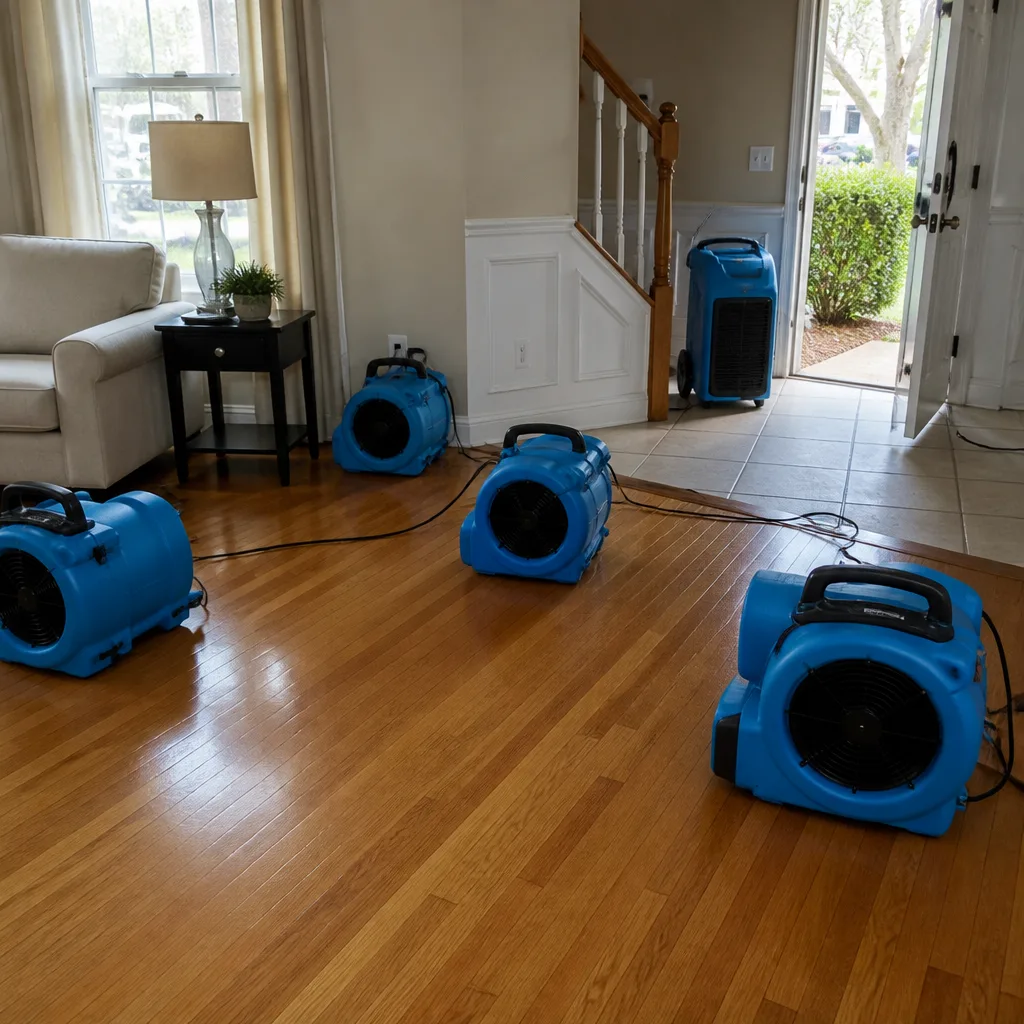





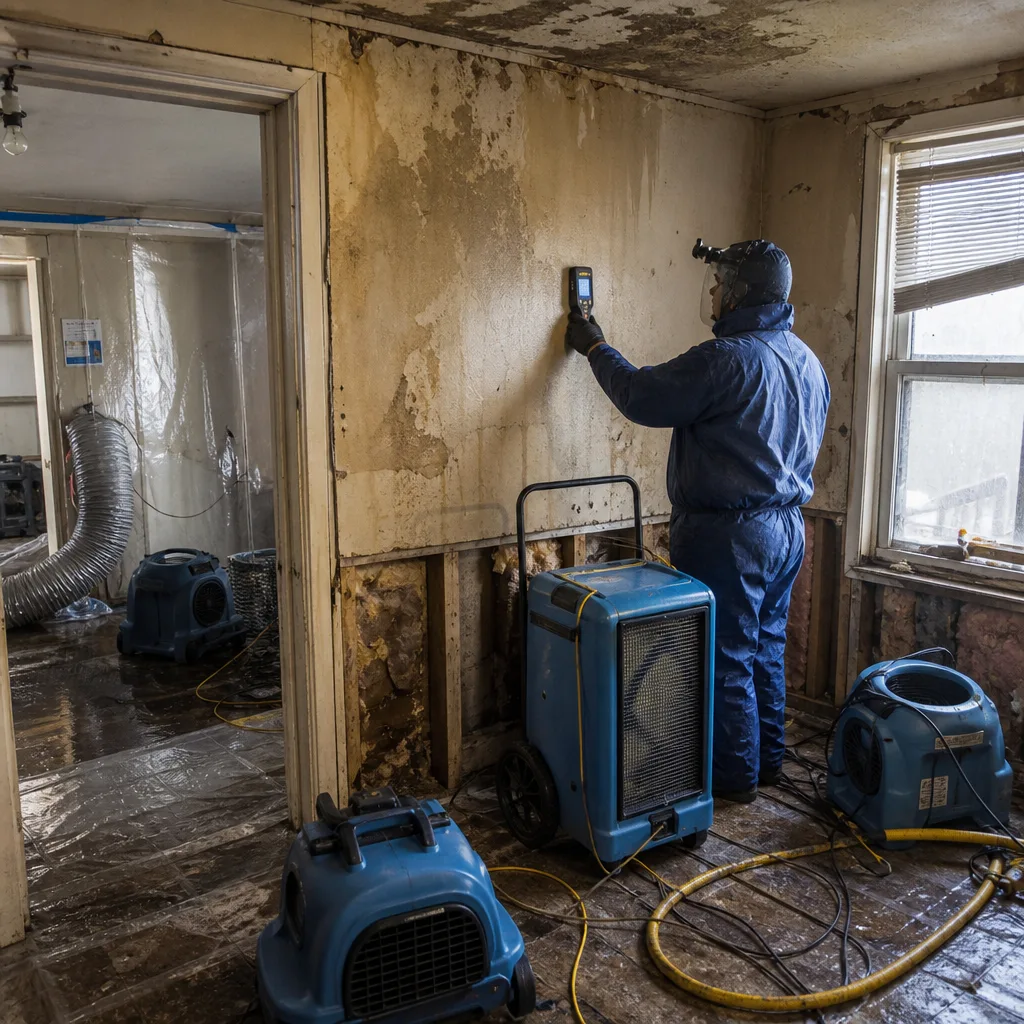 Before
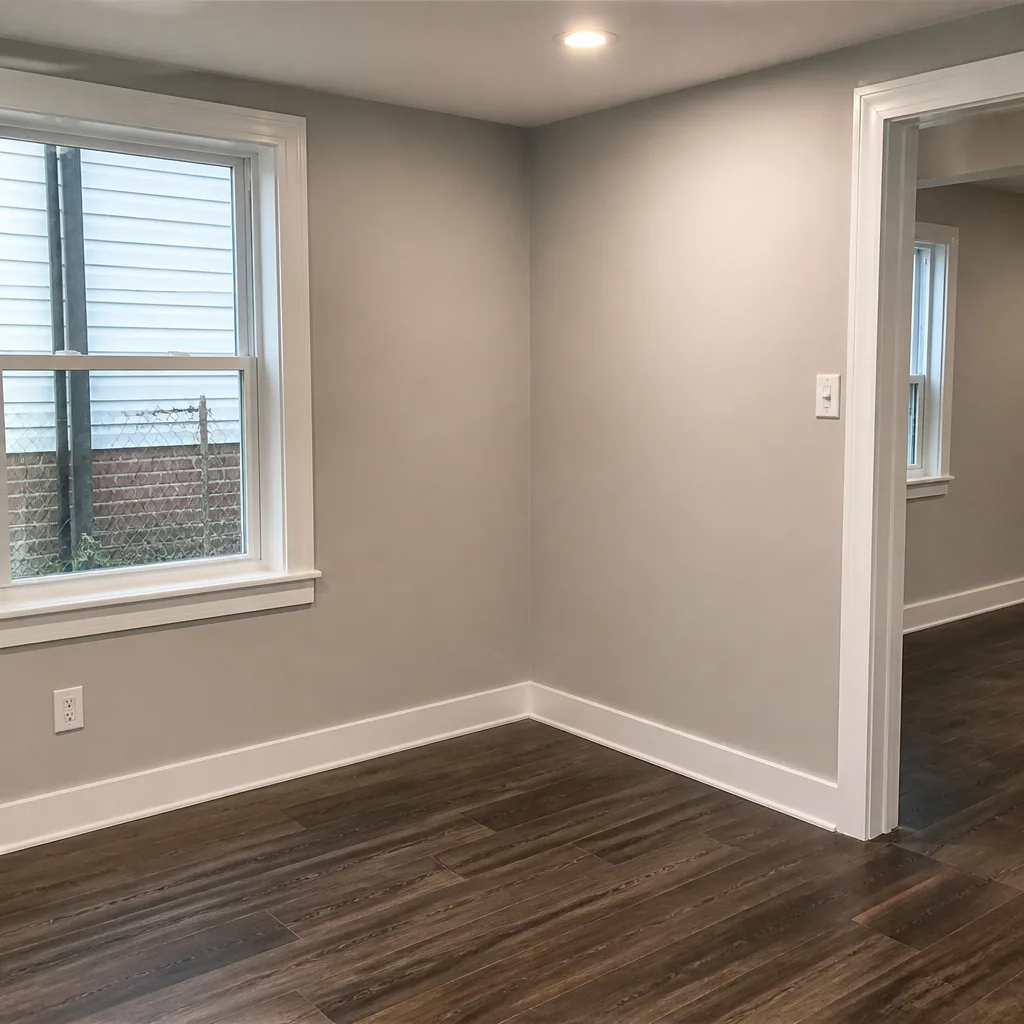 After
After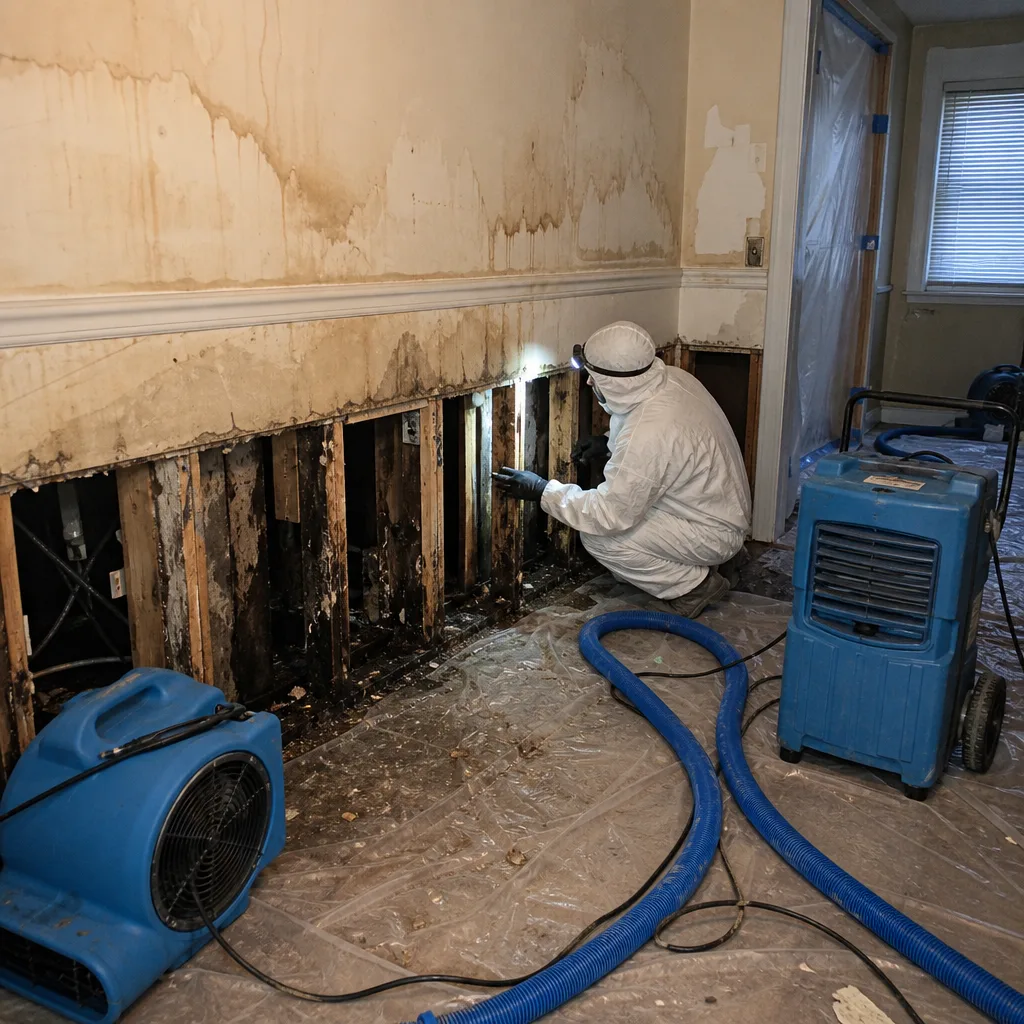 Before
 After
After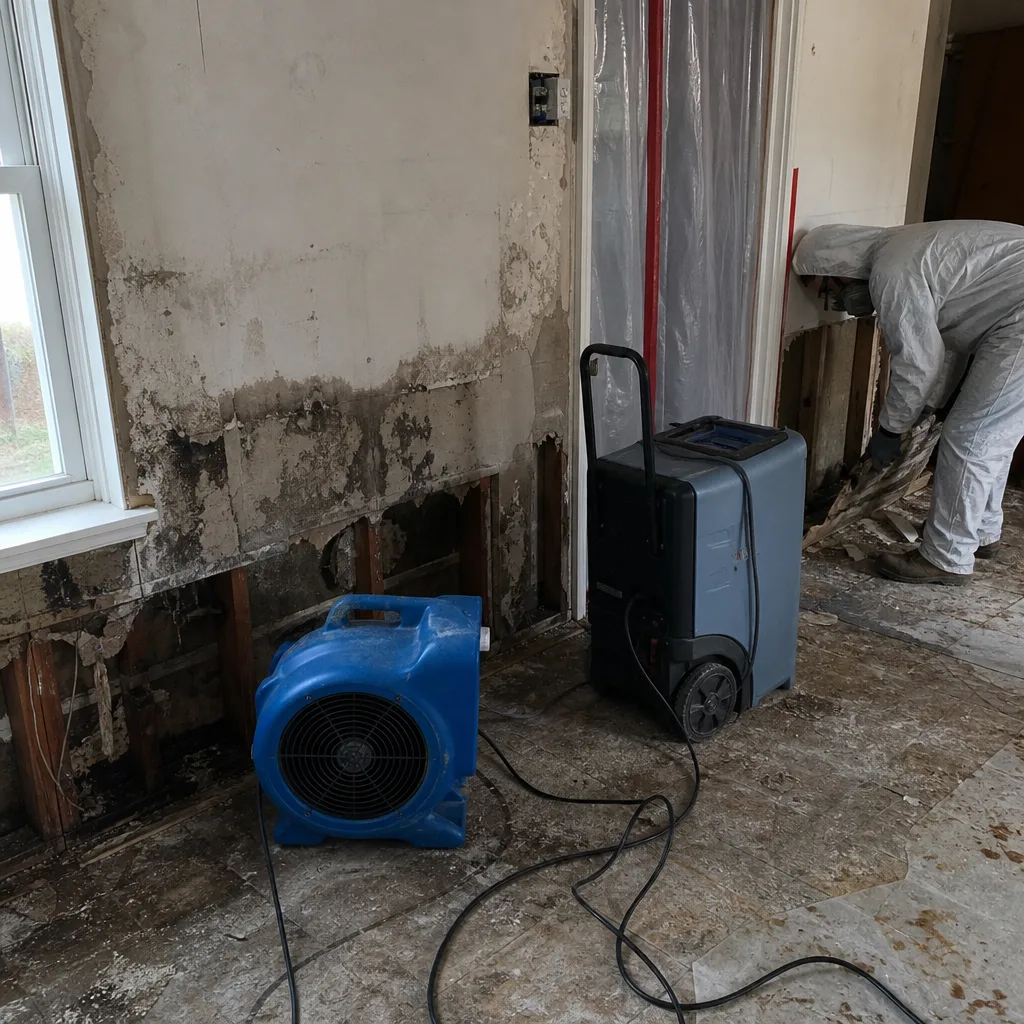 Before
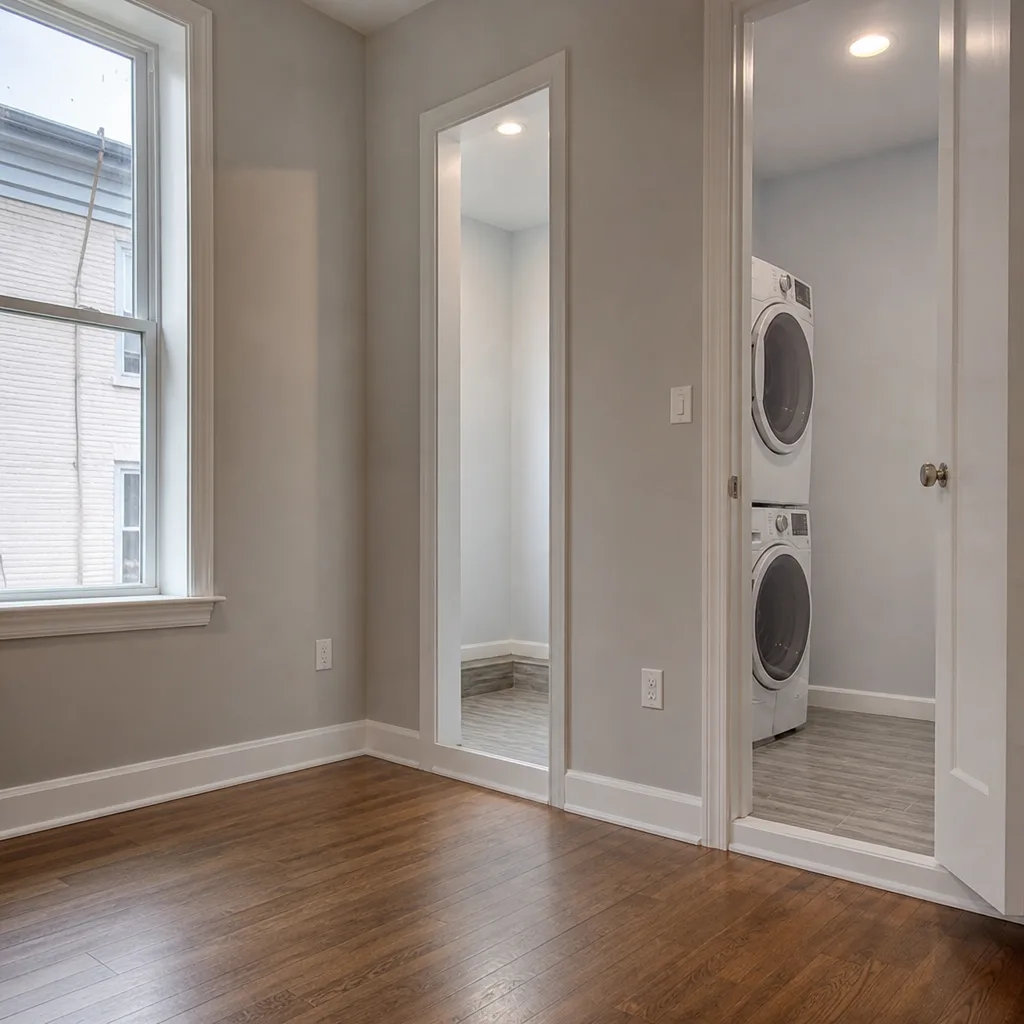 After
AfterDamage Restoration Warning Signs: A Jersey City Homeowner’s Reference Guide
Most Jersey City homeowners don’t discover water damage by finding a puddle. They find it by smell first, then by a stain that wasn’t there last month, then by a floorboard that suddenly feels soft underfoot. By the time any of those three show up, the damage has usually been working quietly behind the wall for weeks. A 2023 study of Northeast housing stock found that homes over 40 years old, which describes a large share of Jersey City’s housing inventory, hide roughly 60% of their moisture problems from plain sight. This guide walks through the warning signs that actually matter, the ones we’ve learned to recognize after fifteen years of opening up walls in Bergen-Lafayette, The Heights, Greenville, and Journal Square, so you can catch trouble before it becomes a rebuild.
Quick Answer
The clearest damage restoration warning signs in Jersey City are: a musty smell that doesn’t fade, stains or discoloration on ceilings and walls, paint or wallpaper that’s bubbling or peeling without a clear cause, floors that feel spongy or have started cupping, and any sudden spike in your water bill with no change in usage. If you notice two or more of these together, you almost certainly have active moisture behind a surface, and the cost of fixing it goes up every week it’s ignored.
Table of Contents
- Water Stains and Discoloration: Reading the Marks on Your Walls and Ceilings
- That Musty Smell: What Your Nose Knows Before Your Eyes Do
- Paint Bubbling, Peeling, and Warped Surfaces
- Floor Damage: Cupping, Crowning, and the Spongy Spot Test
- The Water Bill Spike: A Warning Sign Most People Overlook
- Visible Mold Patterns and What They Tell You
- Foundation Cracks and Settlement: When Movement Means Moisture
- Common Mistakes to Avoid
- When to Call a Professional
- Frequently Asked Questions
- The Bottom Line
Water Stains and Discoloration: Reading the Marks on Your Walls and Ceilings
Water stains are the most straightforward warning sign a Jersey City homeowner will see, and the most commonly misread. A brown or copper-colored ring on a ceiling usually means water pooled there and then dried. The color comes from minerals and tannins in the water, not from dirt. A single ring with a crisp edge often means a one-time event, a fixture overflow or a heavy rain that found a gap. A ring with a soft, spreading edge, or multiple rings nested inside each other, means the water is coming back repeatedly.
Here’s what different stain locations typically indicate in Jersey City homes:
- Ceiling stains directly under a bathroom or kitchen: Usually a supply line leak, a drain leak, or failed caulking around a tub or toilet flange. In prewar Jersey City buildings, cast-iron drain lines from the 1920s and 1930s are reaching the end of their service life, and pinhole leaks in those lines often show up as ceiling stains in the unit below.
- Stains around windows and exterior doors: Flashing failure or failed sealant. Jersey City’s freeze-thaw cycles, winter temperatures below freezing switching to spring rain, work caulk and flashing loose over time.
- Stains on interior walls with no plumbing nearby: Roof leaks tracking down inside a wall cavity, or condensation from a thermal bridge. Older brick row homes without modern insulation get condensation on interior plaster during humid summers, and that condensation stains exactly like a leak.
- Yellowing or browning on baseboards: Wicking from a wet slab or sill plate. In Jersey City basements, this often traces back to a failed perimeter drain or gutter downspout discharging too close to the foundation.
The important distinction: a stain that’s dry to the touch is not a problem that’s over. It’s a problem that’s paused. The moisture that caused the stain already did its work, and if the source hasn’t been found and fixed, the next event is coming. We tell homeowners to photograph stains when they first notice them, mark the edges lightly with a pencil, and check again after the next heavy rain. A stain that grows past the pencil line is an active leak, not an old scar.
That Musty Smell: What Your Nose Knows Before Your Eyes Do
Musty smell is the earliest warning sign of hidden moisture, and in our experience serving Jersey City since 2010, it’s the one homeowners wait longest to act on. The human nose detects the microbial volatile organic compounds that mold and bacteria release at concentrations far lower than what’s visible. People describe the smell as earthy, damp, like old socks, like a basement after rain, or like wet cardboard. What they’re smelling is active biological growth, and odor means the colony has been established long enough to produce a detectable gas signature.
Here’s how to track down the source methodically:
- Close the room off for two hours. Shut doors and windows, then walk back in. If the smell hits you immediately on re-entry, the source is in that room.
- Sniff at floor level, mid-wall, and ceiling. Air currents carry odor upward, so the strongest point tells you the source height. A smell strongest near the baseboard points to a sill plate or slab issue. Strongest at the ceiling points to roof or upper-floor plumbing.
- Check HVAC registers. A musty smell that only appears when the heat or air kicks on usually means microbial growth inside the ductwork, the air handler, or the condensation pan.
- Check the basement or crawlspace first on humid days. Jersey City’s summer humidity, regularly above 70% in July and August, means a damp basement smells stronger when the air is heavy. That’s not the basement “airing out” on its own. That’s equilibrium with outdoor humidity shifting what’s already growing down there.
Baking soda, air fresheners, and scented candles treat the chemical signature, not the biological source. The smell always returns because the moisture source is still feeding the colony. A professional moisture survey with a thermal camera and penetrating moisture meter can locate the source without opening every wall, and in our experience, that’s almost always where the real problem is: not the smell itself, but the wet material behind it.
Paint Bubbling, Peeling, and Warped Surfaces
Paint and wallpaper are cheap moisture detectors. They fail visibly and predictably when the substrate underneath gets wet. In Jersey City’s older housing stock, where many homes still have original lath-and-plaster walls under decades of paint, the warning signs show up differently than they do on modern drywall.
- Bubbling paint: Water vapor pushes the paint film off the wall while the surface is wet, and the bubble often remains after drying. Bubbles on a bathroom ceiling are almost always from steam, but bubbles on an interior wall nowhere near a bath or kitchen mean moisture inside the wall cavity.
- Peeling in sheets: When paint lets go in long strips or sheets rather than small flakes, the substrate is failing. On plaster, this means the plaster has absorbed enough moisture to soften and lose bond. On drywall, it means the paper facing is delaminating from the gypsum core, a sign of prolonged wetting.
- Alligatoring or crackled paint: A pattern that looks like reptile skin usually means the surface below has shifted. On ceilings under bathrooms, this is frequently from minor, repeated water exposure. On walls near windows, it’s condensation cycling.
- Wallpaper lifting at seams: Moisture attacks the paste first, not the paper. Seams are the first place paste fails. Lifting seams in a hallway, bedroom, or dining room with no wet plumbing is a red flag for humidity getting into the wall.
- Warped door frames and window casings: Wood moves when its moisture content changes. A door that sticks in summer and swings free in winter is normal seasonal movement in Jersey City. A door frame that’s visibly bowed, or trim that’s pulled away from the wall at the corners, is not. That’s chronic moisture.
One detail we look for on every Jersey City home assessment: the difference between aged paint and failed paint. Aged paint flakes off in small, uniform pieces from surface wear. Failed paint comes off in flexible, rubbery sheets because the moisture changed the paint’s chemistry. If you can peel a strip and it bends without cracking, water’s been involved.
Floor Damage: Cupping, Crowning, and the Spongy Spot Test
Wood floors are the canary in the coal mine for Jersey City homes. Hardwood absorbs and releases moisture with the seasons, and Jersey City’s swings are wide enough, humid summers, dry winters with radiator heat, that every wood floor moves a little. The question is whether it’s moving normally or telling you something.
Cupping is when the edges of individual floorboards rise higher than the center, making each board look like a shallow U. It happens when the underside of the board is wetter than the top. Water spills, a slow leak from a pipe below, or excess moisture in the crawlspace or basement all cause cupping. Mild cupping can flatten out once the moisture equalizes. Severe or persistent cupping means the moisture source hasn’t been fixed.
Crowning is the opposite: the center of the board rises higher than the edges. It often shows up after someone sands a cupped floor too soon, before the wood has dried, but it can also appear on its own when the top of the board gets wet repeatedly while the bottom stays dry. Crowning in a Jersey City kitchen or bathroom usually points to a slow leak at the supply line or dishwasher.
The spongy spot test is simple and worth doing on any floor you’re suspicious about. Walk slowly across the room in your socks and feel for spots that give slightly, or that feel warmer than the surrounding floor, or that sound hollow when you tap with a knuckle. Subfloor damage, especially around toilets, tubs, and dishwashers, softens the plywood or OSB underneath the finish floor. A spongy spot near a toilet is a wax ring failure or a cracked flange. Near a dishwasher, it’s a supply line or drain problem. Under a bay window, it’s flashing.
Tile floors hide damage longer, but grout tells the story. Crumbling grout, particularly in a straight line, usually traces to movement in the subfloor below, and in a wet area, that movement is often water-driven. Loose tiles in a bathroom or utility area, not cracked, just loose, mean the thinset bond has been compromised, and moisture is the most common reason thinset lets go.
The Water Bill Spike: A Warning Sign Most People Overlook
Jersey City homeowners have a water meter, and most of them never look at it until the bill arrives. But a slow, hidden leak can run for months before it leaves a visible stain, and the utility bill is often the only warning you get. The rule of thumb: any month-over-month increase of more than 10% with no change in household usage, no new appliance, no summer lawn watering, no houseguests, is worth investigating.
Here’s the step-by-step check we recommend, and it takes ten minutes:
- Turn off every water-using fixture and appliance in the home. No flushing, no faucets, no ice maker cycling, no washing machine. If you have a sprinkler system, shut the valve off completely.
- Find your water meter. In most Jersey City homes it’s in the basement near the front wall, or in a meter pit near the curb.
- Note the reading, including the small red sweep hand or the low-flow indicator if your meter has one. Modern Jersey City meters have a leak detector. If it’s spinning with everything off, you have a leak.
- Wait 15 minutes without using any water, then check again. If the meter moved at all, water is flowing somewhere in your system.
- If the meter didn’t move, run a 20-minute test with the main valve closed. This isolates a leak between the street and the house. If the meter still advances with the house valve closed, the leak is in the service line between the curb and your foundation, which happens regularly in Jersey City where service lines from the 1940s and 1950s are still in the ground.
A simple toilet flapper leak can waste 200 gallons a day. A pinhole leak in a supply line wastes less water but does far more damage, because it’s spraying or dripping inside a wall or floor cavity instead of running down a drain. The bill doesn’t tell you which kind you have. But a bill that climbs month after month with no explanation is the earliest, cheapest detector in your house, and it costs nothing to read.
Visible Mold Patterns and What They Tell You
Mold you can see is already a colony, not a beginning. By the time it’s visible on a wall, ceiling, or baseboard, the moisture problem behind it has been active for at least a couple of weeks, often much longer. In Jersey City’s climate, mold growth indoors is nearly always driven by a water problem in the building, not by general outdoor humidity, because outdoor humidity alone rarely wets building materials deeply enough to support a visible colony on finished surfaces.
- Black or dark green spots in a circular pattern: The classic pattern of Stachybotrys or Aspergillus colonies. Circular growth happens because the colony starts at one point and expands outward. On drywall, this pattern means the paper facing has been wet long enough to digest, weeks minimum.
- White or gray fuzzy growth on wood: Usually Penicillium or Cladosporium. On floor joists and sill plates in a Jersey City basement, white growth is a moisture problem, not a structural one, although long-term it rots the wood. On furniture or shoes stored in a damp basement, it’s the same genus but less consequential.
- Pink or orange staining in bathrooms: This is usually Serratia marcescens, an airborne bacteria that thrives on soap scum and mineral deposits. It’s not a structural mold, but its presence means the bathroom holds humidity long enough to support microbial growth, which tells you ventilation needs work.
- Mold in a straight horizontal line at the same height on multiple walls: This is a flood line. In Jersey City basements, especially in low-lying neighborhoods near the Hackensack River or the bay, a past flooding event leaves a distinct line where the water sat. The mold grows on the wick line, the highest point the water reached, because that’s where the material stayed wet longest as it dried downward.
- Mold on the north side of the house or behind furniture against exterior walls: Condensation mold. These walls stay cooler, especially in older Jersey City homes without exterior insulation, and interior humidity condenses on the cool surface. Furniture pushed tight against the wall traps the moisture. This kind of mold often returns seasonally until the ventilation or insulation changes.
The key distinction we teach every homeowner: mold color does not tell you the species, and species does not tell you the toxicity from a photograph. Only a lab test identifies species definitively. What matters for the homeowner is the same in every case: find and stop the water, remove the damaged material, dry the cavity to the dry standard, and rebuild. The mold is a symptom. The water is the disease.
Foundation Cracks and Settlement: When Movement Means Moisture
Jersey City sits on a mix of bedrock, glacial till, and fill, and the geology changes from neighborhood to neighborhood. The Heights sits up on the Palisades sill. Downtown and Paulus Hook are built partly on fill over former marsh. Greenville and Bergen-Lafayette sit on clay and sand. All of that means foundation movement is not uniformly distributed across the city, and a crack that’s cosmetic in one neighborhood is structural in another.
Here’s how to read foundation cracks in a Jersey City context:
- Vertical hairline cracks in poured concrete: Usually shrinkage from the original cure, normal in foundations poured decades ago. Not a concern unless they widen or leak.
- Horizontal cracks in basement walls: Almost always significant. Hydrostatic pressure from water-saturated soil pushes the wall inward, and the wall cracks horizontally as it bows. In Jersey City’s clay-heavy neighborhoods, a wet spring followed by a sudden freeze creates exactly this pressure condition. Any horizontal crack warrants a structural engineer’s eyes, and the moisture problem behind it needs to be solved at the same time.
- Stair-step cracks in block or brick foundations: Differential settlement, one section of the foundation dropping relative to another. In neighborhoods built on fill, like parts of Downtown and the waterfront, this is more common, because fill compacts unevenly under load. Water makes it worse, since saturated fill settles faster.
- Cracks that widen at the top or bottom, or doors that suddenly stick in their frames: Active movement, not historical settlement. When a crack is wider at one end, the foundation is tilting. When doors in the same floor of the house start sticking or swinging shut on their own in the same season, the frame has shifted.
Moisture is the accelerant in most Jersey City foundation problems. Water in the soil against the foundation increases hydrostatic pressure. Water inside the foundation freezes and thaws in the cracks, widening them mechanically. A downspout that discharges at the base of the wall, a common issue in dense Jersey City neighborhoods where houses are close together, funnels roof water directly against the foundation. The crack is the visible warning sign, but the water management around the house is usually the root cause.
We’ve walked into Jersey City basements where the homeowner was convinced they needed full foundation replacement, and the actual fix was regrading a walkway and re-routing a downspout. Other times, the crack is the real deal and the engineering is necessary. The point is that foundation movement and moisture operate together, and any assessment that ignores one while treating the other is leaving half the problem on the table.
Common Mistakes to Avoid
- Painting over water stains without fixing the source. Every paint manufacturer makes a stain-blocking primer, and every homeowner who uses one on an active leak watches the stain bleed through in six weeks. The stain is a symptom. The leak is the problem. Block the stain without fixing the leak and you’ve hidden the only visible warning sign you had.
- Drying a wet area with fans and then closing it up. Home fans move air across surfaces. They do not remove water from inside wall cavities, under flooring, or behind baseboards. The surface dries, you close the wall, and the moisture inside the cavity keeps working. Professional drying in Jersey City homes requires professional equipment, Dri-Eaz and Phoenix units that push dry air into cavities with the correct pressure differential, plus a moisture meter to prove the material is actually dry, not just dry to the touch.
- Treating mold with bleach. Bleach kills surface mold on non-porous surfaces and does almost nothing on porous materials like drywall, wood, and insulation. Worse, bleach is mostly water, and that water soaks into the porous material, feeding the mold roots you can’t see. The colony comes back worse. Proper mold remediation removes the affected material and cleans the cavity, and the guidance from the IICRC reflects exactly this distinction.
- Ignoring a small stain because it’s been there for years. Sometimes a stain is genuinely old and dry, and if you’ve marked it and it hasn’t changed in two seasons, it may be stable. But “it’s been there for years” is also what homeowners say about slow leaks that have been soaking a floor joist the entire time. Old does not mean inactive.
- Waiting until you file an insurance claim to start mitigation. In Jersey City, most homeowner policies require the policyholder to take reasonable steps to prevent further damage after a loss. That means water extraction, tarping, and drying can’t wait for an adjuster to schedule a visit two weeks out. Starting mitigation immediately is both a practical decision and a coverage decision. Photograph everything, then get the water out.
- Choosing a contractor based on the lowest estimate without checking what’s included. Restoration estimates vary widely because scope varies widely. A low number usually means less equipment, fewer days of drying, and no written scope. Homeowners who choose on price alone end up paying twice, once for the cheap job and once to have it redone. We’ve rebuilt more than a few Jersey City jobs where the first contractor walked away when the walls started drying unevenly.
- Assuming a new home doesn’t have water problems. New construction in Jersey City, especially the mid-rise wood-frame buildings that went up fast during the last two building booms, has its own water issues. Improper flashing, grade-level waterproofing failures, and improperly sealed window penetrations are common. Age is not a guarantee of dryness.
When to Call a Professional
Some warning signs you can investigate yourself: reading your water meter, marking a stain and watching it through a storm, checking the moisture feel of a floor. But there’s a line where investigation turns into risk, and knowing where that line is saves Jersey City homeowners money and keeps them out of harm’s way.
Call a professional when you see: any ceiling or wall stain growing past a pencil mark after rain, any musty smell you can’t locate within a day, any floor that feels spongy near plumbing, any water bill spike you can’t explain after the meter test, any mold larger than a paper plate, any foundation crack that’s horizontal, stair-stepped, or wider at one end, and any water event where water sat for more than 24 hours. Also call before cutting into any wall or ceiling you suspect is wet, because the first cut is where hidden damage becomes a health and safety question.
Floodline Restoration Co. offers free estimates in Jersey City. Call (640) 400-9404 and a live person answers, any hour, any day. We’ll walk the property with you, give you a written scope, and tell you honestly whether you have a problem or just an old stain. Floodline Restoration Co. home.
Frequently Asked Questions
Water damage restoration in Jersey City typically runs between $1,500 and $6,000 depending on the square footage affected, the category of water, and how long the water sat before extraction started. A small Category 1 clean-water leak from a supply line might stay under $2,000. A Category 3 sewage backup affecting multiple rooms and requiring full drywall removal ranges from $4,000 to $12,000 or more. Every job gets a written scope before work starts. Call (640) 400-9404 for a free estimate, and we’ll give you exact numbers for your specific situation.
Most Jersey City homeowner policies cover sudden and accidental water damage, like a burst pipe or an appliance supply line failure, and most exclude gradual damage, like a slow leak that’s been running for months. Flood damage from rising water is excluded from standard policies and requires separate flood insurance. Our team photographs everything, logs daily moisture readings, and bills your carrier directly, so you’re not in the middle of the paperwork.
Our dispatch desk answers with a live person 24 hours a day, every day, and a crew is typically on-site within hours of your call, not days. We’ll be there when we say. For active water flowing inside your home, don’t wait, because every hour of standing water expands the damage footprint. Call (640) 400-9404 and the dispatcher will give you a real arrival window.
If the water affected only a hard, non-porous surface and you caught it within a few hours, fans and open windows may be enough. If water touched drywall, wood, insulation, or any porous material, fans dry the surface and leave the inside of the material wet, and that’s where the long-term damage happens. The honest test is a moisture meter reading. We’ll come check it for free and tell you what the readings show.
Mitigation stops the bleeding: extracting standing water, removing wet materials that can’t be saved, setting drying equipment, and stabilizing the structure. Restoration puts it back: rebuilding walls, flooring, ceilings, and finishes to pre-loss condition. At Floodline Restoration Co., the same crew handles both, with a moisture log from day one and the 90-Day Done Right Promise in writing when the job is finished.
We handle the carrier communication directly. Our technicians document the damage with photos and moisture readings, meet with the adjuster on-site when needed, and bill the insurance company directly for covered work. You never play messenger between us and the carrier. The only number you need to call is ours: (640) 400-9404.
The Bottom Line
Water damage in Jersey City homes almost never announces itself with a dramatic event. It starts as a smell, a small stain, a floor that feels slightly wrong, a bill that’s a little too high. The homeowners who catch problems early are the ones who check their meter, mark their stains, and trust their nose when something smells off. The homeowners who pay the most are the ones who rationalize the warning signs away for a season or two. When you find something, investigate it the same day, because delay is the one factor that converts a thousand-dollar repair into a twenty-thousand-dollar rebuild. And when you’re not sure, call someone who will tell you the truth about what they find.
Written by Curt Bowman, Owner at Floodline Restoration Co., serving Jersey City since 2010.