
Last updated August 25, 2026
Free visual inspection and a written scope of work before any mitigation begins - photos, moisture readings, and drying logs go in your claim file
The scope we write is the scope we bill. Anything new gets shown to you, in writing, before we touch it.
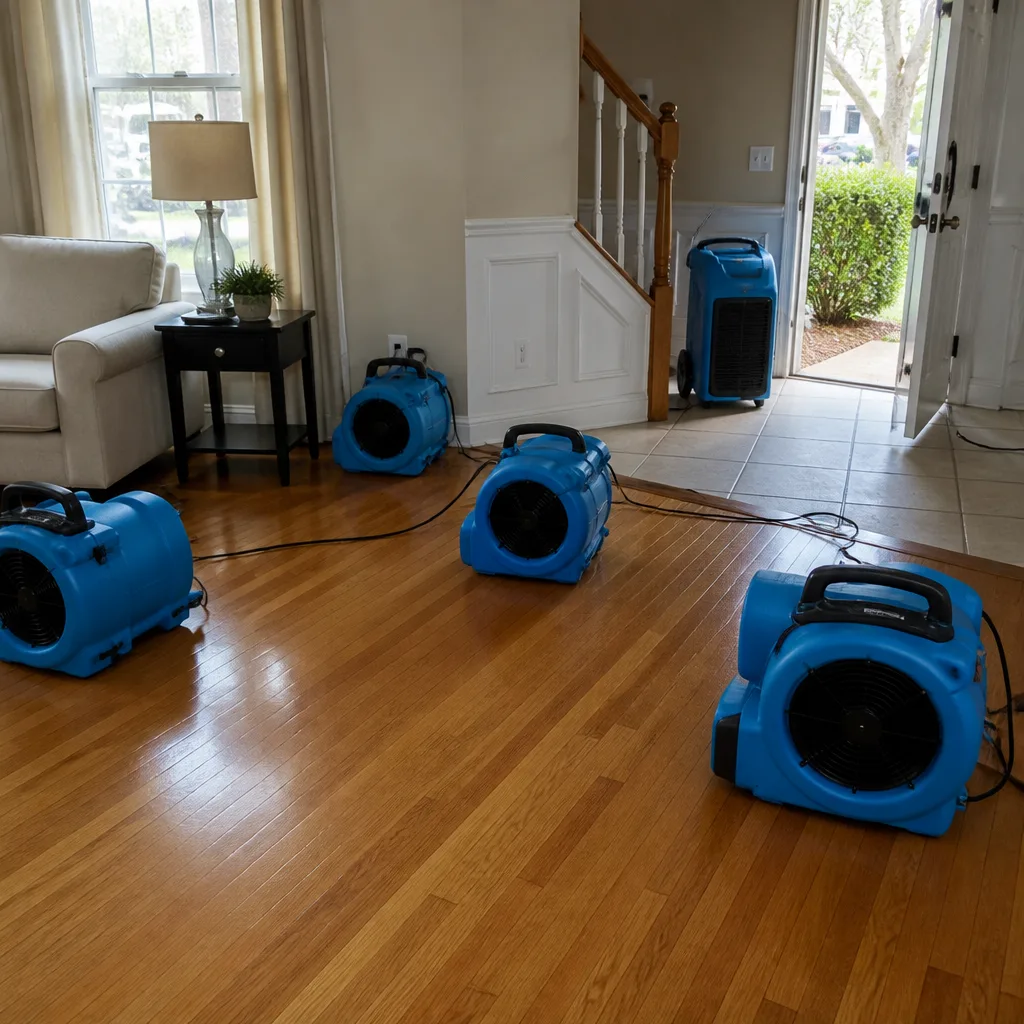





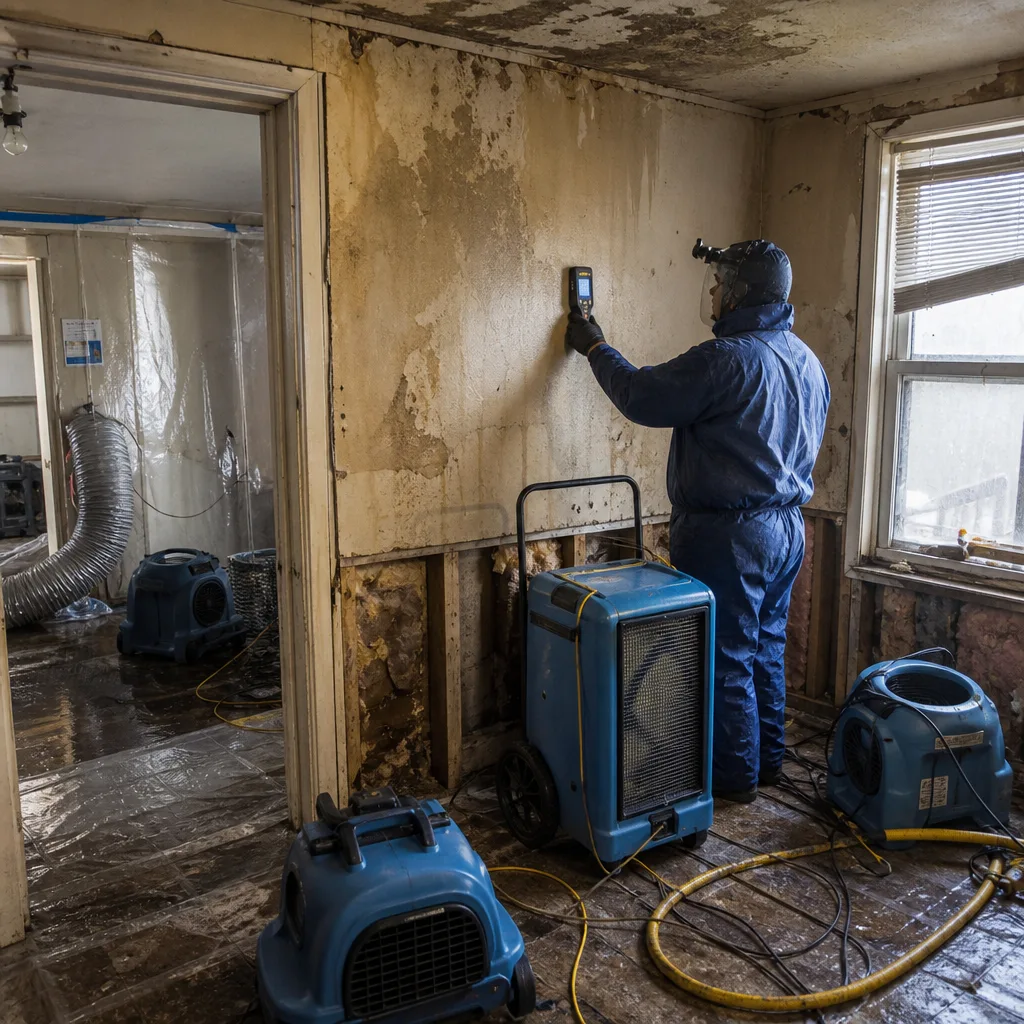 Before
 After
After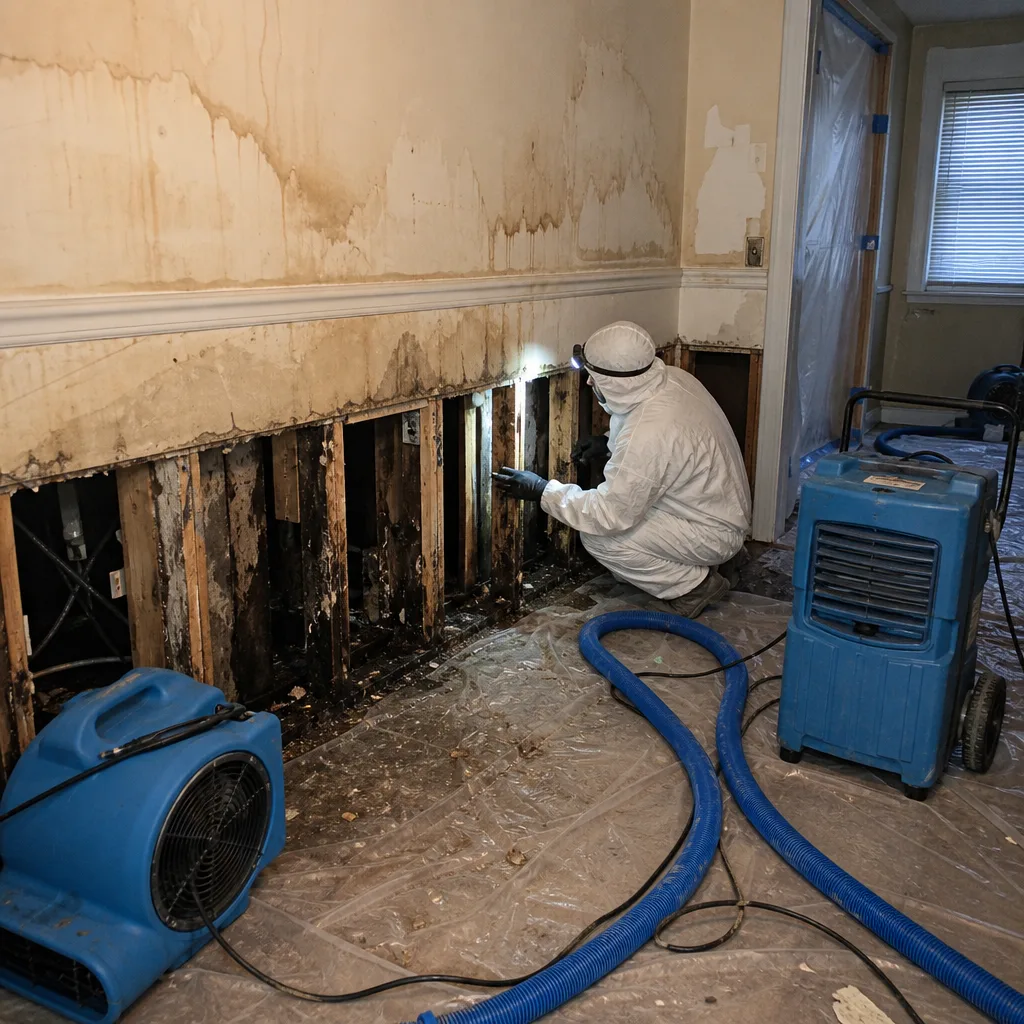 Before
 After
After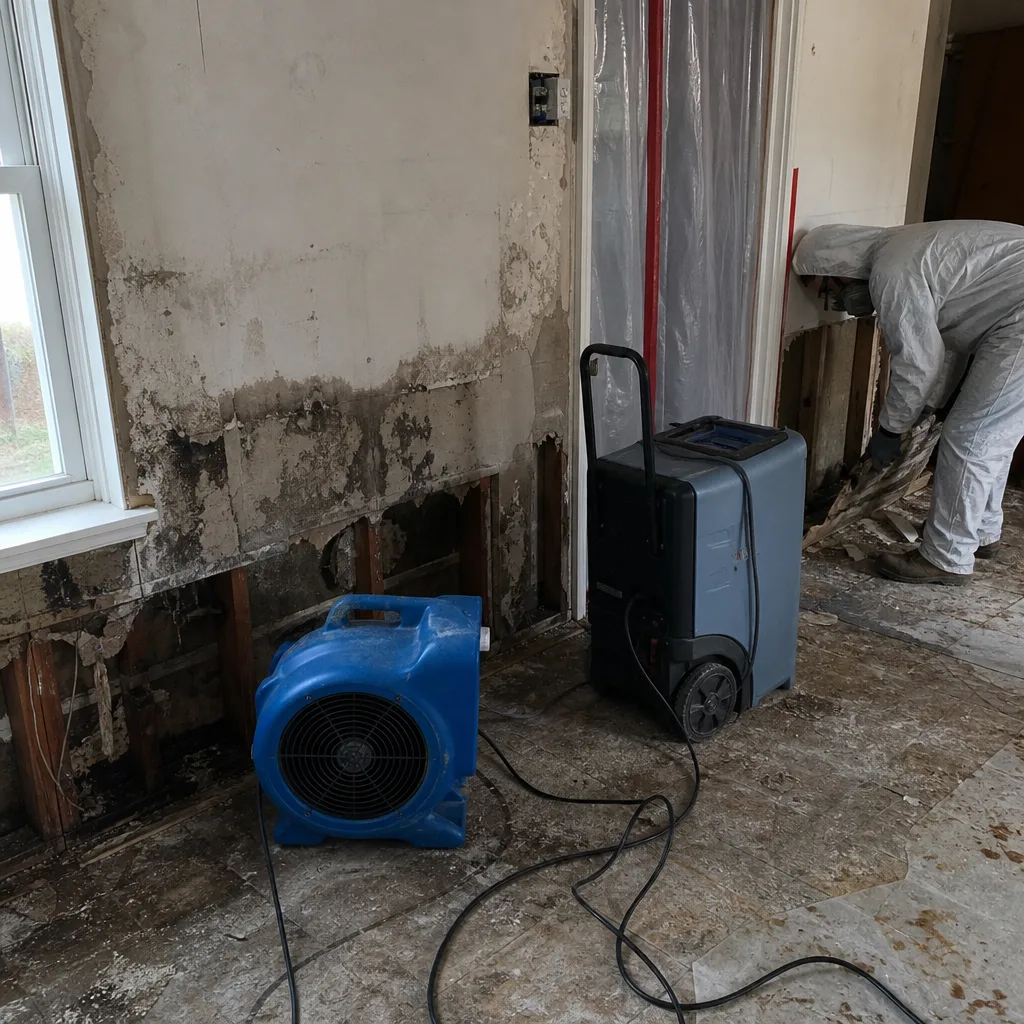 Before
 After
AfterWater Damage Restoration Maintenance Checklist for Jersey City Homeowners
Most Jersey City water damage doesn’t start with a burst pipe in the middle of the night. It starts with a slow drip behind a bathroom vanity on Duncan Avenue, a hairline crack in a brownstone foundation in Bergen-Lafayette, or a gutter that’s been quietly pouring rainwater against a sill plate in The Heights for three seasons. By the time the stain shows up on the ceiling, the damage has usually been underway for weeks or months. This guide is a working checklist for the homeowner who wants to catch water problems before they become restoration projects. It covers what to inspect, when to inspect it, how Jersey City’s older housing stock and coastal humidity change the equation, and which problems you can handle yourself versus which ones need a professional with commercial drying equipment.
Quick Answer
A proper water damage prevention routine for a Jersey City home comes down to four inspections a year, focused on the building envelope (roof, gutters, siding, foundation), the plumbing system (supply lines, drain lines, water heater, sump pump), the humidity control system (bathroom fans, dehumidifiers, AC condensate lines), and the early-warning spots (ceilings, baseboards, under sinks, behind appliances). Spend about one hour per quarter walking through this checklist, and you’ll catch most water problems for under $200 in maintenance instead of $4,000 to $12,000 in restoration. The homes that stay dry are the ones that get looked at on a schedule, not after the water shows up.
Table of Contents
- The Seasonal Inspection Rhythm That Works for Jersey City
- Building Envelope Checks: Roof, Gutters, Siding, and Foundation
- Plumbing System Checks: Supply Lines, Drains, Water Heater, and Sump Pump
- Humidity Control: Bathroom Fans, Dehumidifiers, and Condensate Lines
- Early-Warning Spots: Where Water Hides Before You See It
- After a Heavy Storm or Coastal Flood: The 48-Hour Checklist
- Common Mistakes to Avoid
- When to Call a Professional
- Frequently Asked Questions
- The Bottom Line
The Seasonal Inspection Rhythm That Works for Jersey City
Jersey City’s climate gives you four distinct inspection windows, and each one catches a different set of problems. The freeze-thaw cycle from December through March puts pressure on every pipe joint, hose bib, and foundation crack in Hudson County. The spring thaw reveals what the ice did. Summer brings coastal humidity that feeds mold growth in any space that isn’t moving air. And autumn storms test gutters, downspouts, and sump pumps at full capacity.
We’ve worked in Jersey City homes long enough to know which neighborhoods have which recurring issues. Brownstones and row houses in Downtown and Bergen-Lafayette share party walls and flat or low-slope roofs, so water from a neighbor’s failed flashing often becomes your ceiling stain. The Heights has more single-family homes with basements set into the hillside, which means groundwater pressure and sump pump dependence. Greenville and the West Side have a mix of older frame construction and mid-century brick, each with its own weak points. Whatever your block looks like, the schedule below applies.
Quarterly Maintenance Schedule
- March (post-winter): Check every exposed pipe for freeze damage, especially in unheated spaces like garages, crawl spaces, and exterior walls. Look for bulging supply lines, cracked fitting nuts, and green corrosion on copper. Test the main water shutoff valve to make sure it turns freely. Flush the water heater and check the pressure relief valve.
- June (pre-humidity): Test every bathroom exhaust fan by holding a tissue to the grille; it should pull the tissue against the grille and hold it. Clean AC condensate lines with a cup of white vinegar. Check basement humidity with a $15 hygrometer; anything above 60% RH for more than a few days will feed mold.
- September (pre-storm season): Clean gutters and downspouts, tighten gutter brackets, and check that downspout extensions carry water at least four feet from the foundation. Inspect the roof for lifted shingles, cracked flashing around chimneys and vents, and any soft spots in the decking. Test the sump pump by dumping a five-gallon bucket of water into the pit and watching it cycle.
- December (pre-freeze): Disconnect and drain all exterior hoses. Shut off interior valves to exterior hose bibs if you have them, and install foam bib covers if you don’t. Insulate any exposed pipes in the basement, crawl space, or garage. Check that any unheated spaces have their vents closed and their doors weatherstripped.
The point of this rhythm is that each inspection takes under an hour. Skip a quarter and you’re not just missing that season’s problems; you’re letting them compound. A loose gutter bracket in September becomes a detached downspout by February, which pours snowmelt directly against your foundation through March, which becomes a basement water intrusion by April. The chain is predictable, and it’s always cheaper to break it early.
Building Envelope Checks: Roof, Gutters, Siding, and Foundation
Your building envelope is the first line of defense against water that falls from the sky and water that rises from the ground. In Jersey City, both directions matter. The city averages about 48 inches of precipitation a year, and the water table is high enough in many neighborhoods that basements sit in seasonally damp ground even without a storm. Homeowners who stay dry pay attention to the four surfaces that shed or block water: the roof, the gutters, the siding, and the foundation.
Roof Inspection (Twice a Year)
You don’t need to get on the roof to inspect it. From the ground with a pair of binoculars, or from a second-floor window, you can see most of what matters. Look for lifted, curled, or missing shingles. Check the flashing around chimneys, plumbing vents, and skylights; cracked or corroded flashing is the number one source of roof leaks in Jersey City’s older homes. Look for dark streaks or moss growth, which hold moisture against the shingle surface and shorten roof life.
Inside, check the attic or top-floor ceiling for water stains, especially after a heavy rain. A fresh stain is usually brown or copper-colored and has a defined edge. An old stain is darker, may have rings, and feels soft when pressed. If you see any stain you can’t date, mark the edges with a pencil and check again after the next storm. If it grows, water is still getting in.
Gutter and Downspout Maintenance
Gutters are simple machines, and they fail in simple ways. Leaves from Jersey City’s street maples and Norway maples fill them by late October. Ice dams form in January when heat loss through the roof melts snow that refreezes at the cold eave. Brackets loosen as the freeze-thaw cycle works on old fasteners. All three failures put water against the fascia board or the foundation instead of away from the house.
- Clean gutters twice a year: once in late fall after leaf drop, once in early spring before heavy rains.
- Check downspout extensions. They should carry water at least four feet from the foundation. In Jersey City’s row houses, a downspout that dumps into a shared side alley needs to drain toward the street, not toward the neighbor’s basement window.
- Watch how water behaves during a heavy rain. Stand at a window and see if water cascades over gutter edges, pools at corners, or backs up against the house. What you see in a storm is more useful than any amount of inspection on a dry day.
Siding and Foundation Checks
Siding is the skin of your house, and its job is to keep water out while letting the wall assembly dry. In Jersey City, older brick row houses often have painted brick, which traps moisture inside the masonry and can cause spalling, the face of the brick popping off in freeze-thaw cycles. Frame homes with vinyl or wood siding need attention at butt joints, window trim, and any penetration like a hose bib, electrical mast, or dryer vent.
Walk the foundation perimeter twice a year. Look for cracks wider than a credit card, efflorescence (the white powdery deposit that water leaves behind as it evaporates through masonry), and any place where soil has settled so water pools against the foundation. In neighborhoods like The Heights and the western slope of Jersey City, where homes are built into the hillside, the uphill side of the foundation takes the most groundwater pressure. Those homes benefit from proper grading and, in many cases, an interior or exterior drain system with a reliable sump pump.
Plumbing System Checks: Supply Lines, Drains, Water Heater, and Sump Pump
Most of the water damage we see in Jersey City homes comes from inside the house, not from storms. A supply line lets go under a kitchen sink at 2 a.m., and by 7 a.m. the water has run through the floor, into the basement ceiling, and across the joists. The average washing machine supply hose carries about five to eight gallons a minute at city water pressure. The average dishwasher supply line, about four gallons a minute. These numbers are why a $12 stainless steel braided hose is the best water damage insurance you’ll ever buy.
What to Check Every Quarter
- Under every sink: Turn on the water, let it run, and feel the supply lines and the P-trap. Check for drips, corrosion, and bulging rubber. The older the house, the more important this check is; homes built before 1986 in Jersey City may still have polybutylene supply lines, which fail without warning and should be replaced proactively.
- Around the water heater: Look for water pooling under the tank, rust on the bottom seam, or corrosion around the temperature and pressure relief valve. A water heater that’s ten years old or older in a Jersey City basement is on borrowed time. Replace it before it fails, not after it floods the basement.
- Around the washing machine: Check the supply hoses for blisters, cracks, or loose fittings. If the hoses are more than five years old, replace them with stainless steel braided hoses. It takes ten minutes and costs about $30. We’ve seen the alternative too many times.
- At the main water shutoff: Locate it and make sure everyone in the house knows where it is. In many Jersey City homes, the main shutoff is in the basement near the front foundation wall or in a utility closet. If it’s a gate valve (the round-handled kind), turn it partway and back to make sure it isn’t seized. Ball valves with the lever handle are more reliable; if you have the option, upgrade.
Sump Pump Testing (Critical for Basement Homes)
If your Jersey City home has a sump pump, it’s doing work year-round, not just during storms. The city’s high water table means many pumps cycle regularly even in dry weather. A pump that’s been sitting all winter can fail to start the first time spring rain hits, which is exactly when you need it.
Test it quarterly. Dump a five-gallon bucket of water into the pit and watch the float rise and the pump kick on. Listen for the water clearing the discharge line. Then go outside and confirm water is actually leaving the discharge pipe at least four feet from the house. A pump that runs but doesn’t move water has a clogged intake or a failed impeller. A pump that doesn’t run at all has a failed float switch, a tripped breaker, or a dead motor. Keep a spare pump in the basement if you rely on one; a $150 backup beats a $15,000 basement restoration, and that’s a straight comparison we’ve seen play out many times.
Humidity Control: Bathroom Fans, Dehumidifiers, and Condensate Lines
A lot of Jersey City water damage isn’t a flood. It’s slow, persistent humidity that feeds mold behind baseboards, inside wall cavities, and under flooring, especially in the summer months when the air off the Hudson stays heavy for weeks. The homes that develop odor problems and hidden mold are usually not the ones that had a pipe break; they’re the ones that never moved air through the wet rooms.
Bathroom Fans: The Most Neglected Appliance in the House
Every bathroom in your house should have an exhaust fan that vents to the outside, not into the attic. In Jersey City’s older housing stock, we regularly find bathroom fans that vent into the attic or into the cavity between joists, where the moisture condenses on the underside of the roof sheathing and grows mold. Check your fan by holding a tissue to the grille while it runs. If the tissue falls, the fan isn’t moving air. It might be clogged with dust, the duct might be disconnected, or the damper might be stuck. Fix it before the shower steam keeps loading moisture into the house.
- Run the fan during every shower and for 20 minutes after.
- Clean the fan grille and blades every three months.
- Check that the exterior exhaust hood opens when the fan runs and closes when it stops.
- If your bathroom has no fan, open a window during showers and consider installing one. In a Jersey City row house bathroom with no exterior wall, a ceiling-mounted fan with proper roof or wall venting is the right fix.
Dehumidifiers and AC Condensate Lines
Basements in Jersey City run damp. The water table, the clay-heavy soil in parts of Bergen-Lafayette and Greenville, and the age of many foundation walls all contribute moisture from below. A dehumidifier set to 50% RH is the simplest control you have, and it pays for itself by keeping stored items, structural wood, and the air itself from supporting mold growth.
Your air conditioner has its own water problem. The evaporator coil pulls gallons of condensate out of the air every summer day, and that water has to leave the house through a small plastic drain line. Algae and dust clog that line, and then the water backs up and overflows the drain pan, either onto the floor or into the ceiling below an attic unit. Pour a cup of white vinegar into the condensate line twice a summer. If the line drains slowly, clear the clog or have it cleared. The pan under the unit should be dry.
Early-Warning Spots: Where Water Hides Before You See It
Water tells you it’s there if you know where to look. The trick is looking in places that most homeowners never check until there’s a problem, by which point the problem is well established. These are the spots we check first when we walk into a Jersey City home for a water damage assessment, and they’re the same spots you should check on your maintenance rounds.
The Ceiling Check
Every flat or low-slope roof in Jersey City eventually leaks, and the leak almost always announces itself on the ceiling below. Look at the ceiling in every room, especially under bathrooms, behind chimneys, and in the corner where the wall meets the ceiling. Stains are brown, copper, or yellowish. They may have a darker border or concentric rings. A fresh stain feels damp; an old stain feels dry and may crumble when pressed. If you find a stain you didn’t know about, mark the edge with pencil and check it after the next rain.
Baseboards and Flooring
Baseboards hide water against the wall. Look for swelling, warping, peeling paint, or a dark line at the bottom edge. Press the baseboard with your thumb; if it gives or feels soft, water has been there. Hardwood floors will cup (the edges lift) or crown (the center lifts) when they’ve absorbed water. Vinyl and laminate floors bubble. Tile floors are the sneakiest because the tile hides it, but the grout will darken or the floor will feel cold and damp to the touch in the affected area.
Under Sinks and Behind Appliances
Pull everything out from under each sink twice a year and feel the cabinet floor. Check the back of the cabinet for stains. Then check behind the washing machine, the dishwasher, and the refrigerator if it has an ice maker or water line. These are the highest-risk spots in the house for slow leaks that go unnoticed for months. A slow leak behind a washing machine can rot the subfloor and the joists below before you ever see water on the floor in front of the unit.
The Basement Walls and Floor
In a Jersey City basement, walk the perimeter every month. Look for water beading on the walls, dark streaks, efflorescence, or a damp line at the base of the wall where groundwater is wicking up. Feel the floor in the corners; cold and damp means water is coming through. Musty odor in a basement that isn’t resolved by running a dehumidifier is a sign that moisture is inside the walls or under the slab, not just in the air.
After a Heavy Storm or Coastal Flood: The 48-Hour Checklist
Jersey City sits on the Hudson River, and parts of the city, particularly around the waterfront, in portions of Downtown, and in low-lying areas near the Hackensack River, face real coastal and stormwater flood risk. After any storm that brings water close to or into your home, the first 48 hours matter more than any other window. That’s the time you have to get water out and air moving before mold establishes itself.
If water has entered your home, the first step is always electrical safety. Shut off power to any flooded areas at the breaker panel before you step into standing water. Then follow this checklist:
- Stop the source. If water is still coming in from a pipe, shut off the main water valve. If it’s coming in from the outside, wait until the water recedes and then block the entry point as best you can with plastic sheeting or sandbags.
- Document everything. Photograph every affected room before you move anything, including water lines on the walls. These photos are what your insurance adjuster will work from, and clear documentation is the difference between a smooth claim and a fight.
- Remove standing water. A wet/dry shop vacuum handles small amounts. For anything more than an inch or two across a room, call a restoration company with truck-mounted extraction equipment.
- Move salvageable items to dry ground. Furniture, rugs, boxes, anything porous that’s been sitting in water needs to get out of the water and into moving air.
- Start drying. Open windows if the outside air is drier than the inside air. Run fans and dehumidifiers. The goal is to get the relative humidity down to 50% and keep it there until building materials are dry, which takes measurement, not guessing.
In our experience with Jersey City flood events, the homes that dry fastest are the ones where the homeowner starts moving air and pulling out water within hours. The homes that develop lasting problems are the ones where the water sat for a weekend before anyone looked at it. If the water has touched drywall, insulation, or finished flooring, those materials hold water long after the surface looks dry. That’s when you need a moisture meter and a professional drying plan, not just box fans from the hardware store.
Common Mistakes to Avoid
- Ignoring the small stain. A ceiling stain the size of a dinner plate in a Jersey City row house is almost never the whole problem. Water has been traveling through the ceiling cavity long before it was visible. Small stains mean hidden moisture, and hidden moisture means mold risk. The Floodline Restoration Co. home page explains how we approach exactly this kind of hidden water damage with moisture-mapped assessments. Treat a stain like a warning light, not a cosmetic issue.
- Using box fans and hoping for the best. Box fans move air across surfaces, which helps, but they don’t pull moisture out of wall cavities, under baseboards, or inside the floor assembly. A professional drying setup uses commercial-grade air movers and dehumidifiers, and it’s monitored with daily moisture readings. Feel dry and be dry are different things.
- Skipping the sump pump test because it’s been fine. Sump pumps fail in two ways: gradually, when the float switch wears out, and suddenly, when the power goes out during a storm. Testing only proves the pump works on the day you test it. If you rely on a sump pump, a battery backup is the cheapest insurance you’ll ever buy.
- Waiting to file an insurance claim. Insurance policies have a duty to mitigate, which means the homeowner must take reasonable steps to prevent further damage. Waiting a week to call someone while the damage spreads can give the carrier a reason to reduce the claim. Start drying, start documenting, and call the carrier within 24 hours.
- Painting over water stains without fixing the source. Stain-blocking paint hides the cosmetic problem, but the moisture that caused it is still in the wall or ceiling. The stain will come back, and in the meantime, you’ve given mold a dark, moist cavity to grow in. Find and fix the leak, dry the cavity, then paint.
- Assuming your policy covers everything. Standard homeowner’s insurance covers sudden and accidental water damage, like a burst pipe. It doesn’t cover gradual damage from a long-term slow leak, and it doesn’t cover flood damage from rising water unless you have a separate flood policy. Knowing your policy before the water comes gives you time to fix the gaps.
When to Call a Professional
Some water problems are maintenance issues you can handle with a wrench, a bucket, and an afternoon. Some are not. You need a professional when water has been inside building materials for more than 48 hours, when mold is visible or smelly in an area larger than a bathroom tile, when water has touched drywall or insulation, or when the smell of mildew persists after drying. These are the situations where guessing with DIY equipment costs more than calling someone who does this work every day. A good restoration company brings the right equipment, the moisture measurement to know when it’s actually dry, and the documentation your insurance carrier wants to see.
Floodline Restoration Co. offers free estimates in Jersey City. We answer the phone with a live person at any hour, and our technicians are certified to IICRC standards with professional-grade Dri-Eaz equipment on the truck. Call (640) 400-9404, and we’ll tell you honestly whether you have a maintenance problem or a restoration job.
Frequently Asked Questions
Four times a year, tied to the seasons. March catches freeze damage, June catches humidity problems before summer, September gets you ready for storm season, and December preps the house for winter. Each inspection takes about an hour, and the four of them together cover the building envelope, plumbing, humidity control, and early-warning spots. Call (640) 400-9404 if you find something you’re not sure about during any of them.
In our experience, the most common causes in Jersey City are supply line failures under sinks and behind washing machines, followed by basement water intrusion from groundwater and sump pump failures. The housing stock is old enough that many homes still have original galvanized or polybutylene lines, and the water table is high enough that basements work hard to stay dry. A $30 braided steel supply hose beats a $8,000 kitchen restoration every time.
You look for the signs: musty odor in a room that doesn’t resolve with ventilation, baseboards that feel soft or show a dark line at the bottom edge, paint that’s bubbling or peeling without an obvious reason, and floors that cup or feel cold and damp in a specific area. If you suspect hidden water, call (640) 400-9404 for a moisture-mapped assessment. We find the water with meters and thermal imaging, not by cutting exploratory holes.
If the damage is sudden and accidental, like a burst pipe or a water heater failure, standard policies generally cover the restoration and the resulting repairs. If the damage is from gradual leakage or from rising floodwater, standard policies typically do not cover it; flood insurance is a separate policy through the NFIP or a private carrier. Floodline Restoration Co. bills your insurance carrier directly and documents every step of the drying process with the daily moisture log your adjuster will want to see.
It depends on what got wet and how long the water sat. A clean pipe break caught the same day usually dries in three to five days with commercial equipment. Water that sat over a weekend in drywall and insulation can take a week or more, and finished hardwood can take longer. The only honest answer is that drying is done when the moisture meter says the dry standard is met, not when the surfaces feel dry. We hand you the log showing the numbers.
For most clean water situations, no. The drying equipment is loud and the air movers run around the clock, but the home is usually safe to occupy. If the water came from sewage, if mold remediation is involved, or if the affected area includes the kitchen or the only bathroom, you may need to relocate for a few days. Floodline Restoration Co. will tell you straight what the situation requires before we start, with a written scope and no surprises on the bill.
The Bottom Line
Water damage in Jersey City is a predictable risk with a preventable cost. The homes that stay dry are the homes that get looked at on a schedule behind the sinks, under the roofline, around the foundation, and inside the basement. The homes that don’t are the ones where a $12 hose clamp becomes a whole-room restoration. Four inspections a year, a working sump pump, a clean gutter, and a bathroom fan that actually moves air will stop most of the problems before they start. When one gets past you, act fast, document everything, and call someone who stands behind the work in writing. Done right, and backed.
Written by Curt Bowman, Owner at Floodline Restoration Co., serving Jersey City since 2010.