
Last updated August 25, 2026
Free visual inspection and a written scope of work before any mitigation begins - photos, moisture readings, and drying logs go in your claim file
The scope we write is the scope we bill. Anything new gets shown to you, in writing, before we touch it.
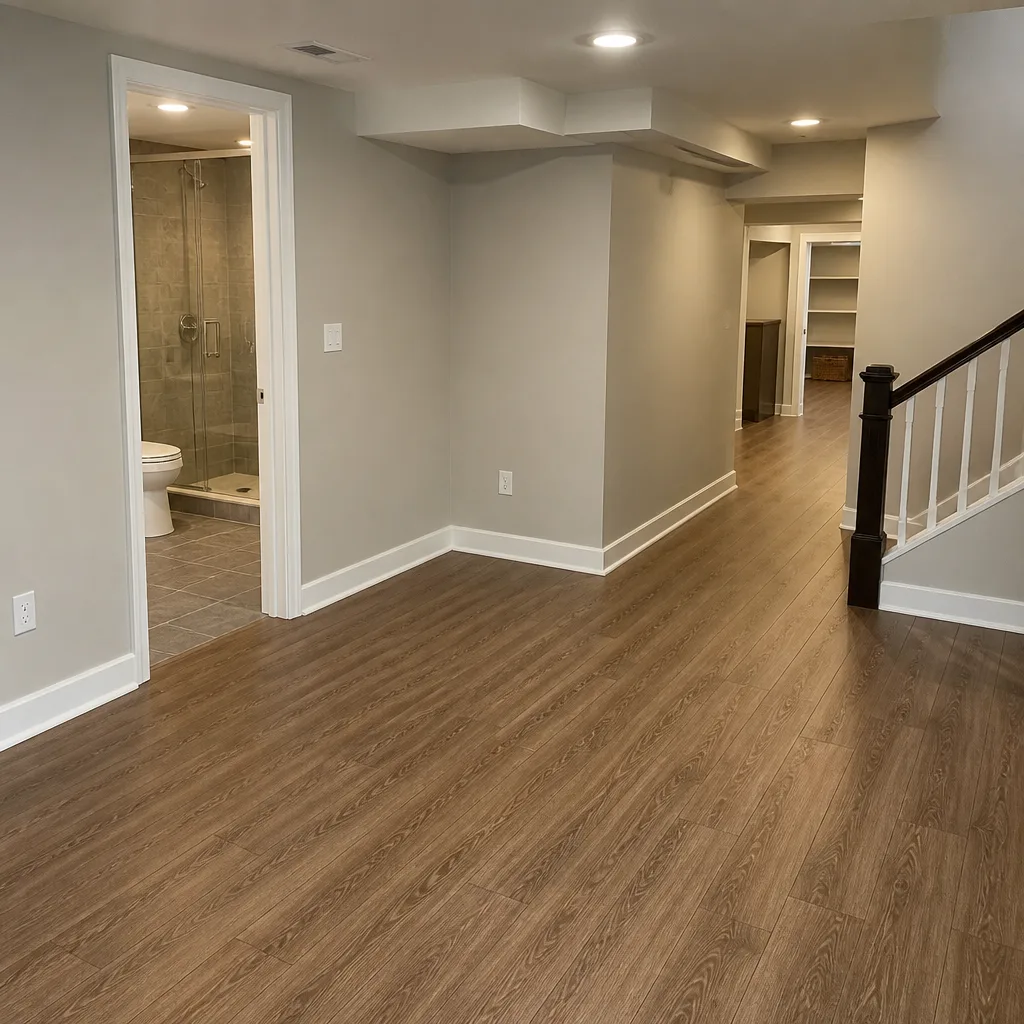

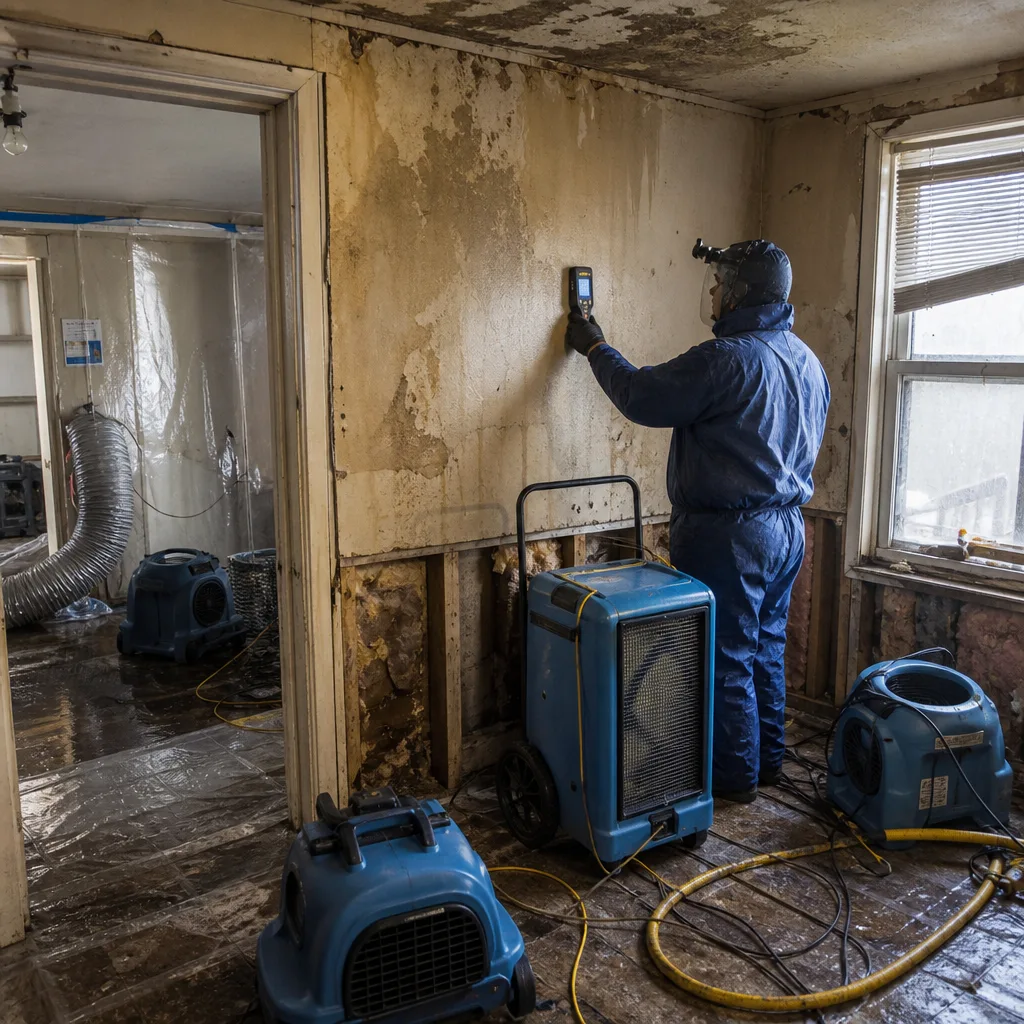 Before
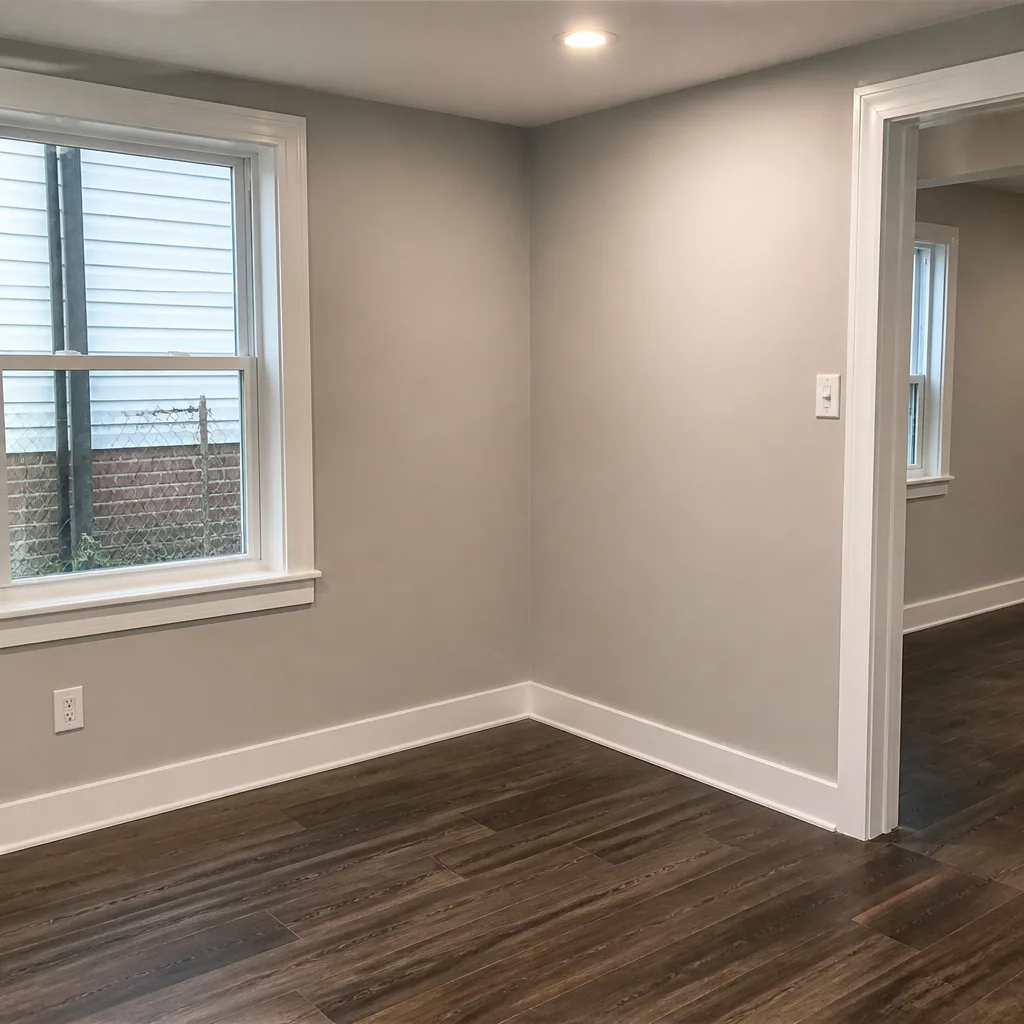 After
After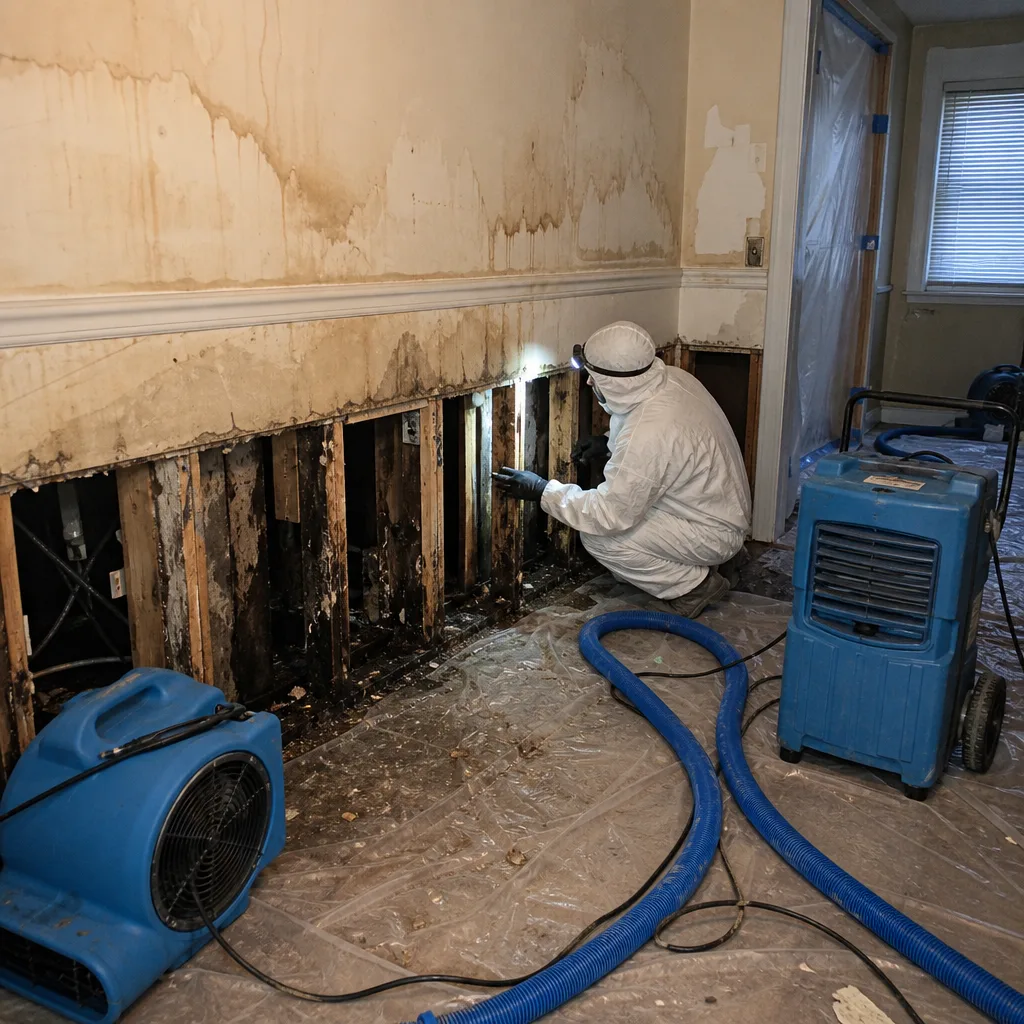 Before
 After
After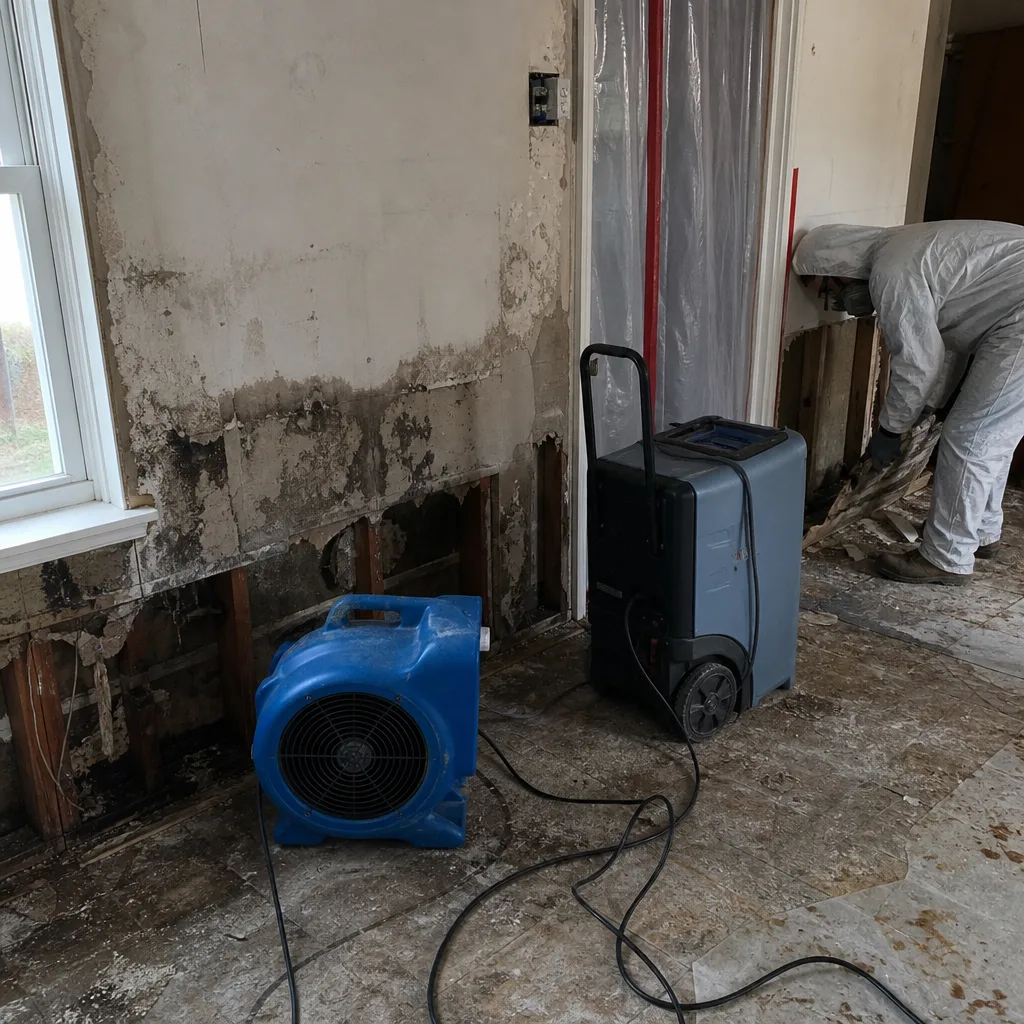 Before
 After
AfterThe Complete Guide to Damage Restoration in Jersey City
Most homeowners in Jersey City never think about restoration until they’re standing in it. Water doesn’t knock, and a pipe that bursts at 3 a.m. doesn’t care that you’ve lived in the same Heights brownstone for thirty years. Here’s the counterintuitive part: the first hour after damage does more to determine the final cost than anything that happens in the following week. What gets extracted, dried, and documented in that first window is what separates a $4,000 cleanup from a $40,000 rebuild. This guide covers the full restoration process, what it costs in the Jersey City market, which types of damage can wait until morning, which cannot, and how to deal with the insurance carrier without becoming a project manager. You’ll learn the repair stages, the equipment that actually matters, and the mistakes we’ve watched homeowners make for more than a decade, because we’ve been restoring properties in Jersey City and greater Hudson County since our start. Knowledge is the only tool you can carry into an emergency without paying for it twice.
Quick Answer
Damage restoration in Jersey City involves mitigating the immediate hazard, drying or cleaning the structure to a measured standard, and rebuilding damaged materials to pre-loss condition. Depending on the type and scope of damage, full restoration from a burst supply line or a kitchen fire typically takes 3 to 14 days and requires professional-grade drying equipment and certified technicians to do correctly. The smartest move is to call a live restoration dispatcher the moment damage is discovered, because every hour of delay adds cost that the insurance carrier may question.
Table of Contents
- Types of Damage Restoration in Jersey City
- What Does Restoration Cost in Jersey City?
- How Insurance Works in the Restoration Process
- The Restoration Timeline: What Happens First
- Professional-Grade Equipment and Why It Matters
- Choosing a Restoration Company in Jersey City
- Jersey City-Specific Considerations: Housing Stock, Climate, and Codes
- Common Mistakes to Avoid
- When to Call a Professional
- Frequently Asked Questions
Types of Damage Restoration in Jersey City
Restoration work splits into categories based on the source of the damage, and the categories matter because each follows a different protocol, uses different equipment, and carries different health and safety risks. Understanding which category you’re dealing with determines how fast you need to act and what kind of help you need.
Water Damage: Clean, Gray, and Black Water
Not all water is equal. Insurance carriers and restoration professionals classify water by its contamination level, and the classification drives the entire response. Clean water comes from supply lines, leaking faucets, or an overflowing bathtub; this is the easiest to handle and often the least expensive to mitigate. Gray water carries some contamination, usually from washing machines, dishwashers, or sink drains. Black water is sewage, storm surge, or any water that has sat long enough to become an incubator for bacteria. Jersey City’s older brick rowhomes and brownstones, with their shared walls and aging supply lines, face a higher risk of slow hidden leaks that turn a clean water problem into a gray or black water problem over time. Black water demands full PPE, professional extraction, and antimicrobial treatment, and it’s a job that absolutely belongs in the hands of a certified crew.
Mold Remediation
Mold grows where moisture lingers, and moisture lingers in places homeowners never look: behind baseboards in a Journal Square apartment, under the flooring near a window that leaks every nor’easter, inside the wall cavity behind a kitchen sink. The remediation process involves more than cleaning visible mold. The source of the moisture must be identified and repaired, the affected area contained so spores don’t spread, the contaminated material removed or professionally cleaned, and the area dried to a measurable standard. In Jersey City, where humidity runs high from May through September, mold problems escalate quickly if the root moisture source isn’t handled.
Fire and Smoke Damage
A fire damages a house three ways: direct flame contact, smoke penetration, and the aggressive chemical residue left from burning synthetics. Even a small kitchen fire can send smoke into every room through HVAC ductwork and shared wall cavities. We’ve seen a contained oven fire in a Grove Street condo leave smoke odor embedded in drywall two floors down. Restoration requires true professional-grade thermal fogging, ozone treatment in some cases, and aggressive surface cleaning using specialized sponges and chemical agents, not a bucket of Pine-Sol and elbow grease. Electrical fires are another subset, often tied to older wiring in Jersey City’s pre-war housing stock, and they require an electrician’s assessment before restoration begins.
Storm and Flood Damage
Jersey City’s low-lying areas, especially around the waterfront, exchange basin, and New Jersey Turnpike extension, are vulnerable to heavy rain events and coastal storm surge. October 2012 changed how this city thinks about water, and every major storm since has reminded homeowners that the flood line on the wall is a permanent record of what nature can do. Storm water carries everything it touches: street runoff, oil, and, in a backup situation, sewage. The restoration sequence after a storm event is extraction first, then decontamination, then drying to standard, then rebuild.
Sewage Cleanup and Biohazard Remediation
Sewage backups are among the most dangerous restoration jobs because they introduce pathogens, bacteria, and viruses into living spaces. Cleanup requires full PPE, negative air pressure containment, controlled disposal per local regulations, and aggressive antimicrobial treatment. The same holds true for biohazard and crime scene cleanup, where bloodborne pathogen protocols and OSHA standards govern every action. These are jobs where no homeowner should attempt DIY cleanup. Jersey City’s aging sewer lines, especially in the older neighborhoods like Greenville and Bergen-Lafayette, make sewage backups a recurring problem during heavy rain events.
Reconstruction and Cleanup
After mitigation and drying come the rebuild. This is where many restoration companies bow out, handing the homeowner a punch list and a referral. The work includes drywall replacement, insulation, trim carpentry, painting, flooring, and sometimes structural repair. Keeping extraction, drying, and rebuild under one roof means the crew that read the moisture map on day one is the same crew that hangs the new drywall on day twelve. There’s no handoff, no inherited subcontractor who doesn’t know the job’s history, and no finger-pointing between vendors if something goes wrong later. Our team at Floodline Restoration Co. home handles every phase from first extraction to finished rebuild, because we believe that’s the only way to truly stand behind the work.
What Does Restoration Cost in Jersey City?
Restoration pricing in Jersey City varies by the type and scope of damage, the accessibility of the affected area, the contamination level, and the current cost of materials and labor in Hudson County. But here are honest ranges based on what we’ve seen across hundreds of local jobs:
- Water extraction and drying (clean water, single room): $1,800-$4,200
- Full water mitigation (multiple rooms, walls opened): $4,000-$12,000
- Mold remediation (contained area): $2,500-$8,000
- Mold remediation (large area or multiple rooms): $8,000-$25,000+
- Fire and smoke restoration (kitchen fire): $5,000-$20,000
- Sewage cleanup and decontamination: $3,500-$10,000
- Full reconstruction after major damage: $25,000-$100,000+
These ranges reflect Jersey City labor rates, material costs, and the logistics of working in dense neighborhoods where parking for equipment trucks and access to multi-unit buildings affects the job. A brownstone on a narrow street in Paulus Hook costs more to service than a single-family home with a driveway in the Heights, because every piece of equipment moves by hand. That’s not a markup; that’s the reality of this city.
What drives cost up mid-job is failing to dry to standard. When a crew packs up before the moisture meter says “done,” mold takes hold inside wall cavities, and the remediation cost doubles or triples. We solve this with daily moisture readings and a written log, because the homeowner and the carrier both deserve to see the proof of dry.
Floodline offers three standing discounts that never expire: $50 off any repair over $250, an $89 seasonal tune-up for your sump pump, water heater, and basic plumbing inspection, and a 5% senior and veteran discount on every job. We state these plainly because a square deal shouldn’t require a coupon code or a negotiation.
How Insurance Works in the Restoration Process
Insurance carriers want restoration done right the first time. They’d rather pay a fair bill from a certified professional than a cheap bill from a handyman that turns into a bigger claim six months later. But carriers also want documentation, and that’s where homeowners get caught in the middle.
The standard process works like this:
- Document the damage immediately. Take photos of every affected area before anything is moved. Time-stamped photos protect your claim.
- Report the claim to your carrier. Your policy likely requires prompt notification. Delay can give the carrier grounds to reduce or deny coverage.
- Call a restoration company that bills insurance directly. This removes you from the messenger role. A professional restoration team creates a written scope of work with photos and moisture readings, submits it to the carrier, and negotiates the claim on your behalf.
- Mitigation begins before full settlement. Carriers expect the homeowner to prevent further damage. The mitigation work, extraction and drying, can start immediately while the full rebuild scope is negotiated.
- Documentation continues throughout. Every reading, every material receipt, every before-and-after photo builds the claim file that justifies the final payment.
One question we hear constantly in Jersey City is whether the deductible applies to every claim. Yes, your deductible applies to restoration insurance claims, but many homeowners in this area carry deductibles between $500 and $2,500, and for a $15,000 mitigation, that’s a reasonable cost to get your house back. We’ve also worked directly with adjusters for years, and we handle that relationship so the homeowner doesn’t have to spend hours on hold. Direct insurance billing means the carrier pays us directly for covered work, and you’re never in the position of chasing reimbursement.
The Restoration Timeline: What Happens First
Every type of damage follows a sequence, and skipping steps to go faster only extends the timeline. Here’s what a typical water damage restoration in Jersey City looks like from the moment you discover the problem:
- Stop the source (hour one). Shut off the water main if you can do so safely. If the water is coming from a burst pipe behind a wall, call a plumber, and we coordinate with plumbers across Jersey City daily.
- Call a live dispatcher (hour one). A human answers at (640) 400-9404 at any hour. The dispatcher gathers the scope, dispatches a certified crew, and gives you a real ETA. No phone tree, no callback tomorrow morning.
- Extraction (hours one to three). Professional-grade extraction equipment removes standing water fast. Water that sits for 48 hours breeds mold; water that sits for a week destroys framing.
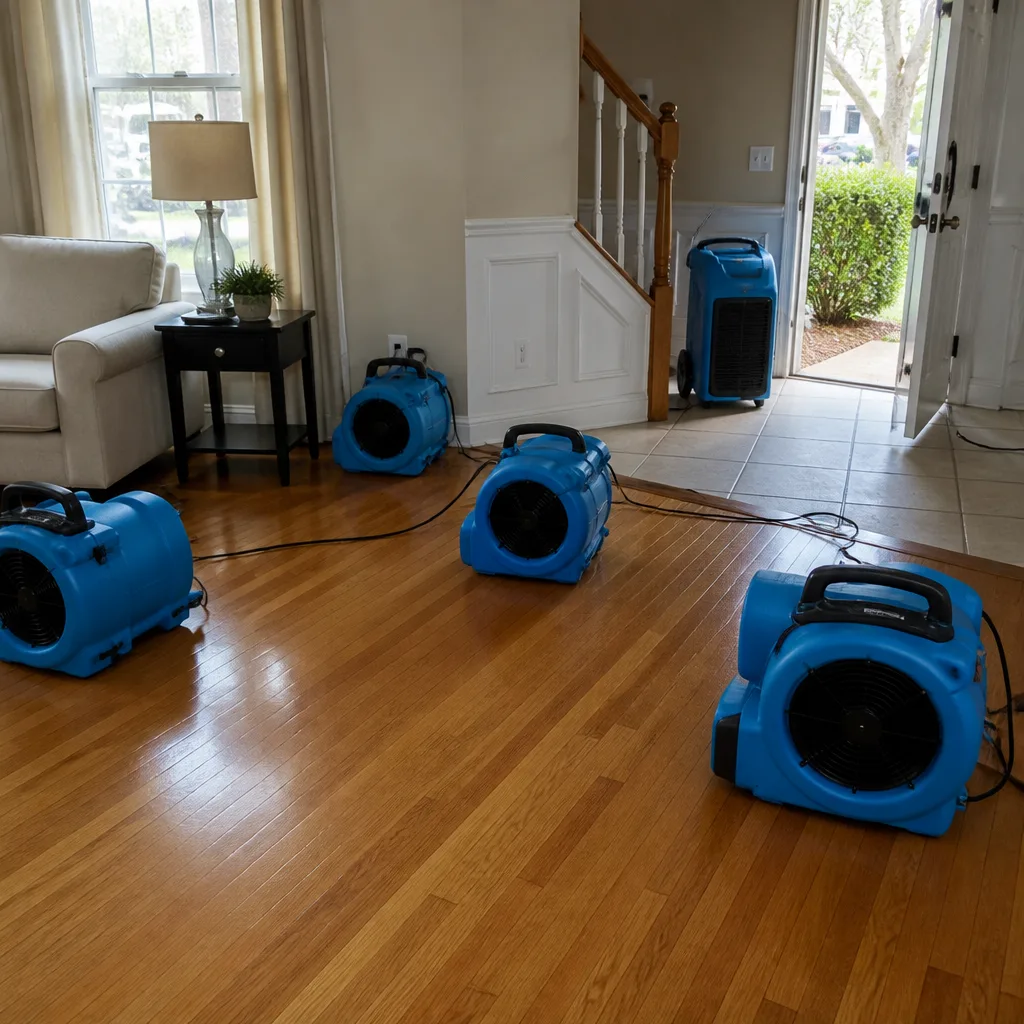
- Moisture mapping and drying setup (hours three to six). Technicians use thermal imaging and moisture meters to map every affected area, including hidden wall cavities. Then they place air movers and dehumidifiers, such as Dri-Eaz and Phoenix brands, precisely where the moisture map says they’re needed.
- Daily monitoring (days two through five). A crew returns daily to read the moisture log, adjust equipment placement, and document progress. This is the part companies skip. We don’t.
- Removal of unsalvageable materials (varies). Drywall, insulation, and carpet that can’t be dried to standard are cut out and disposed of properly.
- Reconstruction (days five through fourteen). New drywall, trim, paint, and flooring go in. The same crew that inspected the moisture map now rebuilds to pre-loss condition.
- Final walk-through and dry standard verification. The homeowner receives a written moisture log and a clear “dry standard met” notation before the job closes.
Professional-Grade Equipment and Why It Matters
The difference between professional-grade drying equipment and the rental units at a Jersey City home improvement store is the difference between a house that’s dry in four days and a house that’s wet in a month. A consumer dehumidifier pulls maybe 40 pints of water per day on a good day. A professional unit from Dri-Eaz or Phoenix pulls 130 to 230 pints per day and moves air at a velocity that forces moisture out of materials. That velocity matters, because drying to standard doesn’t mean surface dry; it means the moisture content inside the studs, subfloor, and wall cavities is back to the level it was before the loss. Surface dry with a wet stud is how you get mold six months later and a fight with your carrier about who’s responsible.
Specialized drying systems like the Injectidry system handle the hardest cases: water trapped behind tile, under cabinetry, or inside wall cavities where standard air movement can’t reach. For wood floors that have cupped or buckled, a drying mat system can often save the floor rather than replacing it. B-Air and XPOWER fans move the volume of air needed to extract moisture from dense materials like plaster and lathe, which is common in Jersey City’s pre-war housing.
None of this equipment matters without trained technicians who know how to use it. Our technicians train to IICRC, RIA, and IFA standards, and they use the moisture readings to guide equipment placement, not a one-size-fits-all template. We’ll be there when we say, and we bring the right tools for the job.
Choosing a Restoration Company in Jersey City
Restoration companies in Jersey City range from national franchises with local licensees to small owner-operated crews, and the quality varies enormously. When a homeowner calls us after another company has failed, the story usually includes one of these: the crew never returned the daily moisture readings, the insurance claim stalled because documentation was incomplete, the reconstruction was handed to a subcontractor who didn’t know the job’s history, or the company simply stopped answering the phone after the check cleared.
Here’s what we tell homeowners to look for, and what we hold ourselves to:
- A live person answers the phone. Call the number at 2 a.m. If you get a recording, you’ve learned something important about how emergencies will be handled.
- Technicians are background-checked and uniformed. You’re trusting this company inside your home and around your family. Background checks are not optional.
- Certifications are current and real. Ask about IICRC, RIA, or IFA training. Certifications expire, and a company that lets them lapse tells you something about its standards.
- Pricing is given before work starts. No-hassle upfront pricing means a written scope of work before the first tool comes off the truck. No surprises on the bill.
- The company handles insurance directly. A restoration company that bills the carrier directly removes you from the messenger role and keeps the claim moving. We do this on every covered job.
- The work is guaranteed in writing. Our 90-Day Done Right Promise, the Keystone Standard, is a written guarantee: if it’s not done right, we make it right. No paperwork battles, no arguing. That’s the standard.
We were founded in 2010 by Curt Bowman around a dispatch board, not a sales desk, and we plan to be in Jersey City in thirty years. That’s why we hire local, train apprentices into journeymen, and answer the phone with a person, every time.
Jersey City-Specific Considerations: Housing Stock, Climate, and Codes
Jersey City’s housing stock is not like the rest of New Jersey. We have brownstones and rowhomes built before 1920, brick-and-block construction with lime-based plaster, post-war frame housing in the Heights and Country Village, and modern glass high-rises along the waterfront. Each building type fails differently, and restoration methods that work in a suburban tract house can fail in an 1890s brownstone.
The older construction matters because plaster and lathe walls hold water differently than drywall. A water leak in a drywall wall shows up as a stain within a day; that same leak behind a plaster wall in a Paulus Hook brownstone can hide for weeks before it telegraphs through, and by then, the lath has begun to rot and mold has set in behind the baseboard. In the Heights and Journal Square, where many homes still sit on original stone or brick foundations, groundwater seepage after a heavy rain is a constant risk, and moisture readings inside basement walls tell a different story than readings on the floor. Waterfront high-rises present their own challenge: multi-unit buildings mean water doesn’t respect unit lines, and a pipe burst on the ninth floor can damage eight units below. We’ve handled that scenario more times than any homeowner wants to imagine.
Jersey City building codes require permits for reconstruction work, and in wards like Historic Downtown, historic district regulations can mandate specific materials and methods. A restoration company doing rebuild work in Jersey City needs to know which permits apply and when. We handle permitting as part of the reconstruction scope, so the homeowner doesn’t have to navigate the Department of Building and Housing alone.
Climate matters too. Jersey City gets humid summers and nor’easters that dump inches of rain followed by days of moisture-laden air. Drying to standard in July means fighting 75% humidity in an unconditioned basement. It takes longer, requires more dehumidifiers, and reinforces why daily moisture readings matter. The line the water left is where we start.
Common Mistakes to Avoid
- Waiting to call. We’ve watched a $1,800 extraction job in a Greenville basement turn into a $22,000 mold remediation because the homeowner waited four days, hoping the water would “just dry.” Water doesn’t just dry inside wall cavities; it breeds.
- Hiring a handyman for mitigation. Mitigation and restoration are specialized work. A handyman with a shop vac is not a substitute for a certified technician with professional-grade equipment.
- Failing to document before cleanup begins. Your insurance claim depends on photos and a written scope. If the evidence is gone, the claim is weaker. Take pictures before anything moves.
- Trusting a cheap bid from an unlicensed operation. Cheapest in town is often the most expensive decision a Jersey City homeowner makes. Unlicensed work creates liability, voids warranties, and often fails inspection.
- Stopping at “surface dry.” A wall that feels dry to the touch can still be at 28% moisture content inside the stud. A professional moisture meter, with documented readings, is the only proof that matters.
- Trying to negotiate with the carrier alone while the damage spreads. Every day you spend on hold with your insurance company is a day the water sits. Let a restoration company that handles direct billing carry that burden.
- Ignoring the source of the moisture. You can clean mold all day, but if the leaking pipe behind the wall isn’t fixed, the mold comes back. Source repair is step one, always.
When to Call a Professional
Call a professional the moment you discover water damage, smoke damage, sewage backup, or visible mold growth. If standing water covers more than a few square feet, if the water came from a sewage line or storm drain, or if the water has been sitting for more than 24 hours, the health risks and structural risks justify professional help immediately. For fire damage, even a small fire requires professional smoke remediation, because smoke penetrates deeper than the visible stain. For mold, if the affected area is larger than ten square feet or if anyone in the home has respiratory issues, professional remediation is required. Floodline Restoration Co. offers free estimates in Jersey City – call (640) 400-9404 and a live person will answer, day or night.
Frequently Asked Questions
Floodline Restoration Co. answers the phone with a live dispatcher 24/7, and a certified crew typically reaches any Jersey City address within 60 to 90 minutes of the call. The dispatcher gives you a real ETA, not a vague window, and extraction is running the same visit. Call (640) 400-9404 now.
Most Jersey City homeowners’ policies cover sudden and accidental water damage, such as burst pipes or appliance failures, but not slow leaks or neglect. The coverage amount depends on your policy terms and deductible. We bill the carrier directly and provide the photo documentation and moisture readings carriers require to process the claim.
A visual cleaning only removes surface contamination; it doesn’t address the moisture trapped inside building materials or the mold spores that remain behind. If the moisture source is still present, the mold returns. Full remediation removes the source, contains the affected area, cleans or removes contaminated materials, and dries to a measured standard. A cleaning without that sequence is temporary.
We do. Floodline Restoration Co. handles direct communication with your carrier, submits the written scope of work with photos and moisture readings, and negotiates the claim on your behalf. You’re never in the position of playing messenger between us and the carrier.
Most contained mold remediation jobs in Jersey City take 2 to 5 days from setup to final clearance, depending on the size of the affected area and whether walls need to be opened. The process includes containment, source repair, removal of contaminated materials, antimicrobial treatment, and drying to standard with documented moisture readings.
It’s our written guarantee, the Keystone Standard, that if any restoration work we perform isn’t done right, we make it right at no cost. No paperwork battles, no arguing. We stand behind it, and we’ve been doing so since 2010.
The Bottom Line
Damage restoration in Jersey City is not a mystery, but it is a race against time with real consequences for getting it wrong. Water, fire, mold, and sewage damage all follow the same fundamental sequence: mitigate the hazard, dry or clean to a measurable standard, rebuild to pre-loss condition, and document everything for the insurance carrier. The companies that do this well are certified, insured, and willing to put their guarantee in writing. The ones that don’t are the reason this guide exists. We’re Floodline Restoration Co., we’ve served Jersey City since 2010, and we answer the phone with a live person at (640) 400-9404 whenever you need us. Done right, and backed in writing.
Written by Curt Bowman, Owner at Floodline Restoration Co., serving Jersey City since 2010.