

Free visual inspection and a written scope of work before any mitigation begins - photos, moisture readings, and drying logs go in your claim file
The scope we write is the scope we bill. Anything new gets shown to you, in writing, before we touch it.
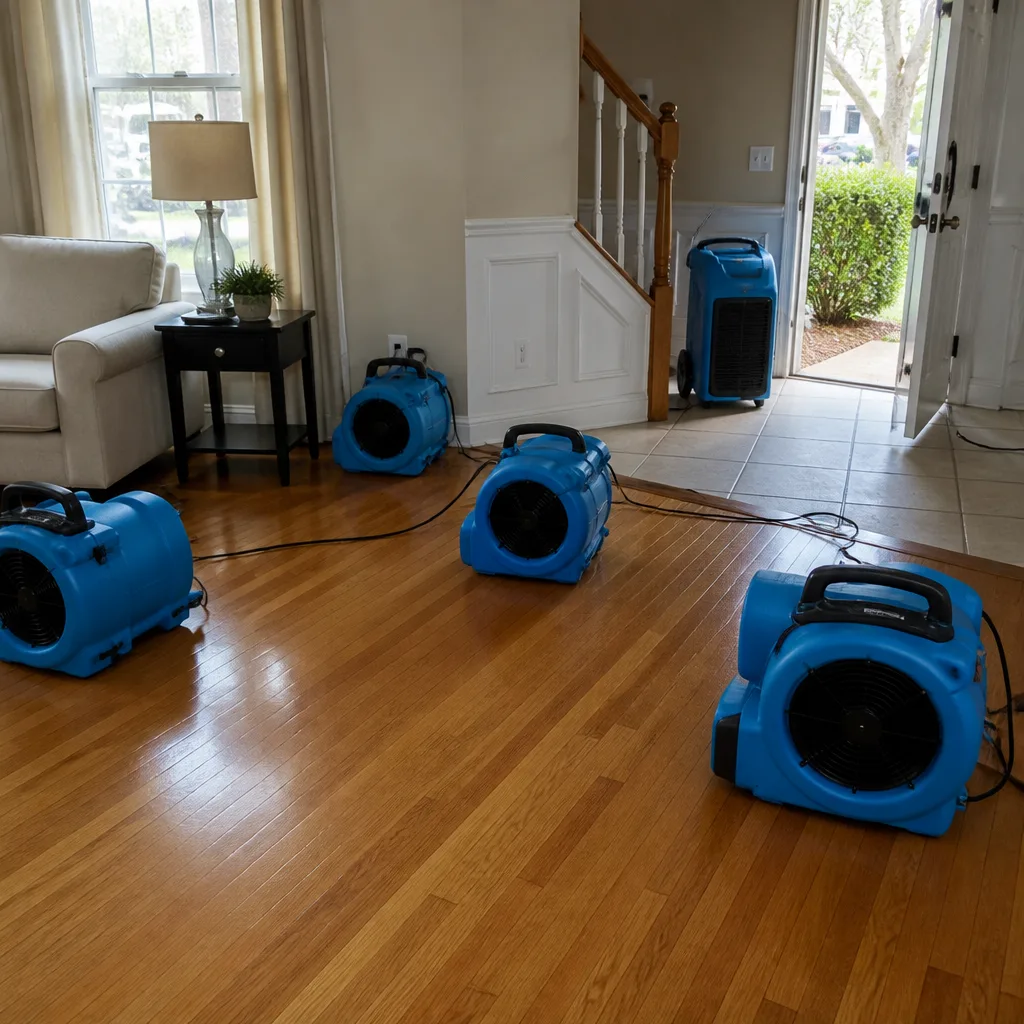
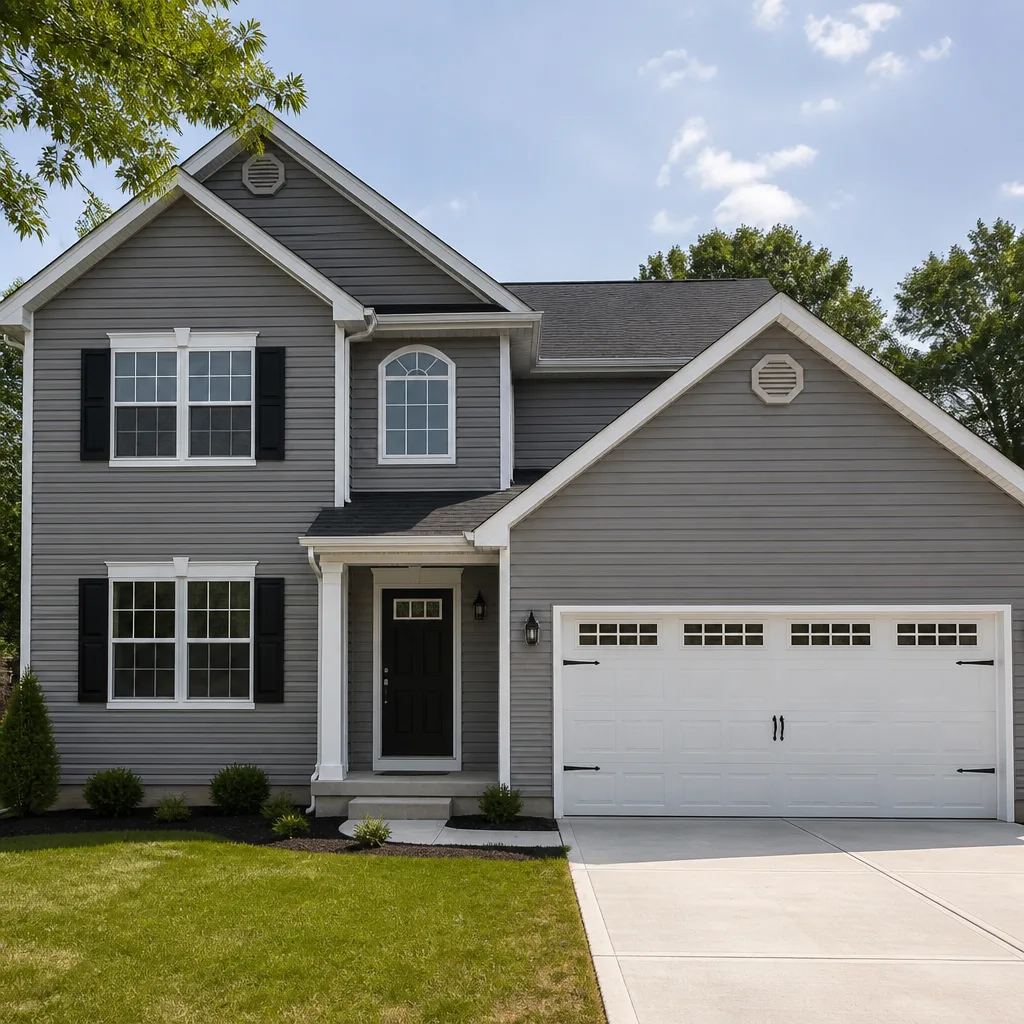

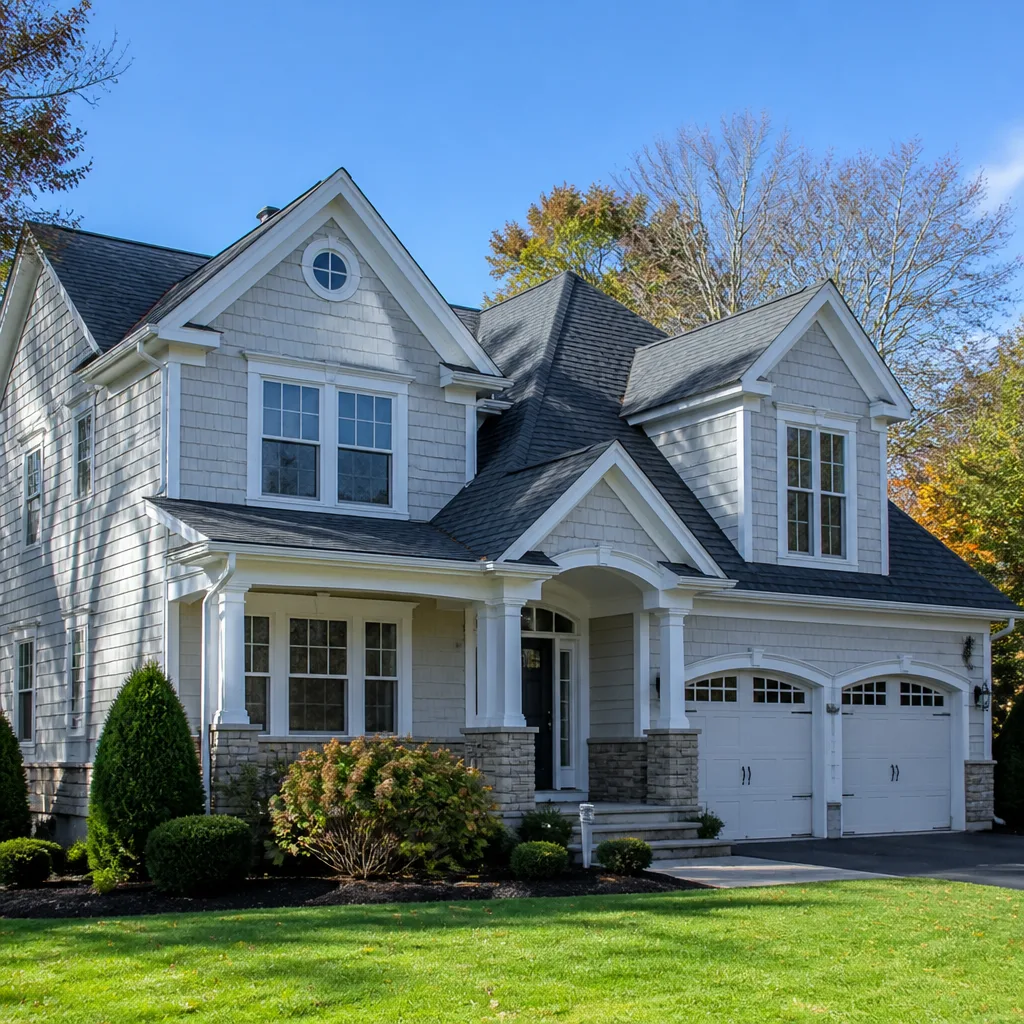
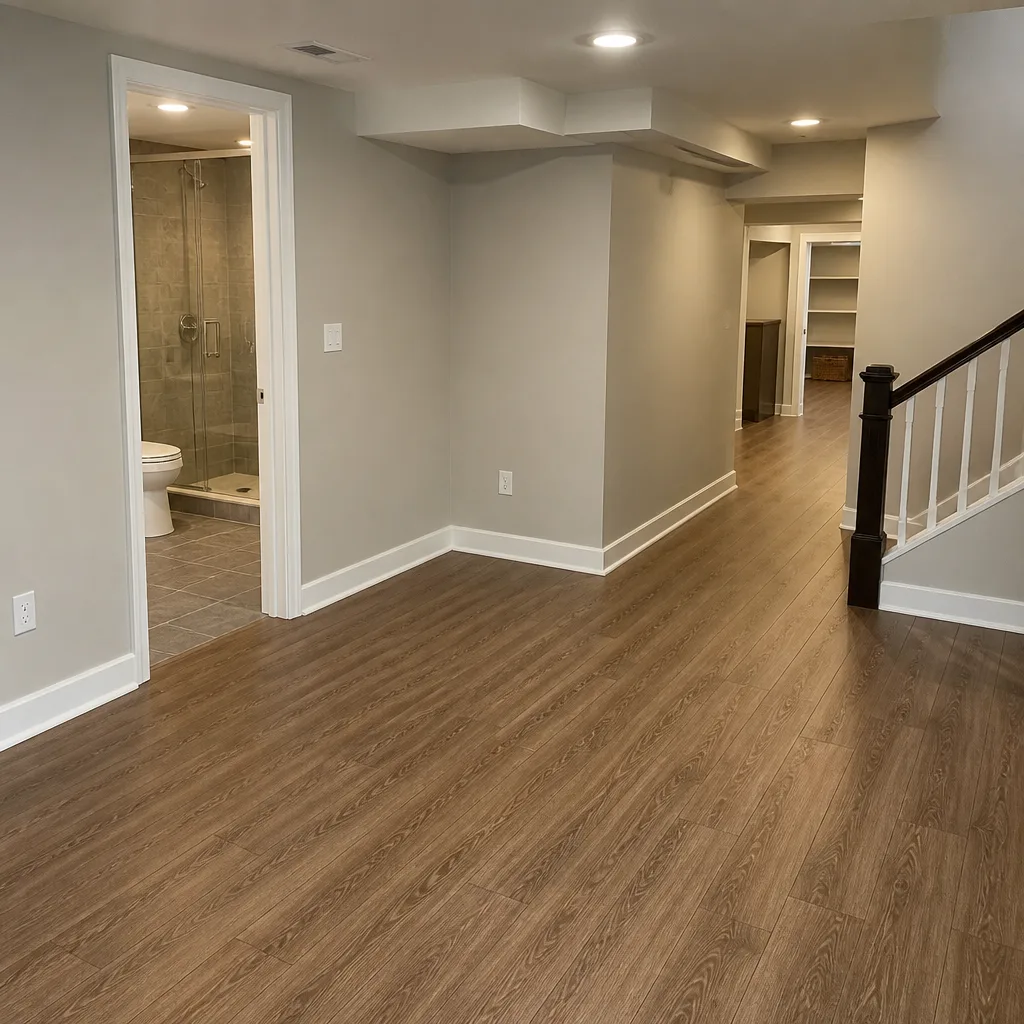

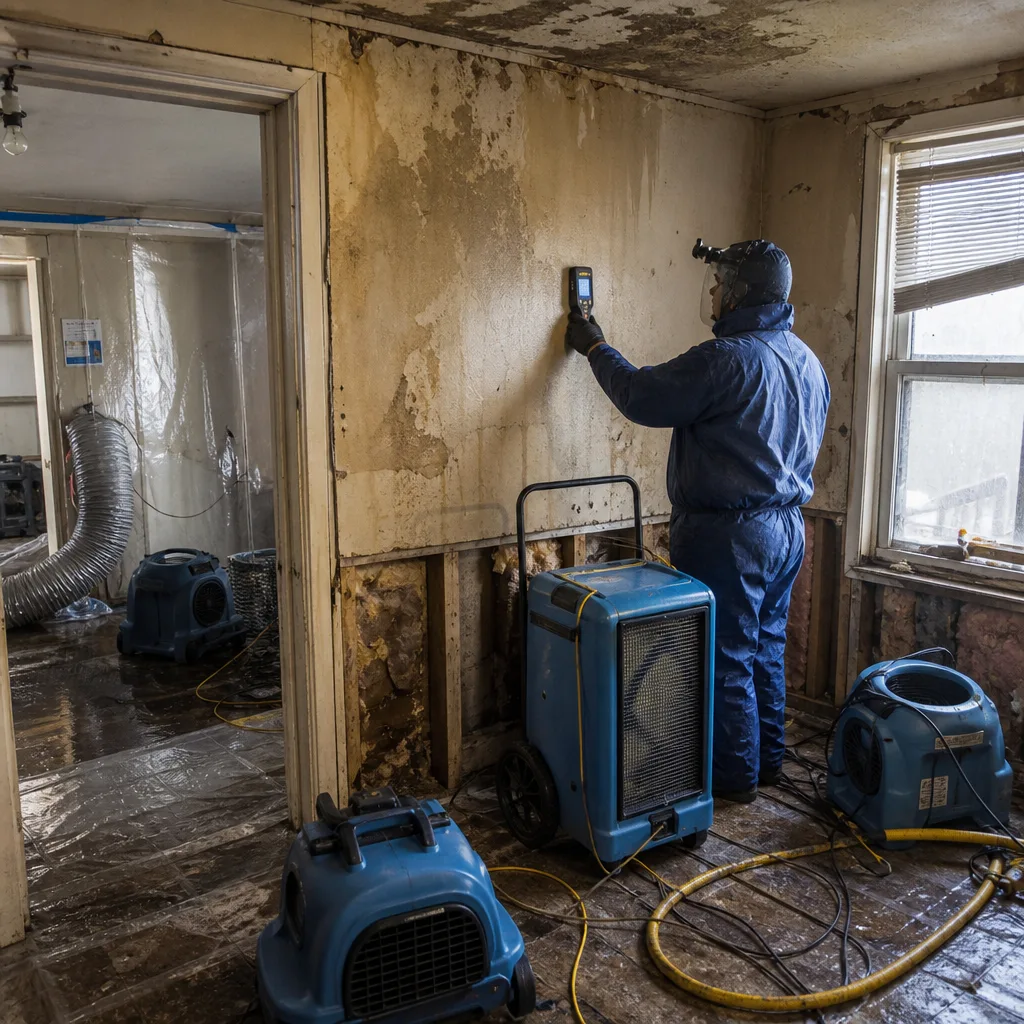 Before
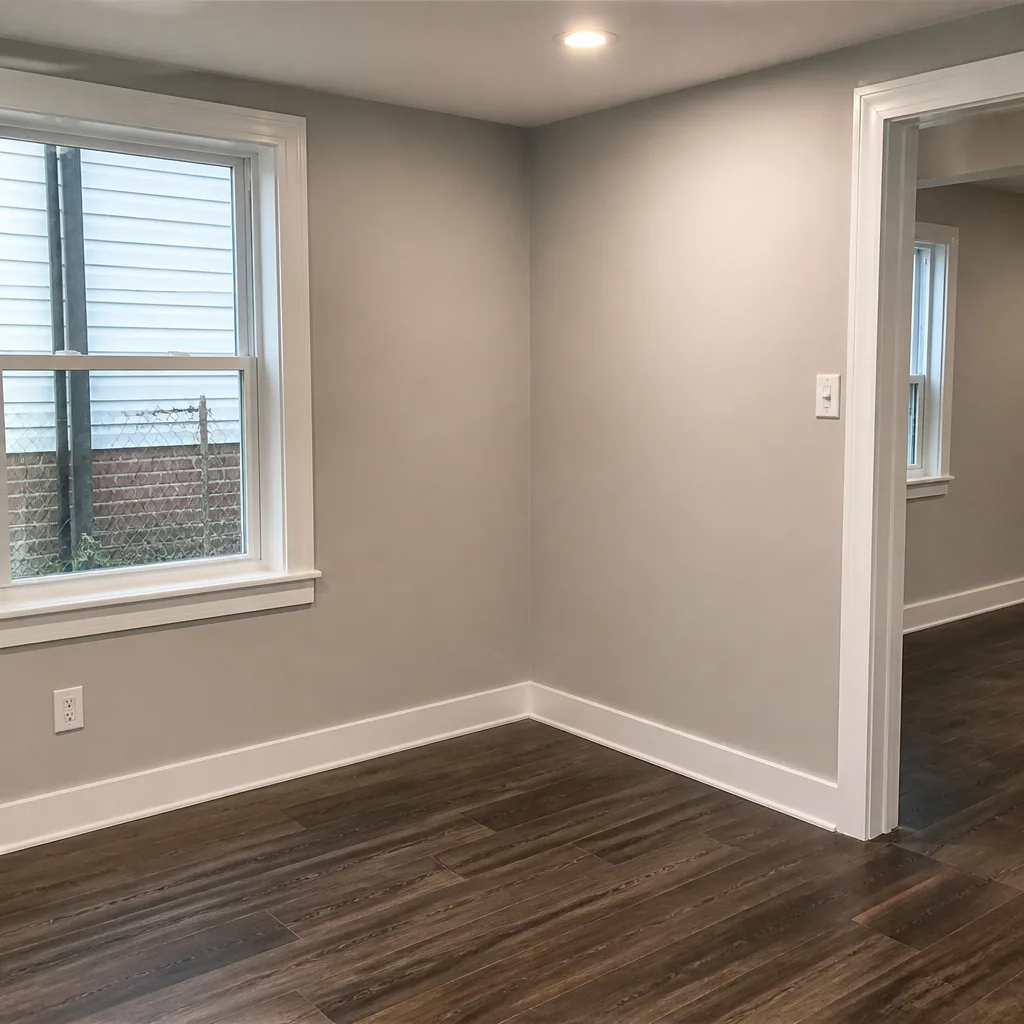 After
After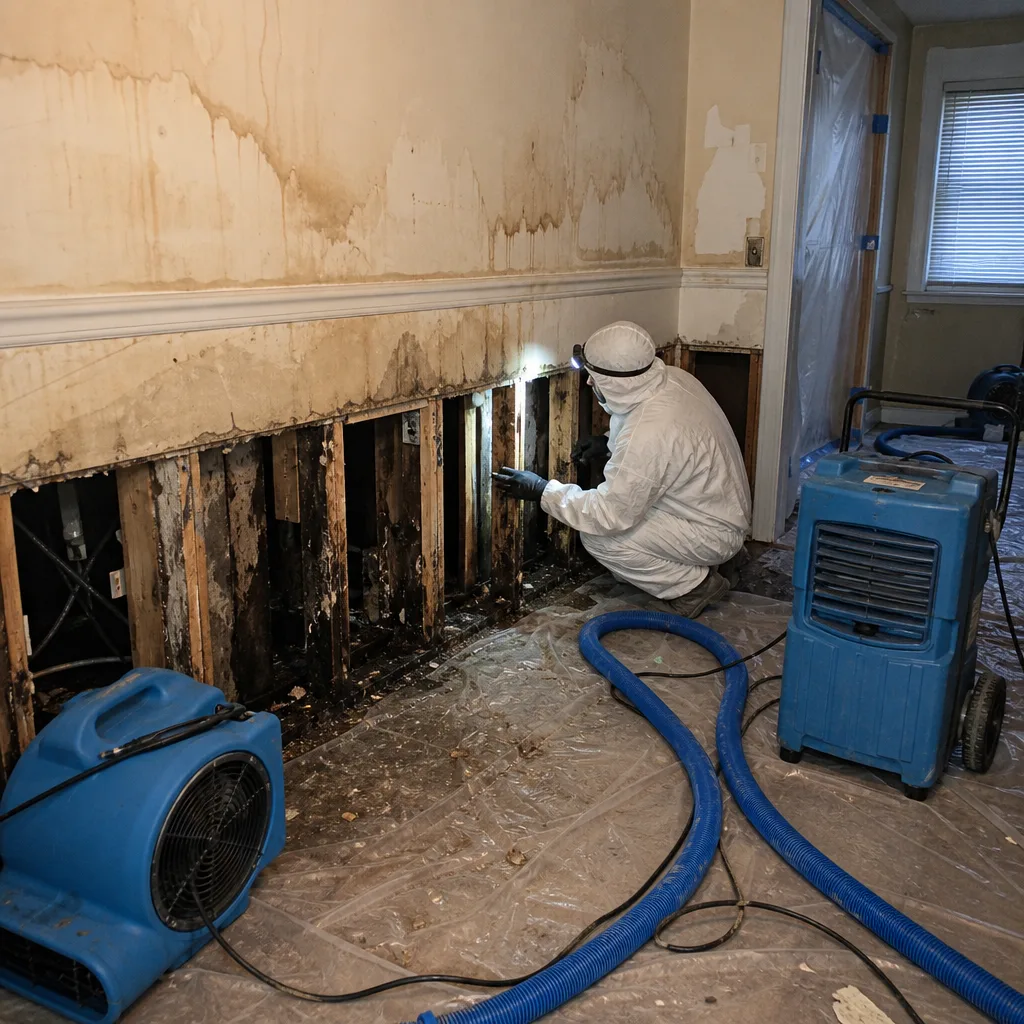 Before
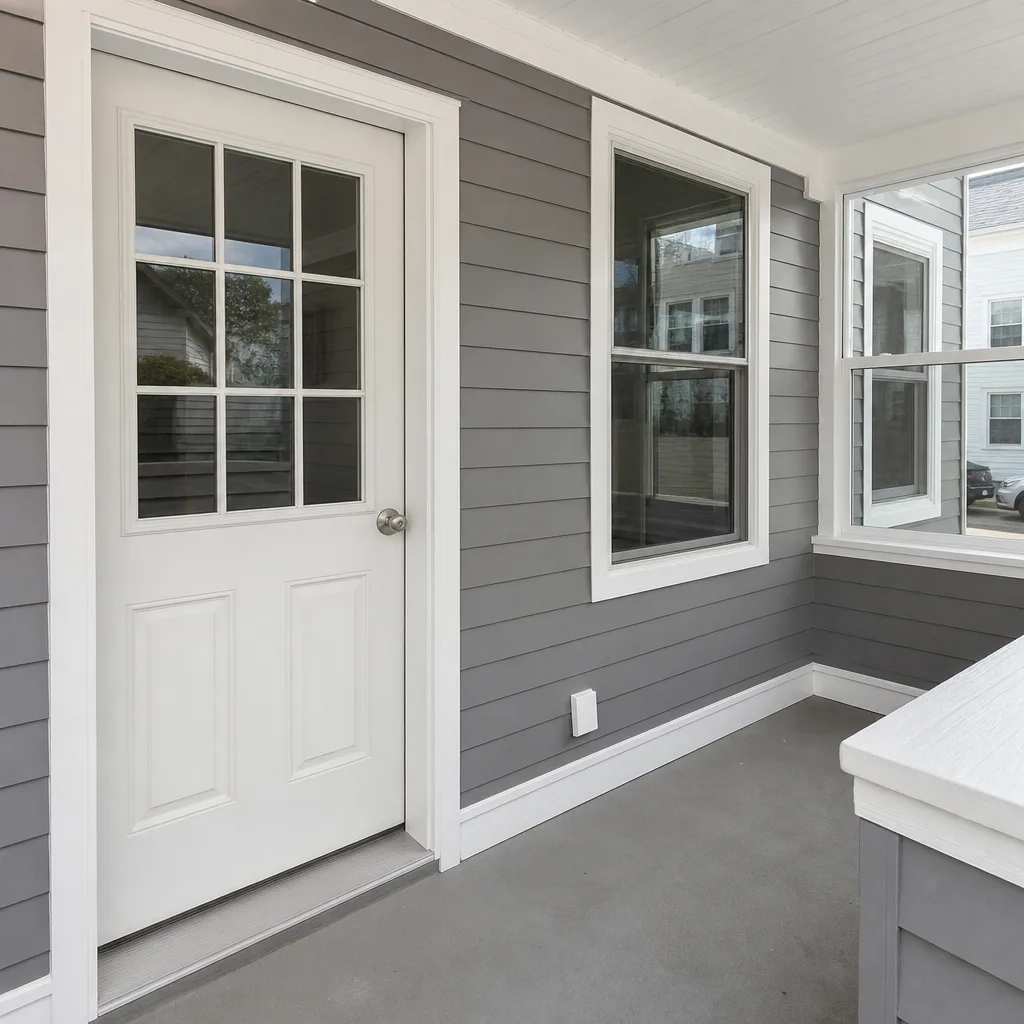 After
After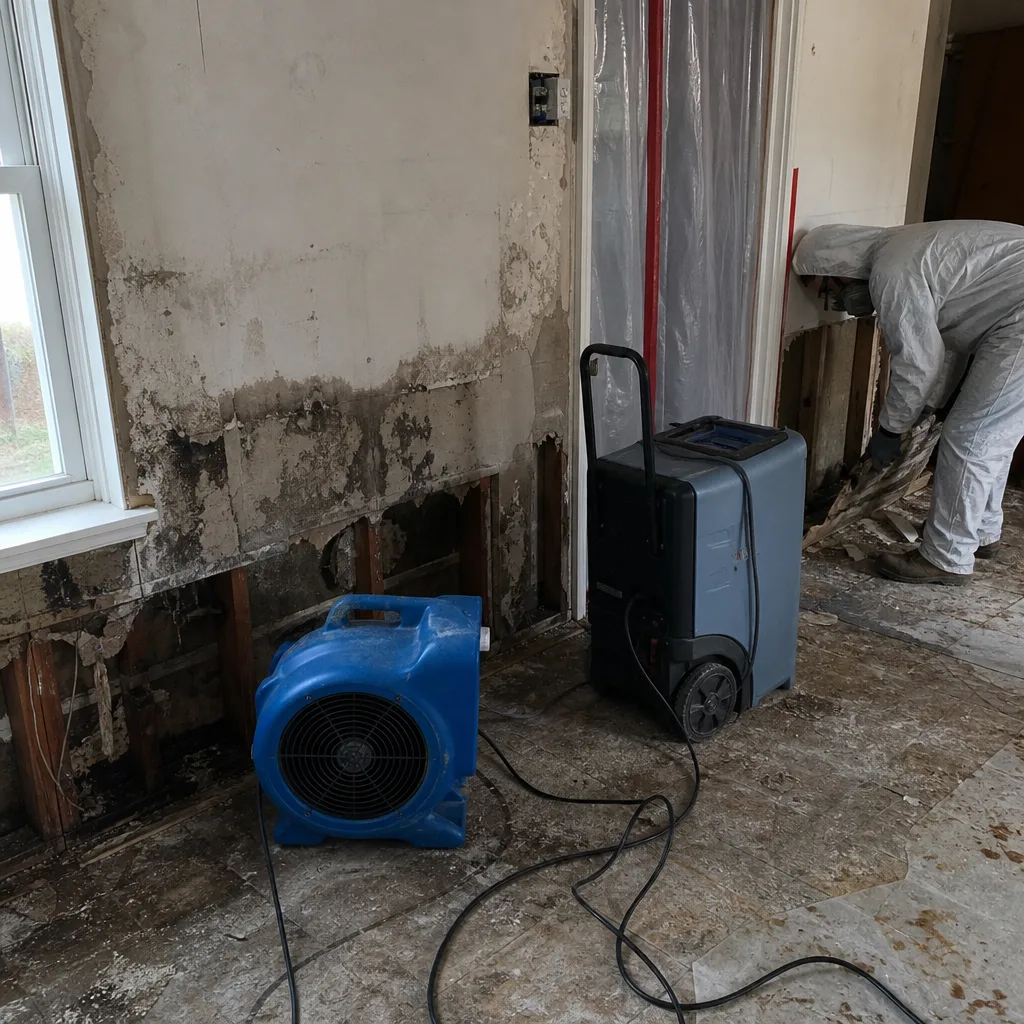 Before
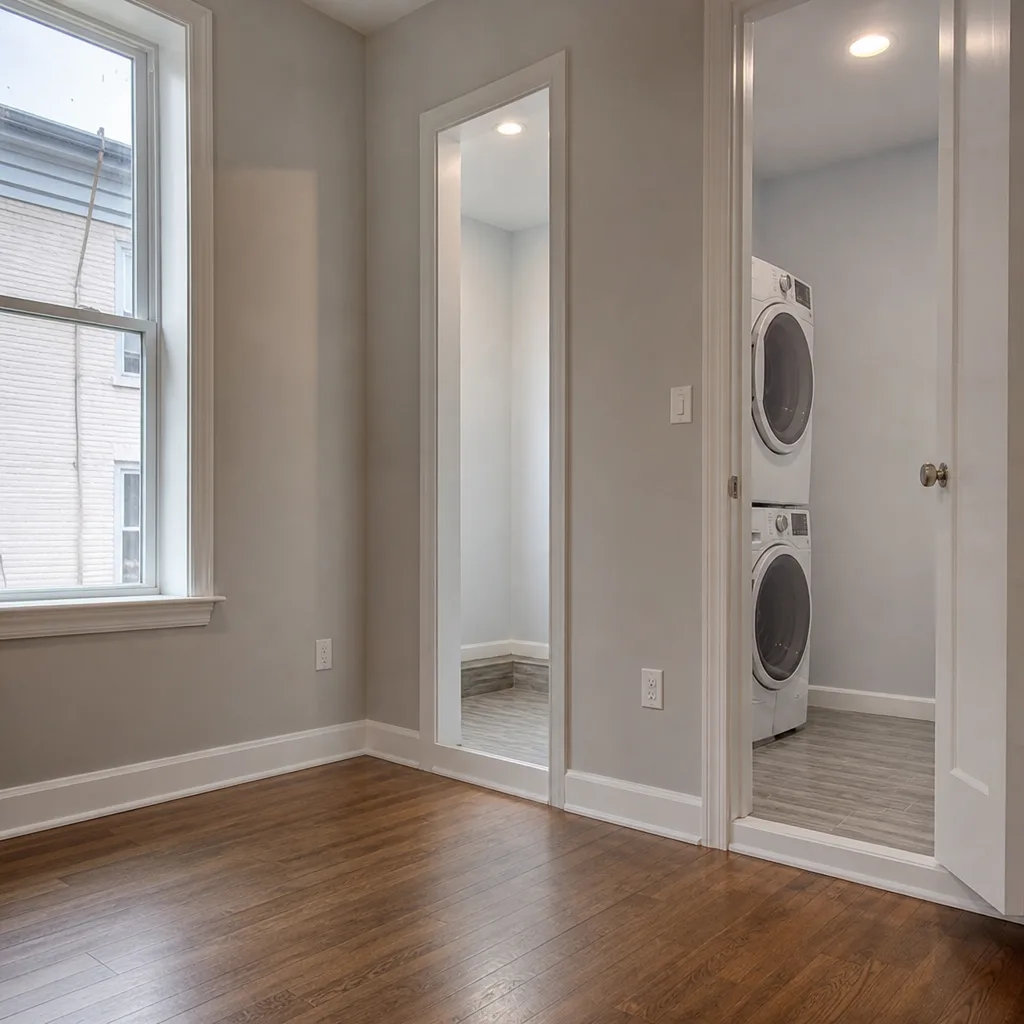 After
After24/7 Emergency Storm & Disaster Restoration in Kearny
When a storm hits Kearny, the damage doesn’t wait for business hours, so neither do we. Floodline Restoration Co. answers the phone live at 2 a.m. the same way we answer it at noon. A certified crew can be on-site in Kearny within 45 minutes, running extraction and setting containment. Call (640) 400-9404 the moment water enters your home or wind opens your roof. The first hour matters more than the next five: once contaminated water wicks into old masonry and floor framing, the cost multiplies and the cleanup changes from drying to full Biohazard & Crime Scene Cleanup - Kearny. We’ll walk the damage with you, free, before any work begins.
Understanding Storm & Disaster Restoration Severity in Kearny Properties
Kearny’s basements rarely see simple clean-water floods. Most of the town sits on low-lying fill drawn from the old Hackensack Meadowlands, with a water table that sits high even in dry weather. When the combined sewer system surcharges during a moderate rain, raw sewage pushes up through floor drains and toilets into basements. That’s Category 3 black water, and it changes everything. Clean rainwater from a window leak is Category 1, and gray water from a washing machine overflow is Category 2. Black water carries pathogens, and it requires contained removal, antimicrobial treatment, and disposal under biohazard protocol. In the brick rowhouses and two-family homes that dominate Kearny’s blocks, that contaminated water wicks into stone-and-mortar rubble foundations and structural lumber that has been damp-cycling for decades. Moisture mapping with thermal imaging and daily hygrometer readings are not optional here. They’re how we prove the structure hit the dry standard before we rebuild.
Why Kearny Property Owners Choose Floodline Restoration Co.
- 45-minute response commitment: When we say a crew is dispatched, it’s already rolling. Most Kearny calls see boots on the ground within three-quarters of an hour.
- 24/7 live answer: A real dispatcher picks up, every time. You’ll never leave a voicemail during a flood, and you’ll never get an answering service that can’t make a decision.
- IICRC-certified crews: Our technicians hold WRT and ASD certifications, with AMRT on every black-water job. The same crew that reads the moisture map on day one handles daily readings until the dry standard is met.
- Free visual inspection: We’ll assess the damage and tell you what actually needs doing. If a basement just needs extraction and drying, that’s what we’ll say. Nobody gets sold work they don’t need.
- Direct insurance billing: We send the documentation, the drying logs, and the line-item scope straight to your carrier and the adjuster. You’re not the messenger between us and them.
- One team from extraction to reconstruction: Floodline doesn’t hand the job off after the water is out. The same certified crew that pulled the water rebuilds the walls, floors, and stair stringers when that’s what the house needs.
Our Storm & Disaster Restoration Process
Inspection & Assessment
We walk the property inside and out, trace the water’s path, and test the standing water classification before we move equipment. In South Kearny, we assume Category 3 until proven otherwise. You get a written scope and a plain-English explanation before anything is touched.
Extraction & Stabilization
Water comes out first, fast. We deploy truck-mounted extraction and submersible pumps, plus emergency board-up and roof tarping if the storm opened the envelope. Structural threats get stabilized the same visit.
Drying & Dehumidification
Professional-grade air movers and dehumidifiers, positioned from the moisture map we built at inspection. Daily readings logged against the dry standard. In Kearny’s dense brick buildings, we monitor adjacent wall cavities because moisture travels sideways between party walls.
Cleaning & Sanitization
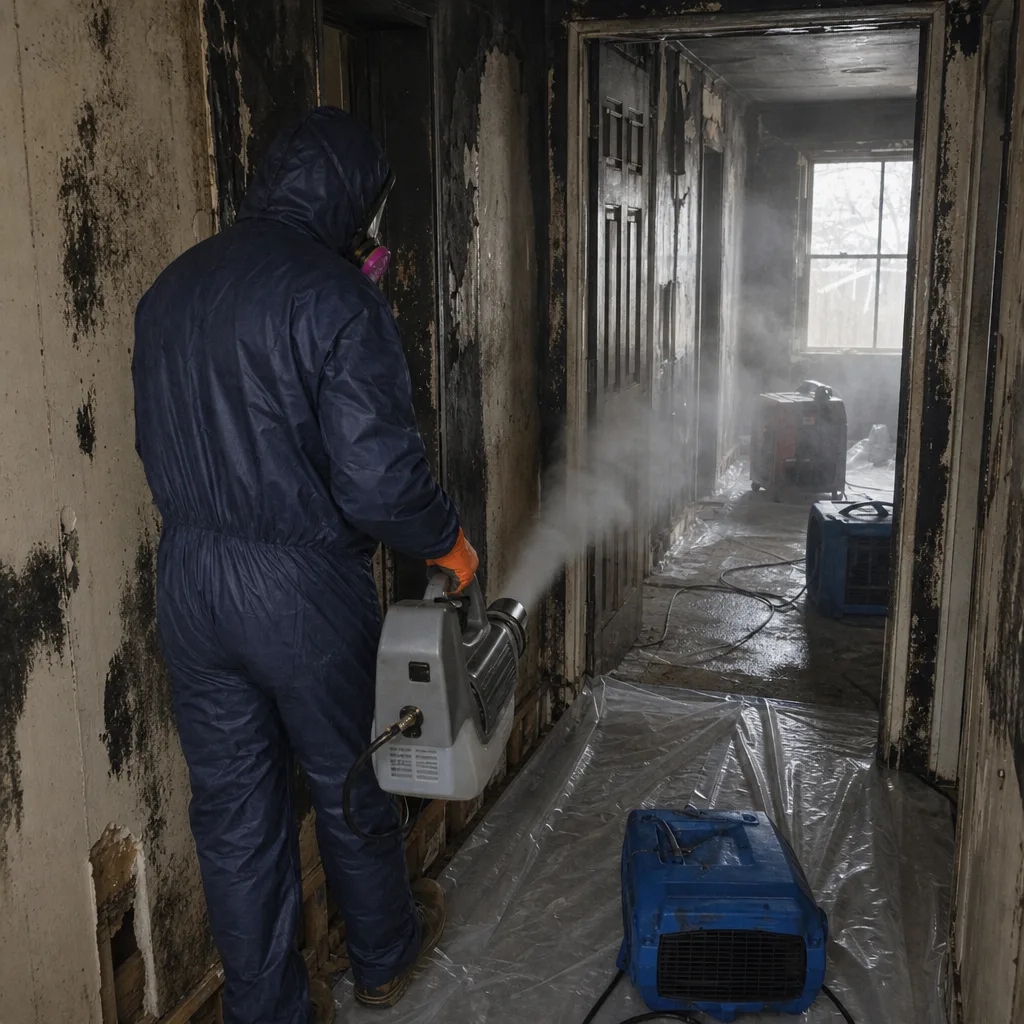
Every surface that touched contaminated water gets cleaned through our Sanitization Services in Kearny, using antimicrobials registered for the category of water we found. HEPA air scrubbers run in containment throughout the job.
Storm-Specific Stabilization
Debris removal from the property, roof tarping secured against wind, board-up installed to code. If the storm compromised sewers or drainage, we address the source so the same water doesn’t return next rainfall.
Repairs & Restoration
The same crew handles Reconstruction & Cleanup in Kearny, rebuilding drywall, flooring, stair stringers, and structural lumber. We don’t hand you a third-party contractor’s number. The 90-Day Done Right Promise covers the whole job, in writing.
Need Emergency Storm & Disaster Restoration in Kearny Now?
Crews minutes away, answering live 24 hours a day. The sooner we start, the less it costs.
Working With Your Insurance Company
Storm and flood claims in Kearny move faster when the documentation is built from the first hour. We photograph every room, every affected surface, and the water line before we move anything. Our team writes industry-standard estimates that adjusters recognize, and we speak directly with your carrier so you don’t have to translate scope-of-work language over the phone. If your policy covers the loss, we bill the insurer directly. If part of the job falls outside coverage, you’ll know the dollar amount before that portion starts, not after.
What We Provide Your Insurer
- Thorough documentation of the loss
- Photos of all damage, room by room
- Moisture readings and drying logs
- A detailed, line-item scope of work
- Direct coordination with your carrier
Built for Kearny’s Loss Calendar
Kearny’s storm problems are not seasonal in the way other New Jersey towns are. It floods here twelve months a year. January deep freezes burst supply lines in unheated rowhouse basements, then the thaw brings groundwater seepage through those old rubble foundations. Spring rain overwhelms the combined sewer, and basements back up with sewage before the street even puddles. Summer thunderstorms dump an inch in twenty minutes, and drainage that worked for decades suddenly loses the race against the water table. Fall nor’easters push Newark Bay backpressure through storm drains and into South Kearny’s low streets. Every season in Kearny has a flood mechanism, and Floodline Restoration Co. has seen nearly all of them on residential streets from the Passaic River side to the Bay. This is our Storm & Disaster Restoration team’s daily work in this town.
Storm & Disaster Restoration Across Kearny’s Neighborhoods
Flood patterns in Kearny change street by street, and our routing reflects that. Around the Arlington section near the Passaic River, we see river-crest overflow that comes up through basements and cracks in old masonry. In the center of town off Kearny Avenue, the 100-year-old two-families with stone foundations absorb groundwater like sponges after every heavy rain, even when the river never crests. Along the Belleville Turnpike corridor and up toward North Arlington, wind-driven rain and roof failures send water down through ceilings and walls. In South Kearny’s 07099 industrial peninsula between the Hackensack River and Newark Bay, it’s the triple-source nightmare: river overflow from one side, tidal backpressure from the other, and combined sewer surcharge from below, all at once. No two zones in Kearny need the same response, and one-size-fits-all drying plans fall apart here.
Specialized Storm & Disaster Restoration Services We Offer in Kearny
Flood Damage Restoration
This is the call we field most in Kearny, and rarely is it clean water. We test every flood on-site. If it’s Category 3, which most combined sewer backups are, we run full biohazard containment, extraction, antimicrobial treatment, and structural drying with documentation handed to you and your carrier. Basement stair stringers and sill plates that have been saturated with black water get replaced rather than dried. Kneeland Street and Stewart Avenue rowhouses have taught us where sewage water hides in rubble foundations.
Storm Damage Cleanup
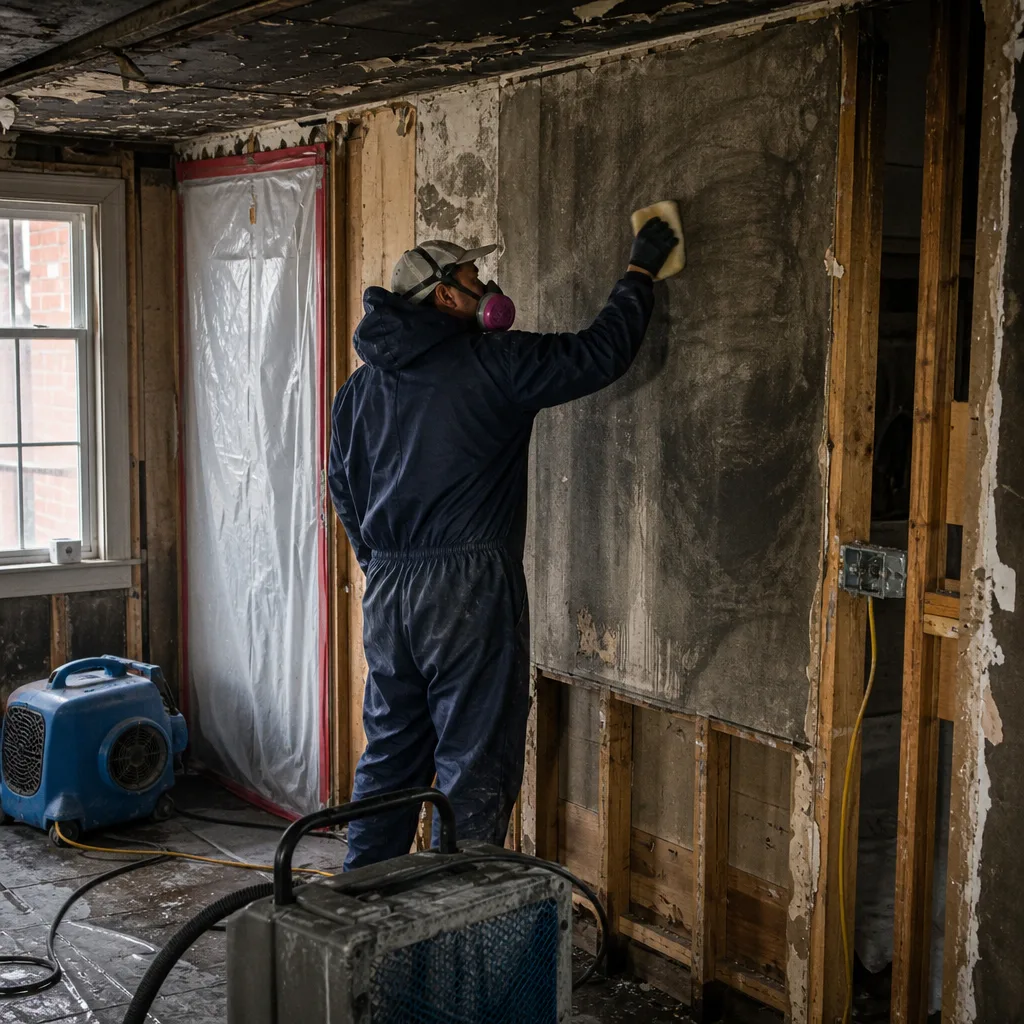
Wind-driven rain, tree limbs through windows, and roof failures all fall under storm cleanup. We remove the debris, board up openings, and dry what got wet before mold becomes the second disaster. In Kearny’s older housing stock, we pay special attention to lath-and-plaster walls that hide moisture for weeks after a storm. Thermal imaging finds what a visual inspection misses.
Emergency Board-Up
A broken window or damaged door in Kearny can’t wait for a contractor’s regular schedule. Our crews board up same-day, secure the property against further weather and entry, and document everything for your insurance file. Board-up is stabilization, not a permanent repair, and we’ll be clear about that when we arrive.
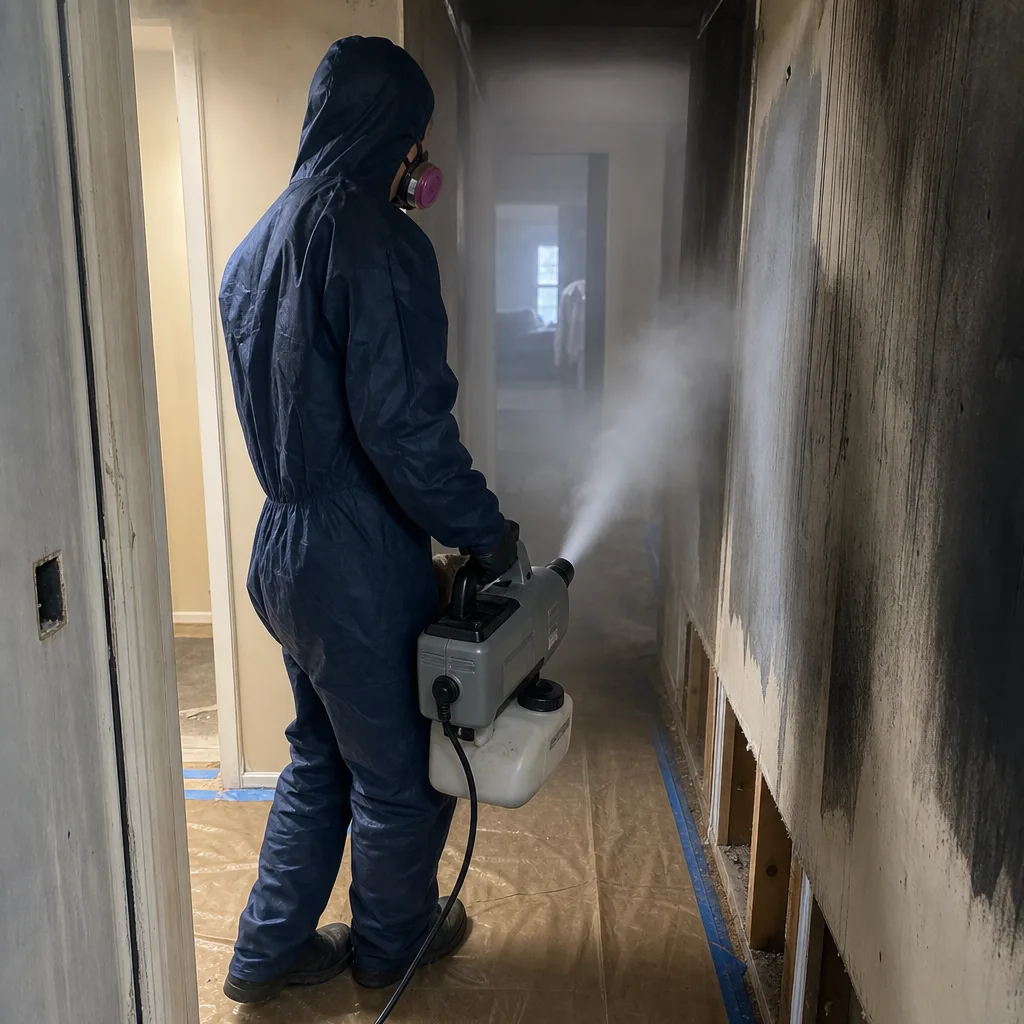
Roof Tarping
When a nor’easter tears a section of flashing or a limb punctures the roof over a Kearny two-family, water enters fast. We tarp roof damage same-visit, using wind-rated securement that holds until permanent repairs can be scheduled. On Brick Church Road and Hudson Street homes with older roofing systems, the tarp often becomes the difference between a contained repair and full ceiling replacement.
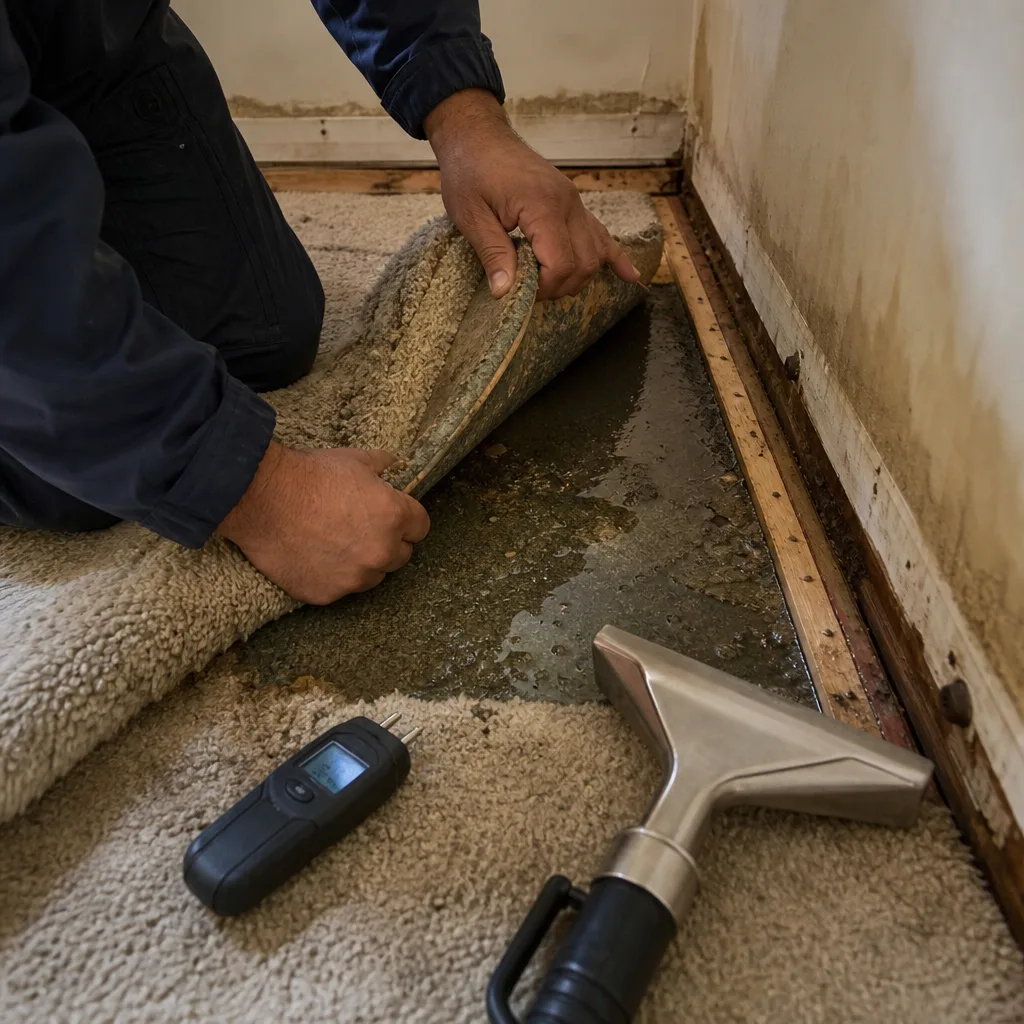
Debris Removal
Fallen trees, storm-blown debris, and the mess left after floodwater recedes all need hauling before restoration can proceed. We remove it, classify what’s salvageable versus what’s contaminated, and coordinate disposal under local Kearny and county requirements. Storm debris in a black-water flood is biohazard material, not ordinary yard waste.
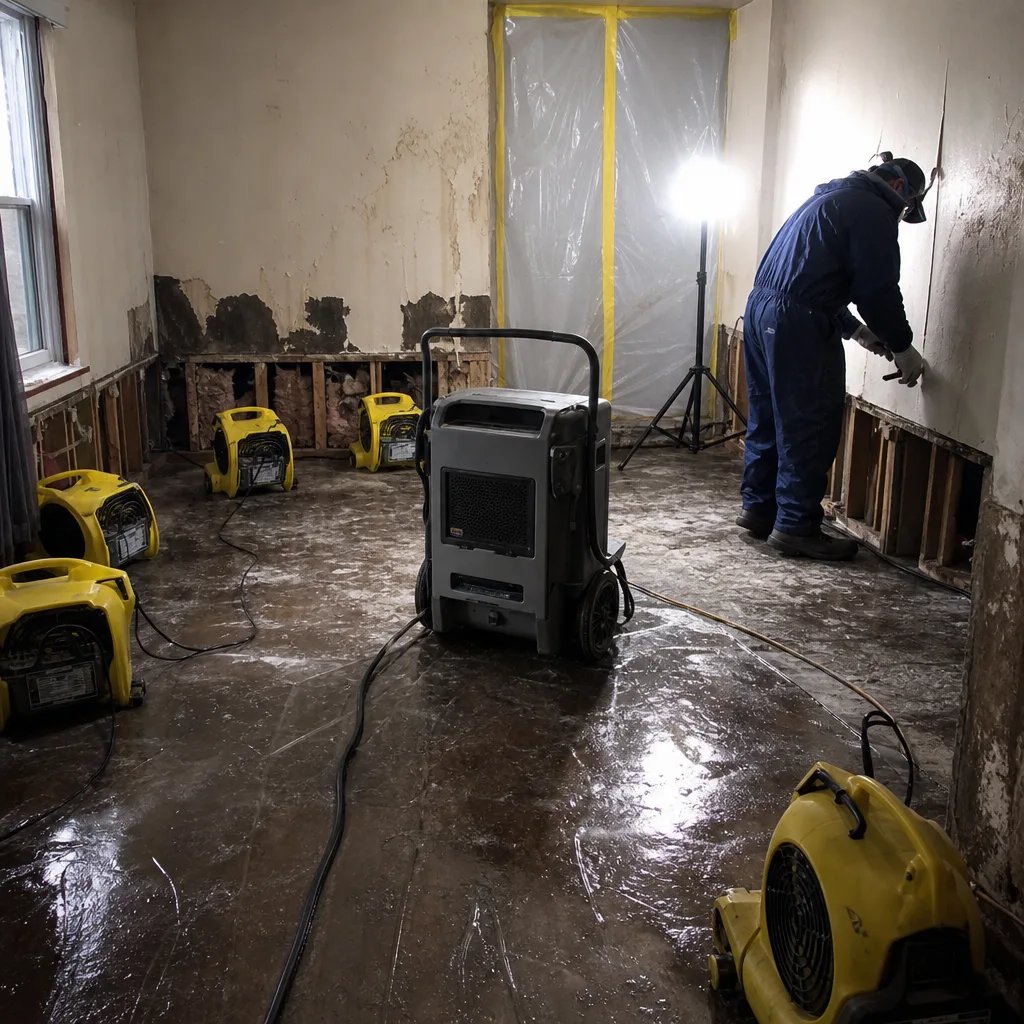
Wind Damage Repair
Kearny’s brick exteriors hide what wind does to framing and roofing. We inspect from the top down after every major wind event: missing shingles, lifted flashing, damaged soffits, and compromised window seals. Catching wind damage early prevents a slow leak that rots structural lumber for a year before anyone notices.
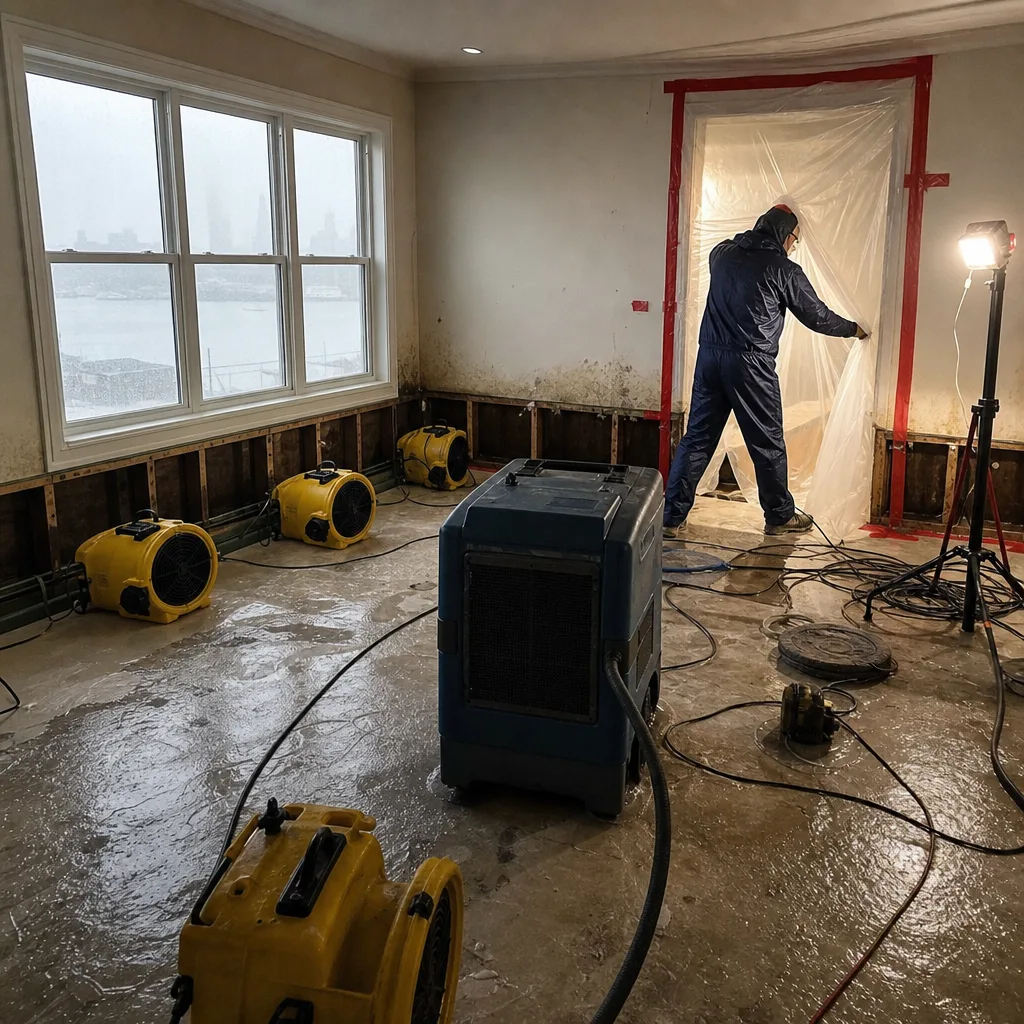
What happens when you call
- 1
A real person answersNo phone trees - you reach a local pro.
- 2
You get an upfront price rangeHonest numbers before anyone is dispatched.
- 3
A background-checked tech heads outLicensed & insured, dispatched right away.
- 4
You approve before work beginsNothing starts until you say go.
Storm & Disaster Restoration Costs in Kearny, NJ
A standard clean-water basement flood in Kearny typically runs $2,400 to $5,800 for full extraction, drying, and basic repairs. A Category 3 black-water sewage backup runs higher, generally $5,000 to $12,000, because of containment, antimicrobial treatment, disposal fees, and contaminated material removal. Roof tarping runs $450 to $1,200 depending on roof pitch and the size of the affected area. Emergency board-up typically runs $350 to $900. Full storm restoration with reconstruction on a flooded finished basement can reach $20,000 to $45,000 depending on the finishes and how much framing was compromised. What moves the price? The category of water, the square footage of affected area, how long the water sat before we arrived, and whether structural lumber passed the dry standard or needs replacement. We bill your carrier directly when the loss is covered, and every job starts with a free visual inspection that turns into a firm written scope. You’ll know the number before we open a wall. Call (640) 400-9404 to schedule the walkthrough.
We Also Serve Cities Near Kearny
Beyond Kearny, our storm and disaster crews work regularly in Harrison‘s mill-town rowhouses, Jersey City‘s low-lying west side, the factory neighborhoods of Secaucus, and the historic grid of Hoboken. The same 24-hour live answer and written-scope discipline applies in every town we work.
Serving Kearny, NJ - Our Local Coverage Area
We’re based in the Kearny area and know this community well. Use the map below to see our service coverage - if you’re nearby, we can almost certainly help.
Kearny Storm & Disaster Restoration Questions, Answered
Why does my Kearny basement flood even when the Passaic River doesn’t crest?
The river crest is only one of three water sources in town. Kearny’s combined sewer system surcharges during moderate rain, pushing sewage up through floor drains before any street flooding appears. Add the high water table from former Hackensack Meadowlands fill, and your basement can take on water from below while the river is still a foot below flood stage. A free inspection will show you exactly which route the water took into your house.
What makes storm water in South Kearny (07099) different from other parts of town?
South Kearny sits between the Hackensack River and Newark Bay, low enough that water arrives from multiple directions at once. River overflow comes from one side, tidal backpressure from the other, and sewer surcharge from below. That’s a triple-source Category 3 event, so we test and treat standing water as black water by default. Standard drying without biohazard containment leaves pathogens in your home. Call (640) 400-9404 if there’s any question about classification.
How do I know if my flooding is clean water or black water after a storm?
If the water came from rainfall alone, it may be Category 1 or 2. If it came through a floor drain, toilet, or sewer line, or if it mixed with river or bay water, it’s Category 3 black water. We test on-site because visible clarity means nothing. Contaminated water can look clean. Only on-site testing and a knowledge of which system failed gives a reliable answer, and that answer changes everything about cost, safety, and what can be dried versus what must be removed.
Why don’t just drying out the basement with fans work in Kearny?
Box fans move air over surfaces, but they don’t pull moisture out of masonry, structural lumber, or the damp soil beneath your slab. Kearny’s brick rowhouses and rubble foundations hold water for weeks, and hidden moisture behind lath and plaster turns to mold long after the floor looks dry. Professional-grade Dri-Eaz dehumidifiers, air movers, and daily hygrometer readings hit a measurable dry standard before we call it done. Fans don’t document anything, and without documentation, insurers won’t confirm the dry standard was met.
Does my Kearny home need repeated inspections even after a previous storm cleanup?
Yes, and this is where many Kearny homeowners get surprised. A home that flooded once often has foundation cracks, compromised floor drains, or deteriorated waterproofing that makes the next flood worse. The water table here stays high year-round, so we recommend a moisture check every spring and after any heavy rainfall. Catching seepage early is a $400 drying job instead of a $9,000 black-water mitigation. We’d rather prevent the second loss than bill for it. Call (640) 400-9404 to schedule a free inspection.
How fast can someone actually get to my Kearny home during a storm?
Typically within 45 minutes from your call. Floodline Restoration Co. keeps crews staged in the area during storm watches and answers the phone live around the clock. The dispatcher who picks up knows which crew is closest to your block and which equipment to load. In South Kearny during a nor’easter, we run multiple crews because access routes flood too.
How long does full storm restoration take in a Kearny home?
Standard clean-water drying takes three to five days with daily monitoring. Category 3 black-water mitigation typically runs five to ten days, plus repair time if structural lumber or finishes need replacement. A full basement rebuild after a serious sewage flood can take two to six weeks depending on the scope. We’ll give you a written timeline after the initial inspection, and we stick to it. The 90-Day Done Right Promise backs the finished work.
What should I do in the first 30 minutes after my Kearny basement floods?
Shut off electricity to the affected area if you can do so without stepping into water. Don’t walk through floodwater, especially if it came from a drain. Call (640) 400-9404 while the water is still visible, because the water line on your walls is documentation. If possible, take photos before anything is moved. Then wait for our crew. Trying to extract black water yourself spreads contamination and makes the job bigger.
When a storm hits Kearny, the water takes the path of least resistance into basements, foundations, and framing that has been fighting moisture for a century. Floodline Restoration Co. starts at the floodline and doesn’t leave until the house is dried, documented, and rebuilt. Our Storm & Disaster Restoration team handles the whole job, from the first extraction to the final coat of paint. Call (640) 400-9404 any hour. A live person will answer, and a certified crew will be on the way.
Written by Curt Bowman, Owner at Floodline Restoration Co., serving Kearny’s storm and disaster restoration needs with 24/7 live response.